
Filters
Level
Grade
Subject
Subject Area
Subject Topic
Standard(s)
Audience
Keyword
DurationMinutes
Preschool Lesson Plans

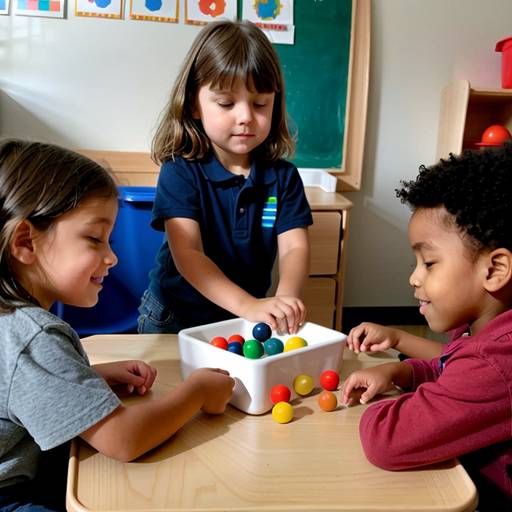
In this preschool science lesson, students will explore the five senses: sight, hearing, taste, touch, and smell through a series of interactive activities. The session begins with an engaging introduction to the senses, followed by five sensory stations where children can independently experience each sense. At the sight station, they will describe colorful objects, while at the hearing station, they will listen to various sounds. The taste station offers opportunities to sample different fruits and vegetables, and at the touch station, children will engage with various textures. Finally, the smell station will challenge them to identify various scents.
After rotations, students will gather for a group discussion to reflect on their experiences, sharing their favorite moments from each station. To conclude, they will create drawings representing their favorite sense, promoting creativity and expression. Optional snack time may be included, allowing further exploration of taste. The lesson aims to foster curiosity and enhance observational skills while accommodating individual needs throughout the activities. Assessment will focus on participation, understanding, and expression during discussions and completed worksheets.

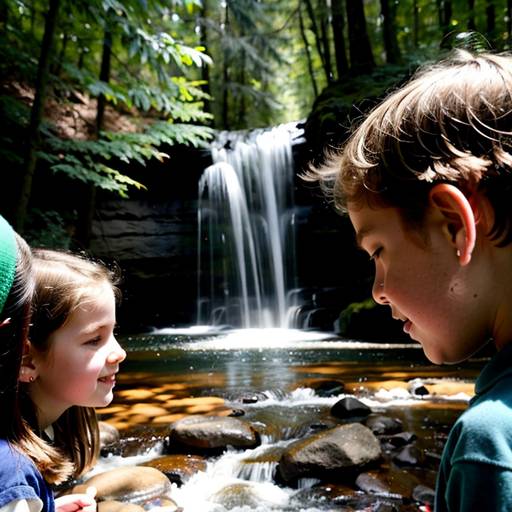
This preschool lesson plan focuses on helping students understand their environment and community through a series of interactive activities. It begins with a welcoming circle time where children discuss their observations of nature and familiar places in their neighborhood. A read-aloud story reinforces concepts related to nature and community, encouraging engagement and critical thinking.
Students then participate in a nature scavenger hunt, either outdoors or through pretend play indoors, to explore their surroundings more actively. This leads to an art activity where they create drawings of their favorite plants, animals, or community landmarks, fostering creativity and self-expression.
The lesson concludes with a sharing session, allowing students to present their artwork while discussing the importance of caring for the environment. They reflect on ways to contribute positively to their community, culminating in a class discussion that emphasizes environmental stewardship. This plan aims to build students' awareness and appreciation of their surroundings while promoting teamwork and shared learning experiences.
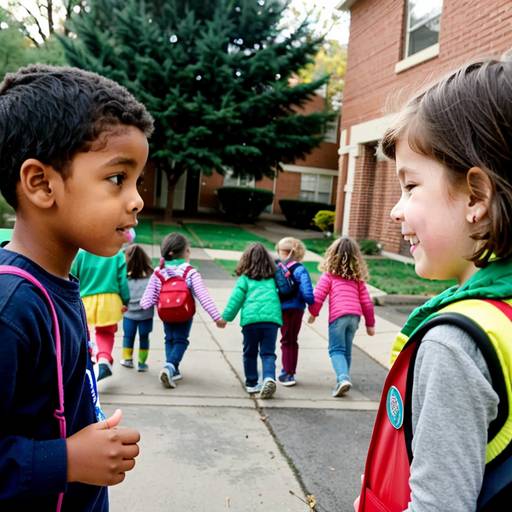
In this preschool lesson, students will explore the concept of community and learn about various community helpers and their roles. The session begins with a discussion to engage children in understanding what a community is, followed by an introduction to different community helpers such as firefighters, police officers, doctors, and teachers. Through the use of pictures and props, students will gain insights into how these individuals contribute to the safety and well-being of the neighborhood.
Following this introduction, students will work in small groups to create a collage representing their chosen community helpers, allowing them to express their understanding creatively. Each group will present their collage to the class, fostering communication skills and reinforcing their learning about the roles of these helpers.
To enhance engagement, a movement activity will follow, where children will participate in a fun dance that incorporates actions reflecting the work of community helpers. The lesson will conclude with a reflective discussion, where students will share what they learned, emphasizing the importance of community and collaboration.
Throughout the lesson, students will actively participate in discussions, creative tasks, and physical activities, reinforcing their understanding of community helpers and their contributions in a fun and interactive way. Adaptations will be made to ensure all students can engage meaningfully with the content.

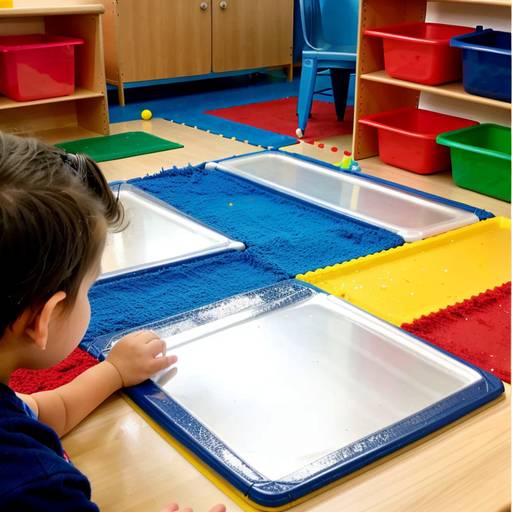
In this preschool lesson plan focused on spatial awareness, students engage in activities designed to enhance their understanding of positional concepts such as in, out, on, under, near, and far. The lesson begins with an interactive introduction using visual aids and gestures to explain these terms. Following this, students participate in storytime, listening to a book that highlights spatial relationships, accompanied by guided questions to foster comprehension.
The main activity involves rotating through various hands-on stations. At these stations, students engage in play and movement, using toys and hula hoops to explore and demonstrate spatial concepts physically. After the stations, there is a group discussion where students share their experiences and practice using the vocabulary learned.
To conclude, the lesson reinforces the spatial terms through a group chant or song, followed by a short assessment where students point out spatial concepts around them. The plan includes differentiation strategies to support diverse learning needs and suggests follow-up activities, such as worksheets and nature walks, to further explore spatial awareness in different contexts.

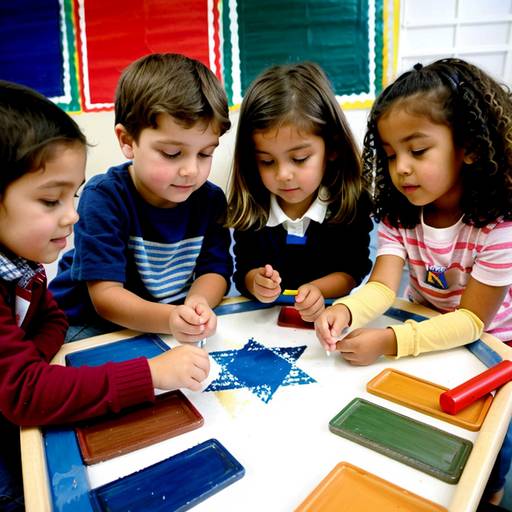
In this preschool art lesson, students are introduced to the concepts of patterns and textures through hands-on exploration. The session begins with a discussion where children identify patterns in their environment and learn the significance of different textures. A demonstration follows, showcasing how to create repeating patterns using stamps and how to apply various textured materials to paper for a unique artistic effect.
During the main activity, students are provided with construction paper and a selection of textured materials and painting tools, allowing them to create their own artwork that incorporates both patterns and textures. Throughout the activity, educators circulate to offer support and ask guiding questions to encourage creativity. After cleanup, students gather to share and reflect on their artwork, promoting a sense of community and appreciation for each other's efforts.
The lesson not only fosters artistic expression and fine motor skill development but also incorporates elements of collaboration and peer feedback. Additional extensions include displaying the completed artwork and integrating a storytelling session that emphasizes patterns and textures, reinforcing the learning objectives. Overall, the lesson provides a rich, interactive experience that enhances children's understanding of visual arts.
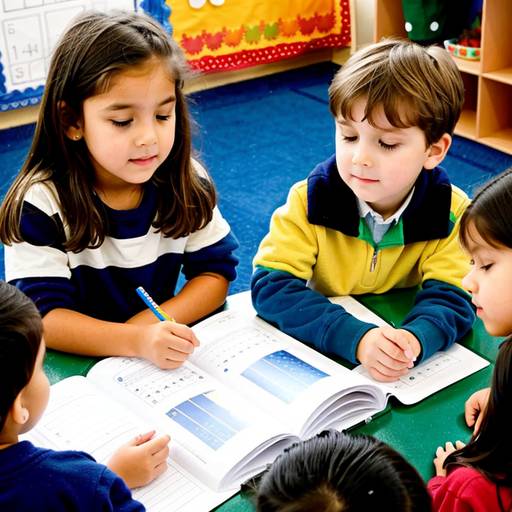
In this preschool math lesson, children will explore the concept of patterns through interactive activities designed to engage their senses and creativity. The session begins with an introduction to patterns, where children will identify simple sequences using colors and shapes. They will then participate in group activities, including creating their own patterns with paper shapes and replicating sound patterns through claps and stomps.
Next, students will embark on a “pattern hunt” in their environment, observing and discussing patterns they find in various surroundings. After returning to the classroom, children will create and showcase their own unique patterns on chart paper, reinforcing their understanding of the concept. The lesson concludes with a group discussion about their discoveries and a fun song to celebrate their learning. Throughout the activities, children will have opportunities for collaboration and sharing, enhancing their understanding of patterns in an engaging, hands-on manner. This lesson will help develop their observation skills, creativity, and mathematical thinking in a playful context.
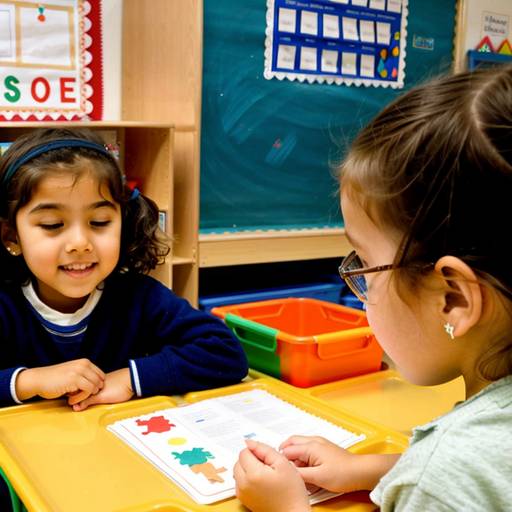
In this preschool language lesson, students will engage in activities designed to enhance their phonemic awareness by exploring letter sounds. The session begins with a warm gathering where children share their knowledge of letters. They will then participate in a flashcard game that introduces letter sounds associated with corresponding objects, encouraging repetition and sound recognition.
Next, a sound hunt activity will involve children finding picture cards that start with specific sounds, fostering both individual exploration and group sharing. Following this, students will use sound shakers while singing along to phonics songs, reinforcing their understanding of letter sounds through movement and rhythm.
The lesson will conclude with a wrap-up discussion about favorite sounds and a brief read-aloud of a phonics-based picture book to reinforce the day’s learning. Throughout the session, children are assessed on their ability to recognize and produce sounds while participating actively in the activities. Optional extensions for future learning may include creating a collaborative phonics display.
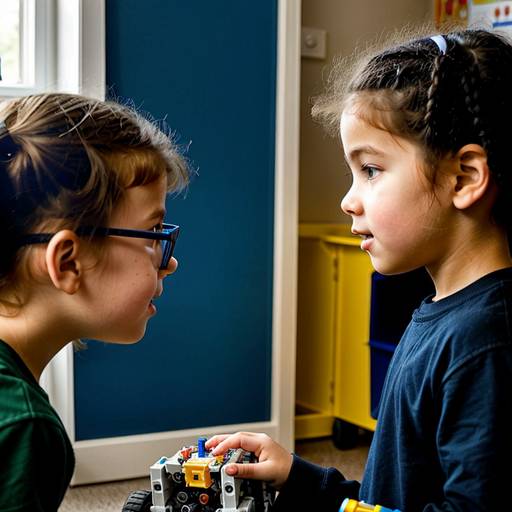
In this preschool technology lesson, students will explore the exciting world of robotics through engaging, hands-on activities. The session begins with an interactive read-aloud that introduces basic concepts of robots and encourages children to share their thoughts and experiences. Following this, students will engage with various types of toy robots, fostering discussion about their functions and features.
The main activity involves small groups building simple robots using LEGO kits, promoting teamwork and collaboration. Students will then transition to a basic coding experience using tablets or computers, where they will create simple command sequences to control their robots. To conclude the lesson, students will participate in a fun robot dance party, allowing them to express their creativity and movement.
The lesson wraps up with a reflection circle, where students share their experiences and insights gained throughout the activities. Assessment will focus on observation of participation and engagement, while extensions will encourage connections to home and potential follow-up lessons on robotics. The overall aim is to introduce preschoolers to the concepts of technology and robotics in a playful and enjoyable manner.
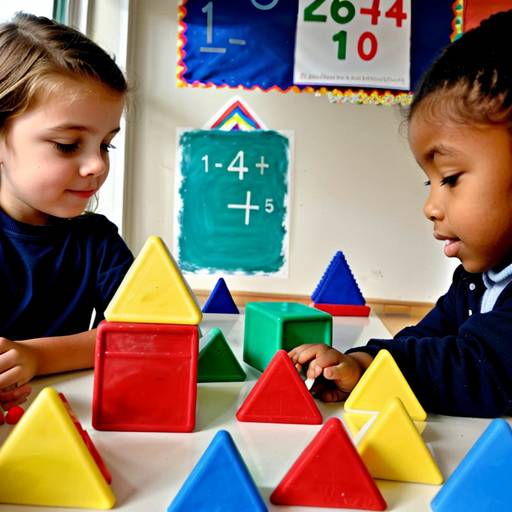
This lesson plan focuses on number recognition for preschool students aged 3-5 years. The objective is to help students identify and understand numbers from 0 to 10 through a series of engaging activities that incorporate shapes and counting.
The lesson begins with a warm welcome and a brief discussion about numbers known by the students. It continues with a shape sorting activity, where students identify shapes and match them to corresponding number cards based on the number of sides each shape has. Following this, students engage in a counting game, where they count objects like blocks and collaborate to count various classroom items, gradually reinforcing their number recognition skills.
The lesson concludes with a recap, allowing students to share their favorite numbers and participate in a fun number song. Throughout the activities, teachers observe student interactions to assess their understanding and provide positive reinforcement. Extensions are suggested for advanced learners, including simple addition and tracing number sheets to further enhance their learning experience. Overall, the lesson promotes a playful and interactive approach to foundational math skills.
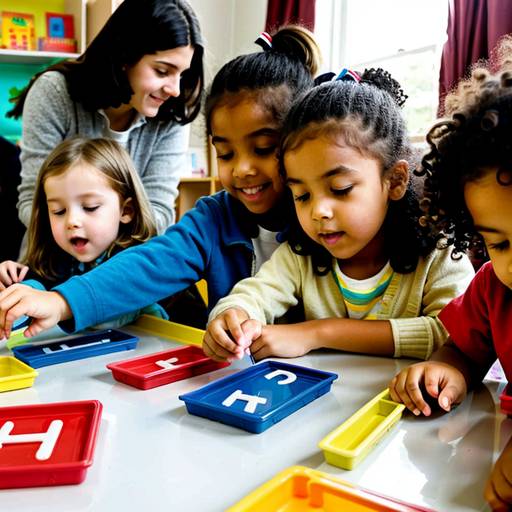
This lesson plan aims to support preschoolers in developing pre-reading literacy skills through engaging and interactive activities focused on letter recognition and sound association. The session begins with a familiar alphabet song to engage children's interest, followed by a series of activities involving flashcards to identify uppercase and lowercase letters and connect them with their corresponding sounds using props.
An interactive story time with an alphabet-themed book further reinforces letter recognition and sounds, encouraging participation and discussion. Hands-on activities, including forming letters with playdough and tracing worksheets, allow children to practice their skills in a tactile manner. Sensory exploration through a bin filled with items that start with different letters provides a fun and immersive experience.
The lesson concludes with a review to reinforce learning and a final sing-along of the alphabet song. Throughout the session, educators assess children's understanding by observing their participation and responses, with suggested extension activities to encourage continued learning at home. Overall, the lesson fosters a positive and playful environment for young learners to build foundational literacy skills.