
Filters
Level
Grade
Subject
Subject Area
Subject Topic
Standard(s)
Audience
Keyword
DurationMinutes
Preschool Lesson Plans
In this preschool lesson, students will engage in digital storytelling to foster creativity, language skills, and basic technology comprehension. The session begins with a discussion about storytelling, where students share their favorite stories and learn the elements of a good story. The teacher demonstrates the use of a story creation app on tablets, showcasing how to select backgrounds, add characters, and record narration.
Following the demonstration, students will brainstorm and sketch their story ideas using printed templates, promoting collaborative thinking and planning. Once ready, they will work individually or in pairs on their devices, creating their own digital stories with guidance from the teacher.
At the end of the session, students will present their stories to the class, helping to build confidence in sharing their work. The lesson wraps up with a reflective discussion, allowing students to share their experiences and thoughts on using technology creatively. This activity not only enhances their storytelling abilities but also familiarizes them with digital tools in a fun and interactive way. Extensions of the activity involve creating more stories and hosting a showcase for parents.

This preschool science lesson focuses on introducing young children to the fundamental concepts of Earth and space. The lesson aims for students to recognize basic features of Earth, such as land and water, and celestial bodies like the sun, moon, and stars.
The session begins with a brief introduction where pictures of Earth and space are displayed to spark discussion. Children then engage in an interactive balloon activity, where they handle balloons representing Earth and celestial bodies, promoting tactile exploration and allowing them to express their observations.
Following the balloon activity, children participate in creating their own art pieces on a large poster board, illustrating their understanding of Earth and space using markers, crayons, and stickers. This creative component encourages self-expression and teamwork as children share their creations with peers.
The lesson wraps up with a group discussion, where children share their artwork and reflect on what they’ve learned. A brief story read-aloud reinforces the themes covered in the lesson.
Assessment is based on student participation and engagement throughout the activities, while potential extensions include deeper explorations of related topics, nurturing curiosity about the world and universe. Overall, the lesson serves to foster a foundational understanding of Earth and space in a fun and interactive manner.
This preschool lesson plan introduces young learners to the five senses through an engaging exploration of Earth's and Space's wonders. Over a 39-minute session, students will participate in various hands-on activities at different sensory stations. They will have the opportunity to feel textures from nature, listen to various sounds associated with Earth and space, identify scents, and taste fruits that represent different planets.
Following the sensory exploration, children will create a mural reflecting their experiences, using their senses as inspiration for artistic expression. The lesson concludes with a group discussion allowing students to share their insights and observations. Throughout the session, the teacher will facilitate engagement and assess understanding by observing student participation and encouraging conversation. This interactive and sensory-based approach aims to foster curiosity and a deeper appreciation for the world around them.

In this engaging preschool science lesson, students will participate in hands-on activities to discover Earth’s elements, such as soil, water, and air, while also exploring basic concepts related to the Earth and space. The lesson begins with an interactive discussion that encourages students to share their prior knowledge about the ground, the stars, and the Moon.
Next, students work in small groups to investigate different Earth materials by filling cups with various elements, discussing their observations, and predicting outcomes when mixing soil and water. Following this, the class participates in a celestial simulation using balloons to represent the Earth and Moon, where children learn about orbits by walking in circles and using flashlights to imitate stars in the night sky.
The lesson concludes with a group discussion where students share what they learned and a storytime session featuring a space-themed book to reinforce the concepts introduced. By the end of the lesson, students will have a foundational understanding of Earth and space elements through experiential learning, fostering curiosity and scientific inquiry.

This lesson plan focuses on enhancing preschoolers' gross motor skills through a variety of engaging activities spanning 105 minutes. The session begins with an energetic warm-up that incorporates movement and stretches, followed by five activity stations where children can practice jumping, balancing, running, and navigating an obstacle course. Each station allows for skill development in a fun and interactive environment, promoting coordination and teamwork. A group activity involving mimicking animal movements further encourages creativity and physical expression. Following the main activities, children participate in a cool-down session with calming stretches, concluding with group reflection to share their favorite experiences. Throughout the lesson, safety is prioritized, and supervision ensures that children can explore and enjoy movement safely, fostering a positive attitude toward physical activity. The lesson aims not only to enhance motor skills but also to build social skills and a love for play.
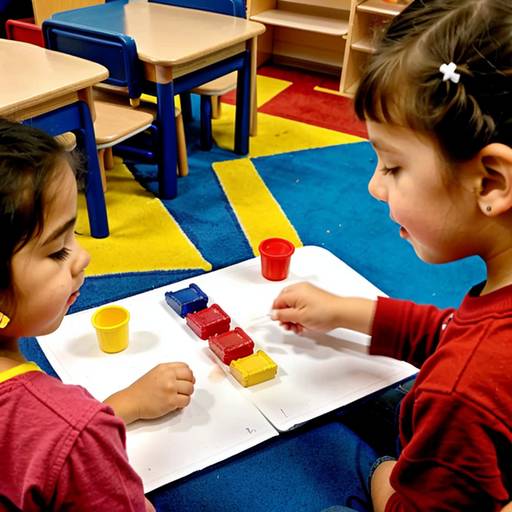
In this preschool lesson, children will engage in a variety of interactive activities designed to introduce them to the concepts of letters and their corresponding sounds. The session begins with a welcoming introduction where students share their thoughts about letters. They will then participate in a lively letter sound chant, matching sounds to hand motions to enhance engagement.
Next, students will work with alphabet flashcards, identifying letters and objects that begin with those letters to reinforce their understanding. Following this, a storytime segment will feature a book rich in alliteration and rhythmic sounds, encouraging active participation through repetition and discussion about the sounds they hear.
The lesson will include a craft activity where each child decorates a letter of their choice and shares it with the group, reinforcing their learning. The session concludes with a closing circle where children reflect on what they've learned and celebrate their creativity through a song that incorporates letters and sounds.
Assessment will be based on observation of participation and understanding during activities, while extensions may include creating a letter sound book or conducting an "Alphabet Hunt" around the classroom. Adaptations for individual needs will also be available, ensuring an inclusive learning environment that fosters early literacy skills in a fun and supportive way.
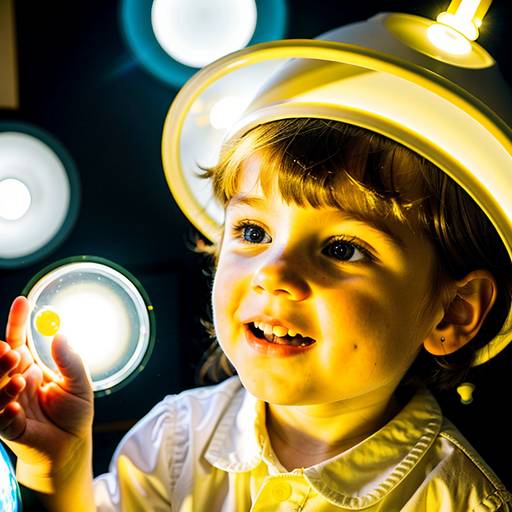
This preschool science lesson focuses on the fundamental concepts of light and sound through interactive and hands-on activities. Designed for children aged 3-5, the lesson begins with a group discussion to introduce these sensory concepts, followed by engaging exploration stations. One set of stations allows children to experiment with light using flashlights, colored cellophane, and mirrors, while the other set focuses on sound with musical instruments and nature sound recordings. After each exploration, students gather to share their discoveries and reflect on their learning experiences. The lesson concludes with a story that reinforces the themes of light and sound. Throughout, teachers observe children's engagement and understanding while encouraging creative expression and reflection. Extension activities, such as creating a class mural or outdoor sound walks, provide additional opportunities for learning and exploration. Overall, this lesson fosters curiosity and a deeper understanding of the world through light and sound.
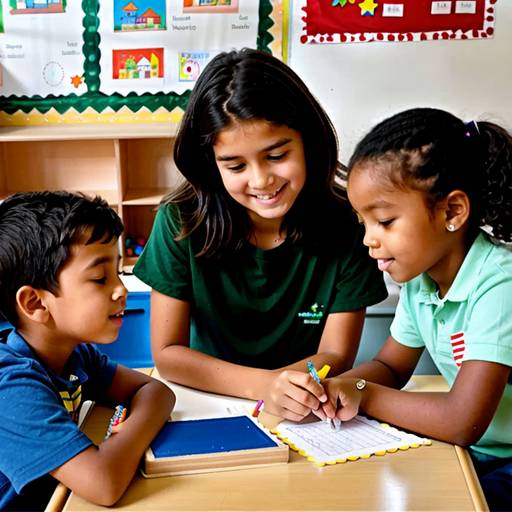
In this preschool language lesson, students will focus on recognizing and using new sight words and vocabulary through a series of engaging activities. The lesson begins with a warm-up song and an introduction to sight words using flashcards, encouraging repetition and discussion about their meanings.
Next, a storybook that incorporates the sight words will be read aloud, with interactive elements that prompt students to identify and say the sight words as they appear.
Following the story, students will participate in a “Sight Word Bingo” game, reinforcing their recognition of the words in a fun and competitive manner. The lesson will then transition to a vocabulary exploration activity, where students will engage with mystery objects related to the sight words, encouraging them to describe and connect the objects to the vocabulary they are learning.
To reinforce creativity and understanding, students will have an opportunity to draw something related to a chosen sight word and share their artwork with the class. The session will conclude with a reflective discussion about the day’s learning and a reminder to share new vocabulary with family members at home. Throughout the lesson, informal assessments will be conducted to monitor participation and understanding.
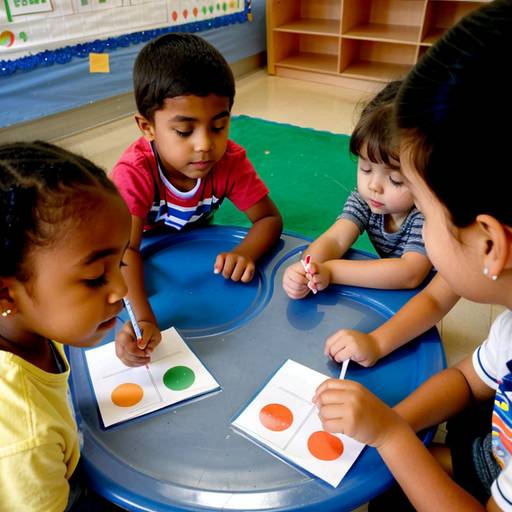
This preschool lesson focuses on introducing new vocabulary and sight words to young learners. It begins with a circle time where students engage with flashcards displaying key sight words, practicing pronunciation and discovering their meanings through corresponding picture cards. An interactive storytime follows, where a carefully chosen book featuring these sight words is read aloud, inviting students to participate by spotting and repeating the words.
Students then take part in a word hunt activity, matching sight word flashcards with picture representations, reinforcing their understanding through hands-on engagement. The lesson concludes with a sharing session, allowing children to express their favorite new words, followed by positive reinforcement in the form of stickers for their participation.
Throughout the session, informal assessments occur, gauging students' recognition and pronunciation of the words, with encouragement to continue practicing at home. Additional suggestions for future activities include creating a word wall and incorporating sight word games to further enhance literacy skills in a playful and interactive manner.

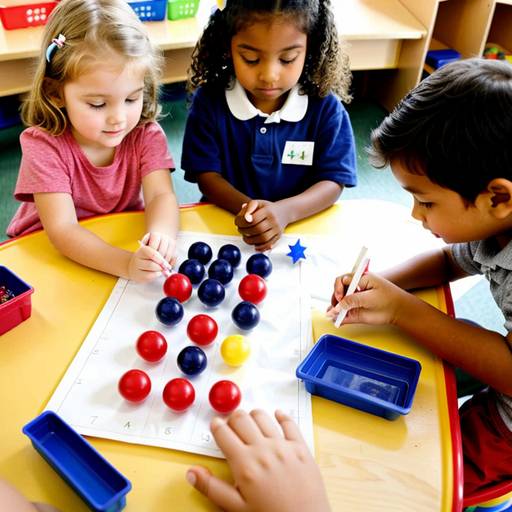
This preschool math lesson focuses on developing early counting skills through a series of interactive activities that engage children in recognizing and understanding numbers up to 10. The lesson begins with a gathering where students learn about the day's theme. They participate in interactive counting using manipulatives, followed by a storytime session that includes a counting book, allowing for group counting and comprehension questions.
Next, the children enjoy a movement-based counting song that incorporates physical actions, reinforcing their counting in a fun way. Following the song, they create their own artwork by drawing items based on number prompts, which provides an opportunity for individual expression and counting practice. The lesson concludes with a group review where students reflect on their learning and share their drawings.
Throughout the session, children are encouraged to engage with counting concepts and collaborate with peers, supporting both cognitive and social development. Observation of participation and understanding serves as a basis for assessing learning outcomes. The lesson is designed to be adaptable based on the children's interests and needs, ensuring an enjoyable and educational experience.