
Filters
Level
Grade
Subject
Subject Area
Subject Topic
Standard(s)
Audience
Keyword
DurationMinutes
Elementary School Lesson Plans

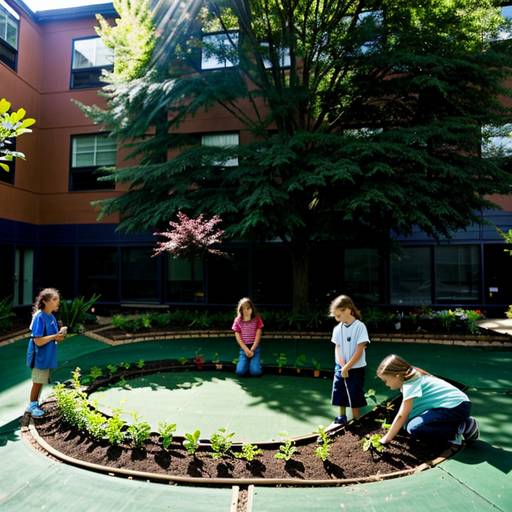
In this 3rd-grade math lesson, students will explore the concept of division through hands-on activities that relate to dividing plants among pots. The objective is for students to understand and perform basic division by visualizing and physically engaging with the material. The lesson begins with an engaging introduction discussing gardens and equal sharing, followed by direct instruction that models division using a simple problem on the whiteboard.
Students will then participate in a group activity where they divide a set number of plant cutouts into designated pots, fostering collaboration and discussion about the division process. This is followed by independent practice, where students solve division problems on worksheets and tackle word problems that apply division to real-life scenarios. The lesson concludes with a review of key concepts and an exit ticket where students express their learning.
Throughout the lesson, assessments will be made based on participation, worksheet completion, and exit responses. Differentiation strategies will be employed to support both advanced students and those who may need additional help, ensuring that each student grasps the concept of division effectively. After the lesson, the teacher will reflect on the activities to evaluate student understanding and future improvements.
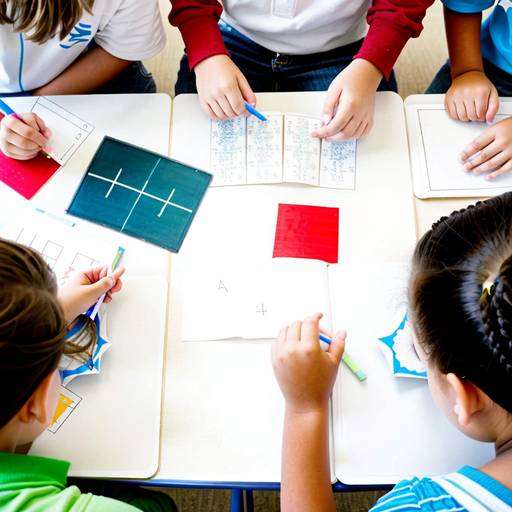
This 3rd-grade math lesson focuses on introducing students to the concept of division through sharing and grouping. It begins with a discussion about everyday experiences related to sharing, leading to the introduction of key vocabulary: dividend, divisor, and quotient. Students engage in direct instruction where they learn to visualize division by grouping objects. They then participate in guided practice using manipulatives to solve simple division problems, followed by independent practice with worksheets that reinforce their understanding. The lesson concludes with a review of the core concepts and an optional extension activity that incorporates teamwork and competition. Throughout the lesson, various assessment methods are utilized to monitor student comprehension and encourage engagement with the subject matter.
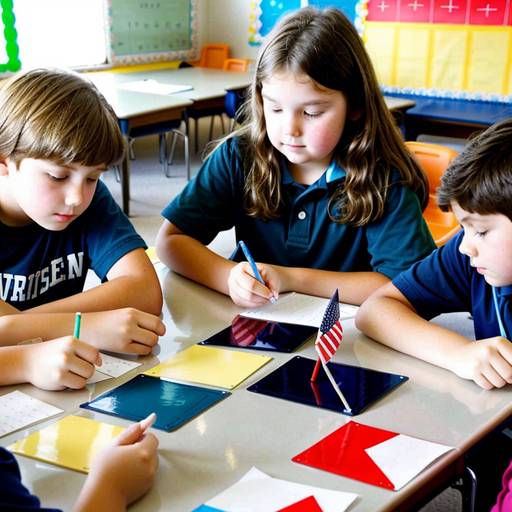
In this 5th-grade math lesson, students will explore the concept of division, focusing on its relationship with multiplication and its application in real-life scenarios. The lesson begins with a discussion about the relevance of division, followed by direct instruction that includes visual demonstrations and examples on the whiteboard. Students will engage in guided practice using worksheets that feature various division problems, allowing them to apply strategies and utilize tools like base-ten blocks for visualization.
After completing the worksheets independently, the class will participate in an interactive game to reinforce their learning in a fun and engaging manner. The teacher will assess understanding through the collected worksheets and students' reflections captured on sticky notes. The lesson provides differentiation to accommodate learners at varying levels, ensuring all students grasp the fundamentals of division. Finally, optional homework is assigned to encourage continued practice and real-world application of division concepts. Overall, the lesson aims to create an interactive and supportive environment for mastering division.

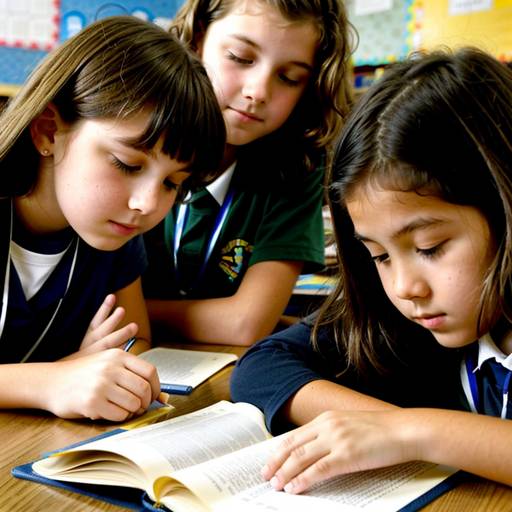
In this 5th-grade Language Arts lesson, students focus on identifying and summarizing the main ideas and supporting details of a text. The lesson begins with a discussion on the importance of understanding the main idea, followed by the introduction of key vocabulary such as "main idea" and "supporting details." Students engage in a guided practice where they work in small groups to analyze a shared passage and fill out a graphic organizer with their findings. Each group then presents their main idea and supporting details to the class. In the independent practice section, students read a different passage on their own and complete their own graphic organizer, utilizing a reading strategy bookmark for support. The lesson concludes with a class sharing activity where students summarize their insights on post-it notes, reinforcing their understanding of the concepts learned. Assessments are based on the graphic organizers, group participation, and the clarity of the post-it note summaries. Extensions and adaptations are provided to cater to varying student needs and abilities.
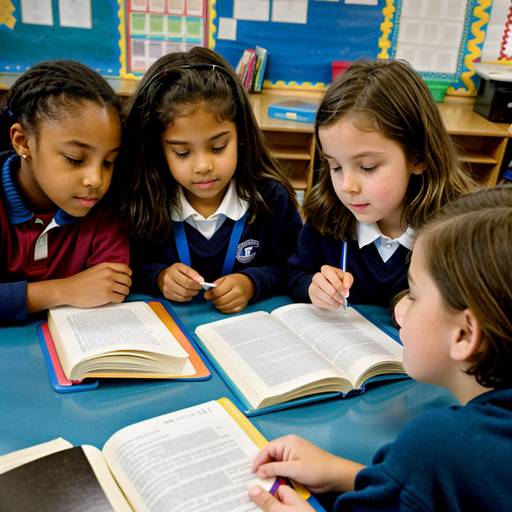
In this 4th-grade Language Arts lesson, students will delve into the world of reading genres, focusing on fiction, non-fiction, poetry, and fantasy. The lesson begins with a discussion on what genres are and how they differentiate books. Through guided practice, students will identify genres from a selection of books and articulate their reasoning. In small groups, learners will classify additional books into the correct genres and discuss their preferences. Each student will then choose their favorite genre to create a visual representation and write a brief explanation of why they are drawn to it. The lesson concludes with students sharing their artwork and insights with the class. Assessment will include observation during discussions, reviewing group organizers, and collecting individual projects. An extension activity invites students to write a short piece in their preferred genre, further enhancing their engagement and creativity in reading.
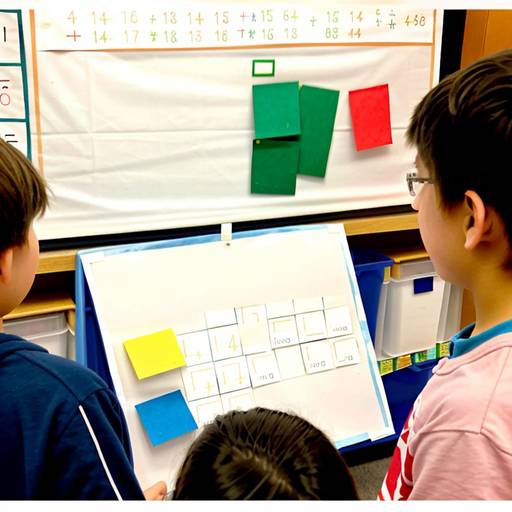
This 4th-grade math lesson focuses on teaching students the concept of division through the idea of sharing equally. The lesson begins with a discussion about sharing items like cookies among friends to introduce division. Key vocabulary such as dividend, divisor, and quotient is explained, and students are shown how to visualize division problems using counters and arrays.
Throughout the lesson, students participate in engaging group activities at different centers, including using counters to solve problems, working on division-based story problems, and playing math games that reinforce their understanding of division. After the group work, the class comes together to share their findings and connect division to real-world scenarios.
To assess understanding, students complete an exit ticket by solving a division problem and reflecting on what they learned during the lesson. The lesson is designed to accommodate varying skill levels, providing additional challenges for advanced learners and extra support for those who require it. Follow-up activities encourage students to apply division concepts beyond the classroom. Overall, the lesson promotes collaboration, critical thinking, and practical application of division in everyday life.
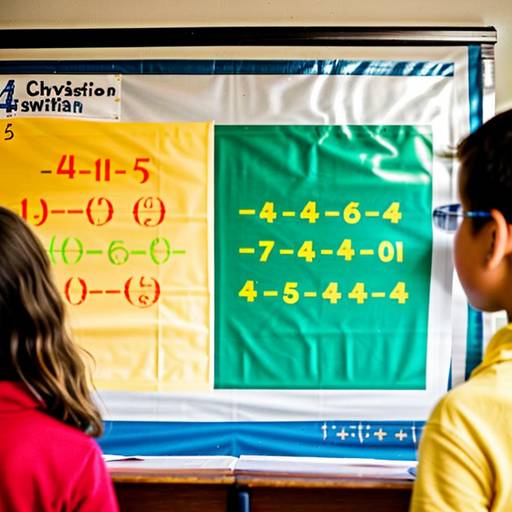
This lesson plan focuses on teaching 4th-grade students the concept of division through the idea of equal sharing. The lesson begins with a discussion to introduce division and its real-life applications, followed by direct instruction where students learn to solve division problems through grouping, using counters, and drawing illustrations. Guided practice encourages collaborative problem-solving using worksheets that include both standard division problems and word problems. Students then engage in independent practice to reinforce their understanding. The lesson concludes with a summary of key points and student sharing about their division strategies. Assessment is conducted through the collection of worksheets and observations of student participation. Differentiation strategies are included to support various learning needs, ensuring that all students can grasp the fundamental concept of division. A follow-up homework assignment further solidifies their learning and allows for creative expression through problem creation.
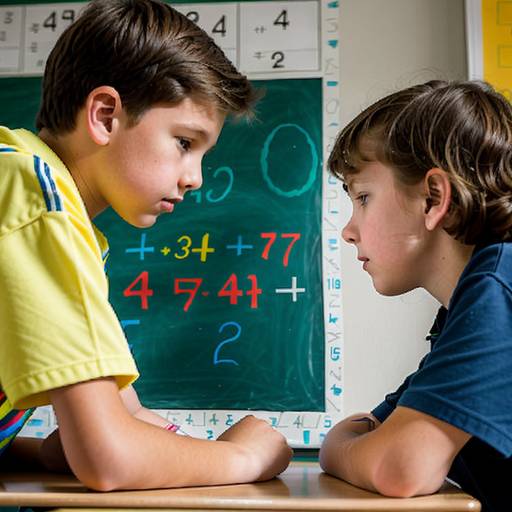
This 5th-grade math lesson focuses on introducing and reinforcing the concept of division through engaging activities. Students will explore division as a method of sharing items evenly, using real-world examples to connect with their experiences. The lesson begins with a brief introduction, where students discuss sharing scenarios and learn division terminology, including dividend, divisor, and quotient.
Guided practice involves using manipulatives to visually demonstrate how division works, followed by small group activities where students tackle specific division scenarios and represent their solutions through illustrations and number sentences. During independent practice, students work on a worksheet with a variety of division problems and real-world applications to solidify their understanding.
The lesson concludes with a review of key vocabulary and concepts, as well as a discussion of student solutions from their independent work. Assessment includes observing student participation, understanding during group activities, and evaluating completed worksheets. Differentiation strategies are provided to support diverse learning needs, with extensions offered through interactive games and exploration of division in everyday contexts. This lesson is designed to create an engaging and thorough understanding of division for 5th-grade students.
This 4th-grade math lesson focuses on introducing students to the concept of division through engaging, hands-on activities. The lesson begins with a warm-up that reviews multiplication facts and discusses the idea of fair sharing. Students learn to model division using counters and explore key vocabulary terms, such as dividend, divisor, and quotient.
During guided practice, students rotate through math stations, where they quiz each other on division facts, solve word problems related to fair sharing, and manipulate counters to visually represent division problems. For independent practice, students apply their knowledge by solving real-life word problems involving division.
The lesson wraps up with a group discussion to reinforce key concepts and encourages students to reflect on how division applies to their everyday lives, concluding with a short exit ticket to assess their understanding. Throughout the session, differentiation is implemented to cater to various learning styles and abilities, ensuring all students can engage with and grasp the material effectively.

In this 4th-grade math lesson, students will explore the concept of division as a means of fair sharing. The lesson begins with an engaging story about pirates dividing treasure to introduce the basic terms of division. Through direct instruction, students will learn how to solve simple division problems using counters and participate in a flashcard drill to reinforce their understanding of division facts. During guided practice, they will work in pairs to visually divide counters and share their findings with the class. For independent practice, students will complete worksheets with a variety of division problems, including real-world scenarios. The lesson concludes with a reflection where students share their learning and submit an exit ticket with a division problem of their own. Assessment will be conducted through observation, worksheet review, and exit tickets, while differentiation strategies will be employed to support learners at different levels. Extensions include games and tech-based activities to further engage students in division concepts.