
Filters
Level
Grade
Subject
Subject Area
Subject Topic
Standard(s)
Audience
Keyword
DurationMinutes
Elementary School Lesson Plans

In this 5th-grade math lesson focused on division, students will explore the concept of splitting a larger total into equal groups. The lesson begins with a review of multiplication and its relationship to division, followed by an explanation of key division terminology such as dividend, divisor, and quotient. Using counters, students will actively participate in guided practice to visualize and solve division problems collaboratively.
During independent practice, students will complete worksheets containing both direct division questions and word problems, illustrating their thinking through drawings and models. The lesson concludes with a recap of key concepts and real-life applications of division, encouraging students to share their discoveries. Assessment will take place through observation and worksheet reviews, with accommodations provided to support diverse learner needs. Extensions include exploring division with remainders and utilizing technology for further practice. This lesson aims to deepen students' understanding of division while making it relevant and engaging.
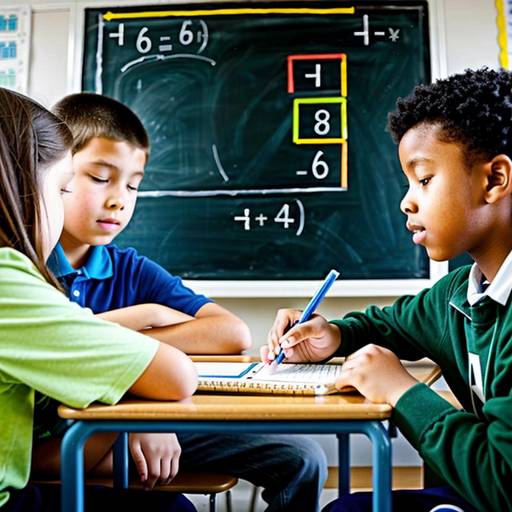
This 5th-grade math lesson focuses on understanding and applying the concept of division through engaging activities. Students will begin by discussing everyday situations where division is applicable, laying a foundation for the topic. The teacher will demonstrate division using visual aids and manipulatives, introducing key terminology such as dividend, divisor, and quotient.
In guided practice, students will work in small groups to solve division problems using manipulatives, encouraging collaboration and discussion. Following this, they will complete worksheets that include both numerical and word problems for independent practice, allowing them to apply what they've learned.
The lesson will conclude with a review of key concepts, where students will share their answers and problem-solving strategies. Moving forward, they will be introduced to real-life scenarios involving division that they will explore in subsequent classes. Assessment will be conducted through observation, worksheet evaluation, and verbal feedback. Extensions and modifications will be provided to cater to diverse learners, ensuring that all students can engage with and understand the material. Homework will involve creating their own word problems to further reinforce the concepts covered.
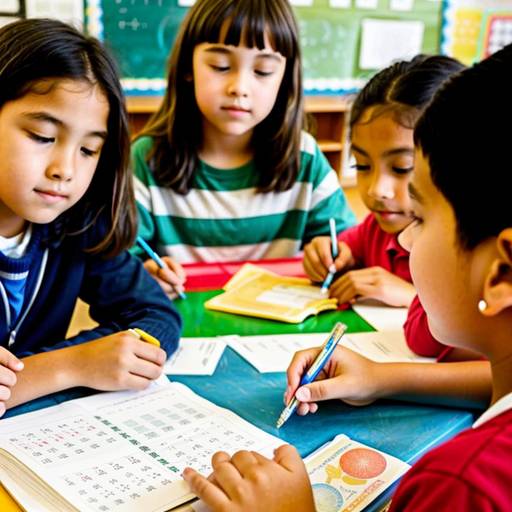
This 4th-grade math lesson focuses on the concepts of money and budgeting. The lesson begins with an engaging discussion about the purposes of money, followed by an introduction to budgeting and its significance in managing finances. Students review different coins and bills before working through an example scenario where they must allocate a budget for a birthday party.
In guided practice, students break into small groups to create a budget for an event using play money, calculating their total expenses against a fixed budget. They then work independently on a budget worksheet, planning their hypothetical event expenditures. The lesson concludes with a few students sharing their budgets and decisions, reinforcing the importance of making thoughtful spending choices. Assessment is conducted through observation and review of the worksheets, while a follow-up activity encourages students to track their spending habits at home. This approach promotes collaboration, critical thinking, and real-world application of math skills.
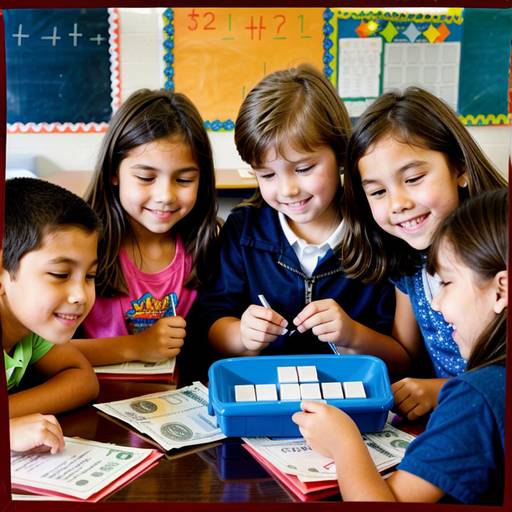
In this 3rd-grade math lesson, students will explore the concepts of money management and budgeting through hands-on activities. The lesson begins with an engaging discussion about budgeting and the importance of managing money wisely. Students will learn to identify and count various coins and bills, followed by practical budgeting scenarios where they will create their own budgets based on a fictional allowance.
Through guided practice, students will use play money to make selections from a classroom store filled with items of varying costs, filling out worksheets as they keep track of their spending and savings. During independent practice, students will design their own budget based on their preferences and learn to complete a budgeting worksheet without exceeding their allowance. The lesson concludes with a sharing session, where students can present their budgeting choices and reflect on their learning.
Assessment will be conducted through completed worksheets and participation in discussions and activities. Extensions will be offered to deepen understanding, while modifications will ensure all students can engage meaningfully with the material. By the end of the session, students will gain foundational skills in recognizing, counting, and budgeting money, setting them up for future financial literacy.
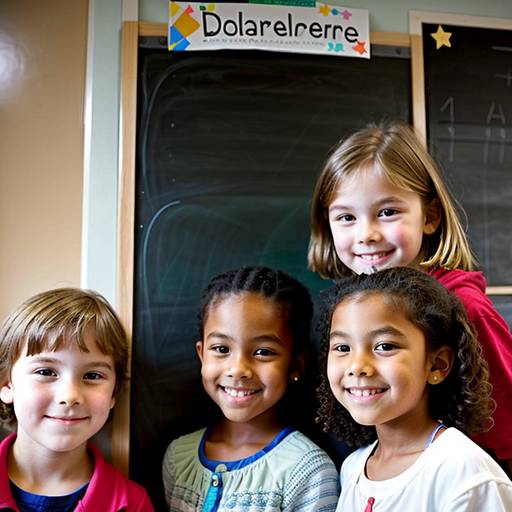
The lesson plan focuses on introducing 1st-grade students to the concepts of money, specifically coins and their values. It aims to help students identify different types of coins—pennies, nickels, dimes, and quarters—and understand how to count them. The lesson begins with an engaging discussion on money and its purpose, followed by direct instruction where students learn the names, images, and values of each coin.
In the guided practice segment, students group and count their coins collectively, promoting collaboration and reinforcing their counting skills. The highlight of the lesson is an interactive "store" activity, where students can buy items priced at 1-10 cents using play money. This hands-on experience allows them to apply their counting knowledge in a real-world context.
The lesson concludes with a group discussion where students share their experiences and what they learned. Assessment includes observing students during the activity and collecting worksheets to evaluate their understanding of coin identification and counting. Additionally, differentiation strategies are included to support a range of learning needs. Overall, the lesson combines direct instruction, practice, and interactive engagement to create a comprehensive learning experience centered around money.
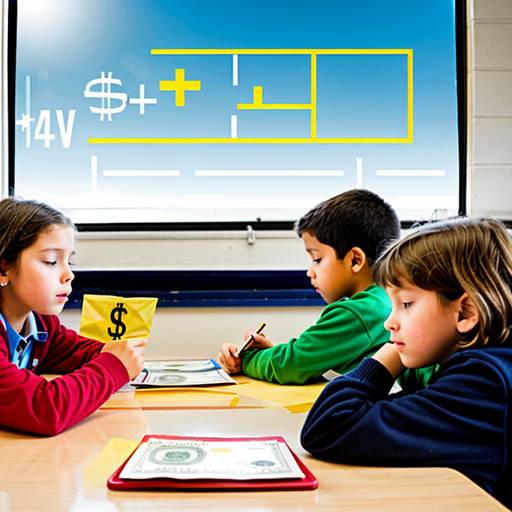
In this engaging 60-minute math lesson for 2nd graders, students will explore the fundamentals of money, specifically focusing on identifying and valuing different coins. The lesson begins with a discussion about the role of money in everyday life and an introduction to the various types of coins—pennies, nickels, dimes, and quarters. Through interactive activities, students will categorize and total real or play coins in small groups, reinforcing their understanding of coin values.
Following this, they will complete worksheets featuring simple addition problems involving coins, allowing them to apply their knowledge in a structured format. The hands-on component of the lesson will involve a classroom store setup where students can use play money to "purchase" items, further practicing counting and making financial transactions.
The lesson concludes with a reflection session that provides students an opportunity to share what they learned, along with an exit ticket task that reinforces their understanding. Throughout the lesson, the teacher will assess student engagement and comprehension, providing support as needed and offering differentiated activities for varying skill levels. This comprehensive approach ensures that students not only grasp the concept of money but also gain practical skills in handling it.

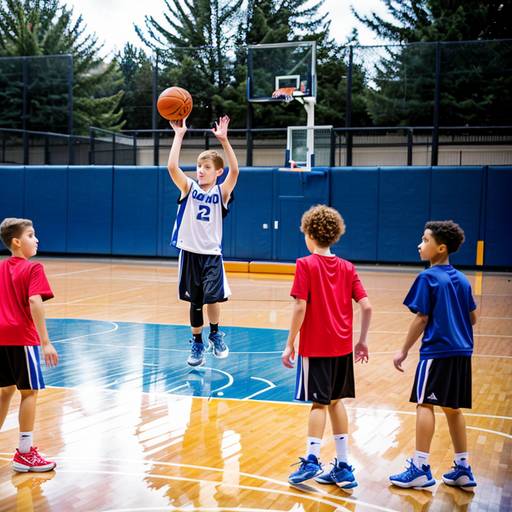
In this 60-minute physical education lesson for 4th-grade students, the focus is on introducing essential basketball skills: dribbling, passing, and shooting. The session begins with a warm-up that includes jogging and dynamic stretches, followed by a brief discussion about the objectives and basic rules of basketball.
Students rotate through three skill stations where they practice dribbling through a cone course, executing chest and bounce passes with partners, and refining their shooting technique from various distances. Each station lasts about 10 minutes, allowing students to develop their skills progressively.
After skill practice, the class splits into two teams for a mini-game that emphasizes teamwork and the skills practiced. Students are encouraged to communicate and work together on the court, with a guideline of limited dribbles to facilitate passing.
Finally, the lesson concludes with a cool-down involving walking and stretching, followed by a group reflection where students share their experiences and insights about teamwork and skills in basketball. Throughout the lesson, the instructor observes and provides feedback, ensuring safety and encouraging effort and improvement among all students. Modifications are available for those who may need additional support or adaptations.
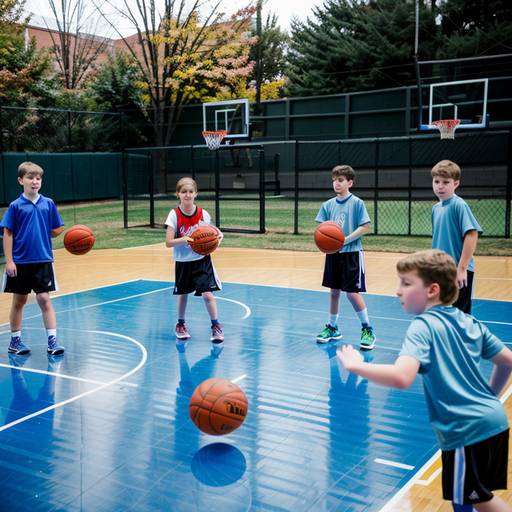
This 5th-grade Physical Education lesson focuses on teaching students fundamental basketball skills, including dribbling, passing, and shooting. The session begins with a dynamic warm-up to prepare students physically while introducing them to basic game concepts and rules. Students participate in skill drills where they practice dribbling using both dominant and non-dominant hands, various passing techniques with a partner, and shooting form using the B.E.E.F. method.
Following the skill development phase, students are divided into small teams for a modified half-court game that emphasizes teamwork and communication, with an emphasis on passing before attempting to shoot. The lesson concludes with a cool-down period involving stretching and group discussion, allowing students to reflect on their skills, teamwork, and sportsmanship throughout the activities. Assessment occurs through observation and student feedback. Adaptations are available for learners of varying skill levels to ensure an inclusive environment where everyone can participate and improve.

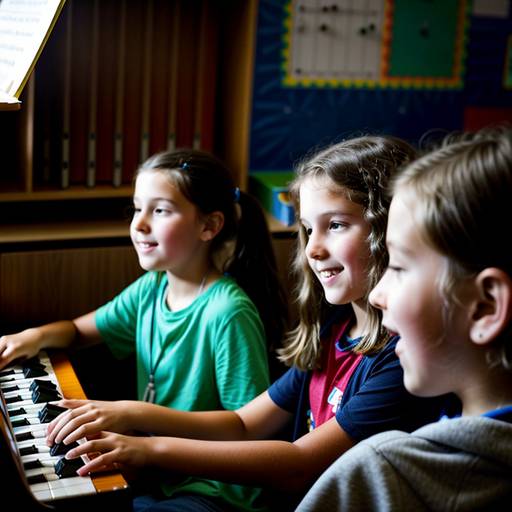
In this 45-minute music lesson for 3rd graders, students will explore the concept of dynamics in music, learning about the terms forte (loud), piano (soft), mezzo forte (moderately loud), and mezzo piano (moderately soft). The lesson begins with an engaging discussion about dynamics, followed by a listening activity where students identify these dynamic changes in various musical clips.
Students will then break into small groups to create and present rhythm patterns using different dynamics with instruments provided. Afterward, they'll engage their voices in a creative exercise where they compose a short musical phrase that incorporates at least two dynamics, using movement to illustrate the changes.
The lesson concludes with a class discussion that highlights how dynamics influence the emotional expression in music. Student participation, both in group activities and their presentations, will be observed to assess their understanding and implementation of dynamics. For an extension, students will be encouraged to identify dynamics in their favorite songs and share their findings in the next class.
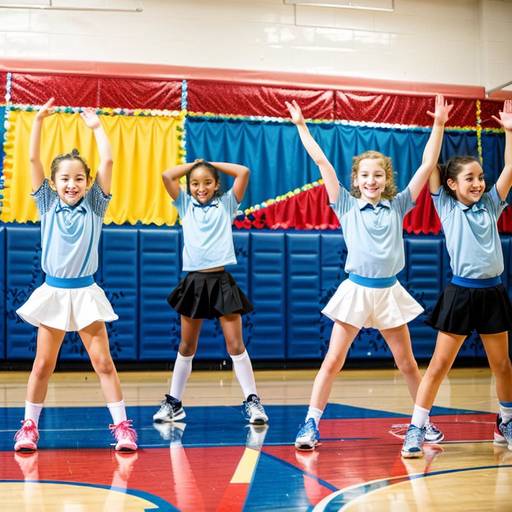
The lesson plan focuses on developing coordination and balance skills for 4th-grade students through engaging, dynamic activities. The session begins with a warm-up that includes jumping jacks and dynamic stretches to prepare students for physical activity.
Students then participate in relay races where they must complete various movements, such as balancing a bean bag on their head and hopping, to promote teamwork and coordination. Following this, they engage in a rhythmic dance activity within hula hoops, where they practice maintaining balance while responding to music and movement prompts.
To conclude, students cool down with gentle stretches and breathing exercises, providing an opportunity for reflection on their experiences with balance and coordination throughout the lesson. The plan also includes observation criteria to assess student performance and offers modifications for varying skill levels. Finally, students are encouraged to practice balance techniques at home to reinforce their learning.