
Filters
Level
Grade
Subject
Subject Area
Subject Topic
Standard(s)
Audience
Keyword
DurationMinutes
Elementary School Lesson Plans

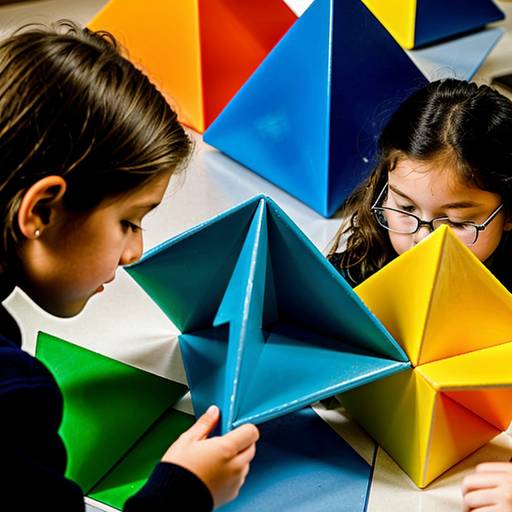
This lesson plan focuses on introducing 5th-grade students to three-dimensional geometric shapes and their properties. The session begins with a discussion about 3D shapes encountered in daily life, using physical models or pictures for visual aid. Students learn to identify different 3D shapes, such as cubes, prisms, and cones, while exploring their characteristics, including faces, edges, and vertices.
In guided practice, students work in small groups to classify shapes based on their properties and share their findings with the class. The hands-on activity allows students to create their own 3D shapes using colored paper, scissors, and glue, reinforcing their understanding of the properties while fostering creativity.
The lesson concludes with a discussion on the presence of 3D shapes in architecture and nature, encouraging students to reflect on their learning. Assessment is based on participation, accuracy in worksheets, and the completed shape project. Follow-up activities may include creating collages of 3D shapes found in their environments and exploring geometry through technology. Overall, the lesson aims to deepen students' understanding of geometry in an engaging and interactive manner.

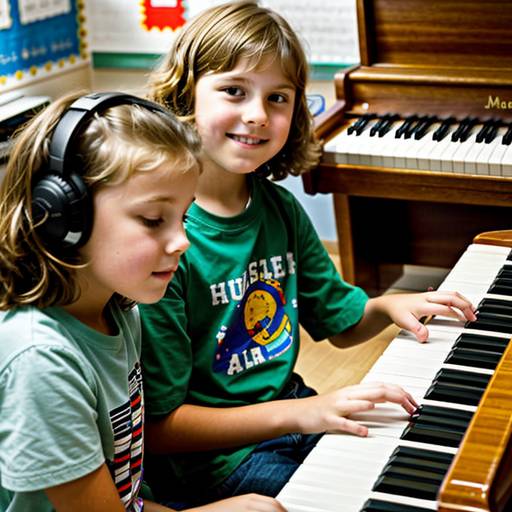
In this 2nd-grade music lesson, students will explore various musical instruments, focusing on keyboard instruments. The session begins with an engaging discussion about instruments and a listening activity featuring different keyboard sounds, such as those from pianos and synthesizers. A demonstration on how to play basic notes on a keyboard follows, illustrating the concepts of pitch and sound variation.
Students will then engage in a hands-on activity where they work in small groups, taking turns playing simple melodies on the keyboard and using rhythm instruments to accompany each other. This collaborative experience promotes teamwork and creativity in music creation. A group discussion will allow students to share their experiences and favorite sounds.
To conclude, the lesson highlights the significance of instruments in music and assigns a fun homework task where students will draw their favorite musical instrument and write a short sentence about it. Assessment will focus on participation, collaboration, and the quality of the homework submitted. Extensions include inviting a local musician for a demonstration and organizing a mini talent show. Overall, the lesson aims to foster an appreciation for music while providing a hands-on learning experience.
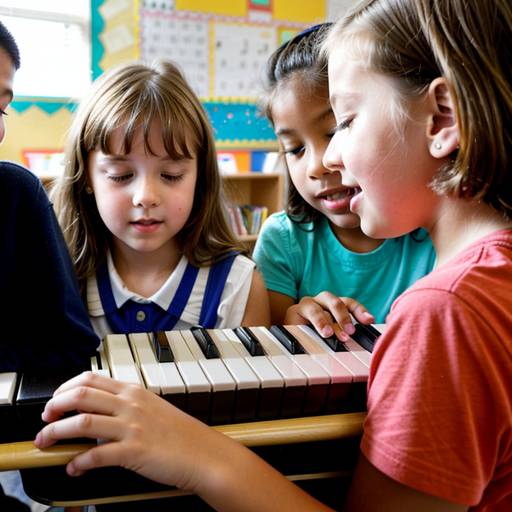
In this 1st-grade music lesson, students will explore the basics of music theory by learning to identify and name different music notes, specifically whole notes, half notes, and quarter notes, as well as their corresponding values. The lesson begins with an introduction to music notes through engaging flashcards, accompanied by rhythmic clapping to reinforce the differences between the notes.
Students will then be introduced to the treble clef and the layout of the musical staff, where they will collaboratively place the notes in the correct order. This visual representation will help them understand the relationship between the notes and their names.
Next, students will participate in an interactive group activity where they are divided into small teams to create rhythmic patterns using the notes they learned. They will practice these rhythms with simple instruments and perform for the class, encouraging peer recognition of the note names as they perform.
The lesson concludes with a review of key concepts and a discussion about their favorite parts, allowing for reflection on the material. Engagement and participation will serve as indicators of their understanding, with opportunities for extension activities to further reinforce the concepts at home or in future classes.
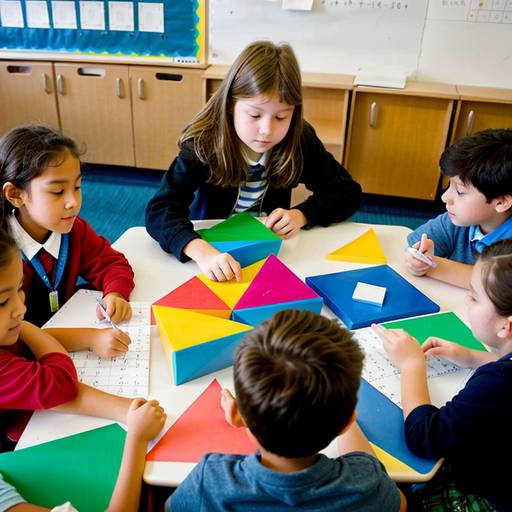
In this 2nd-grade math lesson, students will explore basic geometric shapes—circles, squares, triangles, and rectangles—by identifying and describing their properties. The lesson begins with a discussion about shapes found in their environment, followed by direct instruction where students learn about each shape’s characteristics, including the number of sides and corners.
Guided practice involves sorting a set of shape cutouts into labeled bins, allowing students to reinforce their understanding of shape properties. An engaging scavenger hunt encourages students to find real-world objects that correspond with the shapes they’ve learned. Following this activity, students will draw and label an object they discovered that represents a particular shape.
The lesson concludes with a group sharing session and a review to consolidate the concepts covered. Assessment occurs through observation during activities and by reviewing students' drawings to ensure accurate understanding. Extension activities are provided for further exploration, accommodating diverse learning needs and encouraging creativity in shape representation.
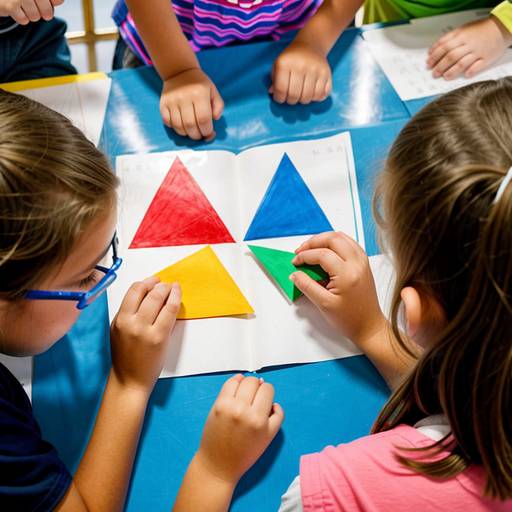
In this 1-hour math lesson for 2nd graders, students will explore geometric shapes and patterns through interactive activities. The session begins with a discussion about common shapes, where students identify and describe characteristics of circles, squares, triangles, and rectangles. They will then work in small groups to sort shapes by different attributes, encouraging collaboration and communication.
Following the sorting activity, students will create their own patterns using pattern blocks or shape tiles, allowing them to experiment with colors and combinations. The lesson will introduce symmetry through a hands-on folding and cutting activity, where students will create symmetrical designs using colored paper.
To conclude, students will share their patterns and symmetry projects, reinforcing their understanding of shapes and real-world applications. Assessment will be based on participation, the creativity of patterns, and the accuracy of symmetrical designs. Extensions will be available for advanced learners, while modifications will support those needing additional assistance, ensuring inclusivity and engagement for all students.
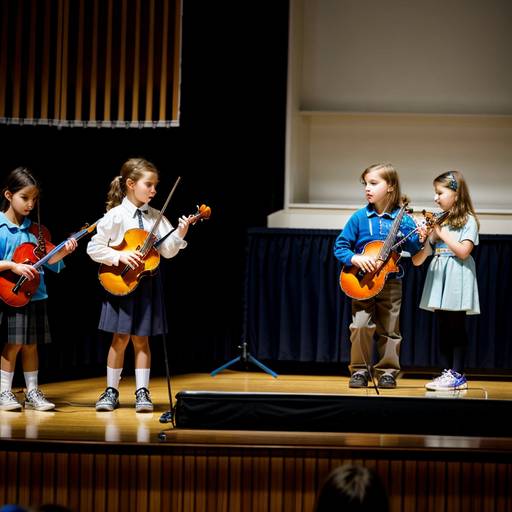
In this 3rd-grade music lesson, students will explore the fascinating world of string instruments. The session begins with an engaging audio clip featuring various string instruments, prompting students to identify and discuss the sounds. After introducing different types of string instruments and explaining how they produce sound through vibrating strings, the teacher will use visual aids and worksheets to reinforce key concepts.
Students will then have the opportunity to hear live demonstrations of selected string instruments, allowing them to experience the unique sounds each instrument produces. The lesson will include a collaborative group activity where students create a simple melody using either real string instruments or through acting out their movements. Each group will present their melodies to the class, fostering creativity and teamwork.
The lesson will conclude with a reflection discussion about favorite instruments and what was learned during the session. Assessment will focus on student engagement, understanding of concepts, and group presentations. Extensions and adaptations are included to accommodate a range of learning needs and interests, ensuring an inclusive and enriching experience for all students.

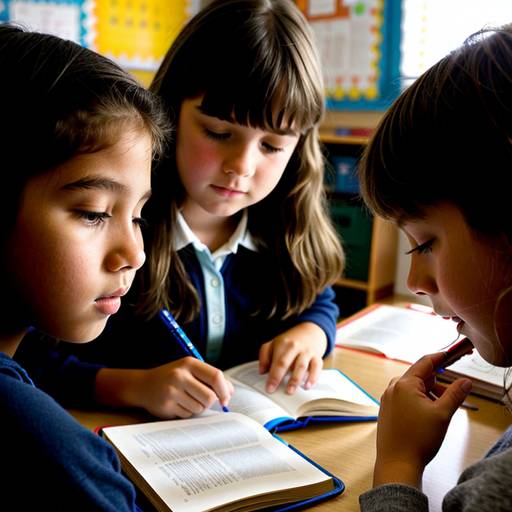
This lesson plan focuses on teaching fifth-grade students effective reading strategies to enhance their comprehension and engagement with texts. The objectives include familiarizing students with four key strategies: predicting, questioning, summarizing, and visualizing. The lesson starts with a discussion on the importance of reading and a modeling session where the teacher demonstrates each strategy using a selected passage.
Following this, students engage in guided practice by forming small groups to read a short story together and create mini-posters summarizing how they applied the strategies. For independent practice, students choose their own chapter book or story to read, applying at least three of the strategies while taking notes. The class concludes with a sharing session, where students reflect on their experiences with the strategies. Assessment is mostly informal through participation, group work, and students’ notes, with a potential exit ticket to gauge individual understanding.
The lesson emphasizes building strong reading habits and the importance of using multiple strategies to become more effective readers.
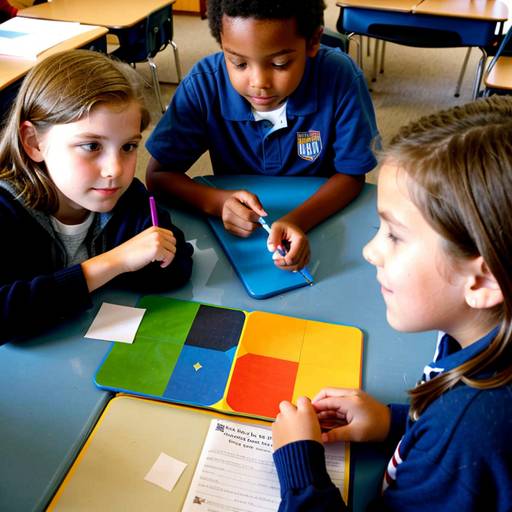
In this 3rd-grade language arts lesson, students will engage in learning about vocabulary and context clues over the course of one hour. The lesson begins with a discussion about the importance of vocabulary, followed by an introduction to context clues as a strategy for uncovering the meanings of unfamiliar words. The teacher models this process using example sentences that include context clues, guiding students in how to infer meanings.
Students will then work in small groups to read a selected text, identify unfamiliar words, and discuss the context clues present in those sentences. Following this collaborative activity, students will complete a worksheet independently, focusing on underlining unfamiliar words and using context clues to deduce their meanings.
The lesson concludes with a group sharing session, allowing students to present one new vocabulary word they discovered and the clues they used to understand it. To reinforce their learning, students are encouraged to find and document new words in their independent reading. Assessment will occur informally through group discussions, shared sentences, and the collected worksheets. Opportunities for differentiation and extensions are included to support varying levels of learners.
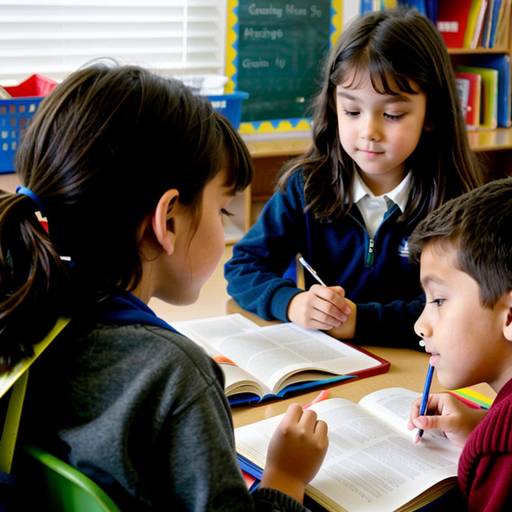
This 1st-grade Language Arts lesson focuses on introducing students to different reading genres, including fiction, nonfiction, poetry, and folk tales. The lesson begins with an engaging discussion to activate prior knowledge about stories and encourages students to share their reading preferences. Through read-aloud sessions featuring one book from each genre, students learn the defining characteristics of each type of literature.
Following the read-alouds, students participate in a genre sorting activity where they work in small groups to match genre descriptions with corresponding book covers. This hands-on activity reinforces their understanding of genre traits. To culminate the lesson, students choose their favorite genre and create illustrations that showcase what they enjoy about it, allowing for creative expression.
The lesson emphasizes active participation and discussion, aiming to deepen students' appreciation of literature by exposing them to various genres. Assessment is conducted through observation, accuracy in the sorting activity, and reviewing the illustrations created by students. Extension activities include the creation of a classroom "genre wall" and sharing favorite books, further promoting a love for reading.
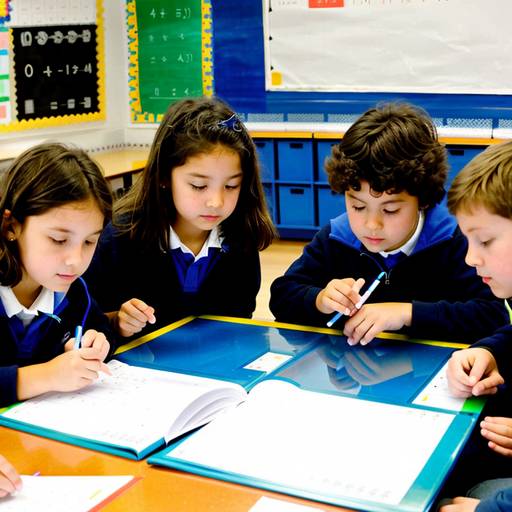
In this 4th-grade math lesson, students will explore the concepts of measurement and volume through a combination of direct instruction, guided practice, and hands-on activities. The lesson begins with a discussion about the importance of measurement in everyday life, followed by an introduction to volume, cubic units, and the formula for calculating the volume of rectangular prisms.
Students will work in pairs to measure the dimensions of various rectangular containers using rulers or measuring tapes and then calculate their volume using the introduced formula. The hands-on component involves filling the measured containers with water or using blocks to observe the concept of volume in action, allowing students to compare their estimations and calculations.
The lesson concludes with a recap of key concepts, a brief formative assessment to gauge understanding, and a preview of the next lesson about measuring volume in irregular shapes. Adaptations are included to support varying levels of learner needs, and extension activities encourage further exploration of measurement and volume through real-world applications.