
Filters
Level
Grade
Subject
Subject Area
Subject Topic
Standard(s)
Audience
Keyword
DurationMinutes
Elementary School Lesson Plans

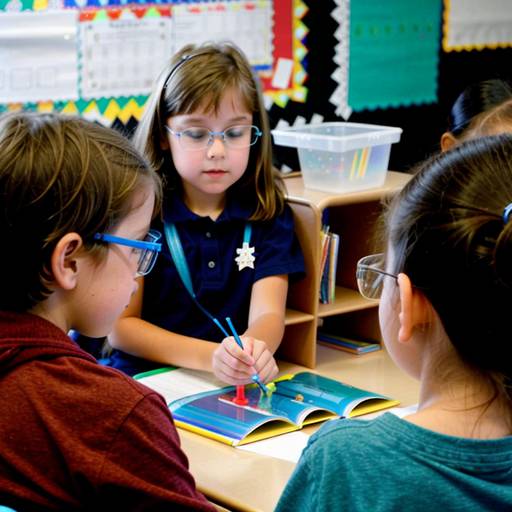
In this 1st-grade science lesson, students will explore the concept of matter, focusing on its three states: solids, liquids, and gases. The lesson begins with an engaging discussion about what matter is, followed by a direct instruction segment where students will learn the characteristics of each state through hands-on interactions with ice cubes (solid), water (liquid), and balloons filled with air (gas).
To reinforce their understanding, students will participate in a sorting activity, where they categorize various objects based on their state of matter, and will visually display these examples on a chart. The lesson concludes with a creative drawing activity, allowing students to illustrate one example of each state. Throughout the session, the teacher will assess student participation and comprehension, ensuring an interactive and engaging learning experience. Reflective practices will help identify areas for future improvement or further exploration of related concepts.

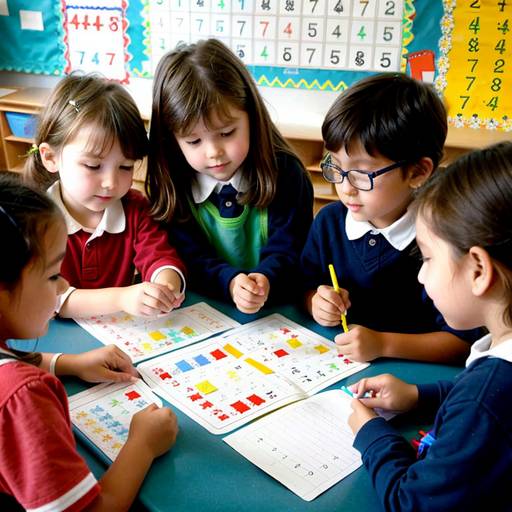
This Kindergarten math lesson focuses on introducing students to the concept of addition with single-digit numbers. The lesson aims to enhance students' understanding and application of addition through engaging activities and hands-on experiences.
The session begins with an engaging story or song about counting to capture students' attention and generates excitement around numbers. During direct instruction, the teacher visually demonstrates addition using drawings and counting manipulatives, allowing students to see the concept in action.
In guided practice, students work with flashcards and participate in small group activities, creating their own addition problems and presenting them to the class. For independent practice, students complete worksheets containing various single-digit addition problems, using manipulatives to assist them if needed.
The lesson concludes with a review of key concepts and a celebration of students' efforts through stickers or stamps. Throughout the lesson, the teacher assesses understanding through observation and worksheet reviews, providing adaptations for different learning needs. Overall, this engaging lesson fosters foundational math skills in a creative and interactive learning environment.
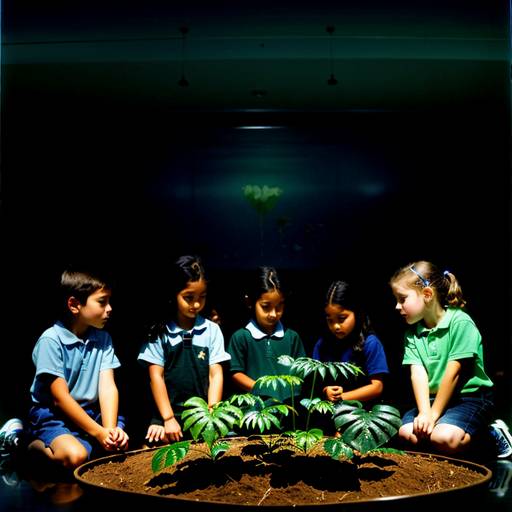
In this first-grade science lesson, students will explore the essential needs of plants, including sunlight, water, soil, and air, while learning to identify the different parts of a plant. The lesson begins with an engaging discussion on what plants require to survive, followed by hands-on activities.
Students will receive potted plants, where they will label the parts—roots, stem, leaves, and flower—while closely observing them with magnifying glasses. Next, they will plant seeds in clear plastic cups filled with soil, watering them and discussing optimal sunlight placement.
The lesson concludes with a group discussion to review key concepts and encourage students to share their excitement about nurturing their plants at home. Assessment will focus on students' participation in activities and their ability to illustrate and label their plants. Extensions, such as creating a classroom garden or reading related stories, can further enhance the learning experience. Safety precautions will be emphasized to ensure a safe, engaging environment for all students.

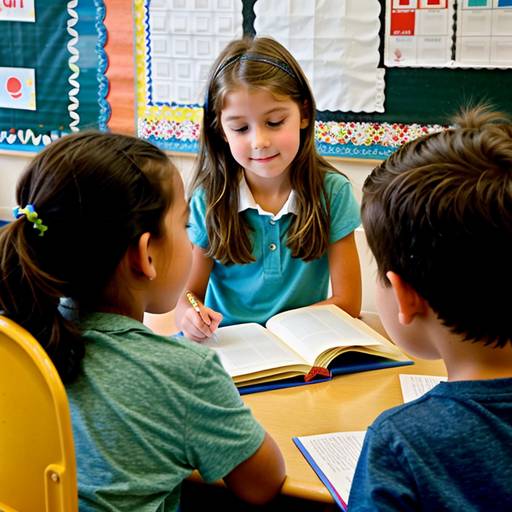
This first-grade language arts lesson plan focuses on introducing students to two primary reading genres: fiction and non-fiction. The lesson begins with a class discussion about what students enjoy about reading, followed by a read-aloud session featuring both a fiction story and a non-fiction book. Through guided questions, students explore the characteristics that differentiate the two genres. A genre sorting activity allows students to work in pairs to categorize flashcards into fiction and non-fiction, reinforcing their understanding of the concepts.
Students then reflect on their learning by creating a graphic organizer where they draw and describe their favorite book from each genre. The lesson concludes with a sharing session that highlights students' preferences, reinforcing the idea that both genres offer unique reading experiences. Assessment is based on student participation and the completion of their graphic organizers. Extensions include a genre-themed reading corner and monthly genre explorations, encouraging ongoing engagement with diverse reading materials.
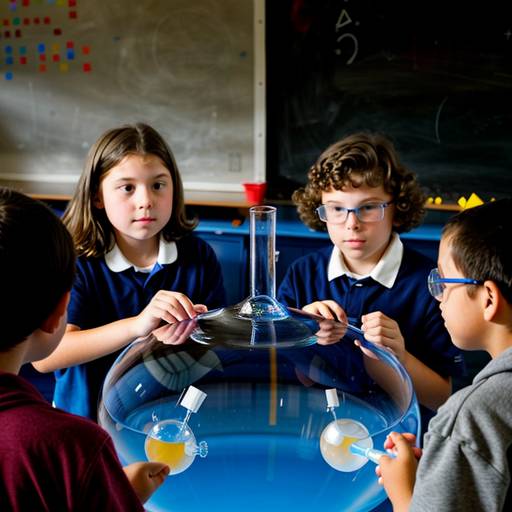
This 5th-grade science lesson focuses on teaching students about the three states of matter: solids, liquids, and gases. The objective is for students to understand the properties of each state and categorize various materials accordingly. The lesson begins with an engaging video that illustrates everyday examples of the different states of matter, followed by a discussion to elicit students' prior knowledge.
Direct instruction covers the definitions and properties that distinguish solids, liquids, and gases. Students then participate in hands-on experiments where they observe the melting of ice into water and the boiling of water into steam, documenting their observations and measurements. Additionally, they classify a variety of materials as solids, liquids, or gases, reinforcing their learning through practical application.
The class discussion at the end encourages students to share their findings and summarize what they have learned. Assessment includes monitoring participation during activities and reviewing completed worksheets. Differentiation strategies are included to support diverse learners, and extensions are provided for those needing additional challenges. Overall, the lesson aims to foster a deeper understanding of matter and its transformative properties through interactive and engaging methods.
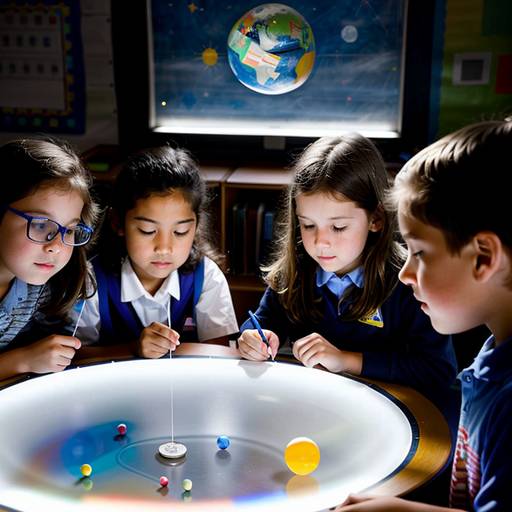
In this 60-minute lesson for 2nd graders, students will explore the concept of matter and its different states: solids, liquids, and gases. The lesson begins with a discussion to define matter and its characteristics, encouraging students to share examples from their experiences. They will then work in small groups to classify various objects provided, allowing them to engage in hands-on activities involving water to observe the properties of liquids.
Following that, the teacher will demonstrate how matter can change states using ice melting into water and boiling water producing steam. This visual and interactive approach helps solidify students' understanding of matter. In the final part of the lesson, students will create simple models of matter using Popsicle sticks, representing a solid, liquid, or gas, and share their creations with the class.
To assess understanding, students will complete an exit ticket that includes drawing examples of each state of matter and writing a brief description of what matter is. The lesson emphasizes exploration, observation, and group collaboration, while providing opportunities for differentiation to cater to varying learning needs. As an extension, students can conduct a simple home experiment to observe changes in matter, fostering a connection between classroom learning and real-world applications.

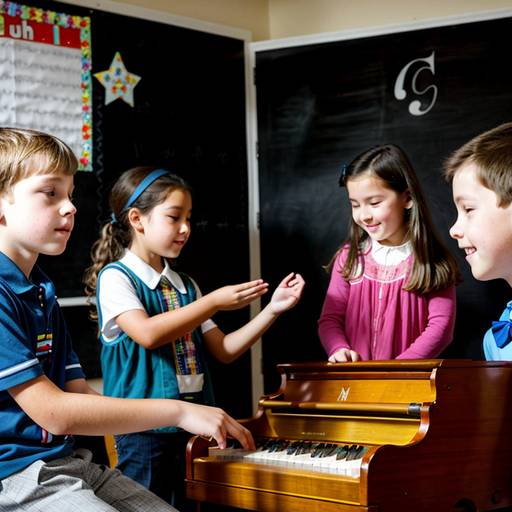
In this 2nd grade music lesson, students will explore the world of music history and notable composers. The lesson begins with an introduction to the concept of composers and a discussion about how music evokes emotions. Students will engage in listening activities where they identify composers based on short audio clips of their famous works, prompting discussions about the feelings these pieces convey.
Moving on, students will express their interpretations of the music through movement, dancing in ways that reflect the different moods of the pieces they hear. They will then create their own artwork inspired by a favorite composer or composition, using crayons or markers to visualize how the music makes them feel.
The lesson concludes with an opportunity for students to share their drawings and thoughts with the class, reinforcing their understanding of the relationship between music and emotion. Throughout the lesson, participation and the creative output of students will be assessed to gauge their grasp of the material. As an extension, students are encouraged to listen to various musical pieces at home and share their favorites in future classes, promoting an ongoing appreciation for music history.
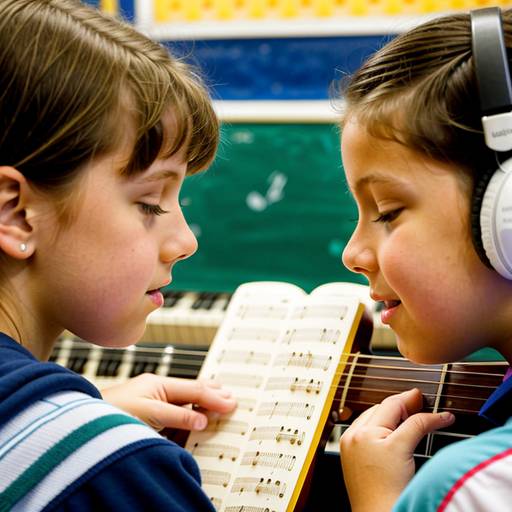
In this 5th-grade music lesson, students will explore the fundamentals of music theory by focusing on note names and their corresponding positions on the musical staff. The lesson begins with a discussion about the role of notes in music, followed by engaging activities that involve recognizing and identifying notes (A through G) on the staff. Students will learn about whole notes, half notes, and quarter notes through clapping exercises that highlight rhythmic concepts.
The hands-on portion of the lesson allows students to work in small groups, using keyboards or xylophones to practice playing or singing assigned notes. They will create short melodies while incorporating diverse rhythms. A fun assessment activity, “Note Name Challenge,” encourages students to demonstrate their knowledge by identifying notes and showcasing their sounds.
The lesson concludes with a reflection on what they learned about note names and their significance in music. Extensions and adaptations are included to enhance learning outcomes for all students, ensuring a comprehensive understanding of music theory fundamentals.
This lesson aims to foster an engaging and interactive learning environment that empowers students to develop a solid foundation in music theory.
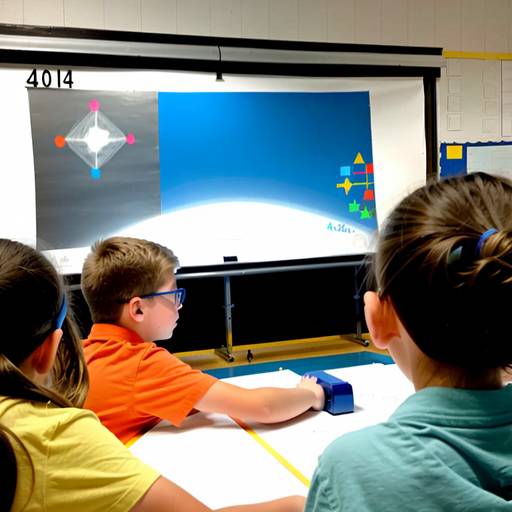
In this 3rd-grade science lesson, students will explore the concepts of motion and the effects of forces on movement through hands-on activities. The lesson begins with a discussion to engage students and introduce key concepts such as force, speed, and direction. An interactive demonstration using toy cars helps illustrate how different forces can affect motion.
Students will then be divided into small groups to conduct experiments using ramps of various angles and toy cars. They will measure the distance traveled and time taken for the cars to roll down the ramps, recording their observations. This hands-on activity allows them to directly observe how changes in ramp angle impact speed and distance.
Following the experiments, the class will come together to discuss their findings, encouraging critical thinking about the results and the forces at play. Students will reflect on their experiences through drawing and written descriptions.
Assessment will be based on participation, group data discussions, and reflections in their science journals. Extensions of the lesson may include research on inventors related to motion or an introduction to simple machines, with modifications available for diverse learning needs. Overall, the lesson fosters understanding of physical science concepts while promoting teamwork and inquiry-based learning.
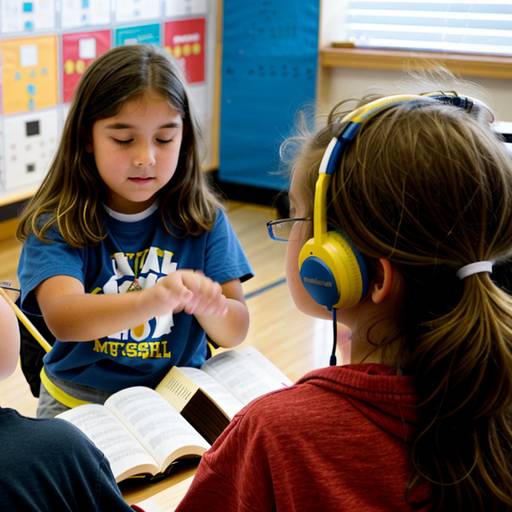
In this engaging music lesson for 3rd graders, students will explore the concepts of musical dynamics, focusing on the terms loud (forte) and soft (piano) as well as the effects of crescendo and decrescendo. The lesson begins with a brief discussion and introduction of terminology, followed by a listening activity where students analyze sound excerpts to identify dynamics and their emotional impact.
Next, students will work in small groups using percussion instruments to create their own short musical pieces, incorporating dynamic variations. Each group will perform for the class, demonstrating their understanding of dynamics and sharing how these elements enhance their performances.
The lesson concludes with a reflection where students revisit key terms and share their favorite parts of the experience. They will also complete worksheets featuring dynamic symbols for further reinforcement. Observations during group work, performances, and the completed worksheets will serve as assessment tools to gauge students’ understanding of music dynamics. Accommodations will be made for those needing different forms of expression, ensuring all students can participate meaningfully.