
Filters
Level
Grade
Subject
Subject Area
Subject Topic
Standard(s)
Audience
Keyword
DurationMinutes
Elementary School Lesson Plans

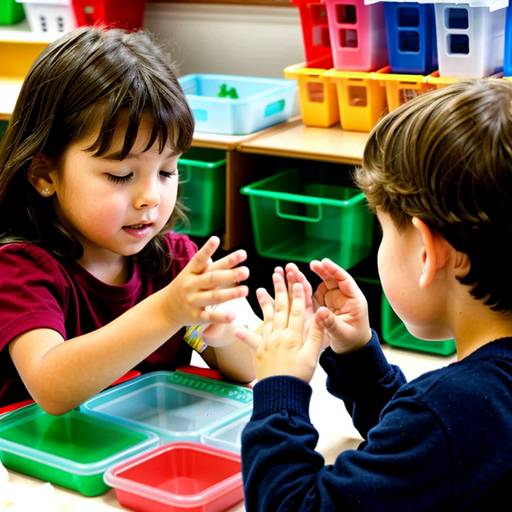
In this kindergarten math lesson, students will explore the concept of addition through hands-on activities using manipulatives. The lesson begins with a warm-up counting song to engage students and introduce the idea of addition through practical examples. Educators will model simple addition problems using visual aids, demonstrating how to group and count manipulatives to find sums.
Students will then work in pairs to solve assigned addition problems collaboratively with manipulatives, fostering communication and teamwork. Following this guided practice, they will complete worksheets where they draw and represent their addition problems using the manipulatives, reinforcing their understanding of the concept.
To conclude, the class will review key takeaways and students will create a simple exit ticket by writing their own addition problems and illustrating them. Throughout the lesson, observation and informal assessments will help gauge students' grasp of addition, with differentiation strategies to support varying levels of ability. This engaging approach promotes foundational math skills while making learning enjoyable and interactive.
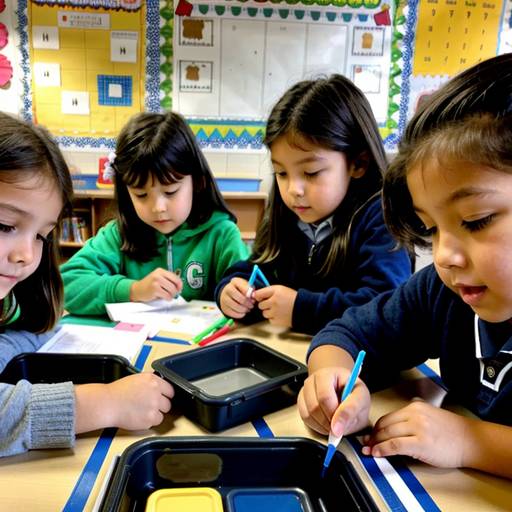
In this 1st grade math lesson plan, students learn about addition through engaging word problems related to animals. The lesson begins with a warm-up discussion about favorite animals, followed by an introduction to addition using visual aids. The teacher demonstrates how to solve a simple word problem on the board, emphasizing comprehension and problem-solving strategies.
Students then work collaboratively in small groups to solve a series of addition word problems using counters and their “Critter Count” posters. This guided practice is followed by independent work where each student completes a worksheet with various addition problems.
Throughout the lesson, students are encouraged to share their solutions and reasoning, reinforcing their understanding of addition in real-life scenarios. The teacher assesses student comprehension through observations and collected worksheets, while also providing differentiated support to meet individual learning needs. Overall, the lesson aims to build foundational addition skills in a fun and interactive way.
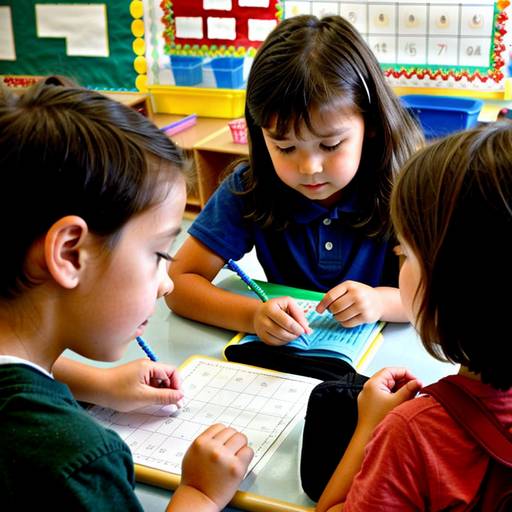
In this kindergarten math lesson, students will explore the concept of addition using single-digit numbers in an engaging and interactive way. The lesson begins with an introduction to addition, where students are encouraged to share their understanding and experiences with adding. Following a direct instruction segment, the teacher demonstrates addition using visuals and manipulatives, such as animal cut-outs.
Students then participate in guided practice by creating their own addition problems in pairs and sharing them with the class. For independent practice, they will complete worksheets featuring images of animals, which reinforces their counting and addition skills. The lesson concludes with a group discussion to review their learning and a fun song to celebrate their understanding of addition.
Assessment will be conducted through observation during activities and by reviewing completed worksheets, ensuring a comprehensive grasp of the concepts taught. Adaptations are available for both advanced learners and those needing additional support, ensuring that all students can engage with the material meaningfully.
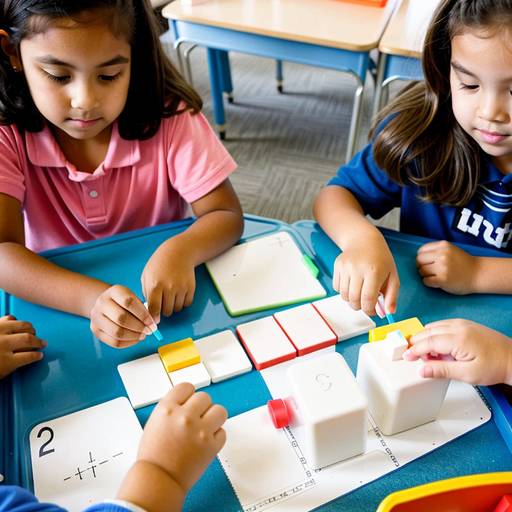
In this 2nd-grade math lesson, students will engage with the concept of addition through hands-on activities using various manipulatives. The lesson begins with a review of addition, followed by a demonstration where the teacher models how to combine groups using physical objects. Students will then work in small groups, using manipulatives to represent and solve simple addition problems from provided worksheets. After completing the activities, groups will share their findings with the class, reinforcing their understanding through discussion. The lesson concludes with a fun counting game that encourages movement and reinforces the addition concept. Assessment will involve observing student participation and reviewing their completed worksheets, with modifications and extensions available to support diverse learning needs. Overall, this interactive approach aims to make learning about addition engaging and accessible to all students.
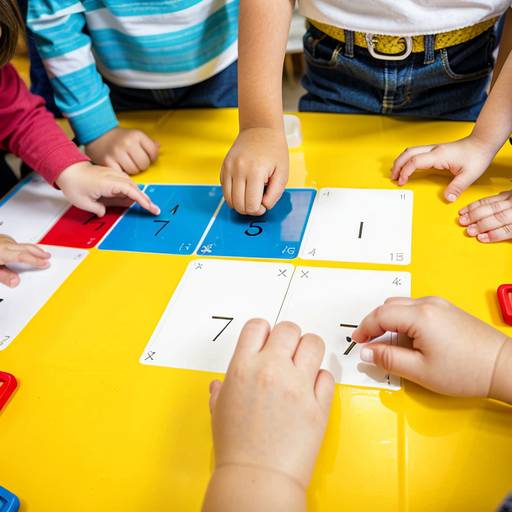
This 1st-grade math lesson focuses on introducing students to the concept of addition using manipulatives to enhance understanding. Over the course of 45 minutes, students will engage in a warm-up discussion to familiarize themselves with addition in real-life contexts. They will explore colorful counters, which will serve as their primary manipulatives for the lesson.
The teacher will model simple addition problems on the whiteboard, demonstrating how to combine groups of counters to find solutions. Students will then partner up to create and solve their own addition problems, utilizing their counters to reinforce the concept. After guided practice, students will complete a worksheet where they draw counters to visualize their answers.
The lesson will conclude with a review of the concepts learned, and students will reflect on their work by writing down an addition problem and its answer as an exit ticket. Assessment will occur through observation and worksheet review, allowing the teacher to gauge student understanding. The lesson includes extensions for advanced learners and modifications for those who need additional support, ensuring a comprehensive approach to teaching addition.
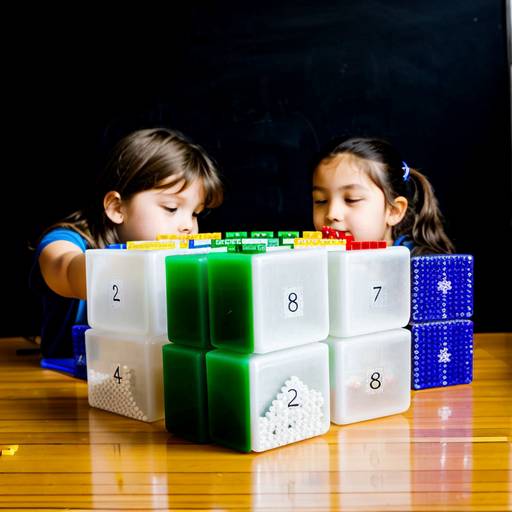
In this 2nd grade math lesson, students will explore the concepts of measurement and weight using both non-standard units and classroom objects. The lesson begins with a discussion about measurement, followed by a hands-on activity where students measure the length of various objects using Unifix cubes, recording their results on worksheets and sharing findings with the class.
Next, students will learn about weight, differentiating it from length, and use a scale to weigh selected objects. They will compare the weights of these items, using terms like "heavier than" and "lighter than." Finally, the class will reconvene to discuss their experiences, reflecting on what they learned about measurement and the importance of using both standard and non-standard units. The lesson aims to engage students in practical applications of measurement while fostering collaboration and critical thinking. Assessment will be based on worksheet completion and group participation, with extensions and differentiation provided to accommodate diverse learning needs.

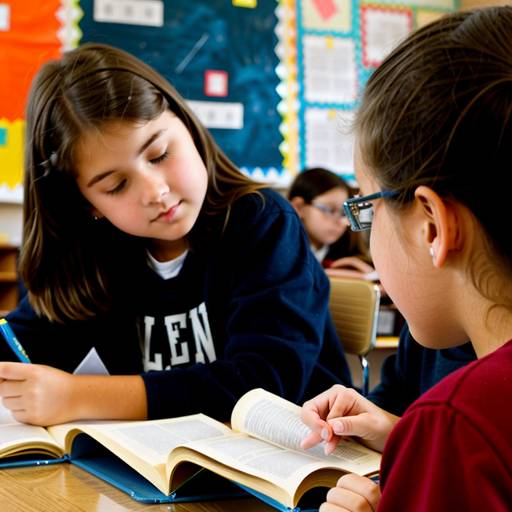
In this 5th-grade language arts lesson, students will learn about expository writing, a style focused on explaining and informing. The lesson begins with engaging students in a discussion about topics they enjoy, setting the stage for understanding how to communicate information effectively. Through a mini-lesson, students will explore the structure of an expository paragraph, which includes a topic sentence, supporting details, and a conclusion. They will analyze example paragraphs to identify these components.
During guided practice, students will fill out graphic organizers to brainstorm topics and supporting details, facilitated by a teacher-led demonstration. Following this, students will independently write their own expository paragraphs based on their chosen topics, applying the structure learned.
The lesson concludes with a peer review activity, where students share their paragraphs and provide constructive feedback to one another. Students will be assessed on their written work based on clarity, structure, and coherence. An extension activity is available for those who finish early to create a visual presentation related to their topic. Throughout the lesson, students will gain a solid understanding of how to write clear and informative expository texts.
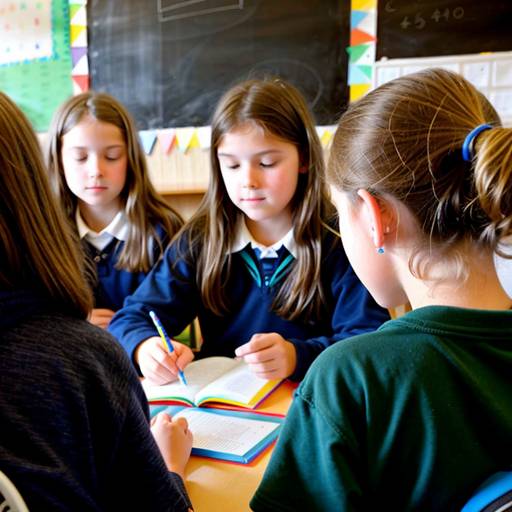
In this 5th-grade language arts lesson, students will explore the components of complete sentences, including subjects, predicates, and various sentence types (declarative, interrogative, imperative, and exclamatory). The lesson begins with a discussion on the importance of complete sentences in communication, followed by direct instruction on sentence structure. Students will engage in guided practice by working in small groups to create sentences using provided subject and predicate strips. This is followed by independent practice where students complete worksheets identifying subjects and predicates and converting sentence types. The lesson concludes with a reflective discussion, and students will be assigned a writing task for homework that involves composing a short paragraph using a variety of sentence structures. Assessments will include observations during group work, review of worksheets, and evaluation of the homework assignment. Extensions are provided for advanced learners and additional resources will be available for those needing extra support.
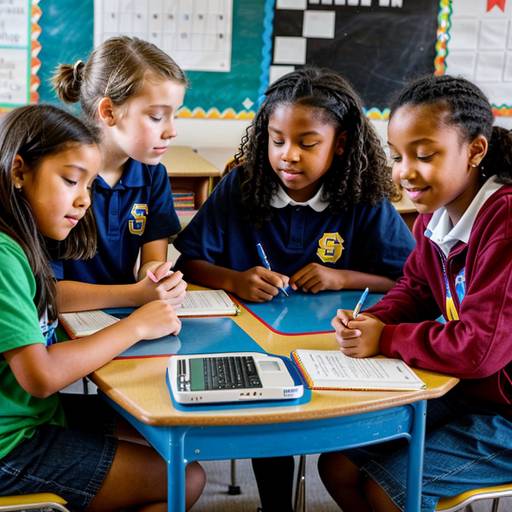
In this 5th-grade language arts lesson plan, students will explore the elements of narrative writing, which include characters, setting, plot, conflict, and resolution. The lesson begins with a warm-up activity where students share memorable personal events with a partner, leading to a class discussion on what makes these moments impactful.
The teacher then introduces the key components of narrative writing by analyzing an example narrative, guiding students to identify its elements. Students will learn to plan their own narratives using a graphic organizer, where they outline their chosen event's details. After completing the organizer, students will share their ideas with a partner for feedback.
Next, students will draft a rough version of their personal narratives in their notebooks, focusing on incorporating sensory details and emotions to engage their readers. The lesson concludes with a wrap-up discussion, where students can share excerpts from their narratives. Assessment will involve monitoring participation, collecting graphic organizers and drafts, and providing feedback on their use of narrative structure and clarity. Extensions and adaptations will be offered to meet diverse learning needs.


In this 2nd-grade physical science lesson, students explore the concepts of motion and forces, particularly focusing on pushes and pulls. The lesson begins with a discussion on various ways students move and introduces key vocabulary related to motion.
Students engage in two hands-on activities: first, experimenting with toy cars to observe how different forces affect their movement. They then form small groups to conduct marble races using rubber bands as a means of propulsion, allowing them to see firsthand how force influences speed and distance. After these activities, students come together to share their observations and contribute to a class chart that summarizes their findings about motion and everyday examples of push and pull.
The lesson concludes with an assessment based on observational insights and a quick reflection activity, encouraging students to express what they learned. Extensions include additional exploration stations and discussions about friction, helping to deepen their understanding of how different factors influence motion. Overall, the lesson aims to foster curiosity and foundational knowledge in physical science through interactive learning experiences.