
Filters
Level
Grade
Subject
Subject Area
Subject Topic
Standard(s)
Audience
Keyword
DurationMinutes
Lesson Plans

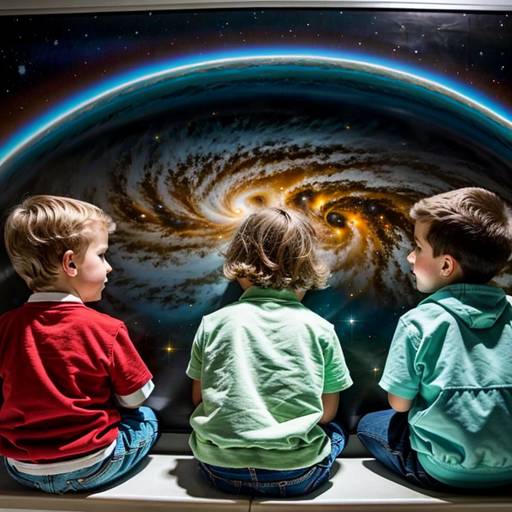
This preschool science lesson introduces young learners to the basic concepts of Earth and Space through engaging storytelling and hands-on activities. It begins with a discussion that sparks children's curiosity about the universe, followed by reading a captivating children's book that explores space, complemented by visuals of planets and stellar phenomena.
Children then participate in a creative craft activity where they design their own solar system using construction paper, encouraging exploration and imaginative thinking about the colors and characteristics of various celestial bodies.
The lesson also includes a sensory experience with light and dark, using a flashlight to illustrate how the sun lights up the day while stars become visible at night.
It concludes with a sharing session, allowing children to present their crafts and express what they enjoyed and learned. The lesson promotes active engagement, creativity, and a sense of wonder about the universe, while assessment methods focus on participation and individual responses. Opportunities for follow-up activities are also suggested to extend learning beyond the classroom.

This lesson plan aims to introduce toddlers to the concepts and characteristics of the four seasons through a variety of engaging activities. The session begins with a welcoming circle, where students share their favorite season, followed by a story time featuring a picture book that highlights seasonal changes. Children then explore seasonal nature items, fostering sensory experiences and discussions about each season's unique features.
In the arts and crafts portion, toddlers create artwork representing their favorite season using construction paper and various craft supplies. Afterward, they participate in movement activities by dancing to seasonal music, allowing them to connect with the content physically. The session concludes with a reflection circle where children share their thoughts and learnings, reinforcing their understanding of seasonal themes. Overall, this lesson provides a hands-on and interactive way for young learners to deepen their appreciation of nature's cyclical changes throughout the year.

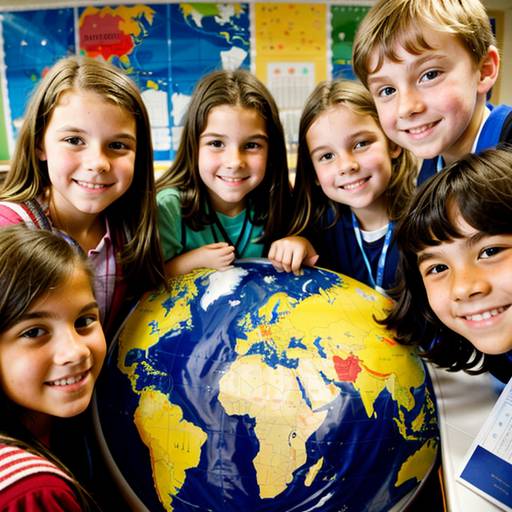
In this engaging 5th-grade social studies lesson, students explore world geography and cultures through collaborative research and creative presentations. Over two class periods, students begin by identifying key geographical features and cultural elements related to various countries. They work in small groups, each focusing on a continent and selecting two countries to research using atlases and digital resources.
The first day involves group discussions, information gathering, and planning for presentations, while the second day focuses on presenting their findings to the class. Students highlight geographical locations, cultural aspects, and notable landmarks of their assigned countries. The lesson concludes with a reflection activity where students share new insights gained from their classmates' presentations. Assessment is based on the effectiveness of the group presentations and individual reflections on learning outcomes. The lesson fosters teamwork, research skills, and a deeper appreciation for global cultures. Additionally, extension activities encourage further exploration and interaction with different cultures.

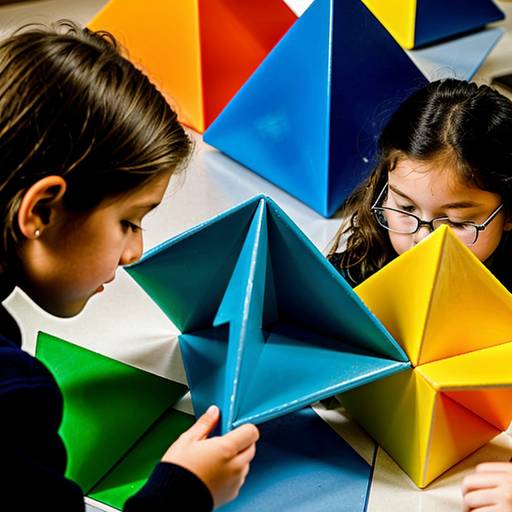
This lesson plan focuses on introducing 5th-grade students to three-dimensional geometric shapes and their properties. The session begins with a discussion about 3D shapes encountered in daily life, using physical models or pictures for visual aid. Students learn to identify different 3D shapes, such as cubes, prisms, and cones, while exploring their characteristics, including faces, edges, and vertices.
In guided practice, students work in small groups to classify shapes based on their properties and share their findings with the class. The hands-on activity allows students to create their own 3D shapes using colored paper, scissors, and glue, reinforcing their understanding of the properties while fostering creativity.
The lesson concludes with a discussion on the presence of 3D shapes in architecture and nature, encouraging students to reflect on their learning. Assessment is based on participation, accuracy in worksheets, and the completed shape project. Follow-up activities may include creating collages of 3D shapes found in their environments and exploring geometry through technology. Overall, the lesson aims to deepen students' understanding of geometry in an engaging and interactive manner.

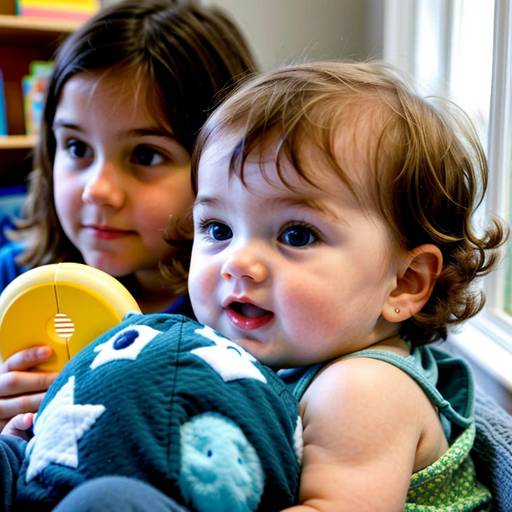
This lesson plan focuses on introducing infants aged 6 to 12 months to the concept of object permanence through engaging activities. The aim is to help infants recognize that objects continue to exist even when they are out of sight. The session begins with a warm-up activity where infants explore a soft toy.
Next, a "hide and seek" game is played, where the toy is concealed under a blanket and then revealed, encouraging the infants to search for it. This is followed by an exploration using a small box containing various toys, allowing infants to discover them while reinforcing the idea that they are still there even when not visible.
To engage the infants further, a sound game is introduced with rattles or crinkly paper, linking sounds to hidden objects. The lesson wraps up with a reflection circle where infants can interact with the soft toy again, and a simple rhyme or song is incorporated for additional engagement.
Throughout the lesson, caregivers are encouraged to observe and interact, helping to support the infants’ developing understanding of object permanence. In addition, optional extensions are suggested to further reinforce the concept at home through books and everyday interactions.

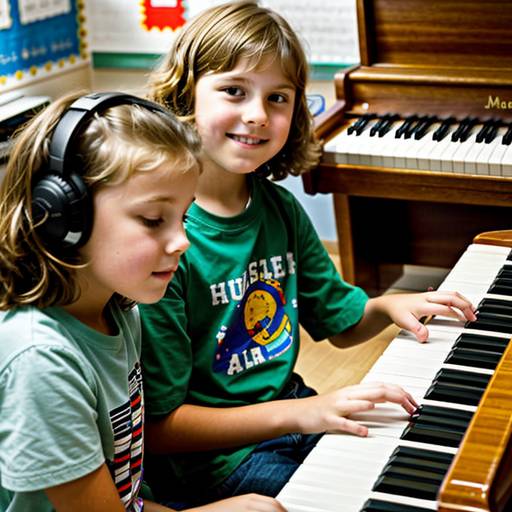
In this 2nd-grade music lesson, students will explore various musical instruments, focusing on keyboard instruments. The session begins with an engaging discussion about instruments and a listening activity featuring different keyboard sounds, such as those from pianos and synthesizers. A demonstration on how to play basic notes on a keyboard follows, illustrating the concepts of pitch and sound variation.
Students will then engage in a hands-on activity where they work in small groups, taking turns playing simple melodies on the keyboard and using rhythm instruments to accompany each other. This collaborative experience promotes teamwork and creativity in music creation. A group discussion will allow students to share their experiences and favorite sounds.
To conclude, the lesson highlights the significance of instruments in music and assigns a fun homework task where students will draw their favorite musical instrument and write a short sentence about it. Assessment will focus on participation, collaboration, and the quality of the homework submitted. Extensions include inviting a local musician for a demonstration and organizing a mini talent show. Overall, the lesson aims to foster an appreciation for music while providing a hands-on learning experience.
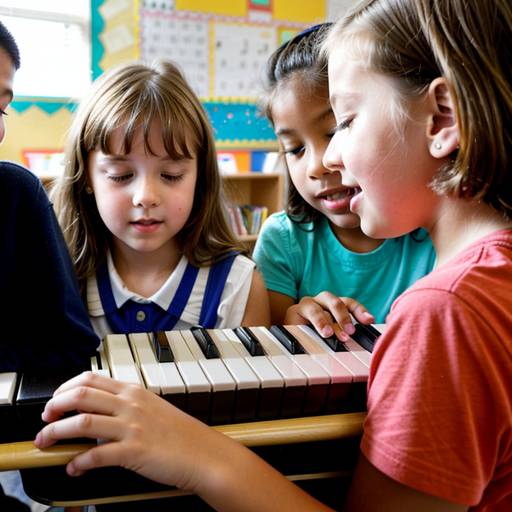
In this 1st-grade music lesson, students will explore the basics of music theory by learning to identify and name different music notes, specifically whole notes, half notes, and quarter notes, as well as their corresponding values. The lesson begins with an introduction to music notes through engaging flashcards, accompanied by rhythmic clapping to reinforce the differences between the notes.
Students will then be introduced to the treble clef and the layout of the musical staff, where they will collaboratively place the notes in the correct order. This visual representation will help them understand the relationship between the notes and their names.
Next, students will participate in an interactive group activity where they are divided into small teams to create rhythmic patterns using the notes they learned. They will practice these rhythms with simple instruments and perform for the class, encouraging peer recognition of the note names as they perform.
The lesson concludes with a review of key concepts and a discussion about their favorite parts, allowing for reflection on the material. Engagement and participation will serve as indicators of their understanding, with opportunities for extension activities to further reinforce the concepts at home or in future classes.
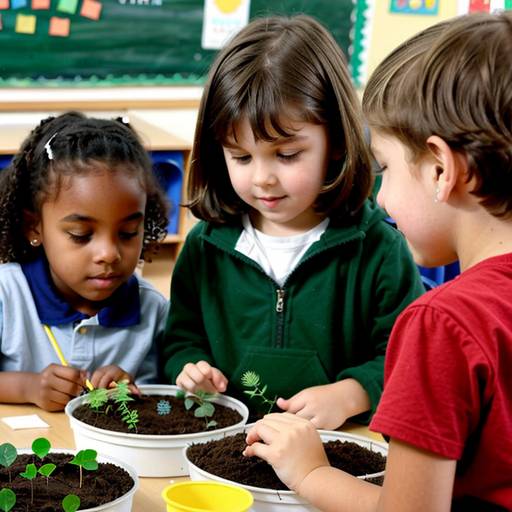
This preschool science lesson focuses on introducing young children to the world of plants, emphasizing their basic parts and the needs for growth. The session begins with an interactive discussion about what plants require, accompanied by visual aids like picture cards. Children engage in hands-on exploration with real plants, using magnifying glasses to observe various plant parts, including roots, stems, leaves, and flowers.
An outdoor discovery walk allows students to observe and identify different types of plants, encouraging them to express their observations. After returning to the classroom, children participate in a planting activity where they pot seeds, learning about the planting process and how to care for their plants at home.
The lesson concludes with a creative reflection, where children draw their favorite plant experiences and share their artwork with their peers. Overall, the lesson encourages curiosity, observation skills, and a basic understanding of plant biology in a fun and interactive manner. Assessments focus on student engagement and comprehension through participation and discussions.

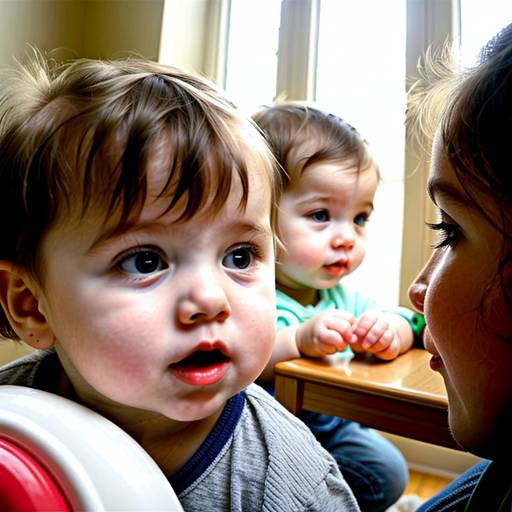
This lesson plan focuses on stimulating infants' sense of smell through a series of engaging activities designed for caregivers and their little ones aged 6-12 months. The session begins with a brief introduction to the importance of scent, followed by exploration stations featuring a variety of scented samples such as herbs, citrus, spices, and sweets. Caregivers will assist infants in sniffing and reacting to the scents, fostering sensory awareness and bonding. The group then participates in a fun interactive game, where infants select scent containers, providing opportunities for guessing and playful reactions. The lesson concludes with a calming activity that incorporates a simple song about smelling, encouraging caregivers to continue exploring scents at home. Observation of infants' responses and feedback from caregivers will be used to assess engagement and learning outcomes. Overall, this experience aims to enhance sensory development and strengthen caregiver-infant connections.
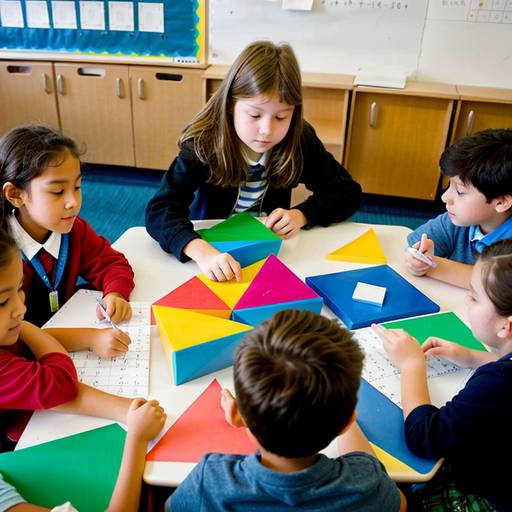
In this 2nd-grade math lesson, students will explore basic geometric shapes—circles, squares, triangles, and rectangles—by identifying and describing their properties. The lesson begins with a discussion about shapes found in their environment, followed by direct instruction where students learn about each shape’s characteristics, including the number of sides and corners.
Guided practice involves sorting a set of shape cutouts into labeled bins, allowing students to reinforce their understanding of shape properties. An engaging scavenger hunt encourages students to find real-world objects that correspond with the shapes they’ve learned. Following this activity, students will draw and label an object they discovered that represents a particular shape.
The lesson concludes with a group sharing session and a review to consolidate the concepts covered. Assessment occurs through observation during activities and by reviewing students' drawings to ensure accurate understanding. Extension activities are provided for further exploration, accommodating diverse learning needs and encouraging creativity in shape representation.