
Filters
Level
Grade
Subject
Subject Area
Subject Topic
Standard(s)
Audience
Keyword
DurationMinutes
Lesson Plans

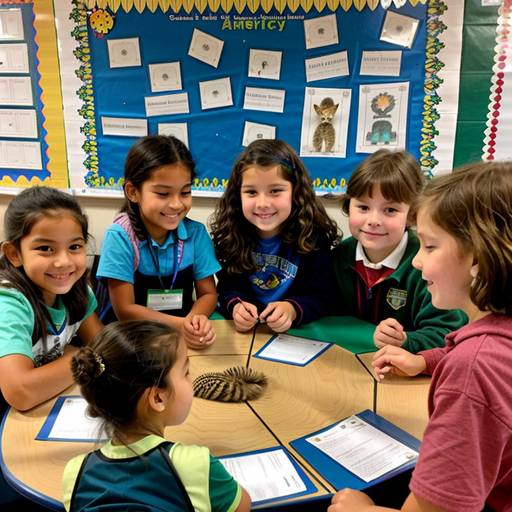
In this engaging 1st-grade science lesson, students will explore the fascinating world of animals, focusing on categorizing them into five main groups: mammals, birds, reptiles, amphibians, and fish. The lesson begins with a group discussion to elicit prior knowledge, followed by a read-aloud of a book that highlights different animals and their habitats. Students will work in small groups to sort animal picture cards into the appropriate categories, fostering teamwork and discussion. After sharing their findings with the class, they will engage in a creative art activity where they draw and label their favorite animal along with one of its basic needs. The lesson concludes with a reflection on what they have learned. Assessment will involve observing group work and reviewing students' drawings for comprehension. Extensions may include inviting a guest speaker or planning a field trip to deepen their understanding of animal care and habitats. Differentiation strategies will be included to support diverse learners. This lesson aims to spark curiosity and a sense of wonder about the animal kingdom while introducing essential life science concepts.

This preschool science lesson aims to introduce young children to various animals and their natural habitats, fostering curiosity and appreciation for wildlife. The lesson begins with a group discussion where students share their favorite animals and explore their characteristics and habitats. Through engaging activities, children will examine animal picture cards, learn about different animal types, and identify corresponding habitats such as forests, oceans, deserts, and wetlands.
Students will then participate in a collaborative drawing activity, creating a mural that integrates animals and elements from various environments. If time allows, an optional outdoor nature walk or scavenger hunt will enhance their observational skills by allowing them to explore local nature. The lesson concludes with a discussion about the importance of protecting wildlife and their habitats.
Assessment will be based on student participation and their ability to describe the animals and habitats discussed. Extensions may include a class journal for further exploration of animals or an invitation to a local wildlife expert. Overall, this lesson is designed to be fun and interactive, encouraging a deeper understanding of the natural world.

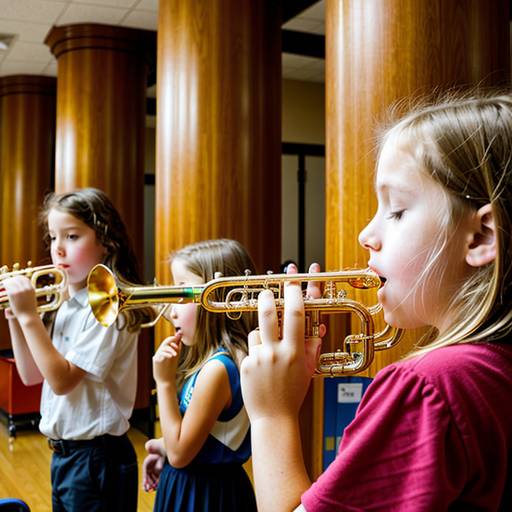
This lesson plan introduces fourth-grade students to the world of wind instruments, focusing on their identification, sound production, and musical significance. The session begins with an engaging discussion about students' experiences with wind instruments, accompanied by visual and audio resources to enhance their understanding. Students listen to pieces of music that feature various wind instruments, allowing them to identify sounds and discuss the characteristics of each instrument.
Following this, a demonstration of selected instruments provides a hands-on learning experience, where students have the opportunity to try out simple notes on accessible instruments. The class is then divided into small groups, each tasked with researching a particular wind instrument and preparing a brief presentation to share with their peers.
The lesson concludes with a whole-class reflection, encouraging students to express their thoughts on the instruments they found most interesting. A worksheet is provided for individual assessment, allowing students to consolidate their learning by answering questions and illustrating a wind instrument they favor. Opportunities for further exploration are suggested, such as bringing in instruments from home or planning a day for performances, to deepen students' engagement with the topic.
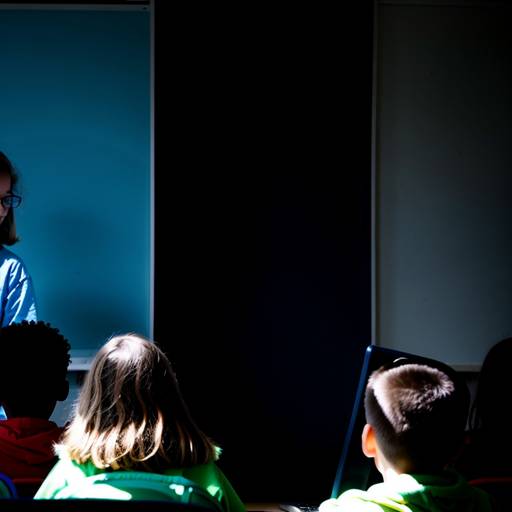
This lesson plan is designed for 3rd-grade students to explore the concepts of digital citizenship and privacy protection. The objective is to help students understand the importance of safeguarding their personal information online. The lesson begins with a class discussion to define digital citizenship, followed by a kid-friendly video that highlights essential online safety practices. Students engage in small group discussions where they analyze various scenarios related to online privacy and share their strategies for responding to those situations.
An interactive activity involves creating a personalized "Privacy Protection Checklist" that students can take home as a reminder of the safety practices they learned. The lesson concludes with a recap of key takeaways, encouraging students to share one action they will implement to protect their privacy online. Participation in discussions and the completion of the checklist serve as assessment tools to ensure understanding. Extensions of the lesson encourage family involvement and reinforce the importance of responsible online behavior within the broader school community. Overall, the lesson equips students with practical strategies to navigate the digital world safely and responsibly.

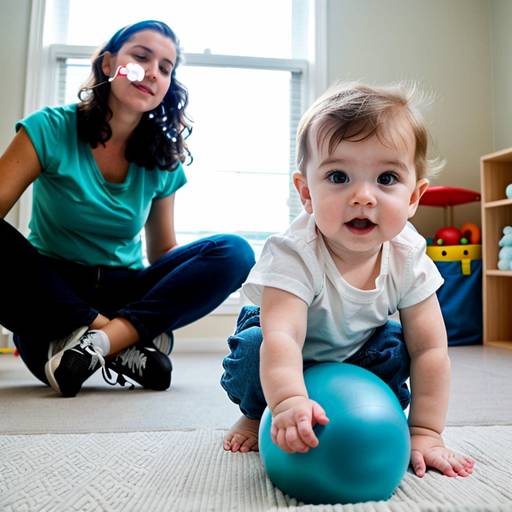
This lesson plan is designed to help infants and toddlers develop their balance and coordination skills through a series of engaging activities. It begins with a warm-up that encourages movement and rhythm in a playful way. Following this, children participate in a variety of balance activities, such as walking along a low beam and rolling sensory balls, which promote reaching and stability.
An obstacle course is introduced to challenge their crawling and climbing abilities, while movement games, like bubble chasing and follow the leader, enhance hand-eye coordination and promote physical activity. The session concludes with gentle stretching exercises to cool down and reinforce body awareness.
Throughout the lesson, caregivers are encouraged to observe each child's participation and progress, providing support and encouragement to foster a positive environment. The overall aim is to enhance motor skills through playful exploration and interaction, ensuring a safe and stimulating experience for all participants.

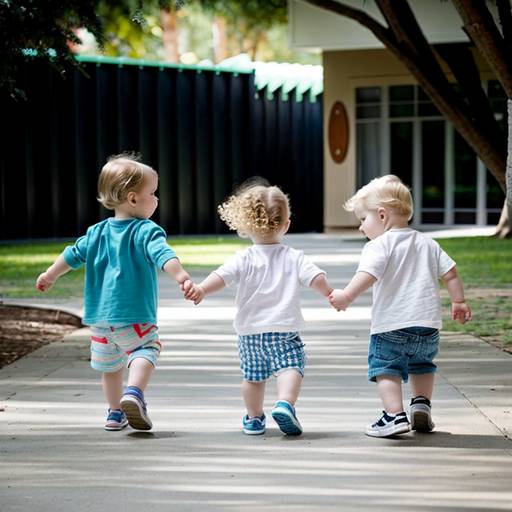
This lesson plan focuses on enhancing gross motor skills in toddlers through engaging balancing activities. The session begins with a brief introduction to the concept of balance, followed by a warm-up featuring simple stretches and movements. Children then participate in three interactive stations: walking on soft balance beams, hopping in and out of hula hoops, and balancing inside large circles. Each activity encourages the toddlers to develop their coordination and stability in a playful environment. The lesson concludes with a calming cool down and reflection, where children can share their favorite activities and celebrate their accomplishments. Safety measures are prioritized throughout the lesson to create a secure space for exploration and learning. Overall, this plan promotes physical development and self-confidence in young children through playful engagement.
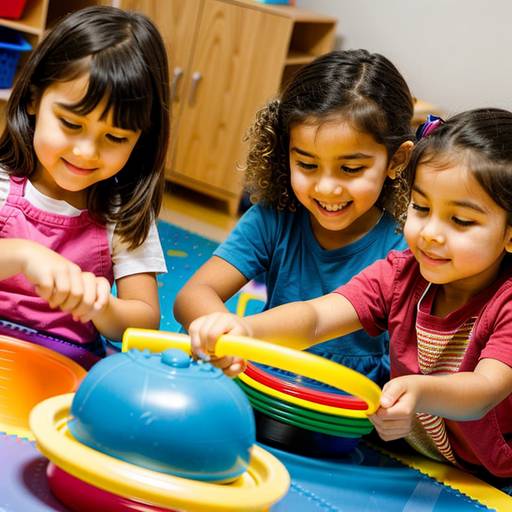
This preschool lesson focuses on introducing young learners to the concepts of forces and motion through interactive and hands-on activities. Students will engage in discussions to identify and describe different forces, such as pushing and pulling. The lesson includes exploration stations where children can experiment with toy cars on ramps, observe the effects of gravity using various balls, and practice moving soft toys with different weights. A fun group game allows students to weave through obstacles, reinforcing their understanding of motion. The session concludes with a reflection circle and a creative drawing activity, enabling children to articulate and visualize their learning experiences. This engaging approach fosters an early curiosity about the principles of movement and encourages cooperative learning among the children.

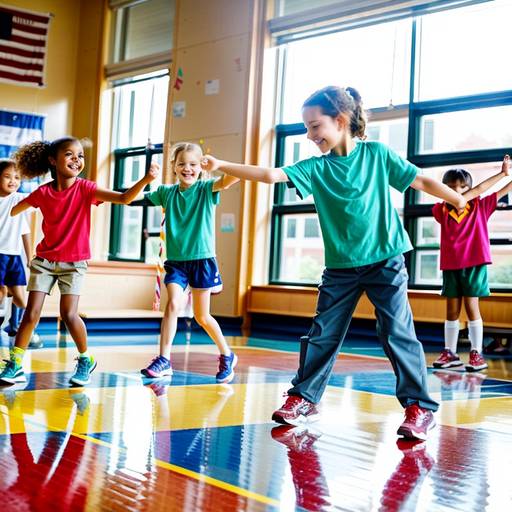
In this kindergarten physical education lesson, students will focus on developing coordination and balance through a series of engaging activities. The lesson begins with a brief discussion about the importance of these skills in daily life, followed by a warm-up that incorporates animal movements to activate their muscles.
Students will then participate in three activity stations: hula hoop balancing, a bean bag toss targeting cones, and walking across balance beams or marked lines to practice their balance. Next, they will engage in a group challenge called "Balance Parade," where they will perform various coordination tasks while walking in line. The lesson concludes with a cool-down session and an open reflection where students can share their experiences and insights about the activities.
Throughout the lesson, students will be encouraged to participate actively and communicate with their peers, fostering teamwork and confidence while enhancing their physical skills. Modifications will be provided for those needing extra support, and safety measures will be implemented to ensure a safe and enjoyable experience.
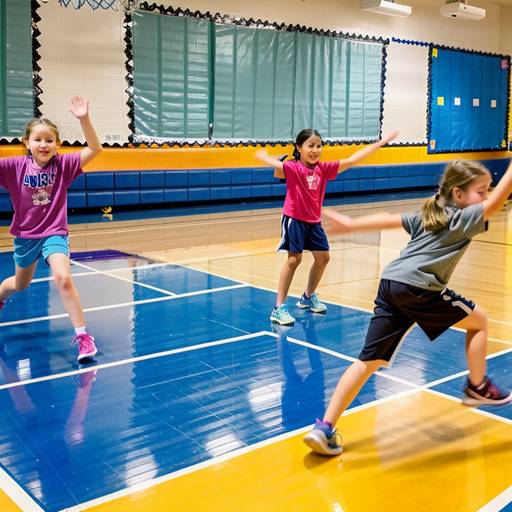
This second-grade physical education lesson focuses on improving coordination and balance through a series of engaging activities. The session begins with a warm-up that includes dynamic stretches and a movement game to prepare students for physical activity.
After a brief introduction explaining the importance of balance and coordination, students participate in four activity stations. Each station emphasizes different skills: walking inside hula hoops while balancing on one foot, weaving through cones, walking across a balance beam, and playing a musical balance game.
A group challenge encourages teamwork and creativity as students work together to transport a bean bag using unconventional methods. The lesson concludes with a cool-down featuring gentle stretches and a reflection session where students share their experiences, challenges, and favorite activities.
Assessment is based on students' participation and ability to perform balance and coordination tasks. Adaptations are provided to support students with varying abilities, ensuring that everyone can engage in the lesson. Overall, the lesson aims to enhance essential motor skills while keeping students active and entertained.

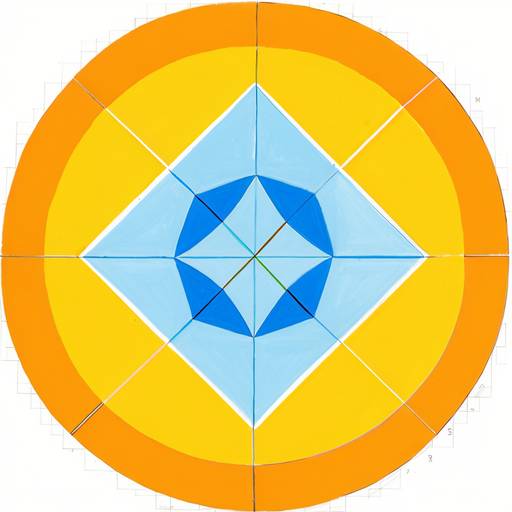
This 3rd-grade math lesson focuses on exploring geometric shapes and the concept of symmetry. The session begins with an introduction to various geometric shapes, followed by a clear explanation of symmetry through visual examples and a demonstration using a mirror. Students engage in guided practice by identifying symmetrical and asymmetrical shapes with provided materials, testing their hypotheses through folding.
During the independent activity, students create their own symmetrical designs using colored paper and markers, incorporating at least one line of symmetry. They then present their creations to the class, explaining the concept of symmetry in their designs. The lesson concludes with a review of key concepts and a discussion about the presence of symmetry in everyday life. Assessment occurs through observation during activities and evaluation of the students' designs. Extension activities provide opportunities for further exploration, including a symmetry scavenger hunt and challenges on rotational symmetry, fostering both understanding and creativity in geometry.