
Filters
Level
Grade
Subject
Subject Area
Subject Topic
Standard(s)
Audience
Keyword
DurationMinutes
Lesson Plans
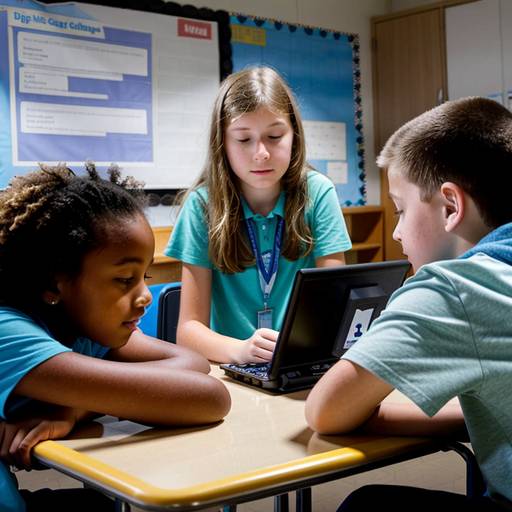
In this 5th-grade technology lesson, students will explore the concepts of digital citizenship and privacy protection. The lesson begins with a class discussion to gauge students' understanding of digital citizenship, followed by a presentation that covers key principles, the types of personal information, and the importance of keeping it private. Students will engage in group activities where they analyze various online scenarios related to privacy and devise appropriate responses to ensure safety. The lesson includes an interactive quiz to reinforce learning and assess understanding. To conclude, students will recap key points and complete a homework assignment involving scenarios that require identifying safe or unsafe actions regarding privacy. Extensions include creating posters with privacy tips and hosting a "Digital Citizenship Day" to share insights. The lesson emphasizes responsible online behavior and aims to equip students with the knowledge needed to protect their personal information in digital spaces.
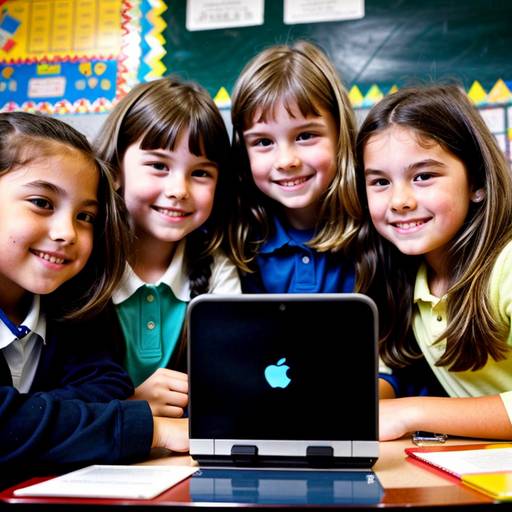
In this 3rd-grade technology lesson, students will explore the fundamentals of internet skills and the importance of netiquette—polite behavior online. The class will begin with a discussion about the internet and its uses, followed by a brief educational video on internet safety and netiquette. Students will then work in small groups to create posters highlighting key netiquette rules, which they will present to their peers.
To reinforce their learning, students will participate in an internet scavenger hunt, utilizing safe and age-appropriate websites to find specific information while practicing respectful online communication. The lesson will conclude with a review of key concepts and distribution of handouts on internet safety tips for students to share with their families. Assessment will focus on group participation, the accuracy of scavenger hunt responses, and the quality of the netiquette posters. Extensions to the lesson may include creative writing or collaborative projects to further engage students in demonstrating their understanding of online etiquette.
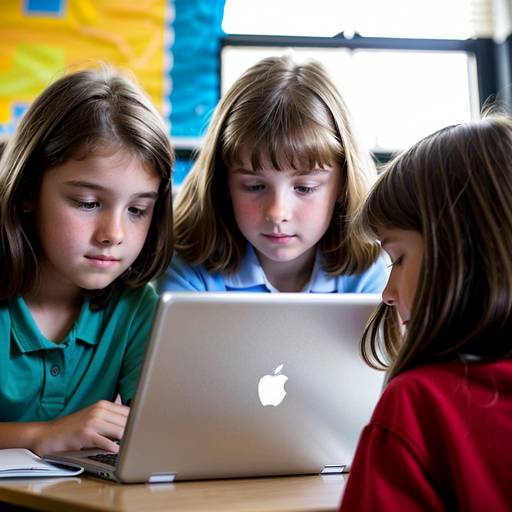
In this 4th-grade technology lesson, students will learn vital internet skills focused on protecting their privacy while online. The session will begin with a discussion about what constitutes safe information to share on the internet, leading to an exploration of digital footprints and the importance of keeping personal information private. Through interactive instruction, students will see how to navigate privacy settings on popular social media platforms.
Engaging in group activities, they will analyze various online scenarios to identify privacy risks and present their solutions. Each student will then reflect on their own online habits by completing a "Safe Browsing" checklist. The lesson wraps up with a recap and an opportunity for questions, reinforcing the importance of safe internet practices. Students may also have opportunities to extend their learning by creating digital posters on internet safety or inviting a guest speaker to discuss cyber safety. Overall, this lesson aims to equip students with the knowledge and tools needed for responsible online behavior.
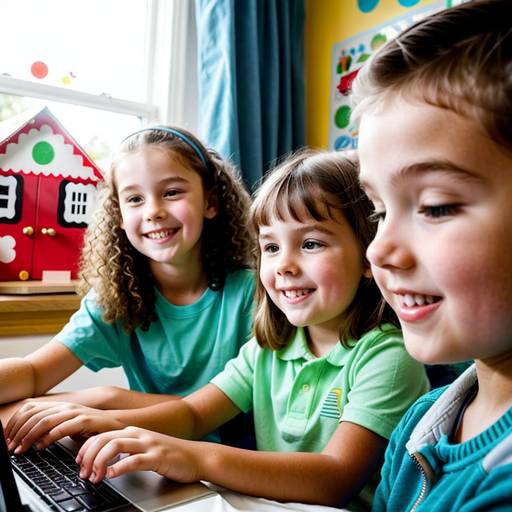
In this preschool lesson plan, young learners will explore the concept of internet safety through a dynamic and interactive approach. The session begins with a circle time discussion, where students are introduced to the internet as a digital playground full of exciting opportunities. A read-aloud story serves as the central activity, illustrating safe and unsafe online scenarios while engaging students with questions to foster critical thinking.
Following the story, students will have a brief discussion on key safety concepts, including the importance of asking for help from an adult when they encounter something confusing online. To reinforce learning, children will participate in role-playing activities where they can enact different situations related to internet safety, allowing them to practice appropriate responses.
The lesson concludes with a creative coloring activity, where students will express their understanding through art while discussing their favorite parts of the lesson. Throughout the session, educators will assess student engagement and comprehension informally, wrapping up with rewards for participation. Overall, the plan emphasizes foundational internet safety skills tailored to a preschool audience, ensuring an enjoyable and educational experience.

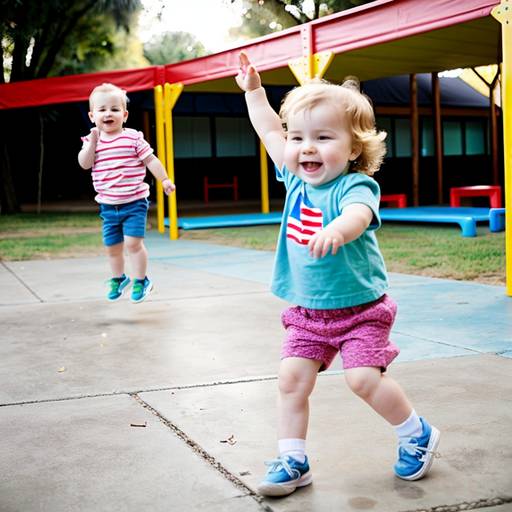
This lesson plan focuses on enhancing toddlers' gross motor skills through activities that promote balance and stability. Designed for children aged 2-4 years, the session begins with an engaging circle time discussion about the importance of balance, followed by a dynamic warm-up to prepare the children for movement.
Three activity stations are set up to encourage exploration: a balance beam walk where children practice walking in various ways, a hula hoop hopping activity that emphasizes careful movement and landing, and a beanbag challenge to help them develop poise while walking. Each station allows toddlers to practice balancing in a fun and interactive way.
Afterward, a gentle cool-down involves stretching and a group discussion to reflect on the activities and their experiences. The session concludes with a playful song or dance, reinforcing the skills learned. Throughout the lesson, educators will assess children's balance abilities while providing adaptations for varying skill levels to ensure inclusivity. Overall, the plan combines physical activity with enjoyment, fostering both fun and learning in developing balance skills.

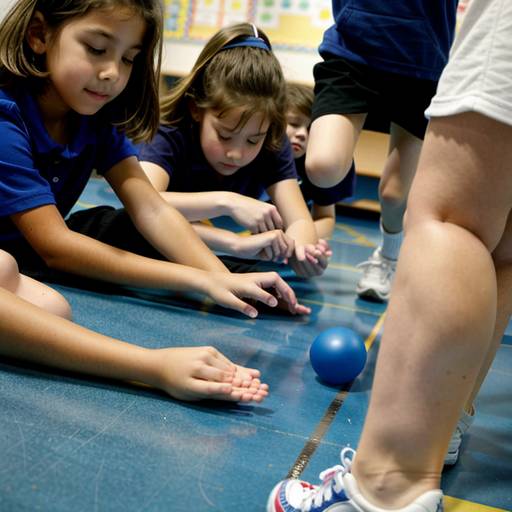
In this 1st Grade Physical Education lesson plan focusing on coordination and balance, students will engage in a series of fun and interactive activities designed to enhance their physical skills. The session begins with a dynamic warm-up featuring animal movements to energize the class. Students will then participate in three main activities: walking along a balance beam to practice their balance, navigating a 'tightrope' created with tape or cones while maintaining control, and hopping across hula hoops representing 'stepping stones' to challenge their balance further.
After the main activities, students will engage in a cool-down session that includes calming stretches, allowing them to reflect on what they have learned and enjoyed. Throughout the lesson, the teacher will assess students' abilities, providing positive reinforcement and encouragement. The session emphasizes the importance of balance and coordination in everyday life while promoting teamwork and cooperation among students.

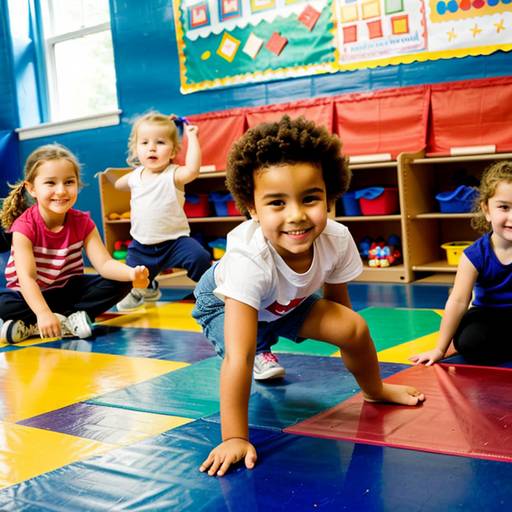
This preschool physical education lesson plan focuses on enhancing balance and coordination skills through a variety of engaging activities designed for children ages 3-5. The lesson spans 98 minutes and begins with a warm-up session that includes simple stretching exercises.
Students then rotate through several balance stations, including walking on balance beams, balancing inside hula hoops, and navigating a zigzag course of cones, while also practicing jumping rope. Group coordination games follow, with activities like "Freeze Dance" and "Toss and Balance," where children work on throwing and catching a ball while maintaining balance.
Next, participants engage in an active relay challenge that reinforces their skills through a fun, competitive format. The session concludes with a cool-down period consisting of gentle stretches and a reflection circle where students can share their experiences and favorite activities. Throughout the lesson, instructors emphasize safety, adaptability, and positive reinforcement to create a supportive environment for all children.
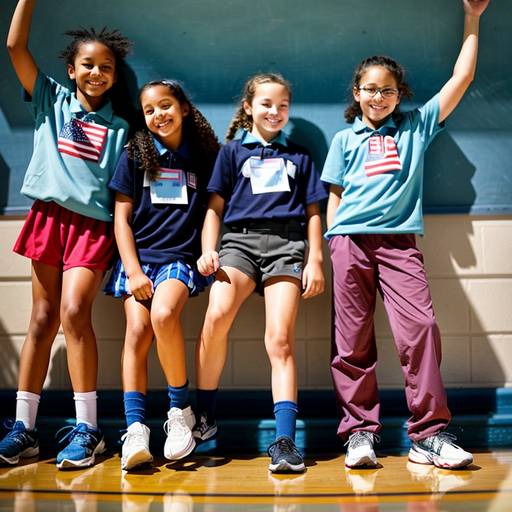
This 3rd-grade physical education lesson focuses on enhancing students' coordination and balance through a series of engaging activities. The class begins with dynamic stretching and a balance challenge to warm up. The main activities include jumping between hula hoops arranged in a hopscotch pattern and navigating a zigzag cone course, emphasizing various movement styles while maintaining balance. A cooldown session with gentle stretches and reflective discussion concludes the lesson, allowing students to share their experiences and insights. The lesson is designed to accommodate varying skill levels and promote safety while encouraging creativity and confidence in physical movement. Teachers will assess students' coordination and balance through observation and provide positive feedback to support their development.
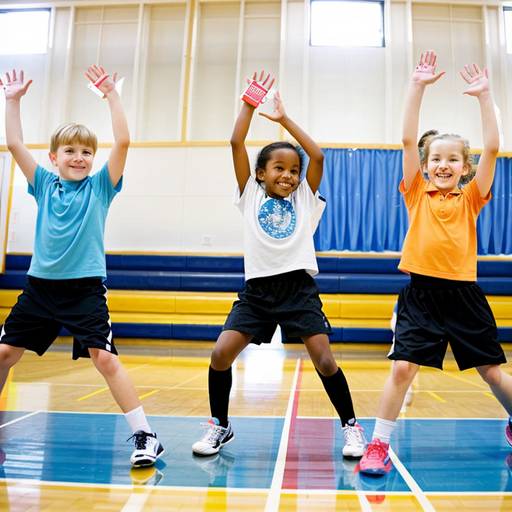
This lesson plan focuses on enhancing coordination and balance for 2nd-grade students through engaging physical activities. The session begins with a brief introduction to the importance of these skills, followed by a warm-up to prepare their bodies.
Students participate in a series of activities designed to promote balance and coordination, including stepping in and out of hula hoops, walking across balance beams, and navigating an obstacle course that combines various movements. Each activity encourages teamwork and provides opportunities for students to support one another.
The lesson concludes with a cool-down session where students reflect on their experiences and engage in gentle stretching. Throughout the activities, instructors assess student progress by observing their ability to maintain balance and safely navigate challenges, providing positive feedback and encouragement.

In this 2nd-grade science lesson, students will explore the solar system and its planets. The lesson begins with an engaging discussion about space, followed by a video or slideshow to introduce the solar system's components. Students will learn to identify each of the eight planets and remember their order from the sun using a mnemonic device.
After gathering information about the planets through fact cards, students will participate in a hands-on activity where they will create model planets using Styrofoam balls and decorate them based on their unique characteristics. They will then work as a team to arrange their models on a large poster board in the correct order.
To reinforce their learning, students will complete a "Planet Hunt" worksheet where they fill in the blanks based on clues about each planet. The lesson concludes with a review, encouraging students to share interesting facts they learned and to observe the night sky at home.
Assessment will be based on participation, the quality of their planet models, and the completion of the worksheet, while extension activities will be provided for those finishing early. Overall, the lesson aims to foster curiosity about astronomy and enhance students’ understanding of the solar system in an interactive way.