
Filters
Level
Grade
Subject
Subject Area
Subject Topic
Standard(s)
Audience
Keyword
DurationMinutes
Lesson Plans

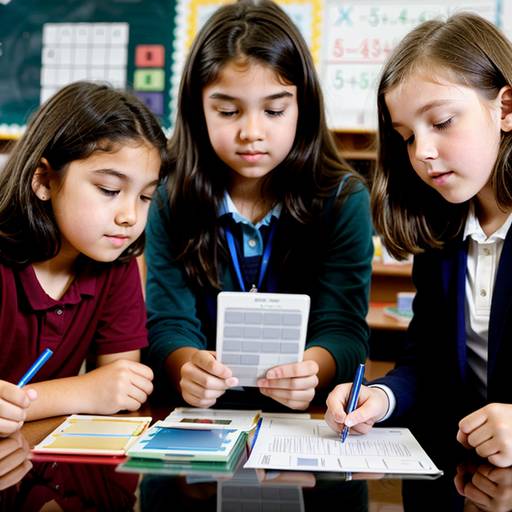
This lesson plan is designed for 5th-grade students to help them understand the concepts of money and budgeting. Throughout a 60-minute session, students explore different types of money, including coins and bills, and engage in discussions about income, expenses, and savings.
The lesson begins with an introduction to budgeting principles, followed by direct instruction where students learn to categorize expenses as needs or wants and how to create a simple budget based on a sample scenario. Students then work in small groups to analyze provided budgeting scenarios and collaboratively develop their own budgets.
As an independent exercise, each student creates a personal budget based on a chosen scenario, estimating income and expenses while determining potential savings. The class wraps up with students sharing their budgets and reflecting on the importance of financial planning.
Assessment includes observing participation and reviewing individual budgets to gauge understanding. Extensions are provided for those who finish early, allowing them to explore more complex budgeting situations. Overall, the lesson aims to instill practical money management skills and the value of making informed financial decisions.
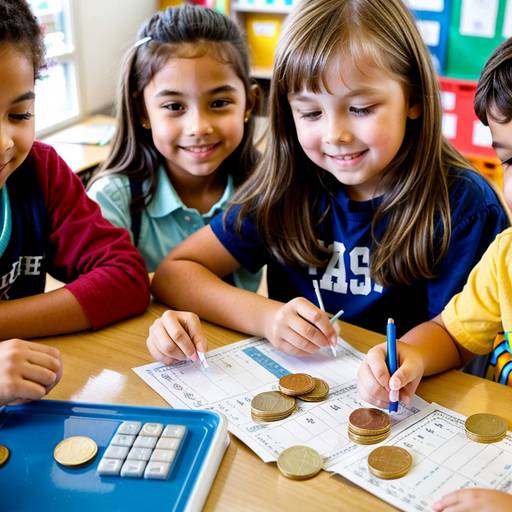
In this 1st Grade math lesson, students will explore the value and identification of various coins and bills. The session begins with an engaging story that introduces money and its importance in daily life. Through direct instruction, students will learn about different coins (pennies, nickels, dimes, quarters) and bills ($1, $5, $10), along with their corresponding values.
Following this, they will engage in guided practice with worksheets that help reinforce their understanding of coin recognition and value. In a hands-on activity, students will participate in a mock store where they can use play money to "shop" for items, allowing them to practice counting and making change in a fun, interactive way.
The lesson concludes with a group discussion where students share their experiences and insights about money. Assessment will be based on participation, worksheet accuracy, and engagement during the mock store activity. Differentiation strategies will ensure that all learners have the support they need, with extensions available for those seeking additional challenges. Overall, this interactive approach aims to build students' confidence and foundational skills in using money.
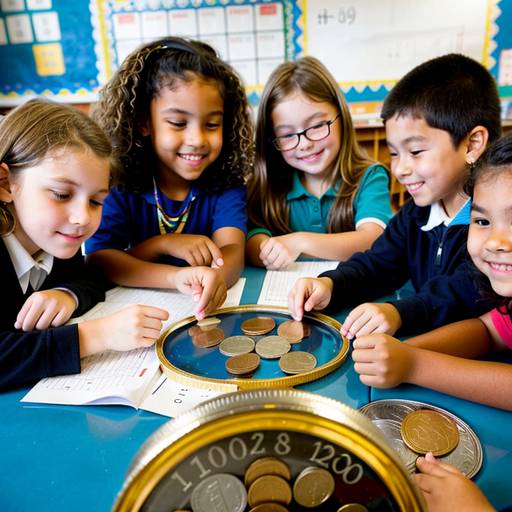
In this 60-minute math lesson for 2nd graders, students will explore the world of money by learning to identify different coins and understand their values. The lesson begins with a discussion about money and an introduction to the various types of coins—including pennies, nickels, dimes, and quarters—and their respective values. Students will engage in direct instruction where they practice counting combinations of coins, followed by guided practice through worksheets that reinforce their understanding.
To reinforce their skills, students will participate in a "Money Memory" game designed to help them match coins with their values. The lesson concludes with a review to solidify their learning and an opportunity for students to share their experiences. Assessment will take the form of observational checks during activities and the review of worksheets to ensure comprehension.
Extensions include creating a small “store” activity to practice buying and selling with play money, while adaptations are provided for students needing additional support or those ready for more challenging tasks. This interactive and hands-on approach aims to enhance students’ understanding of money in practical contexts.

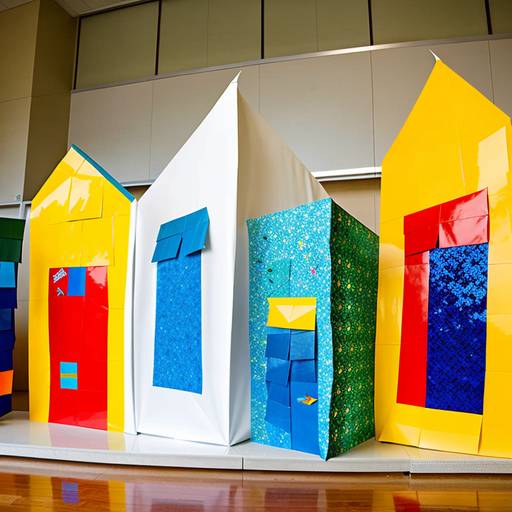
In this 5th-grade art lesson, students will delve into the world of collage by exploring various art techniques to create a layered paper composition that tells a story or conveys an emotion. The lesson unfolds over two sessions.
In the first session, students will learn about the fundamentals of collage art, including principles of composition, color theory, and texture. Following a discussion about the significance of storytelling in art, they will sketch their ideas and plan the layout of their collages.
During the second session, students will gather materials to construct their collages, applying the techniques learned. They will focus on layering paper pieces and incorporating different textures to enhance their work. As they complete their pieces, students will share their artworks with peers, explaining their creative choices and the narratives behind their collages.
Assessment will be based on creativity, effective use of materials, and active participation in discussions. Extensions may include class collaborations or writing components to accompany the artworks. The lesson aims to foster artistic expression and an appreciation for collage as a medium for storytelling.

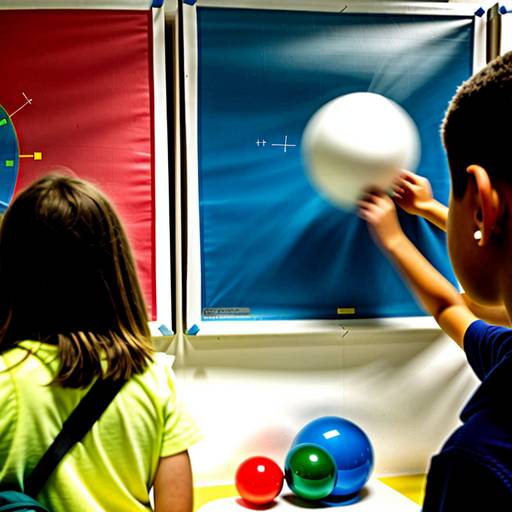
In this 5th-grade science lesson focused on physical science and motion, students will explore essential concepts such as speed, direction, force, and gravity through hands-on activities. The lesson begins with a discussion to engage students and introduce key terminology. In the first activity, small groups will conduct experiments with toy cars or balls on a ramp, measuring their speed and distance. They will perform multiple trials to gather data, fostering observation and discussion about how various factors influence motion.
The second activity will involve adding weights to the cars or balls, allowing students to investigate how additional force impacts movement, speed, and distance. After completing both activities, groups will present their findings, followed by a reflective writing exercise in their science journals to cement their understanding. The lesson will include assessments based on group discussions, data collection, and reflective writing. Extensions may include research on notable scientists related to motion or a day dedicated to testing different movements. Ultimately, students will gain a fundamental understanding of how forces affect motion through active engagement and experimentation.
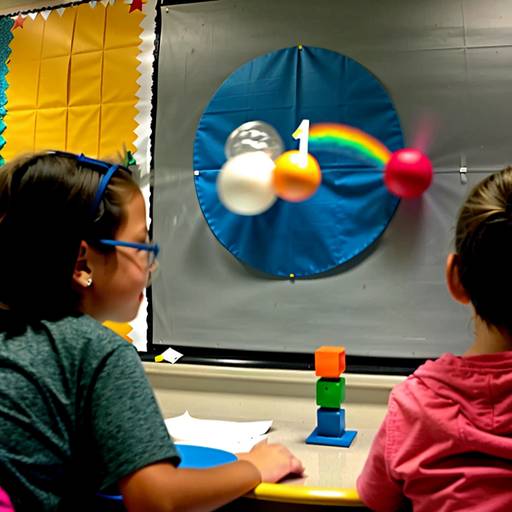
This third-grade science lesson focuses on the concepts of motion and the forces that influence an object's movement. Students will begin with a discussion about motion, exploring definitions and everyday examples. They will learn about different types of forces, including push, pull, gravity, and friction, through direct instruction supported by visuals and videos.
The lesson includes a hands-on experiment where students work in small groups to investigate how various forces affect the movement of toy cars on ramps. They will predict how far a car will roll with and without added weights, measuring the distances and recording their observations. After the experiment, students will regroup to discuss their findings and reflect on the relationship between forces and motion.
Assessment will occur through the collection of worksheets and through informal observations during group activities. Extension activities encourage students to further explore the principles of motion at home. Ultimately, this lesson aims to foster a foundational understanding of physical science while promoting inquiry, teamwork, and critical thinking skills.
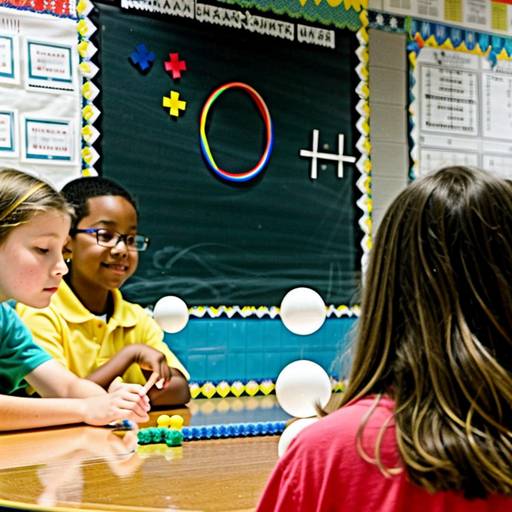
This 4th grade science lesson focuses on the concepts of motion and forces, helping students understand how these fundamental principles affect the movement of objects. Students will engage in hands-on activities by testing toy cars on ramps of varying heights and weights, observing and measuring the distances they travel. The lesson includes stations where students can experiment with pushing objects to discover the relationship between force and movement.
Throughout the lesson, students will record their observations and discuss their findings in small groups, fostering collaboration and critical thinking. This approach not only reinforces the scientific concepts of motion and forces but also encourages students to ask questions and make predictions. At the end of the lesson, students will summarize what they learned and reflect on their understanding through an exit ticket. This comprehensive plan supports interactive learning and lays a foundation for further exploration of physical science concepts.

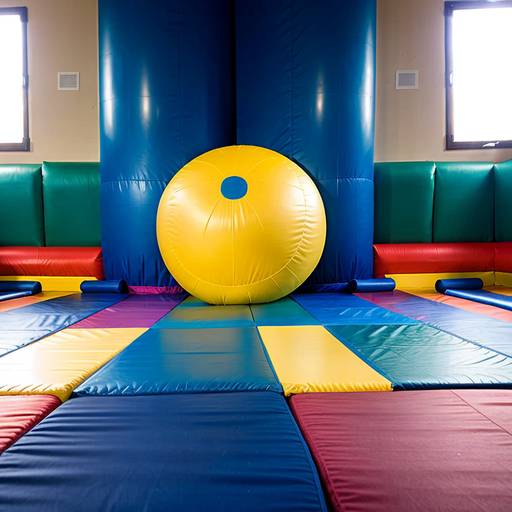
This preschool physical education lesson focuses on enhancing gross motor skills through a variety of engaging and interactive activities designed for young children aged 3 to 5 years. The session lasts approximately 105 minutes and includes warm-up exercises, gross motor skill stations, an obstacle course, and group games.
The lesson begins with a brief introduction followed by an animal movement warm-up to encourage stretching and coordination. Students participate in four different activity stations, each focusing on specific skills, such as jumping, balancing, and throwing. After a healthy snack and hydration break, children take part in a fun and challenging obstacle course that incorporates various movements.
The group then engages in parachute play, promoting teamwork and coordination through different games. The lesson concludes with a cool-down session focused on relaxation and stretching, followed by a closing circle where students share their favorite activities. Throughout the lesson, observation and participation are monitored to assess children's development of gross motor skills and their enjoyment of physical activity. Safety measures are emphasized, and activities are adapted as needed to accommodate all students.

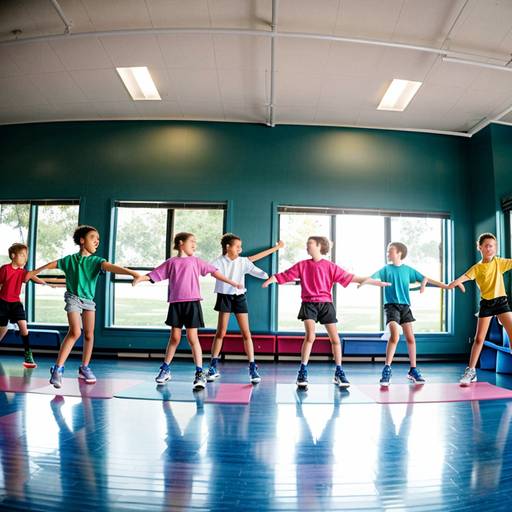
This 5th-grade physical education lesson focuses on fitness and flexibility through engaging activities and exercises. The lesson begins with a warm-up to increase heart rates, followed by a discussion highlighting the importance of fitness and flexibility in maintaining a healthy lifestyle. Students then participate in a series of guided stretching routines, where they learn and practice proper techniques for various stretches.
The primary component of the lesson consists of circuit stations that provide hands-on experience with resistance band stretches, balance challenges, yoga poses, agility drills, and a cool-down area focusing on relaxation and deeper stretches. A team activity encourages cooperation and demonstrates a fun approach to stretching.
Finally, the lesson concludes with a cool-down period and reflective discussion, allowing students to express what they enjoyed and learned. Through observation and feedback during the activities, the teacher assesses students' engagement and understanding, while also suggesting extensions for continued flexibility practice at home. Overall, the lesson aims to promote physical health and develop a positive attitude towards fitness among students.
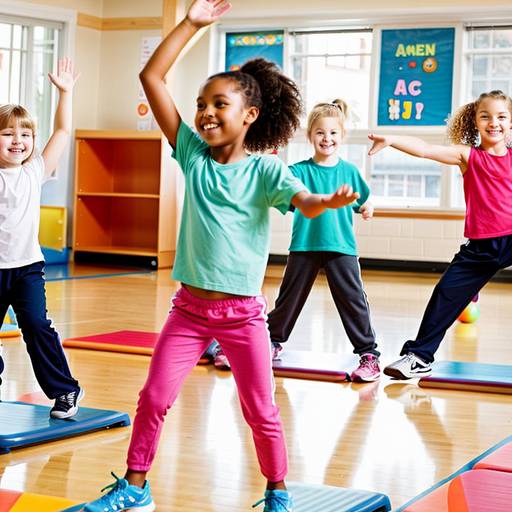
In this Kindergarten Physical Education lesson, students will engage in various activities designed to promote fitness and flexibility. The lesson begins with a warm-up session featuring dynamic movements like jumping jacks and high knees to energize the children. Following the warm-up, students will rotate through several stretching stations, each focusing on different stretches, such as the toe touch and butterfly stretch, allowing them to practice and hold each position while concentrating on their breathing.
Next, students participate in a fun movement game, "Freeze Dance," which combines dancing with stretching prompts, reinforcing the day's theme in an interactive way. To conclude the lesson, children will cool down by lying on mats for a calming body scan and reflection on their experiences, discussing the importance of movement and stretching.
Assessment will be based on observation of the students' participation and ability to follow instructions during stretches and activities. To accommodate diverse abilities, modifications will be offered to ensure inclusivity. The lesson aims to instill an understanding of the significance of fitness and flexibility, encouraging students to continue these practices at home.