
Filters
Level
Grade
Subject
Subject Area
Subject Topic
Standard(s)
Audience
Keyword
DurationMinutes
Lesson Plans

In this 2nd-grade math lesson, students will explore the concept of measurement and learn how to measure lengths using both standard and non-standard units, such as inches, centimeters, paper clips, and blocks. The lesson begins with a discussion to familiarize students with measurement vocabulary, followed by a demonstration of measuring classroom objects with a ruler. Students will then engage in guided practice in small groups, measuring different objects and recording their lengths. After presenting their findings to the class, students will complete a worksheet where they estimate and then measure various items. The lesson concludes with a review of key concepts and an assessment through collected worksheets and observation of group activities. Adaptations are provided to support different learner needs. This interactive approach encourages hands-on exploration and real-world connections to measurement.
In this kindergarten math lesson, students will explore the concept of measurement and length through engaging and interactive activities. The lesson begins with a discussion on what measurement means, focusing on the comparison of lengths, using everyday classroom items as examples. The teacher will demonstrate how to measure objects using non-standard units, such as Unifix cubes or paper clips.
Students will then work in small groups to measure assigned items, record their findings, and determine which items are longest and shortest. Each group will share their measurements and observations with the class, fostering communication and presentation skills. The lesson concludes with a review of key vocabulary and a reflection on the practical applications of measurement in students' lives. Overall, the lesson emphasizes hands-on learning and encourages collaboration while laying the groundwork for future mathematical concepts.
In this 2nd grade math lesson focused on measurement and length, students will explore the concepts of measuring objects using both standard and non-standard units. The lesson begins with a discussion to engage students and elicit their previous experiences with measurement. Key terms such as length, measure, and units will be introduced.
Through direct instruction, students will learn how to use rulers and measuring tapes correctly, and will understand the significance of measuring accurately. They will observe demonstrations of measuring various classroom objects and see visual examples of both standard and non-standard measurements.
Students will then engage in partner work to measure designated objects in the classroom, recording their results on worksheets and comparing the two types of measurement. Following this, they will participate in a scavenger hunt where they will measure specific items around the classroom or school, documenting their measurements and presenting their findings on a chart.
The lesson concludes with students sharing their discoveries and reflecting on the importance of accurate measurement in real-life situations. Assessment will be based on observation during activities and evaluation of their measurement worksheets, with opportunities for extension and modifications tailored to individual learning needs.


In this 4th-grade Language Arts lesson, students will embark on a journey to create their own imaginative stories, focusing on elements such as setting, characters, problems, and solutions. The session begins with a discussion of what makes stories engaging, followed by a read-aloud of a children’s book excerpt to illustrate the use of descriptive language. Students will then complete graphic organizers to brainstorm their story ideas, which will guide them in writing a short narrative. Throughout the writing process, they will focus on using sensory details to enhance their descriptions. At the end of the lesson, students will have the opportunity to share their stories with classmates, fostering a sense of community and encouraging feedback. The lesson will be assessed through the graphic organizers and the final stories, promoting creativity and clarity in writing. Extensions for this lesson may include developing sequels or comic strips to further explore their narratives.

This lesson plan aims to promote preschoolers' understanding of cooperation and sharing, emphasizing the importance of these concepts in building a strong community. The session begins with a group discussion where children articulate their thoughts on sharing and cooperation. A story highlighting these themes follows, encouraging further reflection and dialogue.
Next, children participate in a collaborative activity, creating a community poster where they draw and place toys, working together to build a cohesive visual representation while practicing communication and teamwork. They are then invited to express their learning by writing or drawing on paper hearts or stars, which they share with the group to foster a sense of belonging.
Finally, the lesson concludes with a closing circle where students recap their learnings, reinforcing the key messages about the joys and benefits of working together. The plan includes follow-up activities to extend these concepts into daily routines at home and offers an observational assessment tool for educators to gauge children's grasp of the skills taught. Overall, the lesson seeks to instill a sense of community and positive interaction among preschoolers.
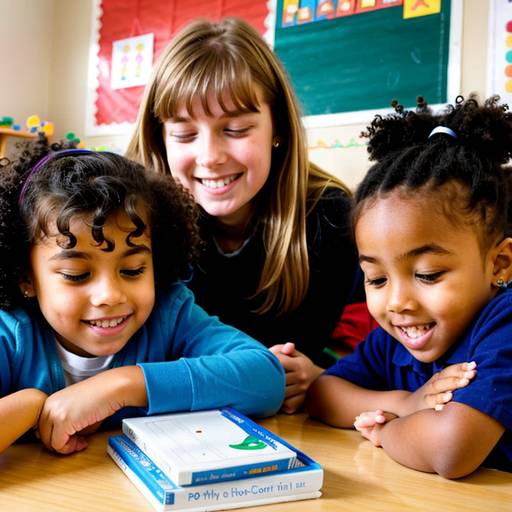
This preschool language lesson focuses on introducing young learners to basic phonics concepts through an engaging, ocean-themed experience. The session begins with a welcoming environment and a phonics song that encourages children to participate actively.
Students embark on a letter hunt, finding letter cutouts around the room and practicing their sounds. Following this, they interact with sea creature puppets to combine phonics with imaginative play. A sensory bin filled with water beads and hidden letter beads provides hands-on exploration and reinforces letter recognition.
Creative time is dedicated to coloring phonics-themed sheets and crafting a sea scene, encouraging children to connect letters with words and sounds. The lesson concludes with a group discussion, allowing students to share their learning experiences while revisiting the phonics song.
Throughout the activities, children receive support and adaptations based on their individual needs, ensuring an inclusive learning environment. Caregivers are encouraged to reinforce these phonics concepts at home, promoting continued learning beyond the classroom.
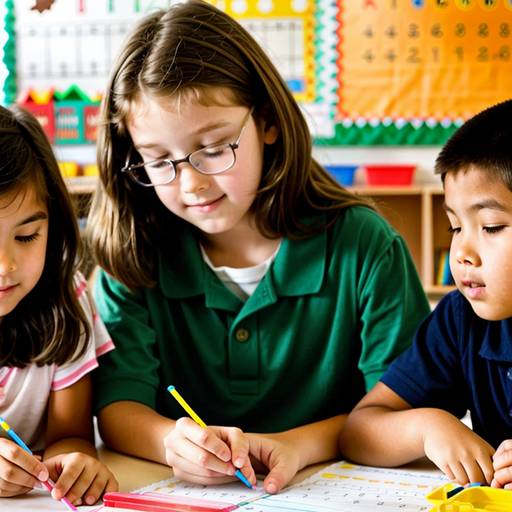
This 1st-grade math lesson focuses on helping students understand the concepts of measurement and time through interactive and hands-on activities. The lesson begins with a discussion about measurement and time, prompting students to share their prior knowledge.
Next, students work in small groups to measure various classroom objects using rulers or string, encouraging estimation and discussion of their findings. Following the measurement activity, the class moves on to learning about telling time using a large classroom clock. Students practice setting the hands of smaller analog clocks to specific times based on teacher prompts.
To reinforce the concepts, students complete worksheets that involve measuring items at home and drawing clock hands to show different times. The lesson concludes with a reflection on what students have learned and a review of measurement and time concepts. Throughout the lesson, students are assessed based on participation, group collaboration, and accuracy on their worksheets, with the opportunity for extensions that encourage continued exploration at home.

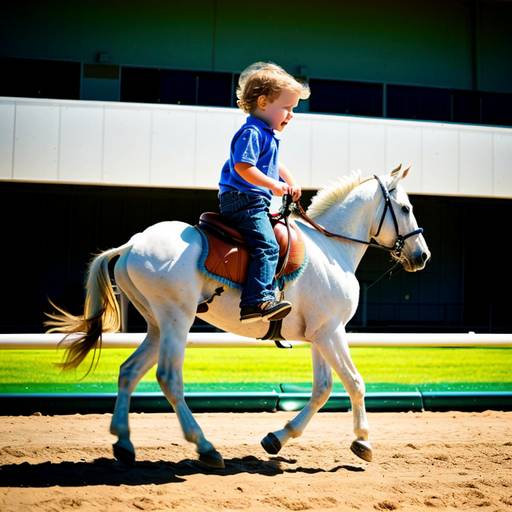
In this lesson plan designed for toddlers aged 2-4, the focus is on developing gross motor skills through the activity of galloping. The session begins with an introduction that explains the purpose and demonstrates the galloping movement. Following this, a warm-up routine featuring light stretches and a playful cheer prepares the children for physical activity.
The main practice involves galloping to various cones set up in a line, with variations such as forward, backward, and sideways movements to enhance coordination. An obstacle course is then introduced, incorporating soft toys and hula hoops to create engaging challenges.
To conclude, a cooldown routine with deep-breathing exercises and gentle stretches helps the children relax, and a reflection discussion encourages them to share their experiences. Throughout the lesson, positive reinforcement is used to support each child's progress while ensuring a fun and safe environment.

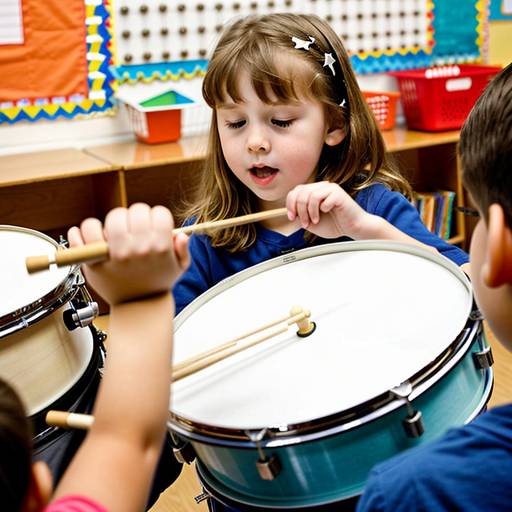
In this 1st Grade music lesson, students will explore and learn about percussion instruments through various engaging activities. The lesson begins with an introduction to what percussion instruments are, accompanied by sound clips and examples for recognition. Students will then form small groups to experiment with different instruments, allowing them to create and share their own sounds. Following this, the class will participate in a body rhythm exercise where they will learn a simple rhythm using claps, stomps, and snaps, and even create their own rhythms to share. A call-and-response rhythm game will conclude the lesson, reinforcing their understanding of rhythm and sound. Throughout the lesson, students will be assessed on their participation and ability to identify percussion instruments. To extend their learning, they will be encouraged to create a homemade percussion instrument to bring for the next class, fostering creativity and continued exploration of music. Adaptations will be made to accommodate diverse learning needs, ensuring inclusivity for all students.
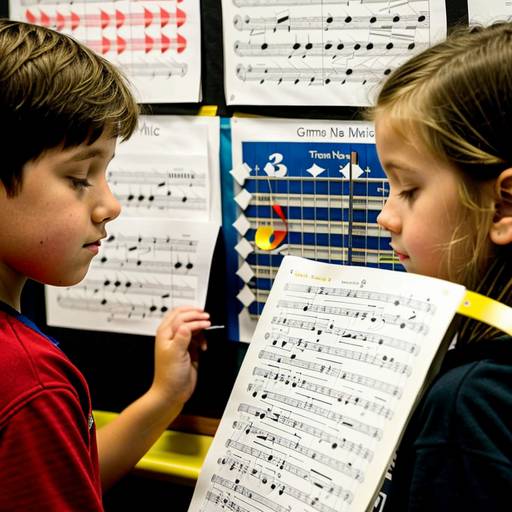
This music lesson for 4th-grade students focuses on introducing and reinforcing the identification of notes on the treble clef staff through engaging activities. The lesson begins with a warm-up game where students connect familiar songs to musical notes, prompting a discussion on the importance of notes in music.
Students are then introduced to the names of the notes in the treble clef and helpful mnemonics to memorize them. Visual aids, including a drawn treble clef on the whiteboard and possibly educational videos, further support this instruction.
The class engages in a guided practice where students complete worksheets identifying notes, followed by an interactive group game that encourages teamwork and quick thinking as they identify notes using flashcards. The lesson concludes with a review and an exit ticket activity to assess understanding. Optional extension activities are provided for students seeking additional practice, ensuring a comprehensive learning experience that fosters both individual and collaborative mastery of music theory concepts.