
Filters
Level
Grade
Subject
Subject Area
Subject Topic
Standard(s)
Audience
Keyword
DurationMinutes
Lesson Plans

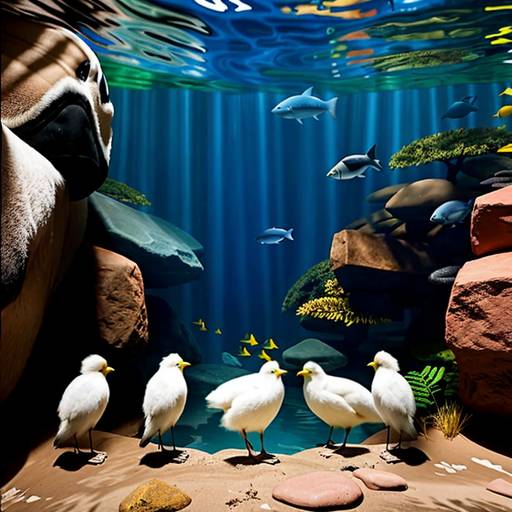
After a brief introduction to specific animals and their habitats, small groups will research assigned animals, identifying key adaptations and their significance. Each group will then create a poster illustrating their animal and its adaptations, fostering teamwork and creativity.
Students will present their findings to the class, sharing insights about the diverse ways animals thrive in their habitats. The lesson wraps up with a review of the importance of understanding these adaptations to support wildlife conservation efforts. Assessment will include observation of group participation, review of worksheets, and evaluation of poster presentations. Optional extensions encourage further exploration and engagement with local wildlife experts.


This lesson plan focuses on introducing toddlers to the properties of water through interactive and sensory-rich activities. The session begins with a group discussion to spark curiosity and awareness of water's characteristics. Children will engage in hands-on exploration at various stations, where they can pour and scoop water, experiment with objects to observe floating and sinking, create color mixes using food coloring, and discover how natural items behave in water.
After individual exploration, the group will reconvene to share their favorite experiences, reinforcing their learning through discussion. The session concludes with a fun water-themed song or rhyme and a collaborative cleanup to promote responsibility. Optional extension ideas suggest further exploration at home and nature walks to deepen the children's understanding of water in their environment. Throughout the lesson, careful supervision ensures safety and encourages a joyful and engaging learning experience.

In this 4th-grade math lesson, students will explore the concept of area and learn how to calculate it for rectangles and squares. The class begins with an engaging discussion about the meaning of area, followed by a demonstration of how to apply the formulas for calculating area. Students will have the opportunity to create their own shapes on grid paper, measure their dimensions, and perform area calculations. Working in small groups, they will apply their knowledge to a real-world scenario involving garden design, sharing their findings with the class. The lesson concludes with a recap of the key concepts, emphasizing the practical applications of area in everyday life. Assessment will involve observing student participation and reviewing their worksheets for accuracy in calculations. An extension activity is available for faster learners, encouraging deeper exploration of area concepts.
This lesson focuses on teaching 5th-grade students about geometry and area by exploring various 2D shapes such as squares, rectangles, triangles, and parallelograms. Students will learn to identify these shapes and use appropriate formulas to calculate their areas, with applications to real-life scenarios. The lesson includes direct instruction on area formulas, guided group practice with shape calculations, and independent practice through a worksheet.
To reinforce understanding, students will creatively design their own parks using different geometric shapes while calculating their respective areas. The lesson concludes with a group reflection on the importance of area in everyday contexts. Assessment will include observations during collaborative activities, completed worksheets, and evaluations of park designs. Extensions and modifications are provided to accommodate varying skill levels. Finally, students will be assigned homework to apply their knowledge at home by calculating the area of an object or space in their environment.


This lesson plan focuses on enhancing infants' sensory development through the exploration of various scents. It is designed for a group of infants aged 3-12 months and spans 30 minutes. The session begins with an introduction to the sense of smell, where caregivers are encouraged to engage with the infants using simple language. The main activity involves passing around containers filled with different natural scents, allowing infants to react and explore with their senses. Caregivers guide the experience, fostering interaction and discussion around the scents.
Following the scent exploration, the plan includes a sensory play activity with scented playdough and tactile materials like cotton balls or feathers, promoting hands-on engagement. The session concludes with a closing circle where caregivers and infants reconnect, sharing experiences and observations, while a song reinforces the themes of the exploration. Safety considerations are emphasized throughout, ensuring that all materials are non-toxic and monitored. The plan also encourages follow-up activities at home, promoting ongoing sensory experiences and bonding. Overall, the lesson aims to create a rich, engaging environment that nurtures infants' sensory awareness.

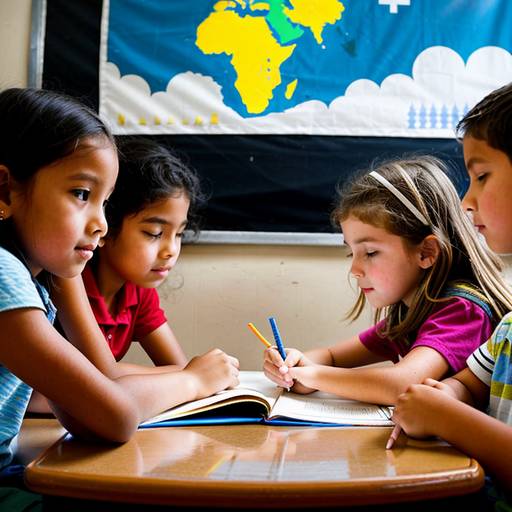
This lesson plan for 1st-grade students focuses on teaching basic geography and cultural awareness through the exploration of different countries. The lesson begins with an introduction to the concept of countries and the use of a world map or globe to help students identify and name various locations. Students will learn about 3-4 selected countries, including interesting facts about their geography, landmarks, food, and traditions.
The activity involves students working in small groups to explore provided materials, discussing and deciding on a key fact to share with the class. Each group will present their findings, fostering communication and collaboration skills. Students will then engage in a creative drawing activity where they illustrate something they learned about one of the countries, further reinforcing their understanding.
Assessment will be based on participation, engagement, and creativity during the activities. The lesson encourages cultural awareness and curiosity about the diversity of the world, with extensions for students to continue learning about different countries at home. Overall, this lesson aims to create an interactive and engaging environment for young learners to explore geography and culture.
In this 4th-grade social studies lesson, students will explore various countries and their cultures through an engaging geography-focused activity. The lesson begins with an interactive discussion about different countries, prompting students to share what they know. A large world map will be used to introduce specific countries, highlighting important geographical features and cultural aspects.
Students will be divided into small groups, each assigned a country to research. They will use individual maps and fact sheets to gather information, which they will compile into a creative group poster including the country’s flag, capital, and interesting facts. Afterward, each group will present their findings to the class, fostering collaboration and communication skills.
The lesson concludes with a reflection activity where students share one new thing they learned, followed by an exit ticket to reinforce individual understanding. Assessments will focus on group participation, the quality of presentations, and reflections, with extensions for further learning suggested for students interested in deepening their understanding of global cultures. Adaptations will be made for differing student needs, ensuring inclusivity and support for all learners.
In this 5th-grade mathematics lesson, students will explore the concept of time and time zones. The session begins with a discussion about time zones and their significance, followed by an explanation of local time versus world time. Using a world map, students will learn about different time zones and how to calculate time differences between various locations, particularly comparing Eastern Standard Time with other zones.
During guided practice, students will complete worksheets that involve calculating the time in different cities based on specific scenarios. This will be followed by independent practice, where they will choose a city, determine its time zone, and create a visual representation of the time differences compared to their local time.
The lesson concludes with a recap of the key concepts, and students will share their findings about the chosen cities. Assessment will take place through the collection of worksheets and independent assignments to evaluate understanding. Extensions and modifications are provided to accommodate different learning needs and to encourage deeper exploration of related topics, such as Daylight Saving Time. Overall, students will gain a better grasp of global timekeeping and its relevance in today’s interconnected world.
In this 2nd Grade social studies lesson, students will explore the concepts of geography and global cultures. The lesson begins with an introduction to geography, where students will identify countries on a world map. They will then be grouped and assigned different countries to research. Each group will examine cultural aspects of their assigned country through pictures and discussions, filling out a "Country Passport" with key information such as the country's name, capital city, traditional food, holiday, and clothing.
Following their research, students will present their findings to the class, allowing for interaction and questions to promote engagement. The lesson concludes with a review of the countries covered and a reflective discussion about students' favorite facts learned during the presentations. Assessment will be based on participation in group activities and the completion of the passports. Additionally, students may extend their learning through homework involving further research on another country, fostering a deeper understanding and appreciation of global diversity.
In this 5th-grade social studies lesson, students will explore the concept of community and the diversity present within it. The lesson begins with a class discussion to define community and discuss its various elements, emphasizing the importance of diversity. Students will then work in small groups to research cultures from different continents, creating informative posters that highlight aspects such as flags, traditional clothing, food, and cultural practices. Each group will present their findings to the class, fostering engagement and encouraging questions.
Next, the classroom transforms into a culture fair, where students can visit each group's station and fill out a "Culture Passport" with interesting facts learned from their peers. Optional guest speakers from local cultural communities may also be invited to enhance the learning experience. The lesson concludes with reflective writing and a class discussion on the importance of understanding and celebrating diversity in building a strong community. Assessments will focus on group participation, the quality of the posters, and insights shared in the cultural passports. Extensions and adaptations are provided to cater to the diverse needs of learners and to deepen their engagement with the topic.