
Filters
Level
Grade
Subject
Subject Area
Subject Topic
Standard(s)
Audience
Keyword
DurationMinutes
Lesson Plans

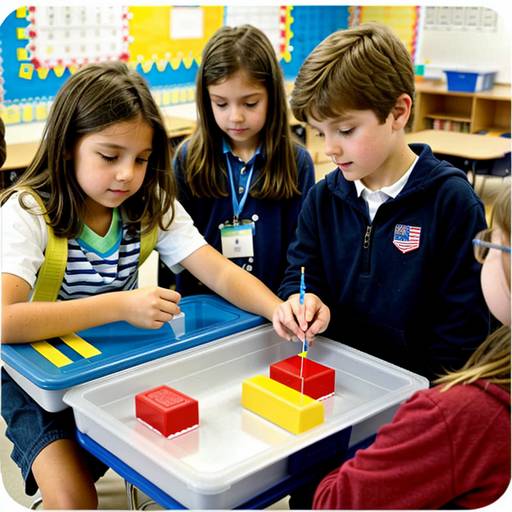
In this 60-minute math lesson designed for 3rd graders, students will explore the concepts of measurement and length through engaging activities. The lesson begins with a discussion about real-life applications of measurement, introducing key vocabulary such as inches, feet, and centimeters.
Following an instructional demonstration on how to use rulers and meter sticks, students will participate in measurement stations where they measure various classroom objects, make estimates, and record their findings. They will create a personal measurement chart featuring three selected objects, noting estimated and actual lengths, and reflect on their accuracy.
The lesson concludes with a review of key concepts and a preview of the upcoming topic on perimeter and area. Assessment will occur through the observation of student engagement during activities and the evaluation of completed worksheets and charts. Differentiation strategies will be implemented to ensure all students are supported according to their individual needs and abilities.

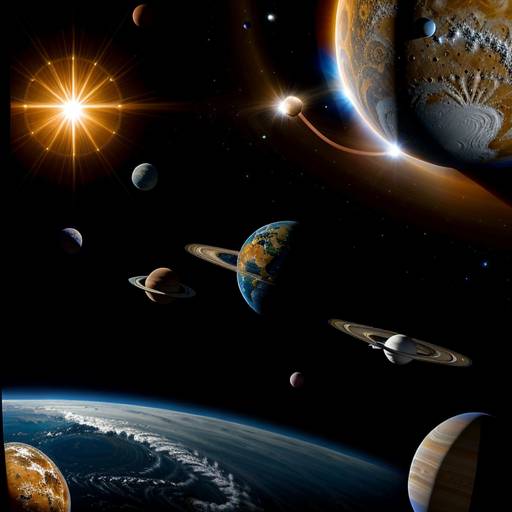
In this 4th-grade science lesson, students will explore the solar system and learn about the individual planets and space exploration. The lesson begins with an engaging discussion to assess prior knowledge and introduces key concepts about the solar system, including the order of the planets and their main characteristics.
Following direct instruction, students will work in small groups to research a specific planet using provided fact cards and model representations. Each group will prepare a short presentation to share interesting facts about their planet with the class. This collaborative activity encourages teamwork and enhances communication skills.
The lesson concludes with a reflective discussion where students can express what they learned. To reinforce their understanding, students will complete a "Planet Journal" worksheet to document information about the planets. Assessment will focus on group participation, presentation clarity, and the completion of the journal. Optional extensions include creating a model of a favorite planet or exploring space-related resources further, while modifications are provided to ensure all students can engage meaningfully with the content.

In this 1st grade Language Arts lesson plan, students will enhance their reading comprehension skills by identifying the main idea and key details of a story through engaging discussions and interactive activities. The lesson begins with a read-aloud of a selected story, during which students are encouraged to participate by predicting events and discussing the plot. After reading, the class will collaboratively explore the main idea and supporting details, which will be documented on the whiteboard. Students will then create their own Story Maps, where they identify the main idea and key details while illustrating their favorite parts of the story. The lesson culminates in a sharing session, allowing students to present their Story Maps to the class. Assessment focuses on participation and the clarity of the completed Story Maps, with differentiation strategies to support varying learning needs. The lesson concludes with a summary of the importance of stories and reading. For follow-up, students will select another story to create their own Story Map for future sharing.

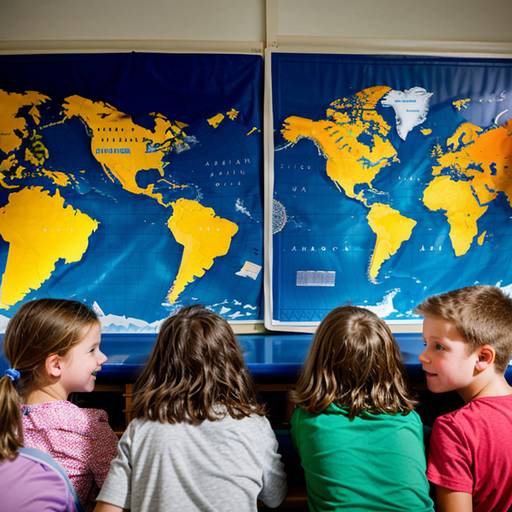
In this 3rd-grade social studies lesson plan, students will explore the concepts of geography and maps through interactive discussions and hands-on activities. The objectives include identifying key components of maps, understanding different types of maps, and creating their own simple maps. The lesson begins with an engaging introduction to maps, followed by group activities where students examine various map types and present their findings. For the independent activity, students will draw a map of their classroom or school, incorporating essential elements such as the title, legend, scale, and compass rose. The lesson concludes with a gallery walk, allowing students to showcase their work and provide feedback to peers. Assessment will focus on participation, the completeness and creativity of the maps, and a reflection quiz to reinforce learning. Differentiation strategies are included to support diverse learning needs, and extension activities are suggested for further exploration of geography and mapping skills.
In this 2nd grade social studies lesson, students will explore the fundamental concepts of maps and geography, focusing on elements such as symbols, legends, and compass roses. The lesson begins with a warm-up discussion where students share their prior knowledge about maps, followed by an examination of various map examples. Through guided practice, the class collaboratively creates a simple map of their classroom, developing a legend to represent different features. Students then independently design their own maps of familiar places, incorporating symbols and legends. The lesson concludes with a sharing session, where students present their maps to the class and reflect on the significance of maps in navigating the world around them. Assessment will be based on participation during activities and the clarity of the symbols and legends in their maps. The lesson also includes potential extensions and adaptations to cater to varying student needs.
In this Kindergarten Language Arts lesson, students will explore the key elements of a story, including characters, setting, and plot, through interactive reading and discussion. The lesson begins with a group conversation about what makes stories special, leading to a read-aloud of a selected picture book. During the reading, students are encouraged to identify and discuss elements of the story, with their responses recorded on chart paper. Following the read-aloud, students will work in small groups to examine another picture book, discussing its characters, setting, and plot, and then share their findings with the class. The lesson concludes with a review of the story elements and rewarding students for their participation. Assessment focuses on observing student interactions, reviewing their graphic organizers, and listening to their sharing to gauge comprehension. Extensions to the lesson include opportunities for students to create their own stories using graphic organizers. Overall, the lesson fosters a love for reading and develops foundational comprehension skills.
This 4th-grade math lesson focuses on geometry and the concept of perimeter. Students will begin by identifying and classifying various geometric shapes such as triangles, rectangles, squares, and circles. The instructor will introduce the concept of perimeter, explaining it as the total distance around a shape and demonstrating how to calculate it using specific formulas for each shape.
In a collaborative group activity, students will use cut-outs and rulers to measure the sides of different shapes and compute their perimeters, allowing them to apply what they've learned in a hands-on manner. Following this, learners will complete a worksheet that includes various shapes, requiring them to calculate the perimeter based on given dimensions or measurements.
The lesson will conclude with a class discussion to review the key concepts covered and an exit ticket exercise where students share their calculations and any lingering questions. Assessments will be conducted through observation during group work, evaluation of worksheets, and the exit tickets to determine student understanding and comfort with the material. Additionally, opportunities for extension activities will be provided to help students connect perimeter to real-world scenarios.
This 2nd-grade science lesson plan focuses on introducing students to the solar system and its key components, including the Sun, planets, moons, asteroids, and comets. The lesson begins with a discussion about space followed by a short video to engage students. Direct instruction involves presenting a visual model of the solar system and highlighting unique features of each planet using fact cards.
Students then participate in a creative activity where they design their own planet, encouraging imagination and personal expression. The lesson concludes with a recap of the solar system’s components and a brief sharing session where students present their creations. Assessment is based on participation and a quick quiz to check understanding. Differentiation strategies are included to support various learning needs, and homework encourages students to observe the night sky and reflect on their observations. Overall, the lesson aims to foster curiosity about astronomy and enhance students’ knowledge of space concepts.
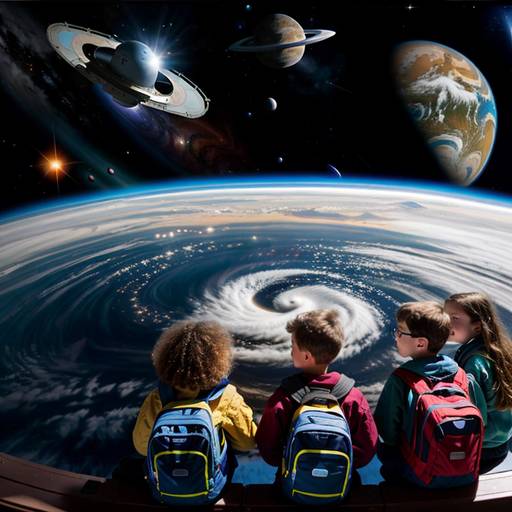
This lesson plan is designed for 1st-grade students to explore the solar system and learn about its components, including the sun and the eight planets. The lesson begins with a discussion to gauge prior knowledge, followed by a storybook reading that introduces key concepts. An interactive segment involves a hands-on activity where students work in small groups to create their own solar system models using craft materials, which fosters teamwork and creativity. As students work on their models, they learn unique facts about each planet. The lesson concludes with a discussion to reinforce learning and a takeaway activity where students create a personalized booklet about the solar system. The plan includes options for engaging videos or online games to further enhance learning. Assessment is based on observation during activities and the completion of the personalized booklets. Differentiation strategies are included to support all learners, ensuring an inclusive and engaging experience for every student.
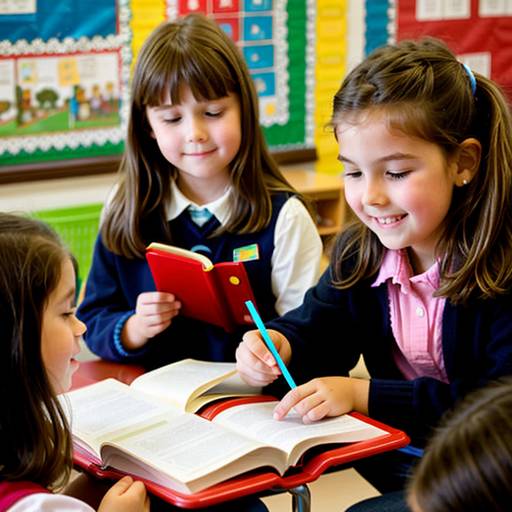
This 2nd grade language arts lesson focuses on enhancing reading skills and comprehension through the use of illustrations and predictions. Students begin by observing the cover of a picture book and making initial predictions about the story. The teacher models how to use illustrations to understand and anticipate story developments through a read-aloud activity.
In pairs, students explore their own pictures books, discussing their predictions and sharing their thoughts through the "Think, Pair, Share" strategy. After reading, they complete a "Main Idea and Details" worksheet to identify the main idea of their story and provide supporting details. The lesson concludes with a whole-class sharing session, allowing students to discuss their findings and reflections. Assessment is conducted through observation and the evaluation of worksheets, while differentiation strategies are in place to support diverse learners. Extensions include creating a prediction wall and organizing a "Book Talk" session, further promoting engagement and comprehension skills.