
Filters
Level
Grade
Subject
Subject Area
Subject Topic
Standard(s)
Audience
Keyword
DurationMinutes
Lesson Plans

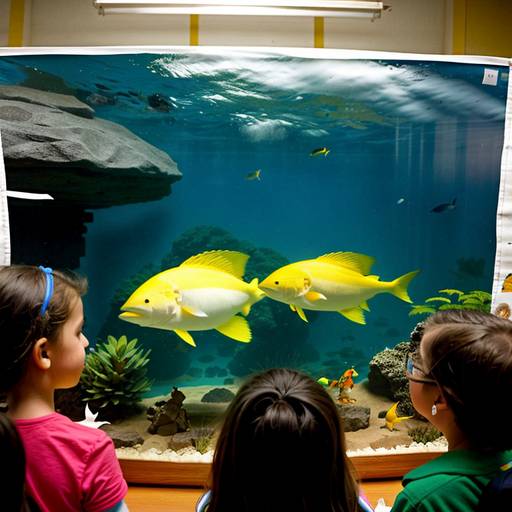
In this 2nd-grade science lesson focused on life science and animals, students will learn about animal habitats and adaptations. The lesson begins with a discussion on what students know about animals, introducing key concepts of habitats and adaptations. A read-aloud session featuring a picture book about various animals and their environments allows students to engage with the material and make predictions.
Students will then work in small groups, assigned to different habitats, where they will match animal flashcards with their corresponding habitats and discuss adaptations that help the animals survive. Following this collaboration, each student will create a habitat diorama, incorporating an animal of their choice along with a description of its adaptations.
The lesson concludes with group presentations, allowing students to share their creations and reinforce their understanding of the concepts. Assessment will be based on participation, the quality of dioramas, and individual descriptions, with accommodations and extensions available to support diverse learners and deepen engagement with the material. Overall, this lesson emphasizes teamwork, creativity, and a foundational understanding of the relationship between animals and their environments.

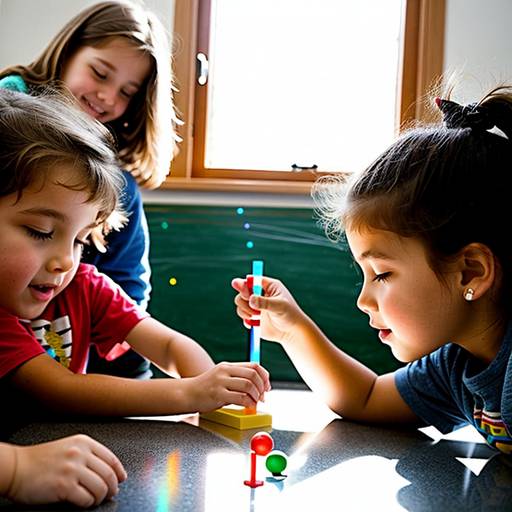
In this preschool science lesson, students will engage in an exploration of energy through hands-on activities that focus on motion and light. The lesson begins with a circle discussion to introduce the concept of energy and its role in movement and illumination. The children will rotate through two stations: one where they experiment with flashlights and mirrors to observe the behavior of light, and another where they interact with battery-operated or wind-up toys to see how energy creates motion. Following these explorations, the class will gather together to reflect on their discoveries, documenting their observations on a poster board. Finally, students will express their favorite findings through drawings and share them with peers. This engaging and interactive approach allows children to develop their curiosity, collaborative skills, and foundational understanding of energy in a fun, safe environment.

This 4th-grade lesson plan focuses on exploring the major human body systems, including the skeletal, muscular, circulatory, respiratory, and digestive systems. Over the course of one hour, students will learn about the functions of each system and how they work together to maintain health. The lesson begins with an engaging introduction to the topic, followed by direct instruction using visual aids and, if available, a 3D body model. In small groups, students will research a specific body system, create a poster summarizing their findings, and present it to the class. The lesson concludes with a review of key concepts and an exit ticket to assess understanding. Extensions are provided to encourage further exploration of specific organs within the systems. Overall, the lesson aims to foster students' knowledge and appreciation of the human body.

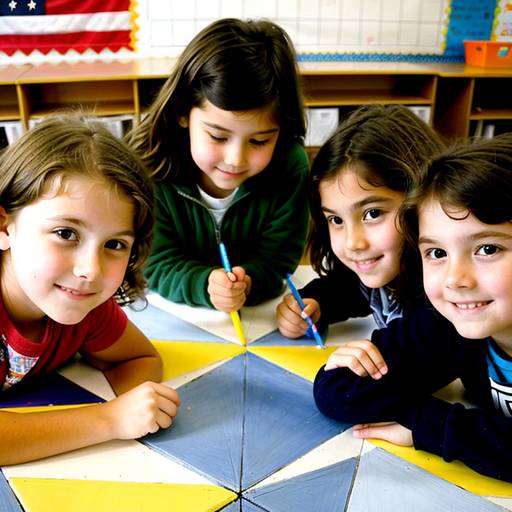
In this 3rd-grade math lesson, students will learn about geometry and angles by identifying and classifying different types of angles: acute, right, and obtuse. The lesson begins with an introduction discussing the concept of angles in real-life objects, followed by a direct instruction segment where the teacher demonstrates how to use a protractor to measure angles in various shapes.
During guided practice, students will engage with angle worksheets to measure and classify angles, collaborating with a partner to discuss their findings. The hands-on activity involves a scavenger hunt where small groups explore cardboard shapes to identify and chart angles. Each group will then present their discoveries to the class, reinforcing their understanding of the material.
The lesson concludes with a recap of key concepts and a homework assignment encouraging students to find and photograph objects with different angles in their home environment. Assessment will be based on student participation, accuracy in worksheet completion, and the quality of group presentations. Differentiation strategies are included to support diverse learning needs within the classroom. Overall, the lesson combines exploration, collaboration, and real-world connections to make the study of angles engaging and meaningful.
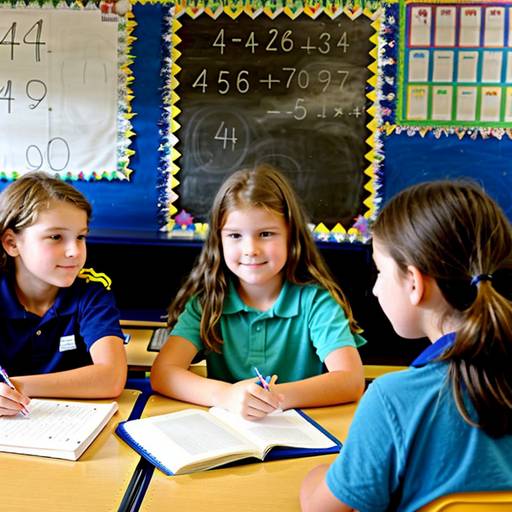
In this 4th-grade math lesson, students will explore the concepts of geometry and angles. They will learn to identify and classify different types of angles—acute, right, and obtuse—through a combination of direct instruction and hands-on activities. The lesson begins with a discussion about angles in everyday life, followed by a demonstration on how to measure angles using a protractor.
Students will practice measuring and classifying angles on the whiteboard and then engage in an independent scavenger hunt to find and record examples of angles around the classroom or at home. The lesson concludes with students sharing their findings, reinforcing their understanding of angle types, and participating in a quick identification quiz.
Assessment will involve observing student participation and reviewing their scavenger hunt worksheets to ensure comprehension of the material. Opportunities for extensions will also be provided for advanced learners. Overall, the lesson aims to create an interactive and relatable learning experience centered around the fundamental concepts of angles in geometry.
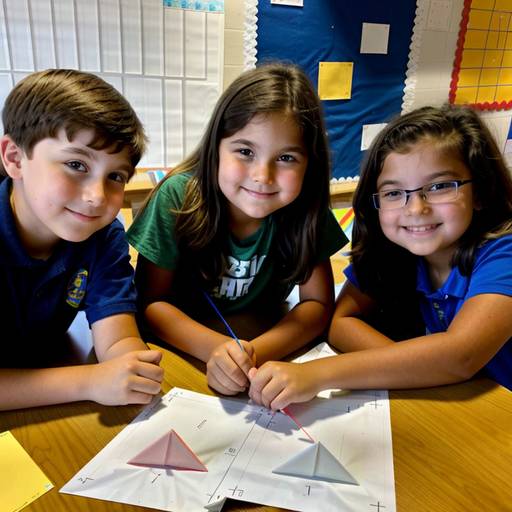
In this 4th grade math lesson plan, students will explore the concepts of geometry and angles, focusing on identifying and classifying angles as acute, right, and obtuse. The lesson begins with a discussion about angles in everyday life, followed by direct instruction that includes definitions and visual demonstrations on the whiteboard. Students will then engage in guided practice by creating and measuring angles using protractors and rulers. Afterward, they will complete worksheets that involve identifying angle types and practicing measurements independently. The session concludes with a review and optional extension activity that encourages students to find and document examples of angles and shapes in their environment. Assessment will include observing student participation and reviewing their completed worksheets to ensure understanding of the material. Overall, this lesson aims to foster a foundational understanding of angles and their applications in geometry.
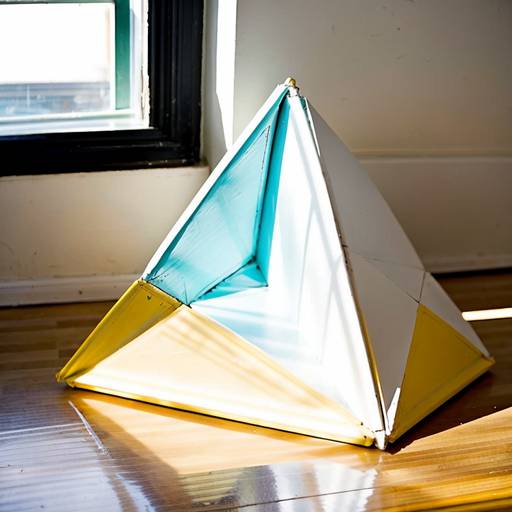
In this engaging 60-minute math lesson for third graders, students will explore the concept of angles and their classifications, including acute, right, and obtuse angles. The lesson begins with a discussion and visual identification of angles in the classroom, emphasizing their significance in everyday life.
Following this introduction, students will learn how to measure angles using protractors through direct instruction, complete with the aid of angle flashcards for visual reinforcement. In a guided practice activity, students will work in small groups to find and measure different angles in their environment, sharing their discoveries with the class.
For independent practice, students will create unique shapes using colored paper, ensuring they include at least one of each angle type and labeling them accordingly. The lesson wraps up with a gallery walk, allowing students to showcase their creations and identify angles in their classmates' work.
Assessment will occur through the evaluation of their angle hunt worksheets and observation during the creative activity. This interactive lesson not only promotes understanding of angles but also fosters collaboration and creativity among students.
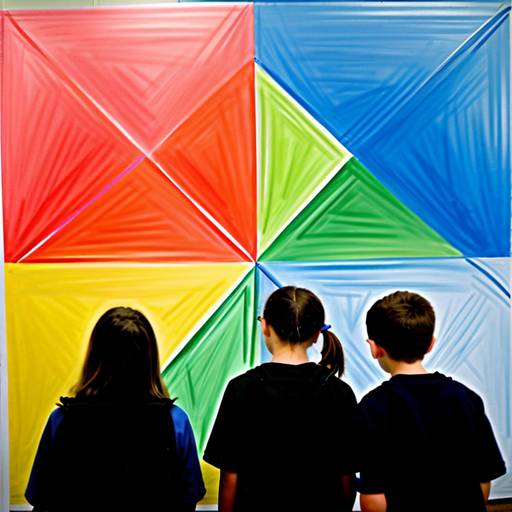
The lesson plan for 5th-grade students focuses on exploring geometry, specifically angles. It aims to help students define and identify three main types of angles: acute, right, and obtuse. Throughout the 60-minute session, students will engage in discussions about where angles can be found in everyday life, followed by direct instruction on how to measure angles using a protractor.
Guided practice will involve students measuring and classifying angles on worksheets while collaborating in pairs. The lesson incorporates a real-world application through an "Angle Scavenger Hunt," where students search for objects demonstrating the various types of angles in the classroom or school environment.
The class will conclude with a reflection on the learning experience, encouraging students to share their discoveries. Assessment will be based on participation during activities and accuracy in measuring angles. The lesson also includes potential extensions for advanced learners and differentiation strategies to support all students, ensuring a comprehensive understanding of angles in geometry.

This 4th-grade math lesson focuses on geometry and angles, specifically teaching students to identify and classify acute, right, and obtuse angles. The lesson begins with a discussion about angles and their importance in real-world contexts, followed by a visual presentation of the different types of angles. Students are guided through measuring angles using a protractor, working collaboratively to practice angle identification and classification on worksheets. They then create their own angles and accompany them with real-world examples on a poster. The lesson concludes with a sharing session where students discuss their work, reinforcing their understanding of the concepts presented. Assessment is conducted through the collected worksheets and group interactions, with differentiation strategies in place to support learners at varying skill levels. This engaging and hands-on lesson helps students connect geometry to their everyday lives.
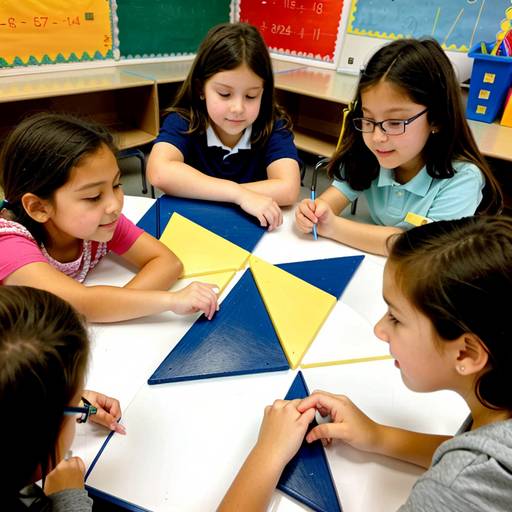
In this engaging 3rd-grade math lesson, students will explore the concepts of geometry and angles, focusing on identifying and measuring different types of angles: acute, right, and obtuse. The lesson commences with a discussion to build background knowledge about angles found in everyday life, followed by a clear introduction of the three angle types.
Students will receive direct instruction on using a protractor to measure angles accurately, which will be practiced through angle worksheets that require them to classify the angles they measure. Following guided practice in pairs, students will create a unique art project using various angles, fostering creativity and application of the geometry concepts learned.
The lesson concludes with students sharing their artwork, explaining the types of angles incorporated in their designs. Assessment is based on their angle worksheets and art projects, ensuring a comprehensive evaluation of their understanding. Adaptations and extensions are provided to support diverse learning needs and maintain engagement. Overall, this lesson combines theoretical knowledge with hands-on activities to solidify students' understanding of geometry and angles.