
Filters
Level
Grade
Subject
Subject Area
Subject Topic
Standard(s)
Audience
Keyword
DurationMinutes
5th Grade Lesson Plans

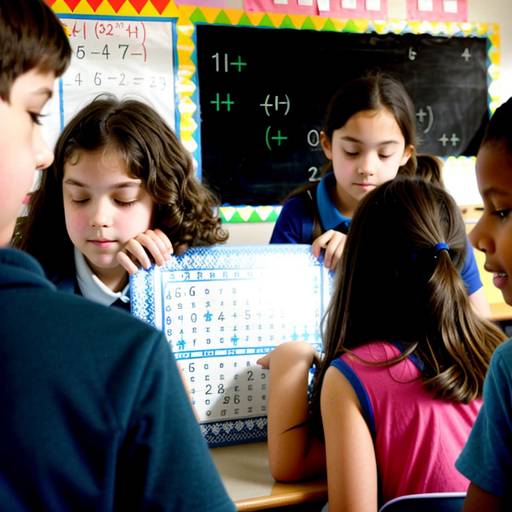
In this 5th-grade math lesson, students will explore the concept of dividing fractions through a variety of engaging activities. The lesson begins with a review of fractions, encouraging students to share real-life examples. The teacher will introduce the process of dividing fractions, emphasizing the rule of multiplying by the reciprocal, and will model this through simple examples on the whiteboard.
Students will then participate in a guided group activity where they will use fraction tiles or circles to solve division problems and visualize their answers. Afterward, they will complete a worksheet that includes both direct division problems and word problems related to real-life scenarios, fostering independent practice and collaborative discourse among peers.
The lesson will conclude with a recap of key concepts, followed by an exit ticket where students will reflect on what they learned and any lingering questions they may have. Extensions for further practice will be provided, including interactive games and a project involving adjusting recipes to apply their understanding of dividing fractions in a practical context. Assessment will be based on participation, worksheet accuracy, and reflections shared in exit tickets.


This 5th-grade Language Arts lesson focuses on introducing students to various reading genres. The objective is for students to identify and understand different genres, explore their unique characteristics, and select books for independent reading. The lesson begins with a discussion about favorite books and genre categorization. Then, students participate in a guided practice session where they collaboratively create a chart of genres and their traits, with examples discussed as a class.
The core of the lesson involves students rotating through “Genre Exploration Stations” where they can examine books from different genres and fill out worksheets noting key characteristics. After this engaging group activity, students independently choose a book that interests them, recording details about their selection. The lesson concludes with a wrap-up discussion where students share their chosen books, fostering a sense of community and exploration in reading. Assessment is conducted informally through interactions and the collected worksheets, and potential extensions include presentations and a reading challenge.

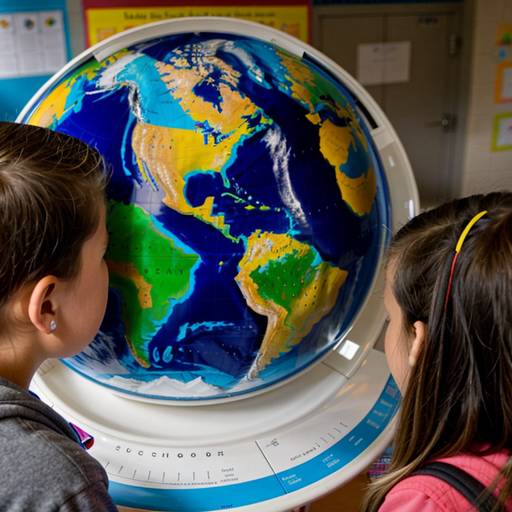
This 5th-grade social studies lesson focuses on geography and landforms, aiming to enhance students' understanding of various landforms such as mountains, valleys, plains, plateaus, hills, and deserts. Over two class periods, students will engage in interactive discussions, explore essential vocabulary, and watch informative presentations about how these landforms are formed and where they can be found around the world.
In small groups, students will research a specific landform and prepare presentations to share their findings with the class. The lesson culminates in a collaborative activity where students will create a colorful, labeled landform map, incorporating 3D elements to represent the different geographical features they have studied.
Students will be evaluated based on their group presentations, participation in creating the map, and understanding demonstrated through a brief quiz. The lesson encourages hands-on learning and critical thinking, fostering a deeper appreciation for Earth’s diverse landscapes and their importance in geography. Extensions such as individual projects and potential field trips can further enhance the learning experience.

This lesson plan is designed for 5th-grade students to explore the concepts of geometry and area. The objectives are to help students define geometric shapes such as squares, rectangles, and triangles, and to teach them how to calculate the area of these shapes using specific formulas. The lesson begins with an engaging discussion about familiar shapes in their surroundings, followed by direct instruction that introduces the area formulas and demonstrates their application.
Students will participate in hands-on activities where they create their own geometric shapes on graph paper, using rulers and cutouts, enabling them to apply their understanding of area in a practical way. Peer review and collaboration are encouraged as students verify each other's calculations.
After guided practice, students will complete an independent worksheet that challenges them to calculate the area of various shapes. The lesson concludes with a class review of the worksheet answers and a discussion on the real-world applications of calculating area. As an assessment, students will submit an exit ticket that reflects their understanding of area in their own words, providing insight into their grasp of the concept. Accommodations are made for diverse learners, ensuring all students can engage with the material effectively.
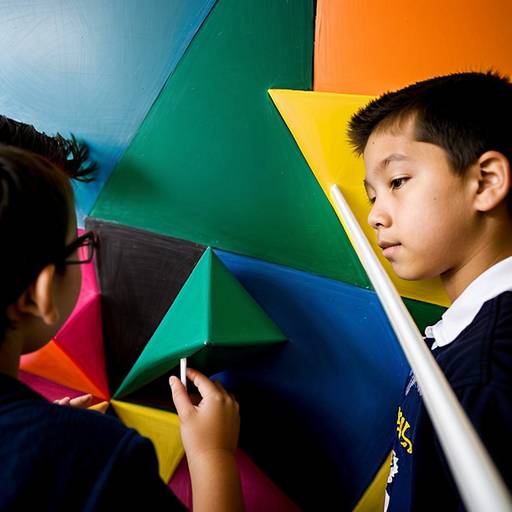
In this 5th-grade math lesson, students will explore geometric shapes and learn how to calculate their perimeters. The lesson begins with an introduction to geometry and the concept of perimeter, including simple definitions and formulas for various polygons such as squares, rectangles, triangles, and pentagons. Students will then engage in creating their own geometric shapes on graph paper and calculating the perimeter for each shape they create.
Following this hands-on activity, students will work independently on worksheets that feature a variety of shapes, applying the formulas learned to calculate perimeter. The lesson also encourages real-world application by having students measure the perimeter of objects within the classroom.
To conclude, the class will review the key concepts and formulas, while students complete an exit ticket to reflect on their learning and pose any lingering questions. Assessment will include evaluating worksheets and observing participation during activities, with extensions available for advanced learners and adaptations provided for those needing extra support.
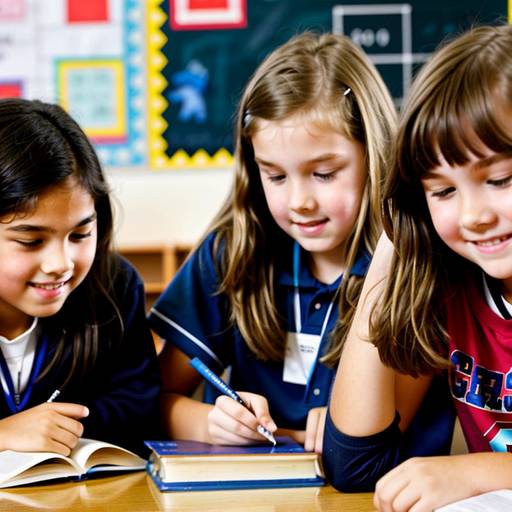
In this 5th grade Language Arts lesson plan, students will explore the importance of grammar and punctuation in writing. The lesson begins with an engaging discussion on how punctuation influences meaning, followed by an interactive whiteboard activity where students correct sentences that lack punctuation.
Next, students participate in a Punctuation Card Game where they work in small groups to identify and apply appropriate punctuation marks to given sentences. Afterward, individual practice is facilitated through worksheets that challenge students to correct sentences, convert statements into questions, and creatively use punctuation in their writing.
The lesson concludes with a sharing session, allowing students to reflect on their learning and the impact of punctuation on clarity in communication. Assessment will be based on participation and worksheet performance, with extensions available for those seeking further practice. Overall, the lesson fosters collaboration and hands-on learning to enhance students’ grammar and punctuation skills.
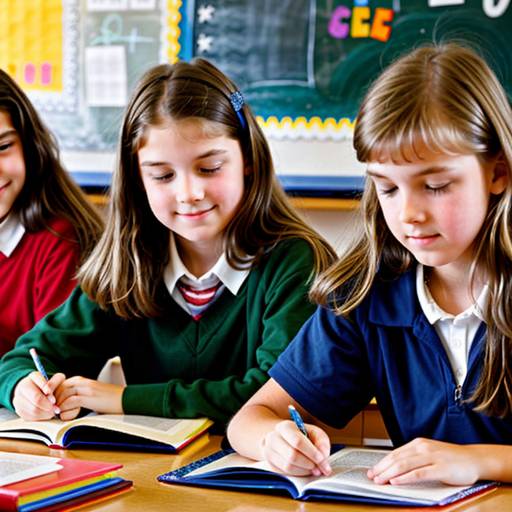
In this 5th-grade Language Arts lesson plan focused on grammar and capitalization, students will learn the essential rules for using capital letters correctly in writing. The lesson begins with an engaging discussion about the importance of capitalization, followed by the introduction of basic rules through a handout. Guided practice involves identifying and correcting capitalization errors in sentences on the whiteboard.
Students then work in pairs to read a short story filled with intentional capitalization mistakes, highlighting and correcting them collaboratively. After sharing their corrections with the class, students apply their knowledge by writing a short paragraph about their favorite holiday or activity, ensuring to use proper capitalization.
The lesson concludes with a recap of key concepts and a review of student work. Assessments include observing participation, evaluating corrected stories, and reviewing the written paragraphs. Adaptations are provided for varying skill levels, and a follow-up activity encourages creativity through photo captioning while reinforcing capitalization rules.

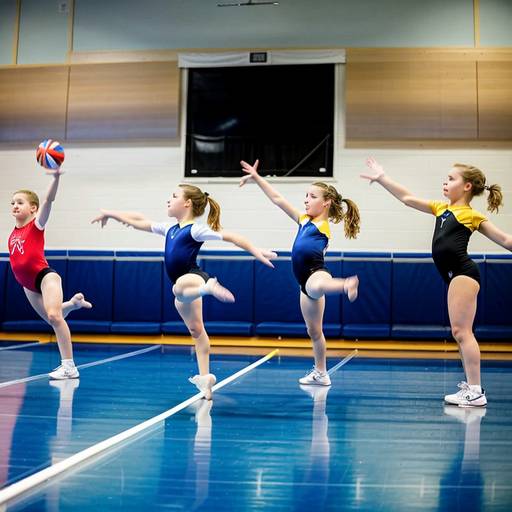
This lesson plan is designed for 5th-grade students and focuses on developing movement, balance, and teamwork through gymnastics and sports-related activities. The session begins with a warm-up that includes light jogging and dynamic stretches, followed by an introduction to key gymnastics skills such as forward rolls, cartwheels, and balance techniques.
Students are divided into small groups and rotate through skill development stations, allowing them to practice each gymnastics movement with partner support. Additionally, a coordination station with hula hoops is included to enhance their agility. A team challenge, featuring a relay race that incorporates the skills practiced, fosters collaboration and sportsmanship among students.
The lesson concludes with a cool-down stretching session and a reflective discussion about the importance of balance, coordination, and teamwork. Overall, the plan aims to engage students in physical activity while promoting positive social interactions and fitness.

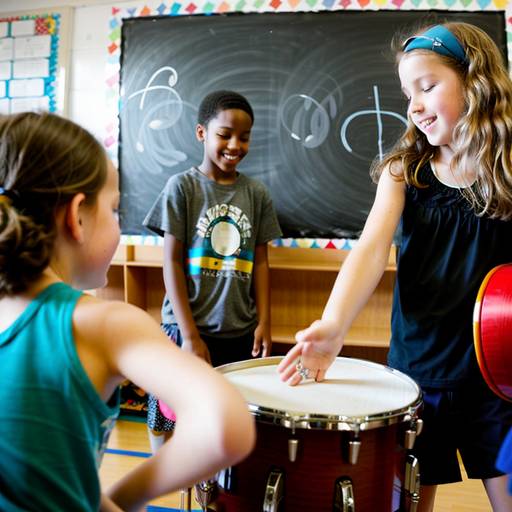
In this 5th-grade music lesson, students will explore the concept of rhythm through a combination of clapping, movement, and percussion instruments. The session will begin with a clapping exercise to warm up and introduce the idea of rhythm, followed by a discussion on its importance in music and daily life. Students will learn to read basic rhythmic notations including quarter notes, eighth notes, half notes, and rests through guided practice.
The lesson includes interactive stations where students engage in body percussion, play percussion instruments, create movement sequences, and compose their own rhythmic patterns in small groups. After rotating through the stations, students will have the opportunity to share their creations with the class, promoting collaboration and creativity.
The lesson concludes with a reflection on what they learned and how they can incorporate rhythm into their everyday lives. Assessment will be based on observation during activities and evaluation of group presentations. Additionally, there are suggestions for extensions to further develop students' understanding of rhythm, including more complex patterns.

In this 60-minute lesson for 5th graders, students will explore the essential concepts of digital citizenship and the critical importance of online privacy protection. The lesson begins with a discussion on responsible online behavior, transitioning into a focus on why safeguarding personal information is vital. Students will learn how to create strong passwords and navigate privacy settings on popular platforms.
During a group activity, students will analyze various scenarios involving online sharing and assess their safety, ultimately presenting their findings to the class. The lesson concludes with a review of key takeaways and the distribution of a "Privacy Protection Checklist" that outlines practical steps for maintaining online security. Students will be assessed based on their participation in discussions, group activities, and the completion of the checklist.
To reinforce the concepts learned, students will have the opportunity to create a poster or digital presentation as homework, highlighting the importance of online privacy. Overall, this lesson fosters critical thinking about digital behavior while encouraging a proactive approach to privacy in the digital age.