
Filters
Level
Grade
Subject
Subject Area
Subject Topic
Standard(s)
Audience
Keyword
DurationMinutes
4th Grade Science Lesson Plans

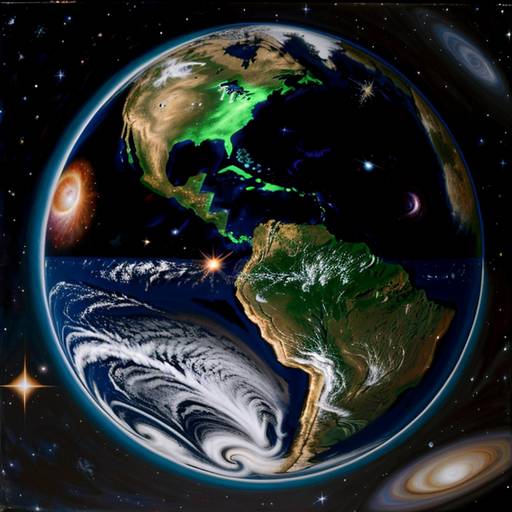
In this 4th-grade science lesson plan, students will engage in exploring the solar system and understanding celestial bodies such as planets, moons, and stars. The lesson begins with a discussion about astronomy, followed by a short video that introduces the solar system. Students will learn about the order of the planets, their characteristics, and how they relate to Earth, as well as the importance of space exploration and key missions.
Following this introduction, students will work in small groups to research a specific planet or celestial body, creating informative posters that highlight its features and interesting facts. Each group will then present their findings to the class, fostering engagement and discussion. The lesson concludes with a recap of key concepts and an assignment for students to complete at home, illustrating significant milestones in space exploration.
Assessment will include participation in discussions, evaluation of group posters, and the completion of the take-home worksheet. The lesson offers opportunities for extensions, such as field trips or invitations to guest speakers, and encourages students to observe the night sky and document their findings in a personal journal.

This fourth-grade science lesson focuses on introducing students to the fascinating world of stars and constellations. It begins with an engaging discussion about what stars are and their essential role in the universe, covering their composition, lifecycle, and various types. Students learn to identify different kinds of stars, such as main-sequence stars, red giants, and white dwarfs, while also exploring constellations and their navigation significance. Through a guided mapping activity, students use star charts to locate and identify constellations, followed by a hands-on project where they create their own night sky on black construction paper, incorporating stickers and drawings to represent stars and constellations. The lesson culminates in sharing their creations and reflecting on their learning, alongside a homework assignment that encourages them to observe the night sky with an adult. Assessment includes evaluating participation and understanding during activities and reviewing the accuracy and creativity of their projects. The lesson supports differentiation, catering to various learning needs and encouraging further research for advanced learners.

This lesson plan for 4th-grade students focuses on astronomy, specifically the study of stars and constellations. It begins with engaging discussions about the nature of stars, including their composition and twinkling effect, followed by an exploration of various star types and their life cycles using visual aids. Students then identify and research different stars and constellations using star charts and online resources.
The creative component of the lesson allows students to design their own constellations on black construction paper, incorporating star stickers or dots and connecting them with lines or glitter. They will name their created constellations and describe their significance.
The lesson wraps up with a gallery walk where students present their projects to the class and reflect on their newfound knowledge. Assessment includes observational notes during activities and a review of the constellation creations. Additionally, suggestions for extensions, such as field trips and star-gazing nights, deepen students’ engagement with the topic. Overall, the lesson fosters both scientific understanding and creative expression related to the wonders of the night sky.
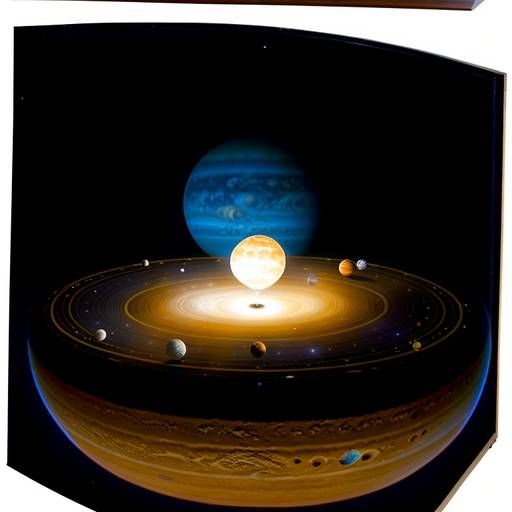
In this 4th-grade science lesson, students will explore the solar system, focusing on the Sun and the eight planets. The lesson begins with a discussion about what the students already know, followed by a brief video overview of the solar system. The teacher will introduce key concepts, including the Sun's crucial role and the order of the planets, while highlighting their unique characteristics.
Students will then work in small groups, each assigned a specific planet. Using provided fact sheets, they will create posters that include the planet's name, a drawing, interesting facts, and its relative position to the Sun. After completing their posters, groups will present their work to the class, allowing for peer interaction and questions.
To conclude the lesson, the class will sing a fun song that reinforces their knowledge of the planets. As an optional assessment, students may write a paragraph about their favorite planet, sharing why they find it interesting. The lesson encourages collaboration, creativity, and engagement with the subject matter, and provides opportunities for differentiation based on students’ varying levels of understanding.

This 4th-grade physical science lesson focuses on the concepts of motion, force, speed, and the effects of different surfaces on the movement of objects. The class begins with an engaging discussion about transportation and the factors that influence speed, followed by definitions of key terms. Students are then divided into small groups to conduct a hands-on experiment using toy cars and ramps set up on various surface materials. They will roll the cars down the ramps, measure the distances traveled, and time how long it takes for each car to reach the bottom. After conducting multiple trials and recording their data, groups will create bar graphs to analyze their findings and identify patterns in how different surfaces affect motion. The lesson concludes with group presentations and a reflective writing activity, allowing students to summarize their understanding of the relationship between forces and motion. Assessment includes observation of engagement, evaluation of data collection, and review of exit tickets. Extension activities may involve creating reports on real-life applications of motion and planning a field trip to a science museum.
In this 4th-grade earth science lesson, students will explore the three main types of rocks: igneous, sedimentary, and metamorphic. The lesson begins with an engaging introduction to rocks, highlighting their materials and characteristics. Through direct instruction, students will learn about the formation processes and key features of each rock type using visual aids and examples.
Following the introduction, students will work in small groups to examine various rock samples, utilizing magnifying glasses and rock identification guides. They will classify the rocks and detail their observations on a provided worksheet. Each group will then share their findings with the class, contributing to a collective chart of rock characteristics.
As a closing activity, students may discuss any rocks they have collected from outside, reflecting on their favorite rock type in a short homework assignment. Assessment will focus on student participation, the accuracy of their worksheets, and their presentations. Extensions can include introducing the rock cycle for advanced learners and incorporating creative activities like diagram creation. This lesson promotes hands-on learning, collaboration, and fundamental knowledge of Earth's geological features.
This lesson focuses on introducing 4th-grade students to the concept of matter and its three states: solid, liquid, and gas. Students will begin by discussing their existing knowledge of matter and learn about the characteristics that define each state. The lesson incorporates hands-on activities, where students observe a melting ice cube to witness the transition from solid to liquid, a teacher-led demonstration of boiling water to illustrate the change from liquid to gas, and an experiment with an inflated balloon to understand how gas occupies space.
Through these experiments, students will engage in active observation and reflection, encouraging them to articulate what they have learned about the properties of matter. They will complete worksheets to reinforce their understanding and share findings in group discussions. The lesson aims to help students grasp fundamental scientific concepts while promoting inquiry and critical thinking through exploration and experimentation.
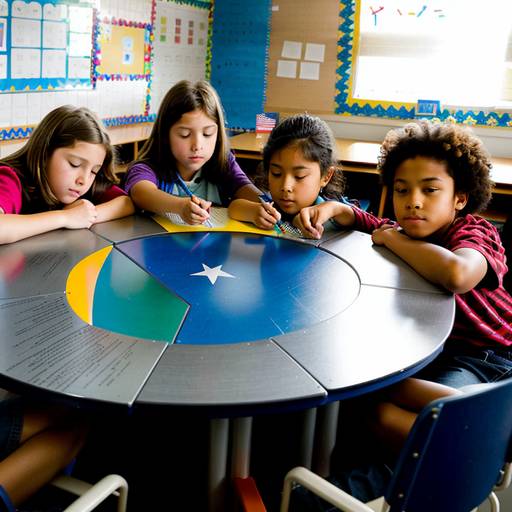
This 4th-grade science lesson focuses on helping students understand the fundamental concepts of forces and energy, specifically kinetic and potential energy, and their relation to motion. The lesson begins with an engaging discussion to elicit student ideas about how objects move. Through direct instruction, students learn about the definitions and real-life examples of kinetic and potential energy, as well as the role of forces like gravity.
Students participate in a hands-on experimentation activity in small groups, where they use toy cars, wooden ramps, and weights to explore how varying ramp heights and added weights affect motion and energy. They record their observations on worksheets to reinforce their understanding. The class reconvenes to share findings and discuss important concepts, solidifying their comprehension through collaborative learning.
The lesson concludes with a recap of the key concepts, encouraging students to identify examples of potential and kinetic energy in their everyday lives, as well as discussing the impact of forces on those energies. Assessment is based on worksheet completion and participation in discussions and activities, with extensions available for advanced learners to explore further connections to energy transformations and simple machines. This lesson aligns with Next Generation Science Standards and fosters an engaging and interactive learning environment.

This lesson plan is designed for 4th-grade students to explore the concept of forces, specifically focusing on pushes and pulls. Over the course of 60 minutes, students engage in discussions to identify everyday examples of forces, learn relevant vocabulary, and conduct hands-on experiments using toy cars and ramps. They will work in pairs to observe how different forces affect the motion of objects and measure their outcomes as they construct ramps at various angles.
Following this guided experimentation, students create visual charts to represent their findings and share their observations with the class, reinforcing their understanding of how forces impact motion. The lesson concludes with a review of key concepts and an exit ticket activity that allows students to reflect on what they have learned. Assessment involves evaluating student participation, group presentations, and individual comprehension through exit tickets. The plan also includes extensions that encourage students to connect forces to real-world applications, such as sports, and provides opportunities for further exploration. Overall, this lesson promotes active learning and scientific thinking through collaborative activities and experimentation.
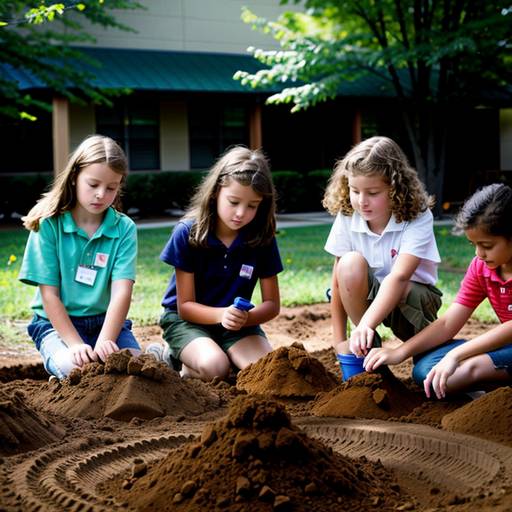
In this Earth Science lesson for 4th graders, students will explore the importance and composition of soil, as well as its various layers. The lesson begins with an engaging discussion about soil, inviting students to share their experiences with digging in the dirt and what they found. The instructor will explain the main components of soil—minerals, organic matter, water, and air—and illustrate the different soil layers, or horizons, using visual aids.
Following the introduction, students will participate in a hands-on activity where they will examine soil samples from different types and observe the layers that form when mixed with water. Working in small groups, they will document their observations using magnifying glasses and fill out worksheets that detail their findings.
The lesson concludes with a group discussion where students reflect on their observations and the role of soil in supporting life. To assess understanding, a quick exit quiz will help reinforce key concepts. Optional extensions will encourage students to collect soil samples from their surroundings, while adaptations will support varying student needs. This interactive and engaging lesson aims to deepen students' appreciation of soil and its vital role in the environment.