
Filters
Level
Grade
Subject
Subject Area
Subject Topic
Standard(s)
Audience
Keyword
DurationMinutes
4th Grade Science Lesson Plans

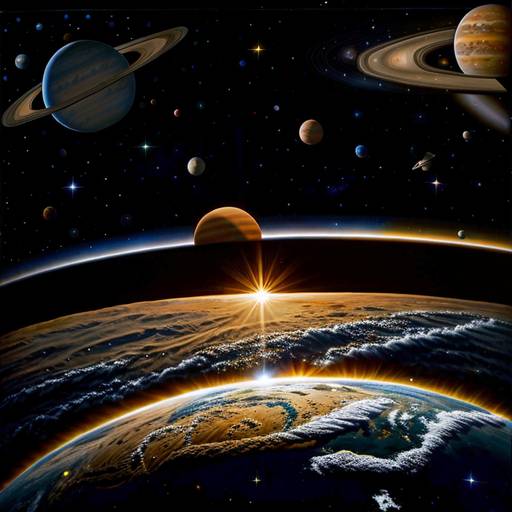
This lesson plan is designed for 4th-grade students to explore the solar system and its various celestial bodies. Over two class periods, students will first learn about the planets, the Sun, and other components of the solar system through group research and presentations. Each group will present key facts about their assigned planet or celestial body, promoting engagement and discussion among classmates.
In the second class, students will create a scaled model of the solar system using materials like styrofoam balls and paint. This hands-on activity will emphasize the concept of scale, enabling students to visualize the relative sizes and distances of the planets. Throughout the lesson, students will enhance their understanding of astronomy while developing teamwork, research, and hands-on skills. Assessment will focus on participation, the quality of presentations, and the completed solar system models. Extensions and differentiation strategies are also included to accommodate various learning needs.
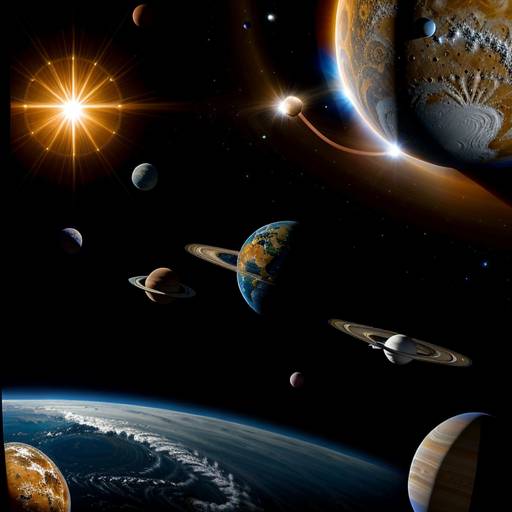
In this 4th-grade science lesson, students will explore the solar system and learn about the individual planets and space exploration. The lesson begins with an engaging discussion to assess prior knowledge and introduces key concepts about the solar system, including the order of the planets and their main characteristics.
Following direct instruction, students will work in small groups to research a specific planet using provided fact cards and model representations. Each group will prepare a short presentation to share interesting facts about their planet with the class. This collaborative activity encourages teamwork and enhances communication skills.
The lesson concludes with a reflective discussion where students can express what they learned. To reinforce their understanding, students will complete a "Planet Journal" worksheet to document information about the planets. Assessment will focus on group participation, presentation clarity, and the completion of the journal. Optional extensions include creating a model of a favorite planet or exploring space-related resources further, while modifications are provided to ensure all students can engage meaningfully with the content.
This 4th-grade lesson plan focuses on the exploration of major human body systems, including the circulatory, respiratory, digestive, skeletal, and muscular systems. Over two class periods, students will learn about the functions and components of each system through direct instruction, group activities, and interactive demonstrations. They will work in small groups to create informative posters detailing their assigned body systems, which they will present to the class. Additionally, they will participate in a hands-on relay game where they complete challenges related to each system. The lesson concludes with a class discussion on the importance of maintaining a healthy lifestyle. Assessments will include group presentations, participation in activities, and a homework assignment, with opportunities for extensions like inviting a healthcare professional to speak on health topics. Overall, the lesson aims to engage students and foster a deeper understanding of how the human body functions.
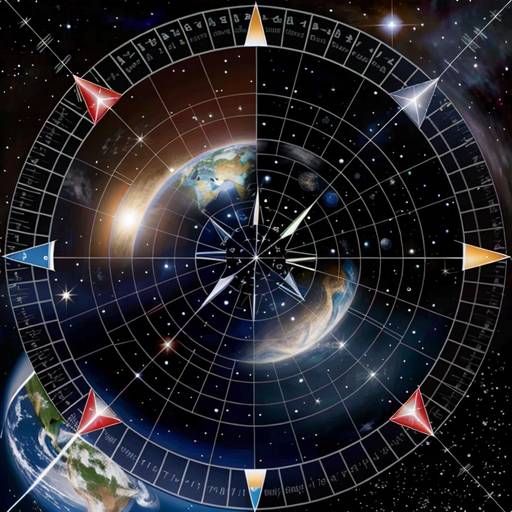
This 4th-grade science lesson focuses on astronomy, specifically exploring stars and constellations. Students will learn to identify and name various constellations while understanding their significance and the concept of star formation. The lesson begins with an engaging video presentation that sparks student interest, followed by a discussion that encourages students to share their prior knowledge.
Through direct instruction, students will be introduced to popular constellations and their historical importance. They will participate in a guided activity where they work in groups to create posters featuring a chosen constellation, including drawings and interesting facts. Following this collaborative effort, each student will independently design their own constellation on black construction paper and craft a short story that describes their creation.
In conclusion, students will share their constellations and stories with the class, reinforcing their learning and promoting creativity. Assessment will involve evaluating participation, the accuracy and creativity of the constellation posters, and the quality of individual stories. Extensions include potential night sky viewing events and the use of digital resources for further exploration. Overall, the lesson aims to make astronomy engaging and accessible while fostering creativity and teamwork among students.
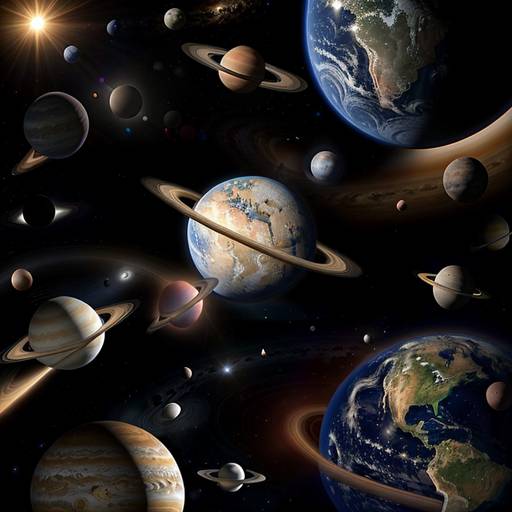
In this engaging science lesson for 4th graders, students will explore the solar system and its eight planets. The lesson begins with a short video introduction, followed by a class discussion encouraging students to share what they already know about space. A presentation will then highlight the key characteristics of each planet, including their orbits around the Sun and the vast distances in space.
Students will then participate in a hands-on activity where they will work in small groups to create models of their assigned planets using various craft materials. They will arrange these models in order from the Sun, visually demonstrating the solar system's layout. Each group will present their planet to the class, sharing interesting facts, fostering collaboration and public speaking skills.
The lesson will conclude with a recap of the day’s activities and an open discussion, allowing students to reflect on what they found most interesting. Assessment will be based on participation, presentations, and worksheet reviews, with opportunities for extension through research projects on additional celestial objects. This lesson effectively combines visual aids, teamwork, and creativity to foster a deeper understanding of astronomy.
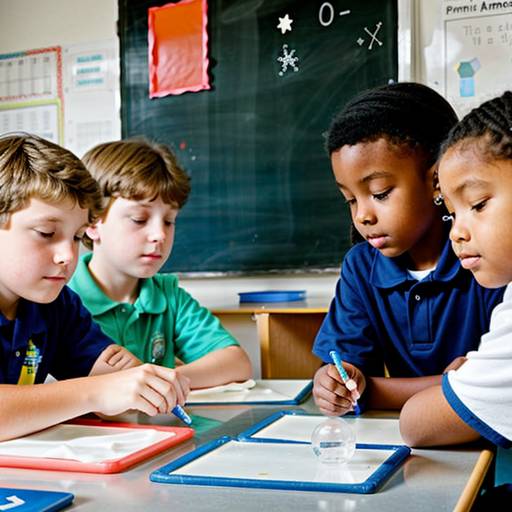
This 4th-grade science lesson focuses on the fundamental concepts of matter within the realm of physical science. Students will learn to identify and classify matter into three states: solids, liquids, and gases. Through hands-on activities, such as measuring mass and volume, and observing the properties of various objects, they will develop a deeper understanding of how matter behaves and interacts in different circumstances.
The lesson begins with an engaging introduction that prompts students to think about what matter is and how they encounter it daily. Direct instruction follows, where students will observe and discuss the characteristics of different states of matter and the processes involved in state changes, such as melting and evaporation.
In guided practice, students will work in groups to classify various objects and measure their properties. They will also engage in an independent worksheet activity to consolidate their learning. The class will conclude with a review of key concepts and an exit ticket where students reflect on their newfound knowledge and pose any remaining questions.
Overall, the lesson aims to foster curiosity and comprehension of matter while catering to diverse learning styles through interactive and collaborative elements.
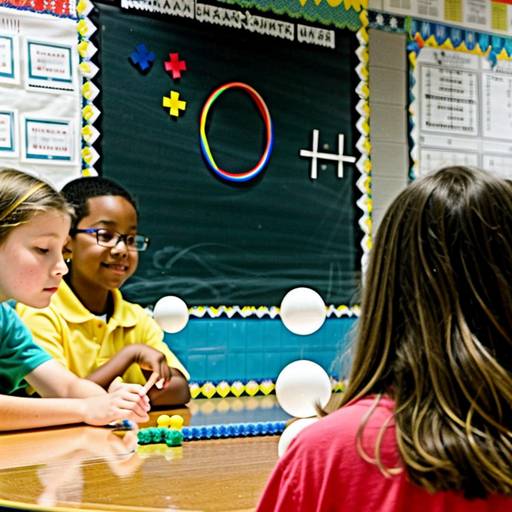
This 4th grade science lesson focuses on the concepts of motion and forces, helping students understand how these fundamental principles affect the movement of objects. Students will engage in hands-on activities by testing toy cars on ramps of varying heights and weights, observing and measuring the distances they travel. The lesson includes stations where students can experiment with pushing objects to discover the relationship between force and movement.
Throughout the lesson, students will record their observations and discuss their findings in small groups, fostering collaboration and critical thinking. This approach not only reinforces the scientific concepts of motion and forces but also encourages students to ask questions and make predictions. At the end of the lesson, students will summarize what they learned and reflect on their understanding through an exit ticket. This comprehensive plan supports interactive learning and lays a foundation for further exploration of physical science concepts.
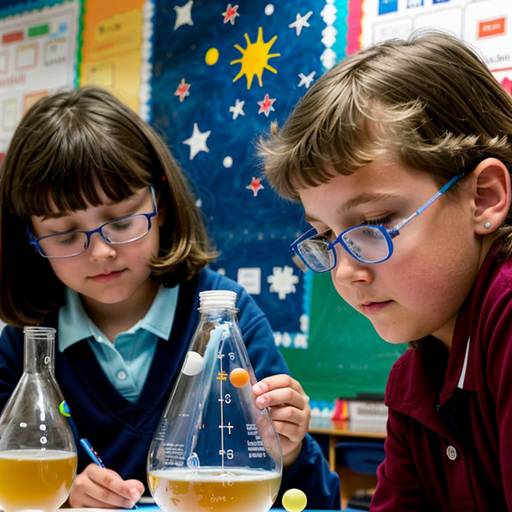
In this 4th-grade science lesson, students will explore the three states of matter: solids, liquids, and gases. They will engage in hands-on activities at various stations that allow them to observe and categorize different materials based on their properties. At the solid station, students will examine various objects to identify characteristics such as hardness and shape. At the liquid station, they will measure and pour liquids to observe how they take the shape of their containers. The gas station will include an activity with a balloon filled with air, helping students understand the concept of gas filling space.
The lesson will also include a demonstration where students observe water changing from a liquid to a gas when heated, facilitating a discussion on how states can change due to temperature. Through participation in group activities and class discussions, students will enhance their understanding of matter and its properties. They will conclude the lesson by writing an exit ticket that summarizes their learning and any remaining questions. Extensions, such as finding examples of each state of matter at home and engaging in interactive games, provide opportunities for further exploration and reinforcement of the concepts. Adaptations will be made to ensure all students can engage with the material effectively.

In this 4th-grade Earth Science lesson, students will explore the three main types of rocks: igneous, sedimentary, and metamorphic. They will learn how each type is formed and gain an understanding of the rock cycle through visual aids and a short video presentation.
The lesson includes a hands-on activity where students work in small groups to classify a variety of rock samples using identification charts and hand lenses. They will observe the physical characteristics of the rocks and document their findings on worksheets.
After sharing their discoveries in a group discussion, the class will review the key concepts learned about the rock cycle and the processes of erosion, cooling, and metamorphism. The lesson emphasizes engagement through observation, teamwork, and discussion while facilitating student understanding of Earth's geology. Assessment will include reviewing students' worksheets and monitoring their participation during group activities.
Extensions to deepen learning may include creating a mobile to illustrate the rock cycle or planning a field trip to observe geological features in nature. Post-lesson reflections will help assess the effectiveness of the instruction and gather student feedback for future improvements.
This 4th-grade lesson plan focuses on understanding forces and energy in the context of physical science. The objectives include introducing students to kinetic and potential energy, allowing them to investigate how energy transfers through objects. The lesson begins with an engaging demonstration of a toy car on a ramp, followed by a class discussion that connects these concepts to real-world examples.
Students break into small groups to conduct experiments with toy cars, measuring ramp heights, distances traveled, and time taken to analyze the relationship between potential energy and kinetic energy. They document their findings and create charts to visualize the data.
The lesson concludes with group presentations, where students share their observations and discuss trends in their results. Reflective discussions emphasize the importance of energy in everyday life. Assessment includes evaluating group presentations and a follow-up quiz to gauge individual understanding. Extensions encourage students to observe and report examples of energy in their surroundings. Overall, the lesson fosters active learning through hands-on activities and collaborative exploration of key physical science concepts.