
Filters
Level
Grade
Subject
Subject Area
Subject Topic
Standard(s)
Audience
Keyword
DurationMinutes
4th Grade Science Lesson Plans

In this engaging 4th-grade life science lesson, students will explore the major systems of the human body, including the skeletal, muscular, circulatory, respiratory, and digestive systems. The lesson begins with an interactive discussion, allowing students to share their prior knowledge. Following this, the teacher presents an overview of each body system, using visuals such as a model skeleton and charts to enhance understanding.
Students will then participate in group activities, researching their assigned body system and creating informative posters that include descriptions, key organs, and fun facts. Each group will present their posters to the class, fostering teamwork and communication skills.
To reinforce learning, the lesson includes hands-on demonstrations, such as using balloons to mimic lung function and straws to illustrate oxygen transportation in the blood. The lesson concludes with a recap and a homework reflective question, encouraging students to think critically about the importance of body systems. Overall, this lesson effectively combines direct instruction, collaborative work, and interactive activities to engage students in understanding the complexities of the human body.
In this 4th-grade physical science lesson, students will explore the concepts of motion and the forces affecting it, such as push, pull, friction, and gravity. The lesson begins with a discussion to define motion and identify examples students encounter in their daily lives. Following an engaging demonstration using a toy car, students will be divided into small groups to conduct hands-on experiments using ramps of varying inclines and different surface textures. Each group will time their car's travel distance and record their observations, encouraging them to analyze how the angle and surface impact motion. The lesson concludes with a sharing session where students discuss their findings and reflect on the relevance of these concepts in everyday life. Assessment will involve reviewing the recorded data and observing group participation, with extensions available for those seeking additional challenges. Safety precautions will be emphasized throughout the activities to ensure a safe and productive learning environment.
In this Earth Science lesson for 4th graders, students will explore the different layers of soil and their characteristics. The lesson begins with a discussion to activate prior knowledge, followed by a multimedia presentation that illustrates soil types and layers, including topsoil, subsoil, clay, and bedrock.
Students will engage in a hands-on activity where they will collect and layer various soil types in clear plastic cups, adding water to observe changes in texture and drainage. This experiential learning opportunity is complemented by an observation segment where students use magnifying glasses to examine the soil up close, drawing and labeling their findings in their notebooks.
The lesson emphasizes the importance of soil in supporting plant life and ecosystems through guided discussions and reflections. Students will share their observations and insights, reinforcing their understanding of the role soil plays in the environment. Assessment will include participation during discussions, review of drawings, and a brief quiz covering key concepts. To extend their learning, a follow-up field trip or home gardening project can be introduced, promoting real-world application of their knowledge.
This 4th-grade science lesson focuses on astronomy, specifically stars and constellations. Students will begin by observing the night sky through a short video and discussing their experiences with stargazing. The lesson then provides an overview of the characteristics of stars and the concept of constellations, highlighting a few well-known examples and their cultural significance.
Through guided practice, students will explore star maps to identify a constellation of their choice, using accompanying books or resources to gather interesting facts. The main hands-on activity involves students creating their own constellation on dark construction paper, drawing stars and connecting them, while inventing a name and story for their creation.
Finally, students will share their constellations and stories with the class, reinforcing their understanding of the material. Assessment will be conducted informally through observation and a brief exit ticket to capture what they learned. The lesson also includes ideas for extensions and reflections for future improvement.

In this 4th-grade science lesson, students will explore the solar system and space exploration. The lesson begins with a discussion about space and an engaging presentation that highlights key components of the solar system, including planets, the sun, and the role of astronauts. After introducing essential vocabulary, students will work in small groups to create models of assigned planets using Styrofoam balls and other materials, encouraging teamwork and creativity.
Each group will present their model to the class, sharing interesting facts about their assigned planet. Following the group activity, students will complete a worksheet that requires them to summarize what they learned and draw a picture of their favorite planet or spacecraft. The lesson concludes with a class discussion where students can share their favorite facts or experiences. The assessment will involve evaluating participation in discussions, presentations, and completeness of the worksheets. Opportunities for extension include creating a classroom display of the solar system and exploring further documentaries or virtual field trips related to space exploration. Reflection activities will help the teacher assess student engagement and areas for improvement in future lessons.
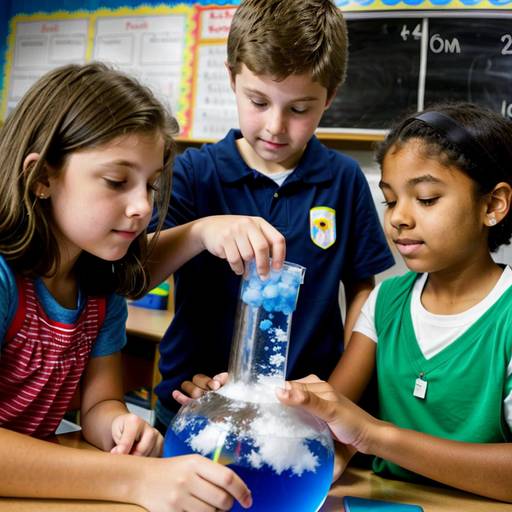
In this 4th-grade science lesson, students will explore the three states of matter: solids, liquids, and gases. The lesson begins with a class discussion on what matter is, followed by direct instruction where key properties of each state are defined and compared using a chart. Students will then engage in hands-on activities where they observe various materials and categorize them based on their state of matter. An experiment featuring the melting of ice and the boiling of water illustrates changes between states due to heat. Through group discussions and reflections, students will share their observations about these transformations. The lesson concludes with a brief assessment via exit slips to evaluate their understanding of the concepts covered, while also providing opportunities for differentiated learning and extensions. The goal is for students to develop a foundational knowledge of physical science and the characteristics of matter in an interactive and engaging manner.
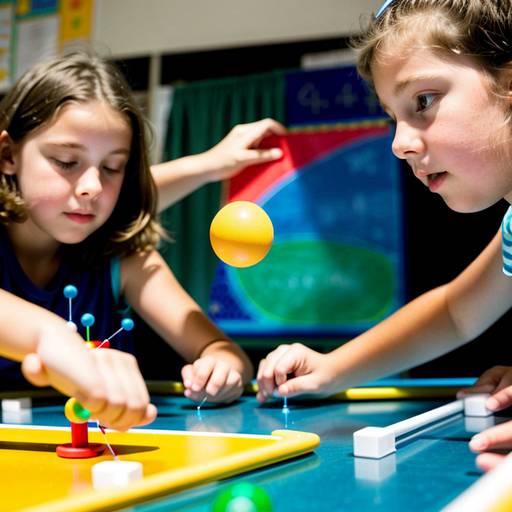
In this 4th-grade physical science lesson, students will explore the concepts of force, motion, pushes, and pulls through interactive activities. The lesson begins with a discussion to define motion and identify everyday examples of pushes and pulls. Students will then engage in a hands-on experiment using toy cars and ramps to investigate how different heights and strengths of pushes influence the distance an object travels. Working in small groups, they will measure their results and analyze the data, sharing their findings with the class. The lesson emphasizes critical thinking and collaboration while reinforcing the relationship between force and motion. Students will complete a worksheet summarizing their learning, ensuring a comprehensive understanding of the topics covered.
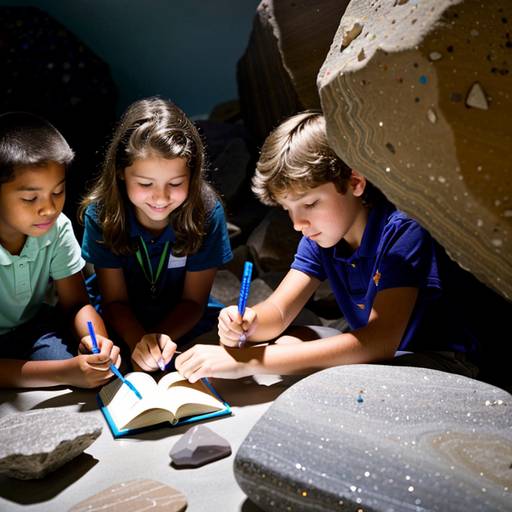
In this 4th-grade Earth Science lesson, students will explore the fascinating world of rocks and minerals. They will learn about the three main types of rocks—igneous, sedimentary, and metamorphic—and gain an understanding of the rock cycle, which explains how rocks transform from one type to another over time. The lesson begins with a class discussion to activate prior knowledge about rocks, followed by a direct instruction segment that introduces rock classifications and characteristics.
Students will engage in a hands-on activity where they work in small groups to observe various rock samples using hand lenses, classify them according to their properties, and create informative posters based on their findings. Each group will present their work to the class, fostering collaboration and discussion about the similarities and differences among the rocks. The lesson concludes with a recap of the key concepts and an assignment for students to find a rock at home and write about its type and characteristics. Assessment will incorporate the rock classification worksheets, group posters, and the take-home project, ensuring students demonstrate their understanding of the material. The lesson aims to cultivate curiosity about Earth science through active learning and exploration.
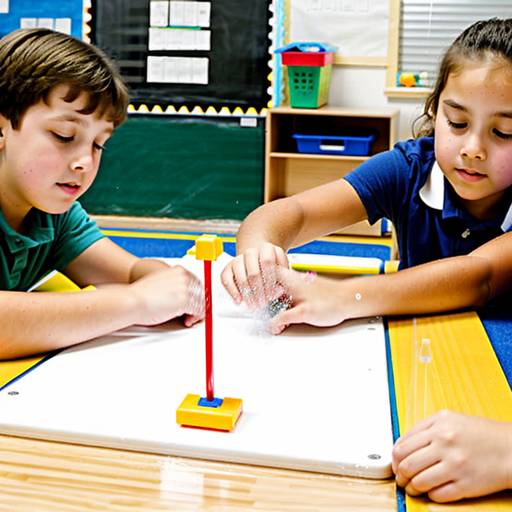
In this 4th-grade science lesson, students will explore fundamental concepts of forces, specifically focusing on pushes, pulls, and the role of friction. The lesson begins with an engaging discussion to elicit student experiences related to motion and forces. Following this, key terms and concepts will be introduced, including friction's impact on the movement of objects.
Students will then participate in a hands-on experiment where they will test how various textured surfaces affect the speed of toy cars. Working in small groups, they will measure the time it takes for the cars to travel a certain distance on different surfaces and record their observations. This activity fosters teamwork and enhances understanding through practical application.
After the experiment, students will regroup to discuss their findings, providing insights into how friction influences motion. To conclude, they will reflect on their learning and pose any remaining questions on an exit slip. The lesson emphasizes interactive learning and critical thinking, helping students grasp essential physical science principles while making real-world connections. Adaptations and extensions are provided to support diverse learners and encourage further exploration of related concepts.
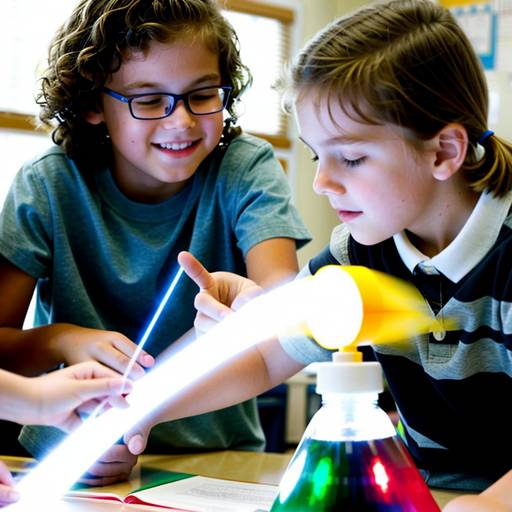
In this 4th-grade science lesson, students will explore the concepts of forces and motion, specifically focusing on push and pull. The lesson begins with an engaging discussion about the movement of objects in their environment, followed by a clear explanation of different types of forces and their effects, including the role of friction.
Students will participate in a hands-on experiment where they will work in small groups to test how different forces influence the distance that a small ball or toy car travels down a ramp. By adjusting the angle of the ramp and adding weights, they will observe and record their results, which will promote understanding of the relationship between force and motion.
The lesson culminates in a class discussion where students share their findings and reflect on their learning. Through this interactive approach, they will develop a foundational understanding of physical forces and their implications in everyday situations, while also honing their data collection and analytical skills. Assessment will be based on observation during activities, worksheet completion, and participation in discussions. Extensions are provided for students who wish to explore further challenges related to forces and motion.