
Filters
Level
Grade
Subject
Subject Area
Subject Topic
Standard(s)
Audience
Keyword
DurationMinutes
4th Grade Science Lesson Plans


This 4th-grade lesson plan focuses on exploring the major human body systems, including the skeletal, muscular, circulatory, respiratory, and digestive systems. Over the course of one hour, students will learn about the functions of each system and how they work together to maintain health. The lesson begins with an engaging introduction to the topic, followed by direct instruction using visual aids and, if available, a 3D body model. In small groups, students will research a specific body system, create a poster summarizing their findings, and present it to the class. The lesson concludes with a review of key concepts and an exit ticket to assess understanding. Extensions are provided to encourage further exploration of specific organs within the systems. Overall, the lesson aims to foster students' knowledge and appreciation of the human body.
This lesson plan is designed for 4th-grade students, focusing on astronomy and space exploration by introducing them to our solar system. Over two class periods, students will learn about the eight planets, exploring their characteristics and significance within our solar neighborhood. The lesson begins with an engaging video and a discussion on space exploration, followed by group research on individual planets using fact cards.
Students will then create models of the planets to understand their size, color, and unique features, while also incorporating the concepts of orbit and rotation. A collaborative activity will see students representing the solar system on a large poster board, emphasizing the correct order and distance between planets. Throughout the lesson, students will engage in discussions, present their findings, and complete reflection worksheets to consolidate their learning.
The plan encourages creativity, teamwork, and critical thinking while also offering opportunities for further exploration and extension activities to maintain interest in the subject. Overall, the lesson aims to foster curiosity about space and enhance students' understanding of our place in the universe.
In this Earth Science lesson for 4th-grade students, the focus is on understanding soil, its composition, and its significance in ecosystems. The lesson begins with a discussion to tap into students' prior knowledge about soil, followed by a presentation on soil components, layers, and its importance to both the environment and human life.
Students are then divided into pairs to engage in a hands-on activity where they analyze soil samples, observing textures and identifying different materials using magnifying glasses and soil texture charts. They record their findings and share them in a class discussion, promoting collaboration and communication skills.
To conclude, key concepts are summarized, and students complete a worksheet and a homework writing prompt. The lesson incorporates differentiation strategies and extension activities, including a potential field trip and the possibility of starting a school garden, enhancing the learning experience and reinforcing the concepts introduced.

This fourth-grade life science lesson focuses on exploring the major systems of the human body and their functions. Students will begin by sharing their prior knowledge about the human body, followed by an introduction to the six key body systems: skeletal, muscular, circulatory, respiratory, digestive, and nervous systems. Each system's major components and functions will be explained using visuals and simple analogies.
Following the direct instruction, students will be divided into small groups to create informative posters about their assigned body system, highlighting its name, parts, functions, and illustrations. Each group will present their poster to the class, fostering collaboration and communication skills. To reinforce their learning, students will then create a simple 3D model of their system using craft supplies.
The lesson concludes with a class discussion on the interconnectivity of body systems and their importance to overall health. Assessment will involve observing group participation, evaluating posters, and assigning fact sheets for homework. Extensions may include inviting a medical professional to speak about their work with body systems or encouraging research on diseases related to each system. This engaging lesson aims to deepen students’ understanding of human biology while promoting teamwork and critical thinking.
This lesson plan for 4th-grade students focuses on Earth Science, specifically the study of soil. The session aims to help students identify and understand the components of soil, its importance for life on Earth, and classify different types based on texture and color.
The lesson begins with an engaging introduction that encourages students to share their thoughts about soil. This is followed by direct instruction using a video or slideshow to explain soil formation and types. In a hands-on activity, students will explore various soil samples in small groups, using hand lenses to investigate elements like texture and visible materials. They will document their findings and classify the samples using a soil classification chart.
If time permits, students will have the opportunity to plant seeds in different soil types to observe which supports growth best. The lesson concludes with a class discussion, allowing students to share their observations and reflections on the importance of soil and environmental conservation.
Assessment will be based on participation, completed observation worksheets, and optional presentations on soil quality related to plant growth. Extensions and nature walks can further enhance the learning experience, fostering curiosity about the Earth's ecosystems and the vital role of soil.
In this Earth Science lesson, 4th-grade students explore the different types of rocks: igneous, sedimentary, and metamorphic. The lesson begins with a discussion where students share their prior knowledge about rocks, followed by a direct instruction segment that covers how each type forms and introduces the rock cycle.
Students then engage in a guided activity where they work in small groups to examine rock samples using magnifying glasses and classify them based on their properties. They complete worksheets to document their findings and share their insights with the class. The lesson concludes with students creating a diagram of the rock cycle, reinforcing their understanding of the material learned.
Assessment is based on the accuracy of their worksheets, participation in group discussions, and their ability to illustrate the rock cycle. The lesson includes options for extensions and modifications to cater to diverse learning needs, ensuring all students can engage effectively with the content.
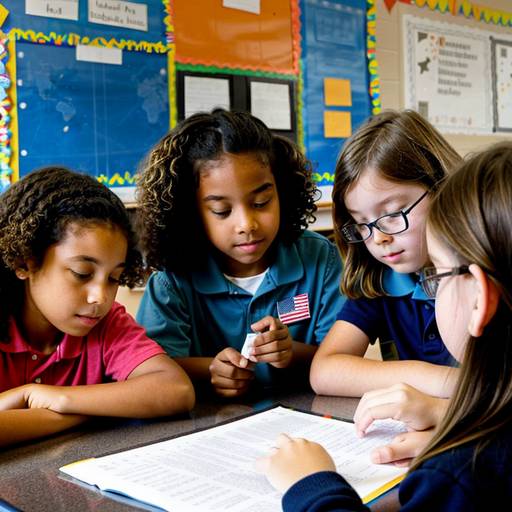
In this 4th-grade science lesson, students will explore the concepts of energy, focusing on kinetic and potential energy through hands-on activities. The lesson begins with a discussion about energy types, followed by a fun balloon rocket activity where students observe how air escaping transforms potential energy into kinetic energy. Next, students work in groups to set up ramps and test how the height of a ramp affects the motion of toy cars, recording distance traveled and time taken. This encourages them to analyze data and draw conclusions about energy transformation. The lesson concludes with a group sharing session, reinforcing the principles learned and introducing the idea of energy conservation. Students are assessed informally through participation and their science journals, with extensions provided for those looking to further their understanding. The lesson incorporates collaborative learning and critical thinking, helping students to grasp fundamental physical science concepts.
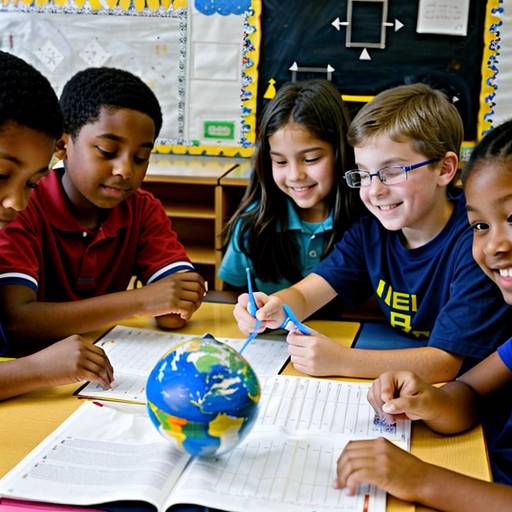
This lesson plan for 4th-grade students focuses on the concepts of potential and kinetic energy within the realm of physical science. The objective is for students to understand these two types of energy, identify real-life examples, and experience the transformation between them through a hands-on activity.
The lesson begins with an introduction to energy, including a discussion about what it is and where it can be observed in daily life. Students learn about potential energy (stored energy) and kinetic energy (energy of motion) through interactive questioning.
Following the discussion, students participate in a hands-on activity where they use rubber bands, toy cars, and ramps to explore energy transformations. They will stretch rubber bands to create potential energy and release them to observe the resulting kinetic energy as the car moves down the ramp. Students record their observations and discuss how different factors like height affect movement.
The lesson concludes with a class review and encourages students to reflect on energy transformations they observe outside of the classroom. Assessment is based on participation and understanding during activities, as well as reflections in their science journals. Extensions include a homework assignment inviting students to identify and illustrate examples of energy transformation in their own environments.
Overall, the plan aims to engage students actively in discovering energy concepts through interactive learning experiences.
This 4th-grade physical science lesson focuses on the concepts of force, push, and pull, helping students understand how these forces affect the motion of objects. The lesson begins with an interactive discussion where students share their prior knowledge of forces, followed by an introduction to key vocabulary and concepts, including gravity and friction.
Students are then divided into small groups for hands-on experiments involving toy cars, ramps, weights, and various surfaces. They conduct two main activities: one to explore how pushing or pulling affects distance traveled with added weights and another to examine the impact of different surface textures on motion. Each group records their observations and findings.
After the experiments, groups present their results, fostering discussion about real-world applications and encouraging peer questions. The lesson concludes with a brief review of key concepts and an exit ticket assessment to gauge understanding. Extensions and adaptations are included to support diverse learners and enhance engagement. Throughout the lesson, students actively explore and engage with the material, laying a strong foundation for their understanding of physical forces.
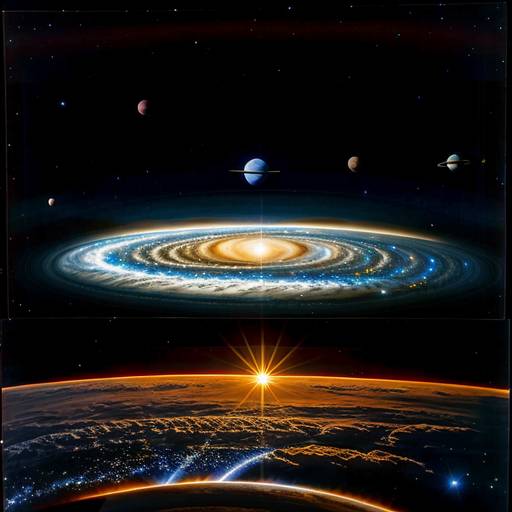
In this 4th grade science lesson, students will explore the solar system and its planets through engaging discussions, multimedia resources, and hands-on activities. The lesson begins with an introduction to the solar system, where students share their prior knowledge and watch a video to spark interest. Following this, the teacher presents detailed information about the eight planets, using visual aids to highlight their unique features and the concept of orbits around the sun.
Students will then participate in an interactive activity where they represent different planets in groups, showcasing their assigned planet's characteristics to the class. They will also simulate orbits around the sun in a movement exercise, reinforcing their understanding of how planets travel in space.
To conclude the lesson, students will reflect on their learning through discussion and by completing a labeled diagram of the solar system. Assessment will be based on participation in activities and the accuracy of the diagrams. Extensions and adaptations are included to enhance learning opportunities and support diverse learners. Overall, this lesson aims to instill a fascination with astronomy and provide foundational knowledge about our cosmic neighborhood.