
Filters
Level
Grade
Subject
Subject Area
Subject Topic
Standard(s)
Audience
Keyword
DurationMinutes
4th Grade Lesson Plans

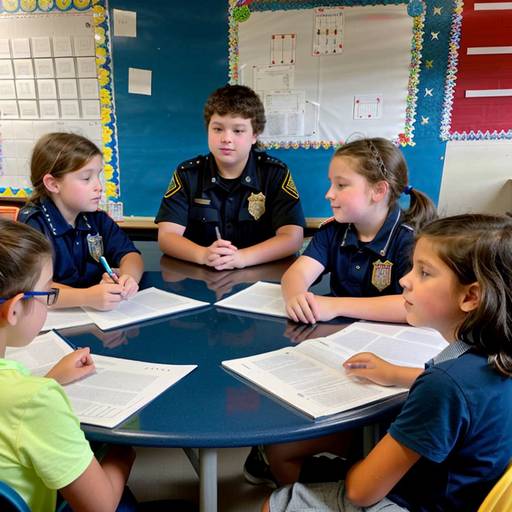
In this 4th-grade social studies lesson, students will explore the concept of community by identifying and discussing various roles within it, such as teachers, police officers, and doctors. They will learn about the responsibilities associated with each role and how these contribute to the overall well-being of the community.
The lesson begins with a group discussion to define what a community is and the roles that comprise it. Students will then work in small groups to select community roles from provided cards, creating posters that highlight the role's title, responsibilities, and illustrations. Each group will present their posters to the class, fostering a collaborative learning environment.
To conclude, students will reflect on their own roles in the community by writing about their personal responsibilities. Assessment will be based on group participation, the quality of the posters, and individual reflections. Additional extensions may include inviting community leaders for discussions or encouraging students to interview someone in a specific role. Overall, the lesson emphasizes the importance of individual contributions to the community and fosters an understanding of civic responsibilities.
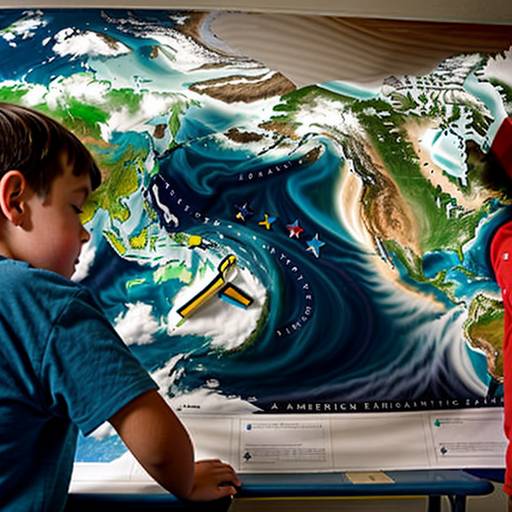
This 4th-grade social studies lesson focuses on introducing students to various landforms and their characteristics. The lesson begins with a discussion about geography and the importance of landforms, using a world map and images to illustrate different types such as mountains, valleys, plains, plateaus, hills, and deserts. Following direct instruction, students are divided into small groups to research a specific landform, fill out a worksheet, and create a visual representation using clay or playdough. Each group shares their findings and models with the class, facilitating peer learning. Assessment includes the collection of worksheets and observation of group participation and presentations. The lesson accommodates diverse learners and offers opportunities for further exploration, including virtual field trips and local research projects, ensuring an engaging and informative experience.

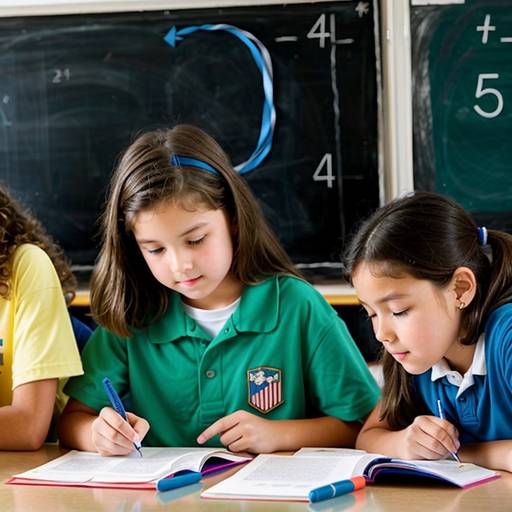
In this 4th-grade math lesson, students will explore the concept of fractions as parts of a whole and apply their understanding by solving various fraction word problems. The lesson begins with a brief review of fractions, illustrated through examples and real-life contexts, such as sharing food.
During guided practice, students collaboratively solve a sample word problem, learning to identify keywords that help in understanding fraction scenarios. They then engage in independent practice, where they work on a worksheet with a variety of fraction problems, using fraction circles or bars to visualize their answers.
To reinforce learning, students participate in a hands-on activity, creating their own visual representations of fractions from their worksheets. In closing, students share their work and summarize what they've learned about fractions and their real-world applications. Assessment will be based on observation during activities and the evaluation of completed worksheets, with an extension offered for advanced learners. The lesson aims to foster both conceptual understanding and practical application of fractions in everyday situations.
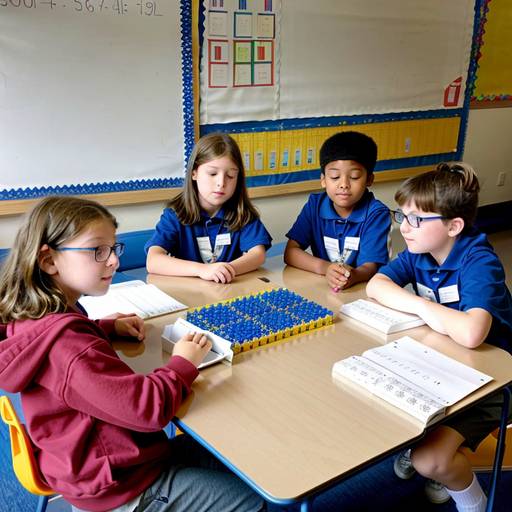
The lesson focuses on helping 4th-grade students understand concepts related to measurement and perimeter. It begins with an introduction to measurement and perimeter, engaging students in a discussion about their real-world applications. Through direct instruction, students learn how to measure shapes using rulers and apply formulas to calculate perimeter for rectangles and triangles.
In guided practice, students work in small groups to measure their assigned shape and calculate its perimeter collaboratively. Following this, they engage in independent practice with worksheets that challenge them to calculate the perimeter of various shapes and create their own shape on graph paper. The lesson concludes with a class discussion to reinforce key concepts and gather student reflections on the learning experience.
Assessment includes evaluating worksheets for accuracy and informal observations during group activities. Extensions may include introducing area and organizing a scavenger hunt to apply measurement skills in a fun, interactive manner. Overall, this lesson fosters hands-on learning, collaboration, and critical thinking skills.

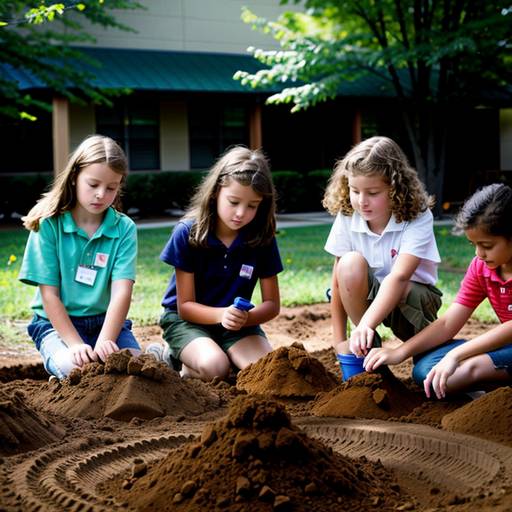
In this Earth Science lesson for 4th graders, students will explore the importance and composition of soil, as well as its various layers. The lesson begins with an engaging discussion about soil, inviting students to share their experiences with digging in the dirt and what they found. The instructor will explain the main components of soil—minerals, organic matter, water, and air—and illustrate the different soil layers, or horizons, using visual aids.
Following the introduction, students will participate in a hands-on activity where they will examine soil samples from different types and observe the layers that form when mixed with water. Working in small groups, they will document their observations using magnifying glasses and fill out worksheets that detail their findings.
The lesson concludes with a group discussion where students reflect on their observations and the role of soil in supporting life. To assess understanding, a quick exit quiz will help reinforce key concepts. Optional extensions will encourage students to collect soil samples from their surroundings, while adaptations will support varying student needs. This interactive and engaging lesson aims to deepen students' appreciation of soil and its vital role in the environment.
In this fourth-grade social studies lesson, students will explore the concepts of community and diversity by investigating various cultural backgrounds present within their own community. The lesson begins with a discussion to define community and diversity, followed by a group activity where students research assigned cultures and create informative posters detailing their findings. Each group will present their work to the class, promoting engagement and curiosity through questions and discussions. Students will then reflect individually on what they learned, writing their insights on Post-it notes, which will be shared in a class discussion to highlight the value of diverse perspectives. The lesson concludes with music from one of the featured cultures, allowing students to celebrate their learnings in a lively manner. Assessment will focus on group collaboration, presentation skills, and reflective understanding. Extensions for the lesson may include a cultural day, where students can showcase their own backgrounds or invite community members to share their experiences. Overall, this lesson aims to foster empathy, respect, and appreciation for the rich diversity within the community.

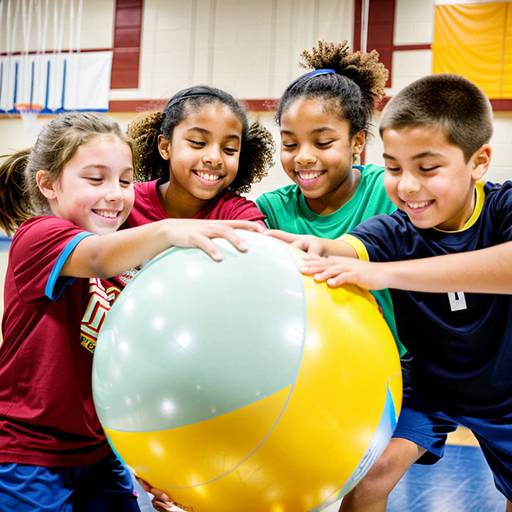
This 60-minute physical education lesson for 4th graders focuses on enhancing coordination and teamwork through a series of engaging activities. The class begins with a dynamic warm-up followed by discussions on the importance of collaboration in physical activities.
Students participate in three main activities: a hula hoop relay that encourages communication, a cone navigation challenge that tests their coordination, including a blindfold twist for added difficulty, and a ball pass exercise that fosters teamwork as they work together to keep the balls moving around a circle.
The lesson concludes with a cool-down session involving stretching and a reflective discussion about the strategies used during the activities and lessons learned about effective teamwork. Assessment is based on students’ participation and their ability to collaborate effectively. Adaptations are provided to ensure inclusivity for all students. Overall, the lesson provides a fun and educational experience that promotes physical activity and social skills among peers.
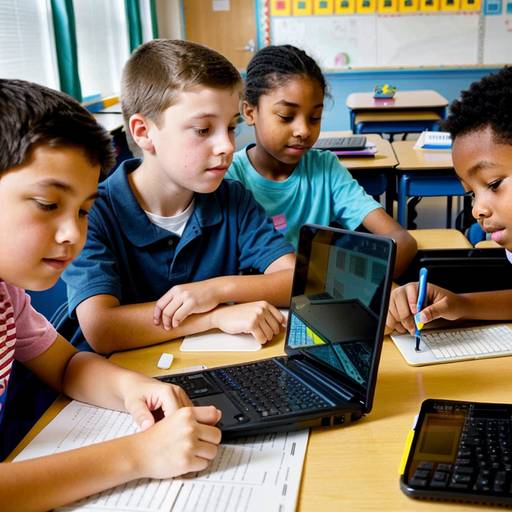
In this 4th-grade technology lesson, students will embark on an introductory exploration of coding and programming languages. The session begins with a discussion about the meaning of coding and its presence in everyday technology, enhancing students' vocabulary with key terms like algorithm and debug. Following this, learners will gain insight into various programming languages and their applications.
The main focus of the lesson involves a hands-on activity where students utilize a block-based coding platform, such as Scratch or Code.org, to create simple animations or games. Through guided instruction, students will learn to navigate the platform, apply various programming blocks to their projects, and develop their own unique creations.
Finally, students will have the opportunity to share their projects with peers, fostering a collaborative environment where they can reflect on their learning experiences and discuss any challenges faced during the coding process. This lesson not only serves to introduce fundamental coding concepts but also encourages problem-solving and creative thinking, setting the stage for future learning in technology and programming.

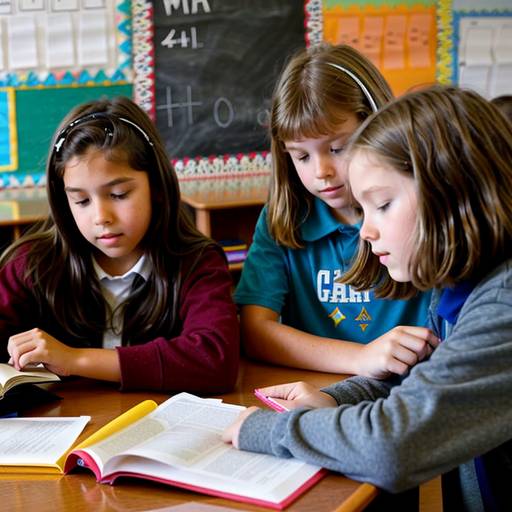
In this 4th-grade Language Arts lesson, students will explore the fundamentals of expository writing, focusing on its purpose and structure. The lesson begins with an engaging discussion to elicit prior knowledge about informative writing. Students will learn about the key components of an expository essay, including the introduction, body paragraphs, and conclusion, through a class reading of a sample essay.
During guided practice, students will collaborate in small groups to brainstorm topics of interest and select one for their essays. They will then create an outline to organize their ideas. In the independent practice phase, students will write the first draft of their expository essay based on their outlines, with the teacher providing support and feedback.
The lesson concludes with a sharing session where students present their main ideas. Assessment will focus on students’ outlines and drafts, evaluating clarity, organization, and completeness. Extensions may involve deeper research or the creation of visual aids. The lesson will also include differentiation strategies to support all learners. Reflection on student engagement and understanding will inform adjustments in future lessons.
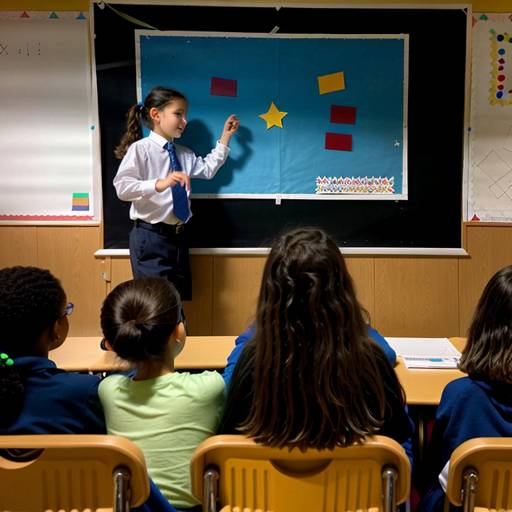
In this 4th-grade Language Arts lesson plan, students will enhance their reading comprehension skills by focusing on two key strategies: visualization and prediction. The lesson begins with an engaging discussion that encourages students to share how they create mental images while reading. The teacher will model these strategies using a short passage, demonstrating how to visualize and make predictions based on text clues.
Students will then work in small groups to read an excerpt together, discussing their visualizations and predictions, which will be shared with the class. Following this collaborative activity, each student will complete a visualization worksheet, drawing or writing about their mental images and predictions from a different text. They will also create prediction bookmarks summarizing their thoughts.
To conclude, students will reflect on how these strategies aided their understanding of the text, and they will be assigned homework to practice these skills at home. Assessment will occur through observations and the review of worksheets and bookmarks, allowing the teacher to gauge student comprehension and mastery of the strategies. Differentiation strategies will be incorporated to support varying levels of student understanding.