
Filters
Level
Grade
Subject
Subject Area
Subject Topic
Standard(s)
Audience
Keyword
DurationMinutes
4th Grade Lesson Plans

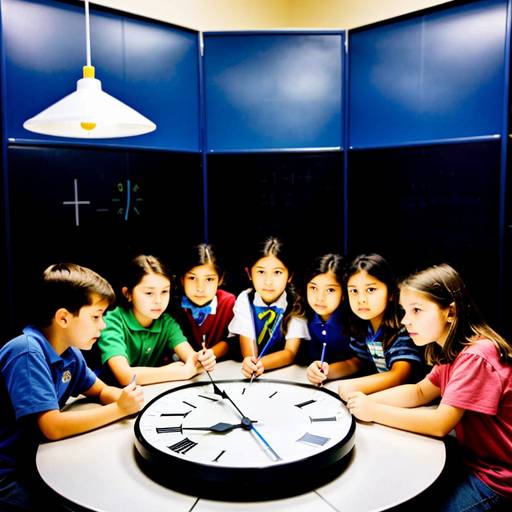
In this 4th-grade mathematics lesson, students will explore the concept of elapsed time through engaging discussions and hands-on activities. The lesson begins with a conversation about daily routines to emphasize the importance of time. Following this introduction, the teacher will explain and demonstrate how to calculate elapsed time using visual aids and interactive exercises.
Students will then work in small groups, utilizing scenario cards that present real-life situations involving start and end times. This collaborative activity allows them to apply their understanding and share their reasoning with their peers. After the group work, students will individually complete a worksheet that reinforces their skills in calculating elapsed time through a variety of word problems and diagrams.
The lesson concludes with a review where students share their calculations and insights, solidifying their understanding. They will also express examples of elapsed time from their own lives as an exit ticket, allowing the teacher to assess their grasp of the topic. The lesson includes suggestions for differentiating instruction based on student needs, with extensions for advanced learners and additional support for those who require it. Overall, this lesson aims to make learning about time relatable and interactive while developing students' problem-solving skills.
In this 4th-grade math lesson focused on measurement and time, students will explore different units of time, including seconds, minutes, and hours. The lesson begins with a warm-up discussion to activate prior knowledge, followed by an overview of time units using a wall clock. Students will engage in solving word problems related to time intervals in pairs, fostering collaboration and critical thinking.
The main activity involves grouping students to measure the duration of various hands-on tasks, such as building structures with playdough or completing puzzles. Each group will use digital timers and stopwatches to record their results in minutes and seconds, promoting practical application of time measurement in real-world scenarios.
The lesson concludes with a wrap-up discussion, allowing students to share insights and findings from their activities, followed by an exit ticket where they reflect on their learning. Through interactive activities and peer collaboration, students will deepen their understanding of time measurement and its significance in everyday life. Assessment will occur through observation, worksheet completion, and student reflections.

This 4th-grade social studies lesson focuses on understanding timelines and their significance in organizing historical events. Students will learn about key moments in American history, such as the signing of the Declaration of Independence and the Civil Rights Movement. Through a collaborative activity, they will create a class timeline, placing events in chronological order. Afterward, each student will design their own individual timeline, showcasing at least five significant historical events learned during the lesson. The objectives include enhancing students’ comprehension of time, continuity, and change, while encouraging creativity and critical thinking. The lesson will conclude with a reflection on the importance of timelines in helping to understand the past and make connections to the future. Assessment will be based on participation and the accuracy and creativity of the students' timelines. Extensions and differentiation strategies are included to cater to various learning needs.
In this 4th-grade math lesson, students will explore the concept of multiplication by connecting it to repeated addition and practicing their times tables up to 12 x 12. The lesson begins with a review of multiplication basics and a group chant of selected times tables to bolster recall. Students will then engage in paired quizzes to reinforce their understanding of multiplication facts, using index cards with various multiplication problems.
The main activity involves a treasure hunt in which small groups will search for hidden index cards containing multiplication questions. They will work collaboratively to solve these problems and record their answers on a treasure map handout. The lesson concludes with a class review of the answers and a discussion on the importance of multiplication in real-life scenarios. Small prizes will be awarded to celebrate the students’ participation and efforts. Overall, this lesson aims to enhance multiplication skills through interactive learning and collaboration.
This 4th-grade social studies lesson focuses on understanding communities and the significance of rules within them. The lesson begins with a class discussion to establish a shared definition of "community" and explore its various forms. Students engage in a dialogue about the importance of rules, examining how they contribute to safety and well-being.
In small groups, students brainstorm essential rules for their community, sharing their ideas with the class. Following this discussion, they create a community poster that illustrates three important rules, allowing for creativity and individual expression. The lesson concludes with students presenting their posters and reflecting on their commitments to following rules within their community. Assessment includes participation in discussions, evaluation of the posters, and an exit ticket where students identify a personal rule to uphold.
The lesson can be extended through field trips or guest speakers, and adaptations are included to support diverse learning needs. This approach fosters student engagement and deepens their understanding of community dynamics and responsibilities.
In this 4th grade social studies lesson, students will explore the lives and contributions of influential figures in American history. The lesson begins with an engaging discussion to spark interest and elicit ideas about important historical personalities. Students will then be divided into small groups, each assigned a specific historical figure to research using provided biographical cards and additional resources. After a brief discussion within their groups, students will present their findings to the class, highlighting key facts, achievements, and the significance of their figure.
Following the presentations, students will participate in a creative activity where they create posters showcasing their assigned historical figure, including drawings and important information. A gallery walk will allow students to view and provide feedback on each other's work. The lesson concludes with a class discussion reflecting on common traits of the figures studied and how their lessons can be applicable today, followed by individual reflection through a worksheet. Assessment will be based on participation, the quality of the posters, and the completed reflection. Extensions and modifications are included to cater to different student needs, ensuring an inclusive and engaging learning experience.

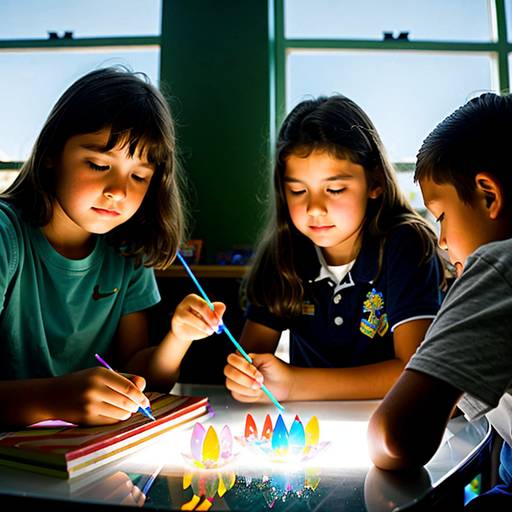
In this 4th-grade art lesson plan, students will explore the fascinating world of glass art forms and techniques. The first day focuses on introducing various types of glass art, such as stained glass and glass sculptures. Students will engage in hands-on activities, creating their own stained glass pieces using colored cellophane layered on clear plastic sheets. They will learn about light interaction and the properties of transparency.
On the second day, students will expand their creations by incorporating mixed media elements. They will sketch their ideas and design backgrounds using construction paper, markers, and crayons. The lesson encourages creativity and individual expression, allowing students to develop a unique artistic piece that reflects their understanding of glass art.
The session culminates in a display of artworks, where students showcase their projects and reflect on their learning experience. Assessment will be based on participation, creativity, and the application of techniques learned during the lessons. Extension activities include organizing an art gallery for parents and discussing the history of glass art and notable artists in the field.

In this 4th-grade music appreciation lesson, students will explore and understand famous songs from various eras, highlighting their historical context and cultural significance. The lesson begins with a warm-up discussion where students share their favorite songs. Following this, they will engage in listening stations, where small groups will rotate through different stations featuring a selection of iconic songs from diverse genres and decades. At each station, students will listen to the music and discuss its themes and historical relevance, using provided handouts for reference.
After completing the stations, the class will regroup to share reflections on the songs that resonated with them and how those songs mirror the time periods in which they were released. The lesson concludes with a creative component, where students are encouraged to write their own short verses or choruses inspired by the themes they explored. This activity fosters creativity and personal connections to music while reinforcing the understanding of its role in reflecting societal values and emotions. Assessments will be based on participation in discussions, group reflections, and the creativity displayed in their song creations. Additionally, extensions may include individual research assignments on other songs and organizing a themed presentation day for students to showcase their findings and creative outputs.
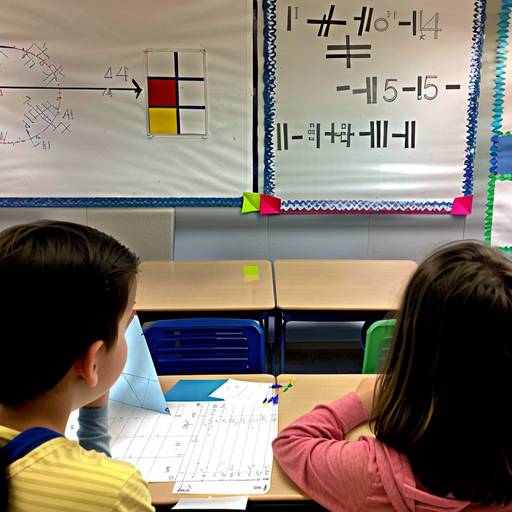
In this 4th-grade math lesson, students will explore the concept of angles through a combination of discussions, hands-on activities, and creative projects. The lesson begins with a warm-up discussion, where students identify different types of angles—acute, right, and obtuse—and observe examples in their daily lives.
Following this, they will engage in an angle scavenger hunt, working in small groups to find and document instances of each type of angle around the classroom or school. Next, students will receive a demonstration on how to measure angles using a protractor, followed by practice worksheets to reinforce their measurement skills.
In a creative activity, students will design their own shapes that incorporate various angles, labeling each angle with its measurement and classification. They will then present their designs to the class, further solidifying their understanding of angles. The lesson concludes with a summary of key concepts and an assignment for students to find additional examples of angles in their homes.
Assessment will be based on participation, accuracy in measuring angles, and the quality of the shapes created by the students, ensuring that all learners are engaged and challenged appropriately.
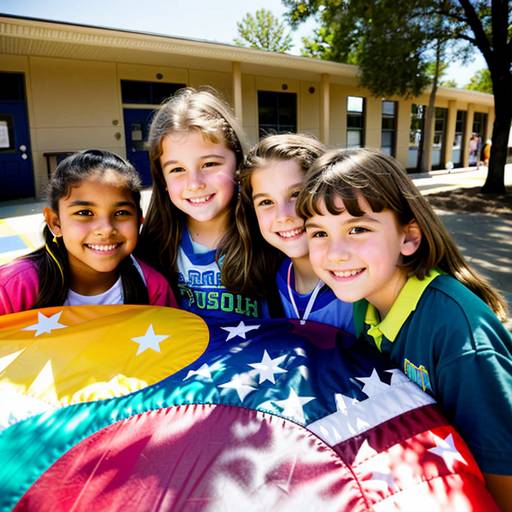
This 4th-grade social studies lesson focuses on community and diversity, aiming to help students understand and appreciate the various cultures that enrich their surroundings. The lesson begins with a warm-up discussion where students share what makes their community special. Key concepts of "community" and "diversity" are introduced and explored.
Students then engage in small group discussions where they investigate different cultural aspects such as food, music, holidays, and clothing that are present in their community. They share their findings with the class, which are recorded for reference.
Following this, students collaboratively create a mural that visually represents the diversity discussed, with sections dedicated to different cultural elements. They complement the mural with personal reflections written on post-it notes, providing an opportunity for individual expression.
The lesson concludes with students sharing their reflections, fostering a collaborative learning environment. Assessment is based on participation, creativity, and understanding demonstrated through the mural and reflections. Follow-up activities include interviews with family members about cultural backgrounds, encouraging continued exploration of diversity.