
Filters
Level
Grade
Subject
Subject Area
Subject Topic
Standard(s)
Audience
Keyword
DurationMinutes
4th Grade Lesson Plans

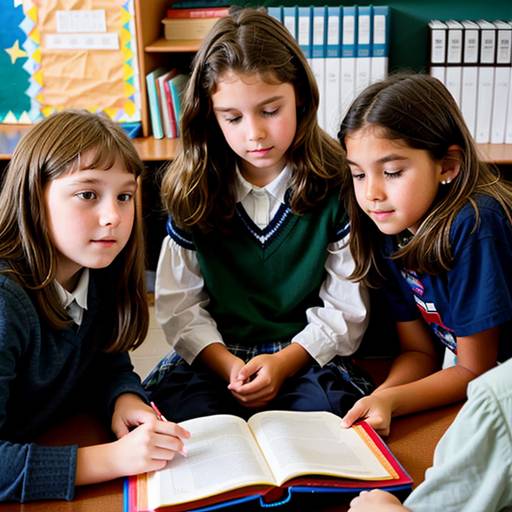
This 4th-grade Language Arts lesson plan focuses on enhancing students' reading comprehension through the exploration of a fictional story. The lesson begins with a discussion about the elements that make stories engaging, followed by a read-aloud session of a selected short fiction text. Students then work in small groups to analyze different story components—such as characters, setting, and plot—using graphic organizers. A whole-class discussion allows for sharing insights and understanding the story's conflict and resolution. To reinforce comprehension, students reflect individually by summarizing the story and sharing their thoughts with a partner. Assessment includes observation during group work, evaluation of graphic organizers, and collection of written reflections. The lesson encourages collaboration, critical thinking, and the application of comprehension skills to foster a greater appreciation for fiction. Extensions include creating original stories for future sharing and exploring additional related texts.

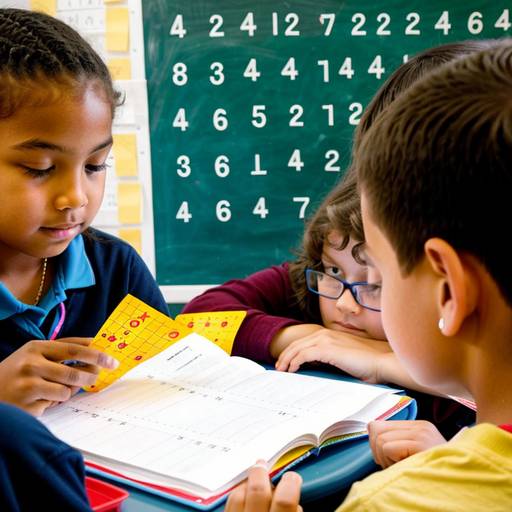
In this 4th-grade math lesson, students explore the concept of subtracting fractions with like denominators. The lesson begins with an engaging hook featuring a real-life scenario related to cooking, which leads to a discussion about the use of fractions in daily life. The instructor introduces the concept of subtracting fractions by explaining the process of subtracting only the numerators while keeping the denominators consistent. Visual aids, such as fraction circles or strips, are utilized to reinforce understanding.
Students participate in guided practice by solving a series of fraction subtraction problems collaboratively, followed by independent work on real-world word problems involving fraction subtraction. The lesson concludes with a class discussion on the solutions to these problems, allowing students to reflect on their learning and build confidence in their skills.
Assessment occurs through participation, accuracy in worksheets, and engagement in discussions. Differentiation strategies ensure that both advanced learners and those needing additional support can succeed. The instructor plans to reflect on the effectiveness of the lesson and consider adjustments for future instruction on fractions.
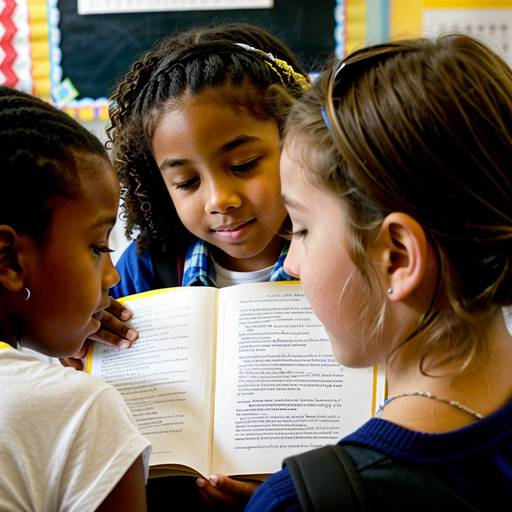
This 4th-grade Language Arts lesson focuses on enhancing students' reading comprehension by exploring the key elements of characters and setting in a story. The lesson begins with a discussion about the significance of these elements, setting clear objectives for student understanding.
Following an introduction to essential concepts, the teacher models effective reading strategies, such as annotating text with highlights and notes. In guided practice, students read a selected short story as a class, engaging in discussions and practicing their annotation skills. They then complete a Character and Setting Graphic Organizer independently, documenting their insights into the main character and setting of the story.
The lesson closes with student sharing sessions to reinforce understanding and encourage collaboration. Assessment is conducted through the collection of graphic organizers, with extensions offered for students to further develop their skills. The lesson emphasizes interactive learning and strategy application to improve overall reading comprehension.
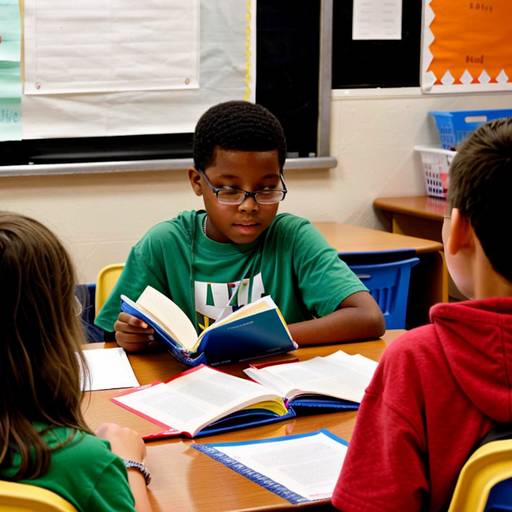
This lesson plan focuses on teaching 4th-grade students the fundamentals of expository writing. It aims to help students understand the purpose and structure of this writing style, which is used to inform or explain topics. The lesson begins with a discussion introducing expository writing, followed by an explanation of its key elements, including the topic sentence, supporting details, examples or facts, conclusion, and transition words.
Students will engage in a graphic organizer activity where they select a topic of interest and outline their paragraphs. After this planning stage, they will compose a complete expository paragraph, utilizing clear language and maintaining organization. The lesson culminates in a sharing session, where students present their work in pairs or small groups, reinforcing their skills in articulating information effectively.
Assessment includes reviewing the graphic organizers and written paragraphs to ensure comprehension of the structure and clarity of writing. The plan also includes extensions for advanced learners and differentiated support for those needing additional assistance, ensuring all students can succeed in developing their expository writing skills.
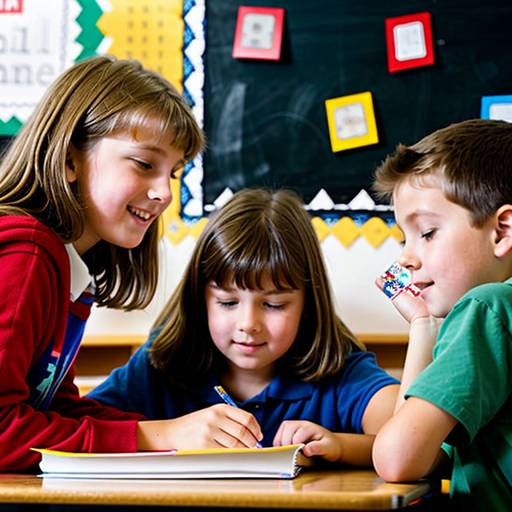
This 4th-grade Language Arts lesson focuses on enhancing students' vocabulary through engaging activities and collaborative learning. The class begins with an interactive word game to capture students' interest, followed by the introduction of 10 target vocabulary words. In small groups, students explore assigned words by brainstorming definitions, synonyms, antonyms, and creating sentences, which encourages teamwork and critical thinking.
After a read-aloud of a short story that incorporates the vocabulary words, students discuss context clues and share sentences from the text. Each student then records the vocabulary words in their personal journals, detailing definitions, illustrations, and sentences, reinforcing their understanding.
The lesson includes interactive games, such as charades or Pictionary, to provide a dynamic way for students to practice the vocabulary. Students reflect on their learning by sharing their favorite new word and its significance. To promote continuous vocabulary development, they are encouraged to seek and document new words throughout the week for a shared "Vocabulary Treasure Chest." Assessment is based on participation, journal entries, and engagement in activities. Adaptations are provided for different learning needs, ensuring all students can participate meaningfully.
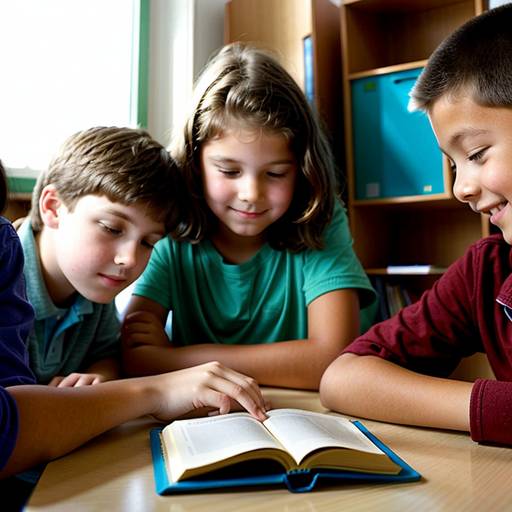
In this 4th-grade Language Arts lesson, students will engage in a vocabulary exploration activity designed to enhance their understanding and application of new words. The lesson begins with a discussion about the significance of vocabulary, followed by an introduction of ten new words. Students will work in small groups to investigate the meanings of assigned vocabulary words, creating visual aids that include definitions, example sentences, and illustrations.
Next, students will complete individual "treasure maps," where they will creatively respond to prompts related to each vocabulary word, reinforcing their learning through drawing and writing. The lesson culminates with students sharing their maps and favorite words with partners and the class. Overall, the lesson encourages collaboration, creativity, and contextual word usage, while providing opportunities for assessment through observation and review of student work. Extensions include keeping a vocabulary journal and planning a scavenger hunt to further reinforce vocabulary skills.
Following this, a mini-lesson on using context clues will help students learn how to deduce the meanings of unfamiliar words within sentences, allowing them to practice this skill through guided exercises. To apply their new knowledge, students will write sentences using the vocabulary words and share them with partners.
The lesson concludes with a reflection on the importance of a strong vocabulary, assigning students to read a short story, identify new words, and create a vocabulary web for each. Assessment will involve monitoring participation, reviewing group work and individual worksheets for understanding, and observing students’ use of new vocabulary. Extensions and accommodations will further support student engagement and individual learning needs.

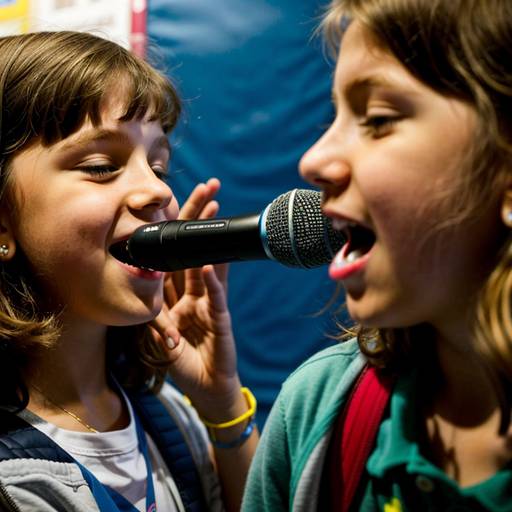
In this 4th grade music lesson, students will explore the emotional and expressive qualities of singing while practicing a selected song. The lesson begins with a discussion about the connection between music and emotions, followed by vocal warm-up exercises to enhance vocal skills. Students will learn rhythmic patterns using clapping and instruments to build teamwork and listening abilities.
As they dive into the song, students will work together to practice the lyrics, focusing on pitch and dynamics. The importance of expression and body language will be discussed to enhance their performance skills. After group rehearsals, students will perform the song, showcasing their individual and collective efforts.
The lesson concludes with a reflection on their experiences and learning, emphasizing personal growth in singing and teamwork. Assessment will be based on engagement, rhythm accuracy, and expression during performance, with opportunities for extensions and adaptations to support diverse learners. This engaging lesson encourages creativity and builds confidence in students' musical abilities.
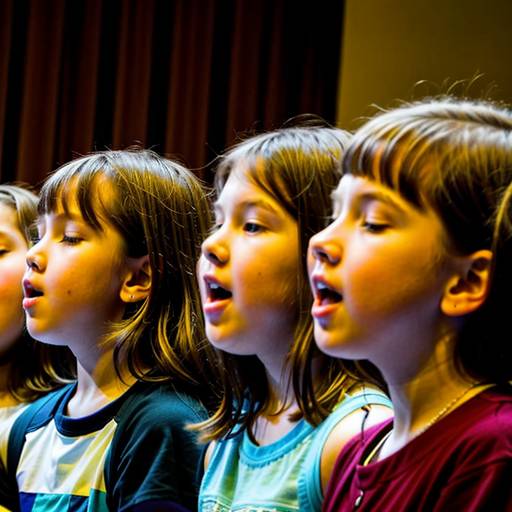
In this 4th-grade music lesson, students will explore the concepts of singing and harmony through engaging activities that foster collaboration and creativity. The lesson begins with an introduction to key musical terms such as melody, harmony, and unison. After a series of vocal warm-ups to prepare their voices, the class will practice singing a familiar song together in unison before learning a simple harmony part. Students will be divided into smaller groups to create their own harmonies for a different well-known song, allowing them to apply what they’ve learned in a collaborative environment. The lesson will culminate with group presentations, where students can share their unique harmonizations and reflect on their experiences. Throughout the lesson, emphasis will be placed on teamwork and listening skills, providing students with a foundational understanding of singing together in harmony.
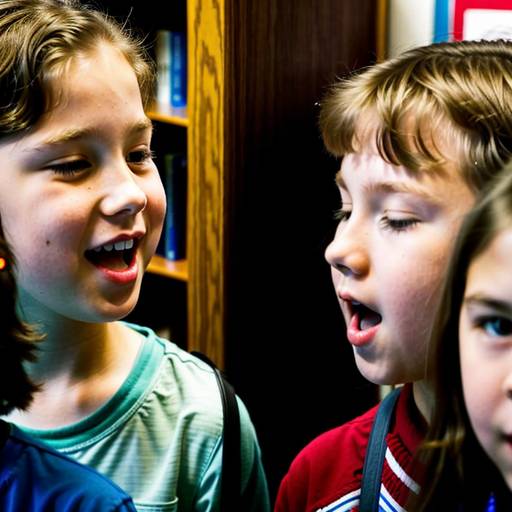
In this 4th-grade music lesson, students will explore the concept of singing in unison while developing their vocal skills, rhythm, and expression through a fun and engaging song. The lesson begins with a discussion about the importance of group singing, followed by warm-up exercises to prepare their voices. Students will learn a chosen song by breaking it down into manageable sections, practicing each part while focusing on maintaining pitch and rhythm together. Simple percussion instruments will be introduced for those interested, enhancing their understanding of rhythm and collaboration.
After thorough practice, students will have the opportunity for a mini-performance within the classroom, emphasizing the joy of sharing music with one another. The lesson concludes with a reflection on the experience, allowing students to express their thoughts about teamwork and what they learned. Extensions may include movements to accompany the song or a discussion on its cultural significance, all promoting an appreciation for the art of music and the benefits of singing together.