
Filters
Level
Grade
Subject
Subject Area
Subject Topic
Standard(s)
Audience
Keyword
DurationMinutes
4th Grade Lesson Plans

In this 4th-grade technology lesson, students will learn essential internet skills and search engine basics to enhance their online research abilities. The session will begin with a discussion about the internet and the role of search engines, followed by an explanation of how search engines operate and the importance of using effective keywords. Students will engage in a hands-on activity where they practice using a search engine to find information on specific topics, focusing on constructing keyword phrases for better search results. They will also learn how to evaluate the reliability of sources based on criteria such as author credibility, publication date, and website domain. The lesson will culminate in an independent practice session where students find a specific fact, record the source URL, and discuss the reliability of their findings with a partner. The class will close with a recap of the key concepts taught, emphasizing the importance of using trustworthy information for research projects. The teacher will assess student understanding through participation and the accuracy of their source evaluations. Extensions will be provided for students who finish early, fostering an environment of exploration and discovery in their online research skills.

This engaging lesson plan for 4th-grade students focuses on essential internet skills and safety. The objective is to teach students how to navigate the web effectively while understanding the importance of online safety. The session begins with an interactive discussion about students' online interests, followed by direct instruction on basic searching techniques and the characteristics of reliable versus unreliable sources.
Students participate in guided and independent activities, including a scavenger hunt that encourages effective searching and a group discussion on various internet scenarios to determine if they are safe or not. The lesson concludes with a recap, a Q&A session, and an exit ticket exercise where students reflect on one internet safety tip they will remember.
Differentiation strategies ensure that all students, regardless of their skill level, can engage with the material, while follow-up suggestions encourage students to practice their skills at home and share their experiences in future classes. This comprehensive approach ensures that students not only learn vital internet skills but also remain safe while using online resources.
This lesson plan is designed for 4th-grade students to explore the concepts of digital citizenship and digital footprint. The session begins with an engaging introduction, prompting students to discuss what it means to be a responsible digital citizen. After defining both digital citizenship and digital footprint, students participate in small group discussions about their online activities and their impact on their digital presence.
An interactive video enhances their understanding, followed by an engaging Q&A session. Students then reflect on their online behaviors by completing a personal action plan template and setting goals for maintaining a positive digital footprint. The lesson concludes with a recap of key points and a discussion on the importance of responsible online behavior. Through group participation, discussions, and personal reflection, students gain valuable insights into navigating their online world safely and responsibly. Extensions and adaptations are included to ensure all learners can engage with the material effectively.

In this 4th-grade music theory lesson, students will explore the concept of musical note identification and the values associated with them. The session begins with a warm-up song, followed by a discussion about musical notes and the treble clef staff. Through direct instruction, students will learn the names of notes on the staff, using mnemonic devices to aid memory, and understand the different note values: whole notes, half notes, quarter notes, and eighth notes.
During guided practice, students will work in pairs to match note name flashcards to their corresponding positions on staff sheets and will engage in rhythmic clapping exercises to solidify their understanding of note durations. They will then complete individual worksheets that reinforce their knowledge of note identification and values.
The lesson concludes with a review of what they learned and a fun challenge where students can demonstrate their understanding by identifying specific notes from flashcards. Assessment will include observing participation, reviewing the completed worksheets, and evaluating performance during the challenge. Extensions of the lesson may involve simple composition activities or technology integration. The overall goal is to foster a positive learning environment and encourage student engagement in music theory.
In this engaging 4th-grade music lesson, students will explore the basics of music theory by learning to identify and name musical notes on the treble staff. The lesson begins with a discussion on the importance of note names and the treble clef. Students will then learn about the musical alphabet (A through G) and how it corresponds to the lines and spaces of the staff, using mnemonic devices for easy recall.
Through a fun note-naming game, students will work in groups to reinforce their understanding by identifying notes on flashcards. They will also engage in a creative activity where they draw notes on sticky squares and label them, encouraging artistic expression alongside musical learning. The lesson concludes with a review of key concepts, promoting a collaborative discussion on what students found easy or challenging. Assessment will be based on participation, accuracy in labeling, and creativity in the drawing activity.
Overall, this lesson provides an interactive and enjoyable way for students to build foundational skills in music theory.

In this 4th-grade technology lesson, students will explore the importance of internet privacy and learn how to manage privacy settings on various online platforms. The lesson begins with a class discussion about online safety and personal information, followed by an interactive presentation highlighting safe online behaviors and the significance of protecting personal data. Students will then work in small groups to research and document privacy settings for different platforms, ultimately creating charts to summarize their findings. Each group will present their work to the class, fostering collaborative learning and reinforcing best practices for online interactions. The lesson concludes with an interactive quiz to assess understanding and retention of the material covered. Extension activities encourage students to further engage with the topic and share their knowledge with family members. Overall, the lesson aims to empower students to navigate the digital landscape safely and responsibly.

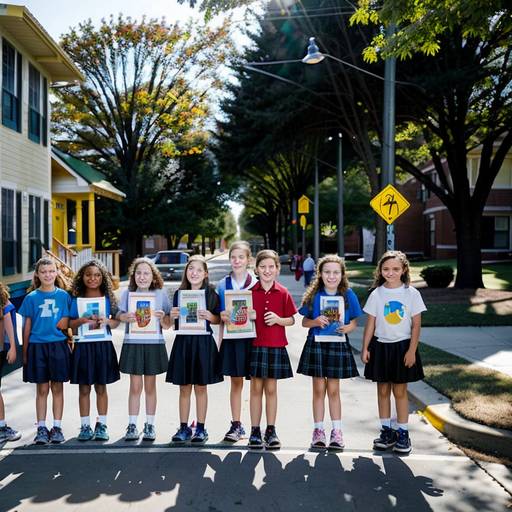
This 4th-grade social studies lesson focuses on the concepts of community and the importance of rules for maintaining a safe and functioning environment. Students will first engage in discussions to define what a community is and brainstorm its key elements. Working in small groups, they will create visual representations of their community, highlighting important locations and features.
The lesson will then transition to exploring community rules, where students will identify and discuss common rules, their purposes, and the potential consequences of not having them. Each student will select a rule they consider important and find images to represent it, compiling their work on a handout.
In the closure of the lesson, students will share their selected rules and contribute to a collaborative poster titled "Our Community Rules," which will be displayed in the classroom. This interactive approach culminates in students understanding how community rules contribute to a thriving and respectful society. The lesson emphasizes participation, creativity, and critical thinking while providing opportunities for discussion and visual learning.
In this 4th-grade Social Studies lesson, students will explore the concepts of community and diversity by investigating the unique cultural, ethnic, and social backgrounds present in their neighborhood. The lesson begins with a class discussion to identify what makes their community special and introduces key terms related to diversity. Students will then work in small groups to research specific aspects of diversity in their area, such as various cultures, languages, and local celebrations.
Following their research, each group will create a visual "Diversity Map" that illustrates their findings, allowing them to creatively express the contributions of different individuals and groups. After completing their maps, students will present their work to the class, fostering a sense of pride and awareness regarding their community's richness.
The lesson concludes with a reflective writing exercise, where students articulate how diversity strengthens their community. Assessment will include participation in discussions and presentations, creativity in their maps, and reflective writing. Extensions might involve inviting community members to share their stories or organizing a “Community Fair” to celebrate and learn more about different cultures. Overall, the lesson aims to instill appreciation for diversity and promote an inclusive community environment.

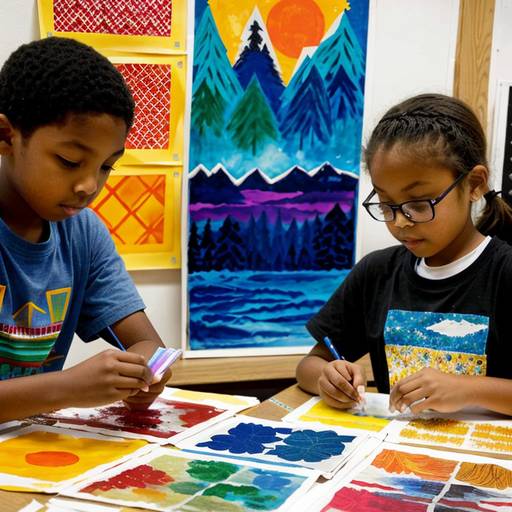
In this 4th-grade art lesson, students will explore the fascinating world of printmaking through nature-inspired creations. They will be introduced to the significance of printmaking as a form of artistic expression while examining patterns and textures found in the natural environment. The lesson begins with a discussion about printmaking techniques, followed by a demonstration of various methods, including the use of foam blocks and natural materials to create prints.
Students will engage in hands-on activities, producing multiple prints using their chosen techniques while experimenting with color and design. The lesson concludes with a mini art gallery walk, allowing students to showcase their work and discuss their favorite prints and the materials they used. Throughout the lesson, students will learn to reflect on their creative processes while enhancing their understanding of both art and nature. Assessment will focus on participation, engagement, and the originality displayed in their prints. Options for extension include incorporating scientific concepts related to the plants used in their artwork.


In this 4th grade math lesson, students will explore the concept of perimeter, learning how to measure and calculate the distance around various geometric shapes, such as squares, rectangles, and triangles. The lesson begins with a discussion about measurement, followed by direct instruction on perimeter formulas specific to each shape. Students will engage in guided practice in small groups, using rulers and measuring tapes to accurately measure sides of shape cutouts and calculate their perimeters. Independent practice will involve worksheets with perimeter calculations and real-world application problems. The lesson concludes with a class discussion to reflect on their findings, emphasizing the importance of accurate measurement and real-life applications of perimeter. Assessments will include evaluating group participation and worksheet accuracy, with extensions available for advanced learners. Modifications will also be provided to support diverse learners in the classroom.