
Filters
Level
Grade
Subject
Subject Area
Subject Topic
Standard(s)
Audience
Keyword
DurationMinutes
4th Grade Lesson Plans

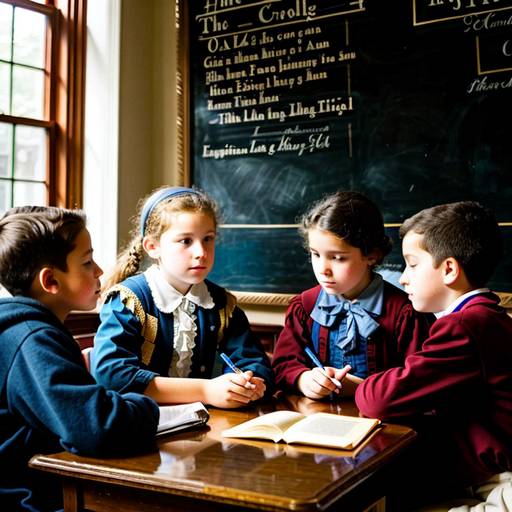
In this 4th grade social studies lesson, students will explore the key events and figures of the American Revolution. The class begins with a short video to capture students' interest, followed by a discussion to gauge prior knowledge. The teacher will then provide a focused overview of significant events, such as the Boston Tea Party and the signing of the Declaration of Independence, alongside key individuals like George Washington and Thomas Jefferson.
Students will work in small groups to create visual timelines of the events, which they will present to the class, fostering collaboration and presentation skills. To wrap up, students will complete a reflection worksheet, articulating their understanding of one key event and figure from the revolution. Assessment will include participation, presentation evaluation, and completed worksheets. Extensions and adaptations are included to enhance learning and accommodate diverse needs, making the lesson both engaging and educational.
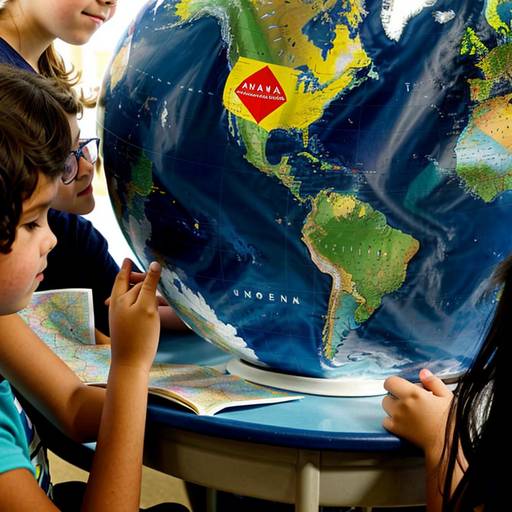
This lesson plan focuses on introducing 4th-grade students to the concepts of geography and maps. The objective is for students to understand key elements of maps, including titles, scales, legends, and compass roses. The lesson begins with an engaging discussion that prompts students to think about the importance of maps.
Direct instruction involves explaining essential map features using a projector to display examples. Guided practice includes completing worksheets that reinforce knowledge of map elements through various exercises, followed by group discussions to promote collaboration.
Students then move into a hands-on activity where they create their own maps of a favorite location, incorporating essential elements learned earlier. This creative component encourages students to use their imagination and apply their understanding of mapping. The lesson concludes with a recap of key concepts and prompts students to consider the role of maps in their daily lives.
Assessment focuses on evaluating students' understanding through completed worksheets and their personalized maps. The lesson also includes extensions and adaptations to meet diverse learners' needs, fostering both creativity and collaboration among peers.


In this engaging 4th-grade life science lesson, students will explore the major systems of the human body, including the skeletal, muscular, circulatory, respiratory, and digestive systems. The lesson begins with an interactive discussion, allowing students to share their prior knowledge. Following this, the teacher presents an overview of each body system, using visuals such as a model skeleton and charts to enhance understanding.
Students will then participate in group activities, researching their assigned body system and creating informative posters that include descriptions, key organs, and fun facts. Each group will present their posters to the class, fostering teamwork and communication skills.
To reinforce learning, the lesson includes hands-on demonstrations, such as using balloons to mimic lung function and straws to illustrate oxygen transportation in the blood. The lesson concludes with a recap and a homework reflective question, encouraging students to think critically about the importance of body systems. Overall, this lesson effectively combines direct instruction, collaborative work, and interactive activities to engage students in understanding the complexities of the human body.

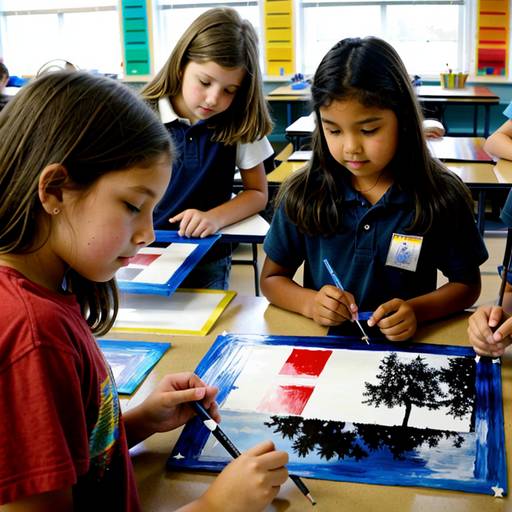
This lesson plan for 4th-grade students introduces printmaking techniques through a hands-on exploration of natural materials. Over two class periods, students engage in creating original prints inspired by nature. They learn how to design and carve printing plates using foam or cardboard, which they use to make relief prints. In the second class, students experiment with natural items like leaves and flowers to create unique prints, applying paint to these textures and pressing them onto paper. The lesson emphasizes creativity and expression as students arrange their prints into a collage. Throughout the process, students reflect on their experiences, discuss their techniques and designs, and showcase their artwork in a collaborative environment. Assessment focuses on creativity, technique application, and student engagement during both sessions.

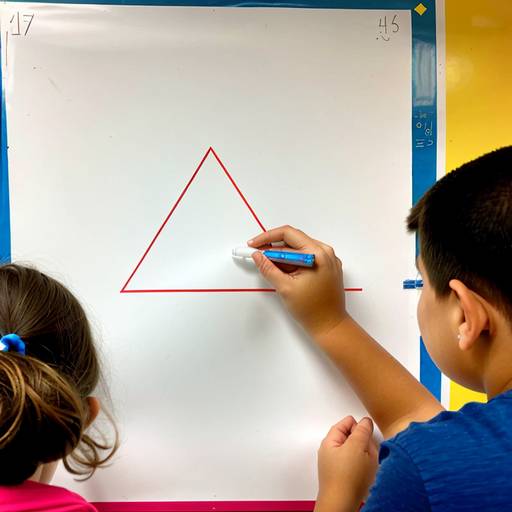
This lesson plan focuses on introducing fourth-grade students to key concepts in geometry and area measurement. The students will learn to identify and classify various geometric shapes, such as triangles, rectangles, squares, and circles. They will be guided through the process of calculating the area of rectangles and squares using the formula Area = Length x Width, and will explore real-world applications of these concepts through practical examples.
The lesson begins with a discussion about shapes found in the classroom, followed by direct instruction where the area formula is demonstrated through examples. Guided practice allows students to create and calculate the area of their drawings, fostering collaboration with peers. Independent practice includes worksheets with a variety of area calculation problems, including real-life scenarios.
The lesson concludes with a review of the material covered and a discussion on the relevance of area calculations in everyday life. Assessment through observation during practice activities and worksheet evaluations ensures understanding. Extensions for advanced learners and adaptations for students needing additional support are also included, promoting comprehensive learning for all students.
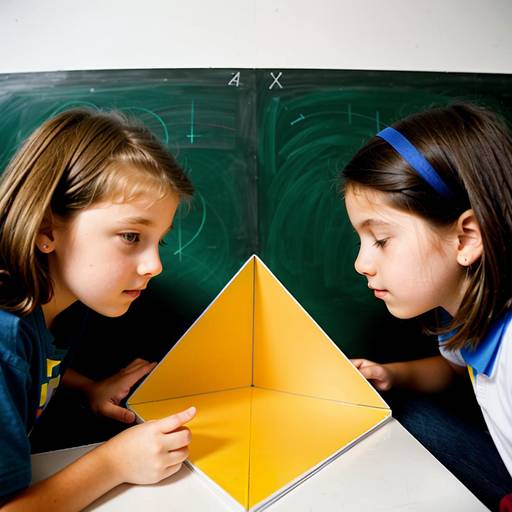
In this 4th-grade math lesson, students will explore geometric shapes and learn about perimeter. They will begin with an introduction to common shapes such as squares, rectangles, triangles, and circles, discussing their properties and real-life applications. Following this, students will learn how to calculate the perimeter for each shape using specific formulas.
During guided practice, they will work on a worksheet where they will calculate the perimeter of various shapes. This will be followed by a hands-on activity where students, in pairs, will create their own shapes using graph paper and scissors, measure the sides, and calculate the perimeter of their creations.
At the end of the lesson, students will have the opportunity to share their work, reflecting on their learning experiences. The lesson will be concluded with a quick quiz or review game to reinforce the concepts covered. Assessment will focus on students' worksheet completion, participation in the activity, and a short exit ticket to capture their learning. Differentiation strategies will be employed to support varying levels of understanding among students.
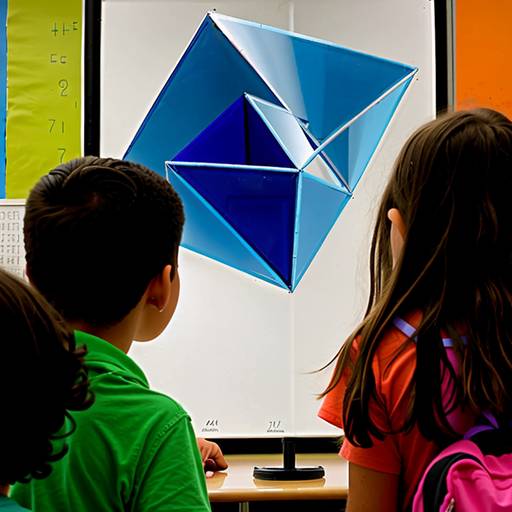
In this engaging 4th-grade math lesson, students will explore the concepts of geometry and symmetry. The lesson begins with an introduction to symmetry through visual examples and a discussion about its significance in everyday life. Students will participate in guided practice using mirrors to identify symmetrical and asymmetrical shapes. They will then move into an independent activity, where they create their own symmetrical designs on white paper, utilizing markers and rulers to enhance their artwork. Following the creation process, students will display their designs in a “Symmetry Gallery Walk” to share their work and understanding with classmates. The lesson concludes with a reflection on what they learned and the distribution of a “Symmetry Scavenger Hunt” worksheet for homework, encouraging students to find and recognize symmetry in their environment. Assessment will focus on student participation, their finished designs, and the completed scavenger hunt. Extensions for advanced students and modifications for those needing additional support are also included to cater to diverse learning needs.

In this 4th-grade technology lesson, students will explore the basics of coding through engaging and interactive activities. The lesson begins with a discussion on what coding is, followed by an introduction to essential coding concepts such as algorithms, loops, and conditionals. A demonstration using a block-based coding platform showcases how these concepts can be applied in a simple project.
Students will then work in pairs to create a short animation or game, applying the coding concepts they've learned. Collaboration is encouraged as students explain their code to one another, reinforcing communication skills. After an opportunity for independent exploration and creativity, a few pairs will present their projects, focusing on the coding concepts they utilized.
The lesson will conclude with an exit ticket activity, where students write down one thing they learned and one question they still have. Assessment will be based on observation and student participation, with extensions for those seeking additional challenges. Differentiation strategies will be employed to support varied learning needs, ensuring an inclusive environment that fosters enthusiasm for coding.
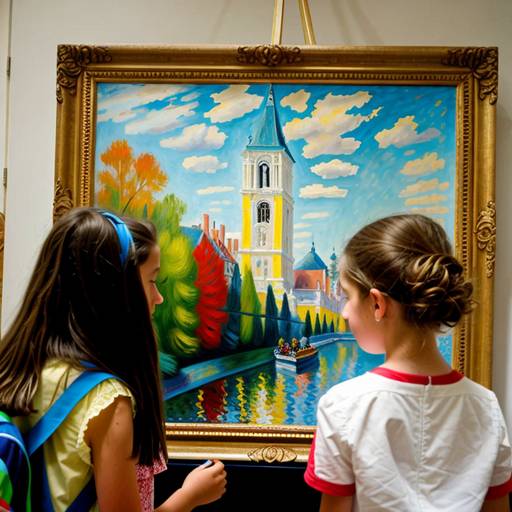
This two-day lesson plan introduces 4th-grade students to the Impressionist art movement, focusing on its key characteristics and influential artists such as Claude Monet and Pierre-Auguste Renoir. The first day begins with an engaging presentation that showcases famous Impressionist paintings, followed by a class discussion that stimulates critical thinking about color, emotion, and technique. Students complete an art history worksheet to reinforce their understanding of the movement.
On the second day, students review the concepts learned and receive instructions for creating their own watercolor paintings inspired by Impressionism. They practice using watercolors to achieve light and texture effects in their artwork. After painting, students participate in a gallery walk to share their creations, fostering appreciation and reflection on their peers' work. The lesson emphasizes creativity, engagement with art history, and the exploration of different artistic techniques, culminating in a meaningful artistic experience. Assessment is based on participation, the completion of the worksheet, the quality of their artwork, and engagement during the gallery walk.
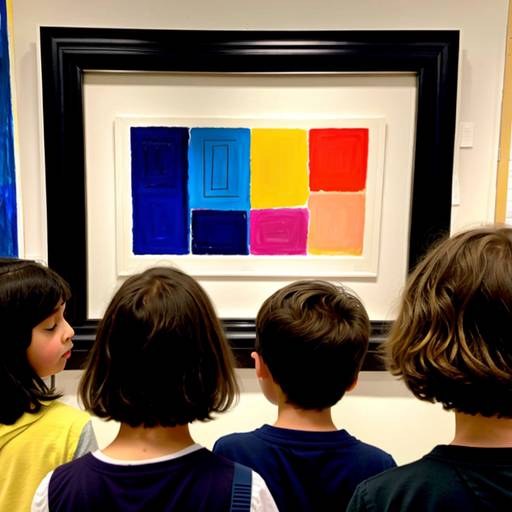
This lesson plan is designed for 4th grade students to explore significant art movements, specifically Impressionism, Cubism, and Surrealism. The class begins with an engaging introduction to art history, where students discuss their favorite artworks and learn about the context and characteristics of each art movement. Through visual presentations, students examine iconic works by artists such as Monet, Picasso, and Dalí, gaining insights into the distinctive features and historical influences that shaped these movements.
Following the presentations, students participate in group discussions to delve deeper into their assigned movements, sharing interesting facts with their peers. The lesson culminates in a creative activity where each student creates their own artwork inspired by one of the movements, allowing them to apply what they’ve learned through hands-on practice. Finally, students present their artworks to the class, fostering a sense of confidence and community. The lesson concludes with reflections on their experiences, with opportunities for assessment based on participation and creativity. Extensions include creating a bulletin board to showcase student work and organizing a mini-exhibition for families. Overall, the lesson combines art history with creative expression, encouraging students to engage with and understand the evolution of art.