
Filters
Level
Grade
Subject
Subject Area
Subject Topic
Standard(s)
Audience
Keyword
DurationMinutes
4th Grade Lesson Plans

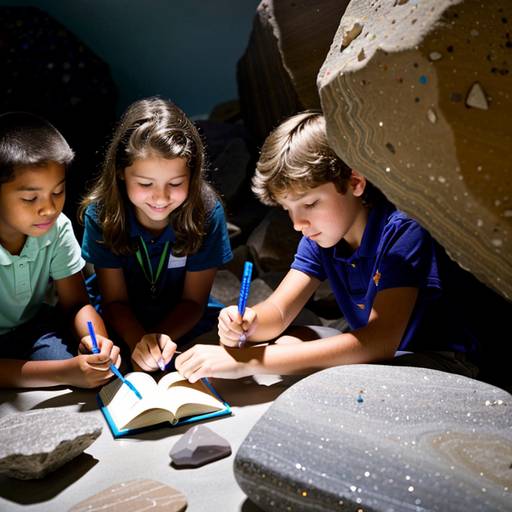
In this 4th-grade Earth Science lesson, students will explore the fascinating world of rocks and minerals. They will learn about the three main types of rocks—igneous, sedimentary, and metamorphic—and gain an understanding of the rock cycle, which explains how rocks transform from one type to another over time. The lesson begins with a class discussion to activate prior knowledge about rocks, followed by a direct instruction segment that introduces rock classifications and characteristics.
Students will engage in a hands-on activity where they work in small groups to observe various rock samples using hand lenses, classify them according to their properties, and create informative posters based on their findings. Each group will present their work to the class, fostering collaboration and discussion about the similarities and differences among the rocks. The lesson concludes with a recap of the key concepts and an assignment for students to find a rock at home and write about its type and characteristics. Assessment will incorporate the rock classification worksheets, group posters, and the take-home project, ensuring students demonstrate their understanding of the material. The lesson aims to cultivate curiosity about Earth science through active learning and exploration.

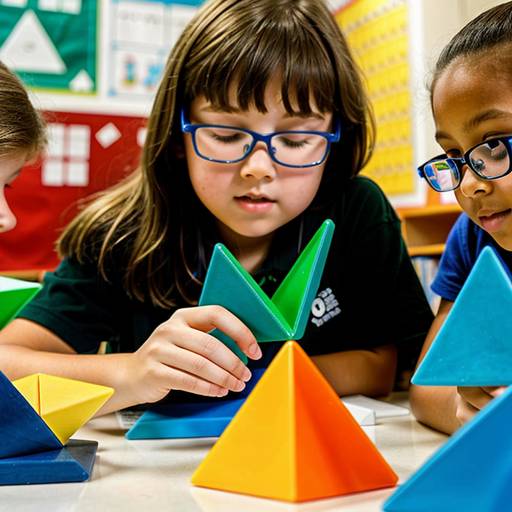
This 4th-grade math lesson focuses on introducing students to three-dimensional shapes and their properties. The lesson begins with a discussion on real-life examples of 3D shapes, followed by a presentation on various solids, including cubes, spheres, cylinders, cones, and pyramids. Students will engage in hands-on activities to examine and classify these shapes while counting their faces, edges, and vertices.
In small groups, they will work on worksheets to identify and classify different 3D shapes, reinforcing their understanding through collaboration. Students will then create their own 3D shapes on graph paper, labeling their properties. At the end of the lesson, there will be a review of key concepts and a homework assignment that encourages students to find and document examples of 3D shapes in their environment.
Assessment will be conducted through observation during activities and the evaluation of worksheets and homework for comprehension. Differentiation strategies will be employed to support all learners, including extensions for advanced students, and additional guidance for those needing extra help. Overall, the lesson aims to make learning about geometry engaging and relevant to students’ everyday lives.
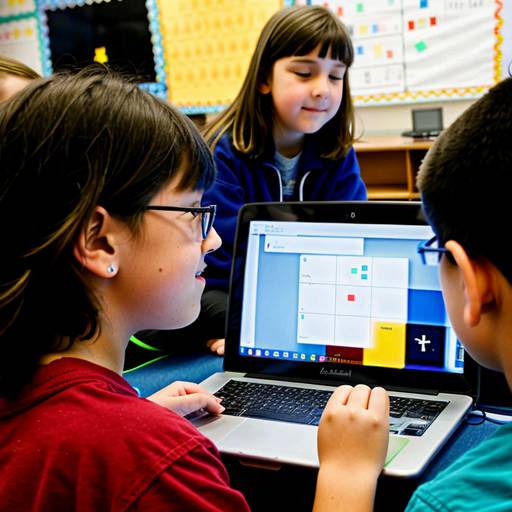
In this 4th-grade technology lesson, students will explore the basics of coding through the understanding of algorithms, which serve as step-by-step instructions for problem-solving. The lesson begins with a warm-up discussion on coding, followed by an introduction to a coding platform where students will learn about essential concepts like sequences, loops, and conditions. They will engage in an interactive activity where they create their own algorithm based on a common task.
Guided practice allows students to develop a simple coding project, such as an animation or interactive scene, based on a theme of their choice. As they work on their projects, students will reflect on their learning and share their creations with the class. The lesson concludes with a recap of key concepts, emphasizing the importance of algorithms in programming and the troubleshooting process of debugging. Assessment will focus on collaboration, creativity, and understanding of coding concepts, with opportunities for further exploration in follow-up lessons. Adaptations will be made to support diverse learners and challenge advanced students.

In this 4th Grade Technology lesson, students will be introduced to the fundamentals of coding and programming languages through engaging activities. They will learn what coding is, its importance, and basic terminology such as algorithm, loop, and debugging. The lesson begins with a video showcasing coding applications, followed by a discussion to gather students' ideas about coding. A demonstration of a block-based coding platform, like Scratch or Code.org, guides students through creating their own simple program, allowing for creativity and hands-on experience. They will also learn how to identify and fix mistakes in their code. At the end, students will present their projects to the class, reflecting on their experiences and challenges. Assessment will be based on participation and the final projects, with optional extensions for advanced learning and adjustments for diverse learners. This interactive lesson aims to make coding accessible and fun, fostering critical thinking and collaboration among students.

This lesson plan focuses on introducing 4th-grade students to expository writing, highlighting its purpose and structure. The session begins with a discussion about the significance of expository texts, followed by direct instruction on the key components of an effective expository paragraph, including the topic sentence, supporting details, and concluding statement. Students engage in guided practice by analyzing sample texts in small groups and identifying the various structural elements.
For independent practice, students select a topic of interest to create a graphic organizer that outlines their expository paragraph, incorporating a topic sentence, supporting details, and a conclusion. The lesson concludes with students sharing their topic sentences and details, reinforcing their understanding of the writing format. Assessment is informal through observation and evaluation of graphic organizers, with extensions available for students who wish to expand their work into full essays or articles. This comprehensive approach aims to develop students' skills in informative writing while encouraging creativity and personal expression.


In this 4th-grade music appreciation lesson, students embark on a journey to explore various music genres, including classical, jazz, rock, pop, and folk. The lesson begins with a discussion about the importance of music and students' favorite types. Through a structured listening activity, students analyze audio samples from each genre, identifying instruments and discussing the feelings evoked by each piece.
Following this, they engage in a genre matching activity to reinforce their understanding and correct any misconceptions. In a hands-on segment, students work in small groups to create brief medleys inspired by their assigned genres using simple percussion instruments, which they later present to the class.
The lesson concludes with a reflective discussion about what they learned, encouraging students to continue exploring different music styles at home. Assessment includes participation, completion of worksheets, and creativity in group presentations. Extensions of the lesson encourage further engagement with local musicians and ongoing exploration of music at home.
This 4th-grade language arts lesson focuses on helping students understand various reading genres and their characteristics. The lesson begins with a discussion to activate prior knowledge about genres, followed by direct instruction where key genres, such as Fiction, Non-Fiction, Mystery, Fantasy, Historical Fiction, and Poetry, are defined and examples are provided.
Students work in small groups to classify a selection of books into the appropriate genres based on their unique features. For independent practice, each student chooses a book, reads a short excerpt, and completes a graphic organizer noting the title, author, genre, and key characteristics.
The lesson concludes with students sharing their findings with the class, reinforcing the importance of understanding genres in enhancing the reading experience. Assessment includes observations of group participation, review of graphic organizers, and an exit ticket where students reflect on a new genre they learned about. Adaptations are provided for different learning needs, ensuring all students can engage meaningfully with the material.

In this 4th-grade technology lesson, students will gain an understanding of technology and its various tools used in everyday life. The lesson begins with a discussion on the definition of technology, followed by a video showcasing different tools. Students will be divided into small groups to explore assorted technology tools, discussing their uses and problem-solving capabilities. Each group will present their findings to the class, fostering an engaging discussion about the impact and relevance of these tools. To conclude, students will reflect in their journals on what they found most interesting and predict future technological changes. The assessment will be based on participation, group presentations, and individual reflections. Extensions include a homework assignment involving interviews about technology use at home and a planned "Tech Show and Tell" event. Overall, the lesson emphasizes the importance of technology in our lives and encourages students to embrace new tools for learning and growth.

In this 4th-grade art lesson, students will explore the connection between color and emotion by creating personal drawings that represent specific feelings. The lesson begins with a discussion about emotions and how colors can evoke different responses, using a chart to illustrate common color associations. Following a demonstration of various drawing techniques such as shading and blending, students will select an emotion from provided cards and sketch a rough draft of their artwork.
Using colored pencils, crayons, or optional watercolors, they will apply the techniques demonstrated to enhance their expressive drawings. The activity culminates in a sharing session, where students present their artwork, explain their chosen emotions, and discuss their creative choices. The lesson emphasizes creativity, emotional expression, and the application of art techniques, with opportunities for both guided support and advanced exploration for students with varying skill levels.
In this 4th-grade mathematics lesson, students will delve into the concepts of multiplication and factors through a series of engaging activities. The lesson begins with a warm-up review of multiplication, leading into the introduction of factors as the numbers that multiply together to produce a product. Students will participate in a Factor Finder activity, where they collaboratively identify and list all factors of chosen numbers while working in pairs.
Groups will create informative posters displaying their numbers' factors, promoting collaboration and creativity. Following this, students will engage in a fun game of Multiplication Bingo, reinforcing their understanding of identifying products from given factor pairs.
To conclude, a reflective discussion will help students articulate what they have learned about the importance of factors in multiplication, and they will summarize their takeaways on Post-it notes. Assessment will include observational data from participation, accuracy in worksheets, and creativity in group projects. Extensions and adaptations to the lesson will cater to varying learning needs, ensuring all students can engage meaningfully with the material.