
Filters
Level
Grade
Subject
Subject Area
Subject Topic
Standard(s)
Audience
Keyword
DurationMinutes
4th Grade Lesson Plans

In this 4th-grade music appreciation lesson, students will explore various musical cultures from around the world through listening activities and discussions. The lesson begins with an introduction to the idea that music reflects cultural identity, followed by a series of listening stations where small groups will engage with diverse musical pieces. At each station, students will fill out a “Music Culture Passport” highlighting key details about the music, including instruments and emotional impact. After experiencing all the stations, the class will come together to discuss their findings, focusing on the similarities and differences in the music. Finally, students will reflect creatively by illustrating a scene related to their favorite cultural music. Assessment will be based on participation in discussions, completion of the passport handouts, and the creativity demonstrated in their illustrations. Optionally, students can further engage with music outside the classroom by sharing a favorite international song in future sessions. This lesson aims to cultivate an appreciation for global music and its cultural significance.

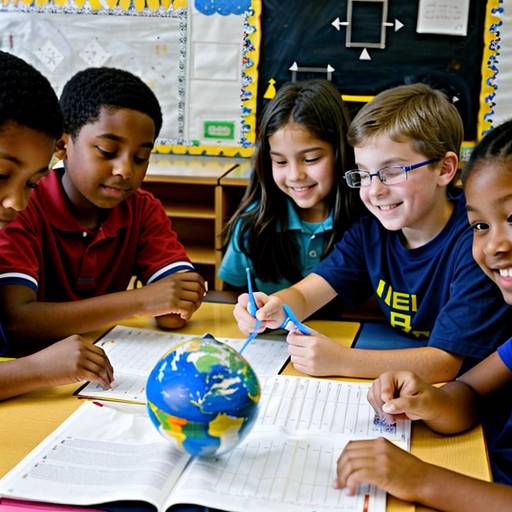
This lesson plan for 4th-grade students focuses on the concepts of potential and kinetic energy within the realm of physical science. The objective is for students to understand these two types of energy, identify real-life examples, and experience the transformation between them through a hands-on activity.
The lesson begins with an introduction to energy, including a discussion about what it is and where it can be observed in daily life. Students learn about potential energy (stored energy) and kinetic energy (energy of motion) through interactive questioning.
Following the discussion, students participate in a hands-on activity where they use rubber bands, toy cars, and ramps to explore energy transformations. They will stretch rubber bands to create potential energy and release them to observe the resulting kinetic energy as the car moves down the ramp. Students record their observations and discuss how different factors like height affect movement.
The lesson concludes with a class review and encourages students to reflect on energy transformations they observe outside of the classroom. Assessment is based on participation and understanding during activities, as well as reflections in their science journals. Extensions include a homework assignment inviting students to identify and illustrate examples of energy transformation in their own environments.
Overall, the plan aims to engage students actively in discovering energy concepts through interactive learning experiences.

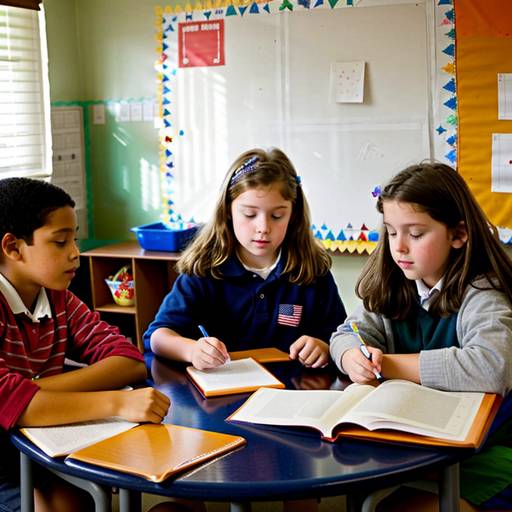
In this 4th-grade Language Arts lesson, students will explore the elements of folktales through character analysis and theme identification. The lesson begins with an introduction to folktales, where students share their prior knowledge and experiences. Students will read a selected folktale aloud, highlighting important character traits and events. Following the reading, they will analyze the main characters using graphic organizers, focusing on their motivations and actions. This analysis will lead to a class discussion about the story's themes and moral lessons. Students will conclude the lesson by reflecting on what they learned through writing and potentially illustrating a scene from the tale. The lesson incorporates assessments of participation, graphic organizer completion, and written reflections while providing differentiation to support diverse learners. Extensions may include comparing folktales from different cultures or creating original stories. Overall, the lesson aims to enhance students' reading comprehension and critical thinking skills in an engaging and interactive manner.
This 4th-grade physical science lesson focuses on the concepts of force, push, and pull, helping students understand how these forces affect the motion of objects. The lesson begins with an interactive discussion where students share their prior knowledge of forces, followed by an introduction to key vocabulary and concepts, including gravity and friction.
Students are then divided into small groups for hands-on experiments involving toy cars, ramps, weights, and various surfaces. They conduct two main activities: one to explore how pushing or pulling affects distance traveled with added weights and another to examine the impact of different surface textures on motion. Each group records their observations and findings.
After the experiments, groups present their results, fostering discussion about real-world applications and encouraging peer questions. The lesson concludes with a brief review of key concepts and an exit ticket assessment to gauge understanding. Extensions and adaptations are included to support diverse learners and enhance engagement. Throughout the lesson, students actively explore and engage with the material, laying a strong foundation for their understanding of physical forces.

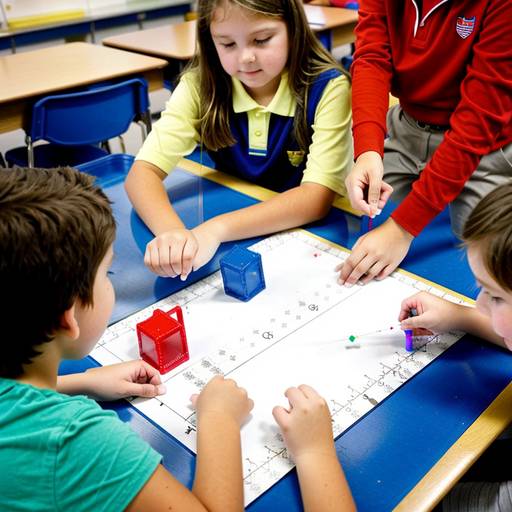
This 4th-grade math lesson focuses on the concepts of measurement, specifically weight and length, encouraging students to explore and practice these skills through hands-on activities. Students will learn to differentiate between weight and length and use standard units such as grams, kilograms, centimeters, and meters. The lesson begins with an introduction to measurement, followed by direct instruction on how to properly use scales and rulers. In guided practice, students work in small groups to measure and record the weight and length of various classroom objects. During independent practice, they will complete a worksheet where they measure additional objects of their choice and document their findings. The lesson concludes with a class discussion where students share their results and reflect on the importance of measurement in everyday life. Assessment will be based on the completed worksheets and observations of group interactions. Accommodations are provided for students needing extra support, and extensions are suggested for those ready to explore advanced concepts.
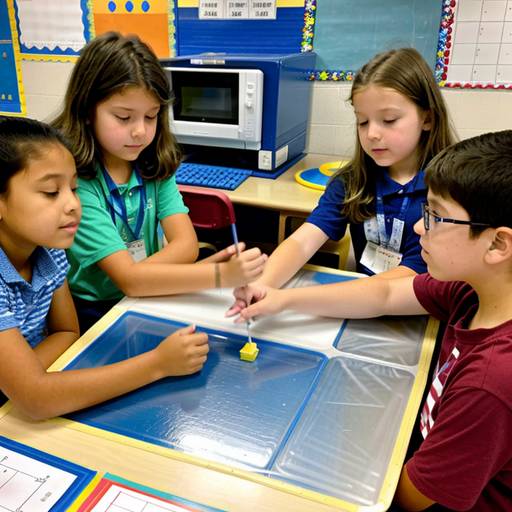
In this 4th-grade mathematics lesson, students will explore the concepts of measurement and area. The lesson begins by engaging students in a discussion about the importance of measurement in everyday life. They will learn to use rulers and measuring tapes to accurately measure the length and width of various classroom objects. Through direct instruction, students will be introduced to the formula for calculating area (Area = Length × Width) and will practice measuring and calculating area during guided activities.
In small groups, students will measure different objects, record their findings, and calculate the area for each. After the guided practice, they will work independently on worksheets to reinforce their understanding of area calculations. An optional extension activity allows students to create a mini garden on grid paper, incorporating their area calculations into a creative project.
The lesson concludes with a class discussion, where students share their measurements and findings, solidifying their understanding of how measurement and area apply to real-world scenarios. Assessment will be conducted through monitoring group work, reviewing worksheets, and checking for collaboration and accuracy, ensuring that all students grasp the fundamental concepts. Differentiation strategies will be employed to support students who may need additional help, as well as offering challenges for those ready to advance their skills.
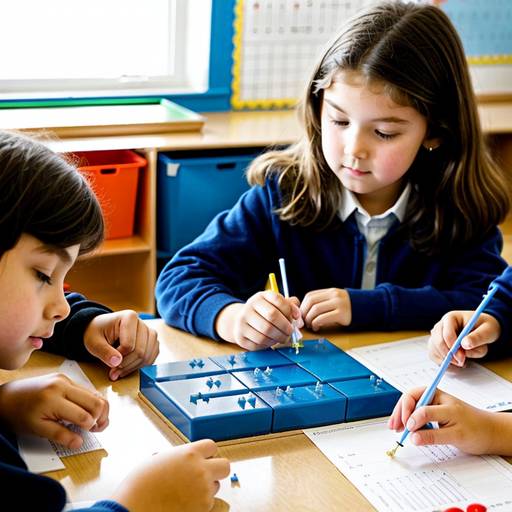
In this 4th-grade math lesson, students are introduced to the concepts of measurement and volume. The lesson begins with a discussion on real-life applications of measurement, followed by direct instruction on using standard units such as cups, pints, quarts, and liters. Students are then divided into small groups for a hands-on activity where they measure the volume of various containers using measuring cups and record their findings, while also practicing unit conversions. After the group activity, students participate in a class discussion to share their discoveries and challenges. The lesson concludes with an assessment in the form of a worksheet that includes volume-related problems and word problems. Throughout the lesson, differentiation strategies are incorporated to meet the diverse needs of students, ensuring all can engage with the material effectively. Reflection on student engagement and understanding is encouraged for future lesson adjustments.
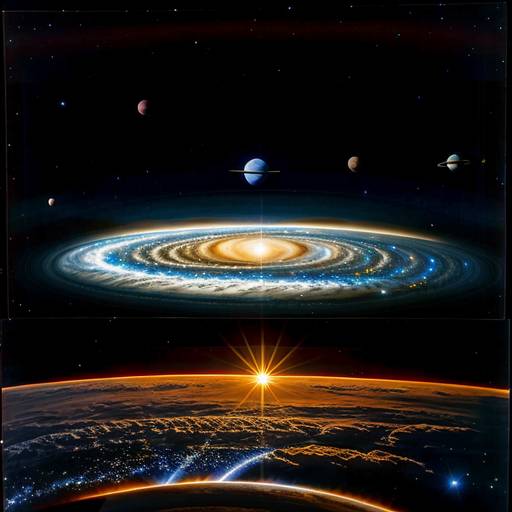
In this 4th grade science lesson, students will explore the solar system and its planets through engaging discussions, multimedia resources, and hands-on activities. The lesson begins with an introduction to the solar system, where students share their prior knowledge and watch a video to spark interest. Following this, the teacher presents detailed information about the eight planets, using visual aids to highlight their unique features and the concept of orbits around the sun.
Students will then participate in an interactive activity where they represent different planets in groups, showcasing their assigned planet's characteristics to the class. They will also simulate orbits around the sun in a movement exercise, reinforcing their understanding of how planets travel in space.
To conclude the lesson, students will reflect on their learning through discussion and by completing a labeled diagram of the solar system. Assessment will be based on participation in activities and the accuracy of the diagrams. Extensions and adaptations are included to enhance learning opportunities and support diverse learners. Overall, this lesson aims to instill a fascination with astronomy and provide foundational knowledge about our cosmic neighborhood.

This 4th-grade social studies lesson focuses on exploring geography and landforms. Students will begin by watching a video showcasing various landforms, followed by a discussion about their characteristics and significance. They will learn about different types of landforms, including mountains, hills, plains, valleys, plateaus, and deserts, along with the processes that form them.
In small groups, students will create models of assigned landforms using modeling clay or playdough, promoting teamwork and creativity while reinforcing their understanding. Each group will then present their model to the class, explaining its features and importance. Students will also label and illustrate a blank map of their locality with the landforms they learned about.
The lesson wraps up with a review of what students have discovered and emphasizes the importance of understanding landforms in the context of their own environment. Assessment will include observational notes during group activities and an evaluation of the maps created by students. Extensions may involve further independent research on specific landforms and their cultural impact. This engaging lesson blends visual, tactile, and collaborative activities to enhance students' understanding of geography.
In this 4th-grade social studies lesson, students explore geography and different countries, aiming to understand cultural diversity and the importance of geography. The lesson spans two class periods. In the first session, students learn about the continents and oceans, and then work in small groups to select a country for research. They gather information about the country's population, capital, language, landmarks, and cultural aspects using various resources.
In the second session, groups create informative posters based on their findings. They present these posters to the class, fostering engagement through questions and discussion. The lesson culminates in a wrap-up discussion that reinforces the concepts learned and highlights cultural appreciation. Assessment focuses on group participation, the accuracy of information, creativity, and engagement during presentations. Optional extension activities include creating a class geography book and considering pen pal exchanges to connect with students globally.