
Filters
Level
Grade
Subject
Subject Area
Subject Topic
Standard(s)
Audience
Keyword
DurationMinutes
4th Grade Lesson Plans

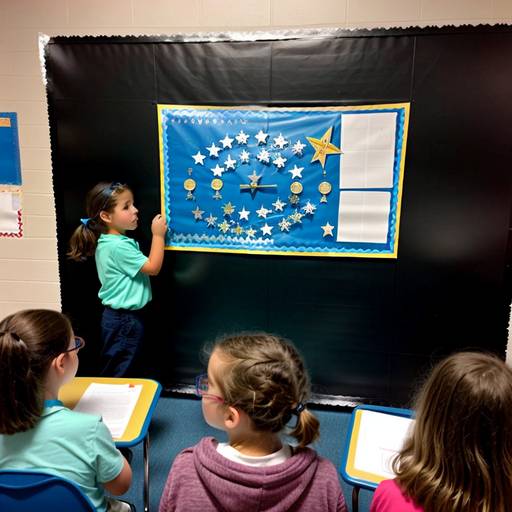
In this 4th-grade social studies lesson, students will explore the concept of timelines as a tool for understanding historical events. The lesson begins with a discussion about history and the purpose of timelines, followed by group activities where students analyze historical timelines and identify key events. They will then create personal timelines that include significant moments from their own lives, allowing them to make personal connections to the material. Students will work individually and collaboratively to construct a large historical timeline as a class, gaining insight into the relationship between individual experiences and broader historical narratives. The lesson concludes with presentations of their personal timelines, reinforcing their understanding of how timelines help organize and convey information about past events. Assessment will be based on participation, timeline creation, and understanding of the concepts introduced. Additionally, extension activities are provided to encourage further exploration of historical events.
In this fourth-grade social studies lesson plan, students will explore various landforms, including mountains, valleys, plains, plateaus, and hills, and their impact on human activities and the environment. The lesson begins with a discussion that prompts students to share their observations of landscapes, followed by an informative presentation on each type of landform. Students will work in small groups to create models of selected landforms using clay or playdough, encouraging creativity and teamwork. Each group will then present their models to the class, explaining the characteristics of their chosen landforms and discussing how these features influence human life. Assessment will focus on group participation, model creativity, and the quality of presentations. An optional extension activity involves researching a travel destination with significant landforms for further exploration. Overall, the lesson aims to engage students in understanding geography through hands-on activities and collaborative learning.

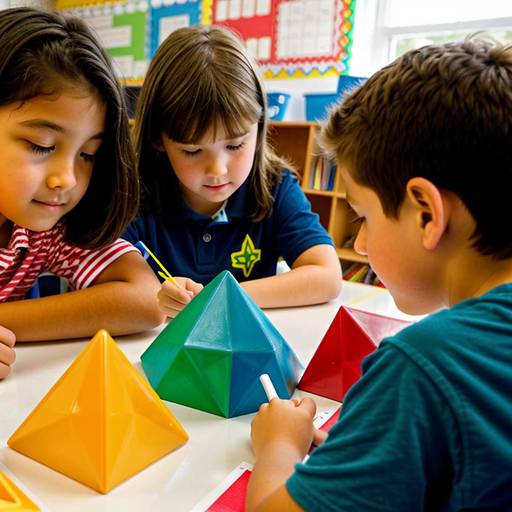
In this 4th-grade math lesson, students will explore the concept of three-dimensional shapes by identifying, analyzing, and creating various solids such as cubes, spheres, cylinders, cones, and pyramids. The lesson begins with a discussion about the shapes found in everyday life, followed by a mini-lecture that highlights the properties of each solid, including the number of faces, edges, and vertices.
Students engage in a scavenger hunt to find real-world examples of 3D shapes, promoting active learning and exploration. They then create their own models using construction paper, applying their understanding of shape properties. The lesson concludes with student presentations, where they share their models and reflect on the applications of these shapes in real life. Assessment will include observation during activities, the evaluation of models, and a quiz on identifying and describing 3D shapes. Differentiation strategies are included to support all learners, and extension activities provide opportunities for deeper exploration.

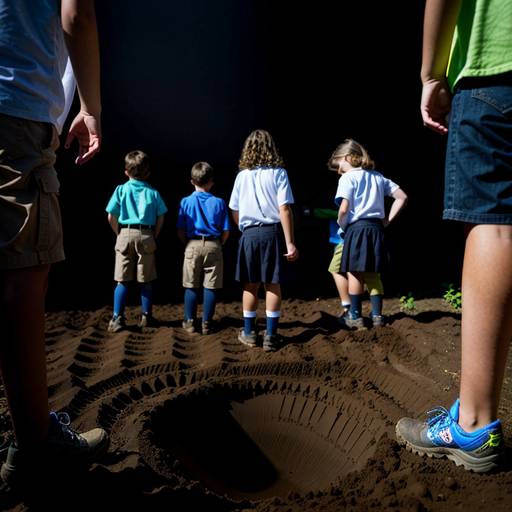
This lesson plan for 4th-grade students focuses on Earth Science, specifically the study of soil. The session aims to help students identify and understand the components of soil, its importance for life on Earth, and classify different types based on texture and color.
The lesson begins with an engaging introduction that encourages students to share their thoughts about soil. This is followed by direct instruction using a video or slideshow to explain soil formation and types. In a hands-on activity, students will explore various soil samples in small groups, using hand lenses to investigate elements like texture and visible materials. They will document their findings and classify the samples using a soil classification chart.
If time permits, students will have the opportunity to plant seeds in different soil types to observe which supports growth best. The lesson concludes with a class discussion, allowing students to share their observations and reflections on the importance of soil and environmental conservation.
Assessment will be based on participation, completed observation worksheets, and optional presentations on soil quality related to plant growth. Extensions and nature walks can further enhance the learning experience, fostering curiosity about the Earth's ecosystems and the vital role of soil.
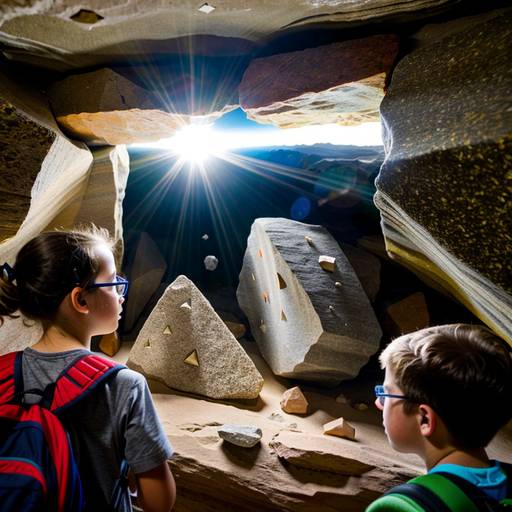
In this Earth Science lesson, 4th-grade students explore the different types of rocks: igneous, sedimentary, and metamorphic. The lesson begins with a discussion where students share their prior knowledge about rocks, followed by a direct instruction segment that covers how each type forms and introduces the rock cycle.
Students then engage in a guided activity where they work in small groups to examine rock samples using magnifying glasses and classify them based on their properties. They complete worksheets to document their findings and share their insights with the class. The lesson concludes with students creating a diagram of the rock cycle, reinforcing their understanding of the material learned.
Assessment is based on the accuracy of their worksheets, participation in group discussions, and their ability to illustrate the rock cycle. The lesson includes options for extensions and modifications to cater to diverse learning needs, ensuring all students can engage effectively with the content.


In this engaging 4th-grade music appreciation lesson, students explore various music genres from around the world. The lesson begins with a thoughtful discussion on the meaning of music and the different genres students enjoy. Through a hands-on guided listening activity, students visit genre stations, where they listen to audio clips and read fact sheets that highlight the characteristics, origins, and notable artists associated with each genre.
Following the listening activity, students engage in a group discussion to share their impressions and insights, deepening their understanding of the cultural significance of the different genres. In small groups, they then create visual posters that represent their assigned genre, showcasing key instruments, famous artists, and unique aspects of the music style. The lesson concludes with presentations from each group, allowing students to share their findings and fostering a sense of collective appreciation for the diverse landscape of music.
Assessment is based on group participation, the quality of the visual posters, and reflections on favorite genres. Extension activities encourage students to further explore their musical interests outside the classroom. This lesson effectively integrates music, cultural studies, art, and language skills, providing a comprehensive understanding of the richness of music from various cultures.
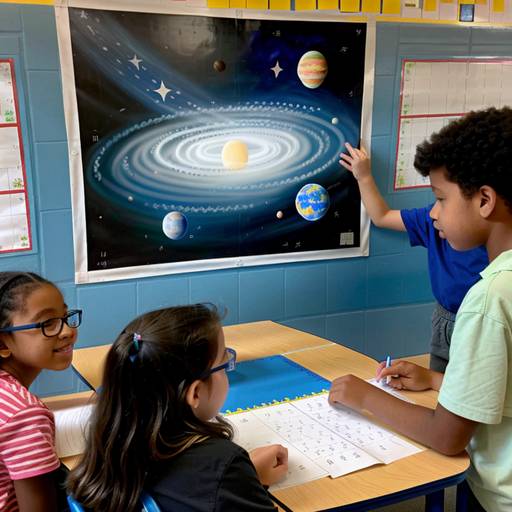
This 4th-grade math lesson focuses on teaching students the concepts of measurement and area through interactive and hands-on activities. The lesson begins with a discussion about the significance of measurement in everyday life and introduces the concept of area as the space inside shapes, specifically rectangles. Students learn how to measure length and width using rulers and apply the formula for calculating area: Area = Length × Width.
During guided practice, students work in small groups to measure various rectangular objects in the classroom and calculate their areas. Afterward, they individually complete a worksheet featuring several rectangles to reinforce their understanding. The lesson concludes with a review of key concepts, allowing students to share their measurements and calculated areas. Assessment is conducted through observation during group work and the evaluation of completed worksheets, ensuring that all students grasp the material. Differentiation strategies are included to support diverse learning needs, and extensions offer opportunities for further exploration of measurement concepts.
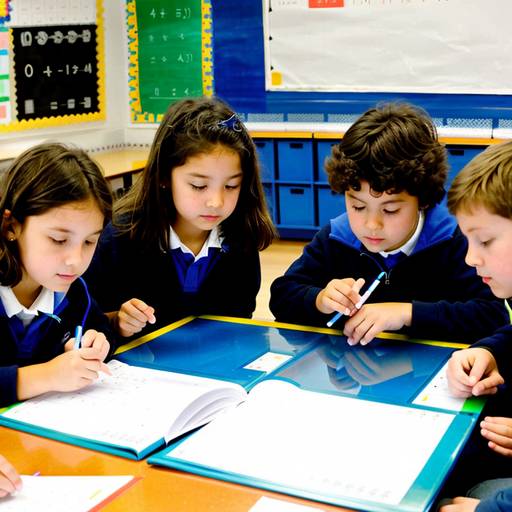
In this 4th-grade math lesson, students will explore the concepts of measurement and volume through a combination of direct instruction, guided practice, and hands-on activities. The lesson begins with a discussion about the importance of measurement in everyday life, followed by an introduction to volume, cubic units, and the formula for calculating the volume of rectangular prisms.
Students will work in pairs to measure the dimensions of various rectangular containers using rulers or measuring tapes and then calculate their volume using the introduced formula. The hands-on component involves filling the measured containers with water or using blocks to observe the concept of volume in action, allowing students to compare their estimations and calculations.
The lesson concludes with a recap of key concepts, a brief formative assessment to gauge understanding, and a preview of the next lesson about measuring volume in irregular shapes. Adaptations are included to support varying levels of learner needs, and extension activities encourage further exploration of measurement and volume through real-world applications.

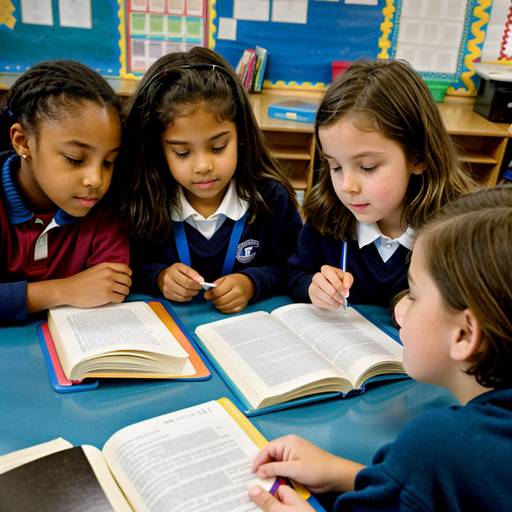
In this 4th-grade Language Arts lesson, students will delve into the world of reading genres, focusing on fiction, non-fiction, poetry, and fantasy. The lesson begins with a discussion on what genres are and how they differentiate books. Through guided practice, students will identify genres from a selection of books and articulate their reasoning. In small groups, learners will classify additional books into the correct genres and discuss their preferences. Each student will then choose their favorite genre to create a visual representation and write a brief explanation of why they are drawn to it. The lesson concludes with students sharing their artwork and insights with the class. Assessment will include observation during discussions, reviewing group organizers, and collecting individual projects. An extension activity invites students to write a short piece in their preferred genre, further enhancing their engagement and creativity in reading.
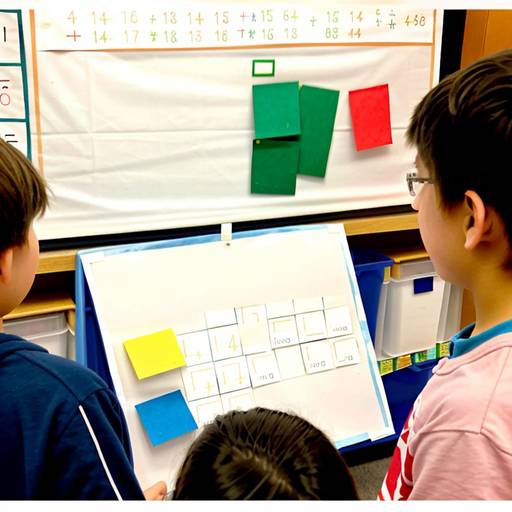
This 4th-grade math lesson focuses on teaching students the concept of division through the idea of sharing equally. The lesson begins with a discussion about sharing items like cookies among friends to introduce division. Key vocabulary such as dividend, divisor, and quotient is explained, and students are shown how to visualize division problems using counters and arrays.
Throughout the lesson, students participate in engaging group activities at different centers, including using counters to solve problems, working on division-based story problems, and playing math games that reinforce their understanding of division. After the group work, the class comes together to share their findings and connect division to real-world scenarios.
To assess understanding, students complete an exit ticket by solving a division problem and reflecting on what they learned during the lesson. The lesson is designed to accommodate varying skill levels, providing additional challenges for advanced learners and extra support for those who require it. Follow-up activities encourage students to apply division concepts beyond the classroom. Overall, the lesson promotes collaboration, critical thinking, and practical application of division in everyday life.