
Filters
Level
Grade
Subject
Subject Area
Subject Topic
Standard(s)
Audience
Keyword
DurationMinutes
3rd Grade Math Lesson Plans

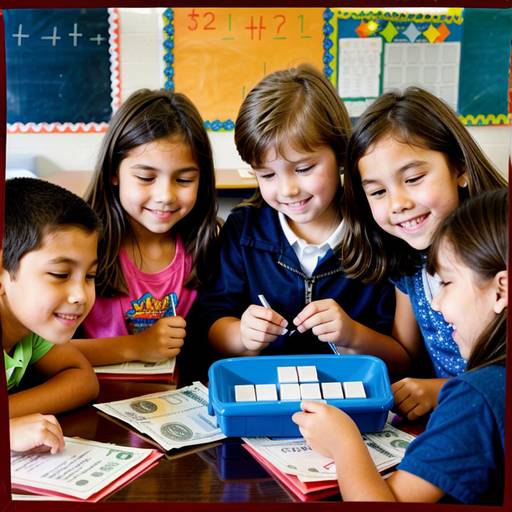
In this 3rd-grade math lesson, students will explore the concepts of money management and budgeting through hands-on activities. The lesson begins with an engaging discussion about budgeting and the importance of managing money wisely. Students will learn to identify and count various coins and bills, followed by practical budgeting scenarios where they will create their own budgets based on a fictional allowance.
Through guided practice, students will use play money to make selections from a classroom store filled with items of varying costs, filling out worksheets as they keep track of their spending and savings. During independent practice, students will design their own budget based on their preferences and learn to complete a budgeting worksheet without exceeding their allowance. The lesson concludes with a sharing session, where students can present their budgeting choices and reflect on their learning.
Assessment will be conducted through completed worksheets and participation in discussions and activities. Extensions will be offered to deepen understanding, while modifications will ensure all students can engage meaningfully with the material. By the end of the session, students will gain foundational skills in recognizing, counting, and budgeting money, setting them up for future financial literacy.
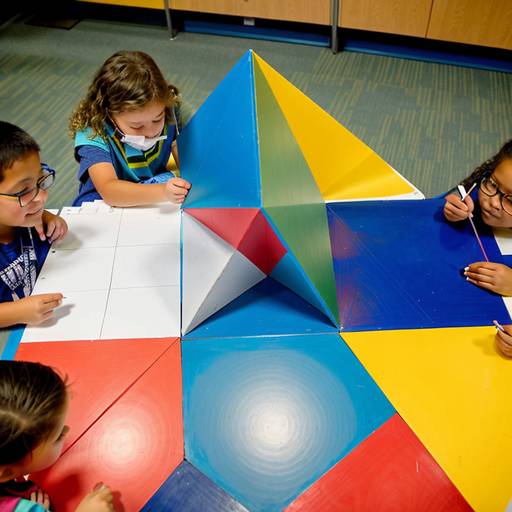
In this 3rd-grade math lesson, students will explore basic geometric shapes, including triangles, squares, rectangles, and circles, while learning about perimeter. The class will begin with a "Shape Hunt" activity to identify shapes in their environment, followed by a discussion on the concept of perimeter and how to measure it. Direct instruction will guide students in using rulers to calculate perimeter for various shapes, emphasizing formulas for rectangles, squares, and triangles.
Students will engage in a collaborative Shape Creation Activity where they will draw their own geometric shapes and measure them to calculate the perimeter. After this guided practice, they will independently complete a worksheet that requires them to find the perimeter of different shapes using the concepts learned. The lesson will conclude with a review of key concepts, encouraging students to share their insights and submit an exit ticket reflecting their learning.
Overall, this lesson aims to combine hands-on activities with practical problem-solving to enhance students' understanding of geometry and perimeter while fostering collaboration and independent thinking in mathematics.
This lesson plan focuses on introducing 3rd-grade students to basic geometric shapes and the concept of area. The lesson begins with an engaging discussion about shapes found in the classroom and environment, followed by direct instruction on how to calculate the area of squares and rectangles using the formula: Area = Length × Width. Students participate in guided practice by drawing shapes on graph paper and calculating their areas.
The lesson includes a hands-on activity where students go outdoors for a shape scavenger hunt, measuring real-world examples of geometric shapes they find. They apply their understanding of area by calculating the dimensions of these shapes. To wrap up, the class reconvenes to share findings and review the concepts taught. Assessment opportunities may include a worksheet that reinforces the learning objectives.
Differentiation strategies are incorporated to support varying learning needs, ensuring that all students engage effectively with the material. The overall goal is to foster a deeper understanding of geometric shapes and area through practical application and collaboration.
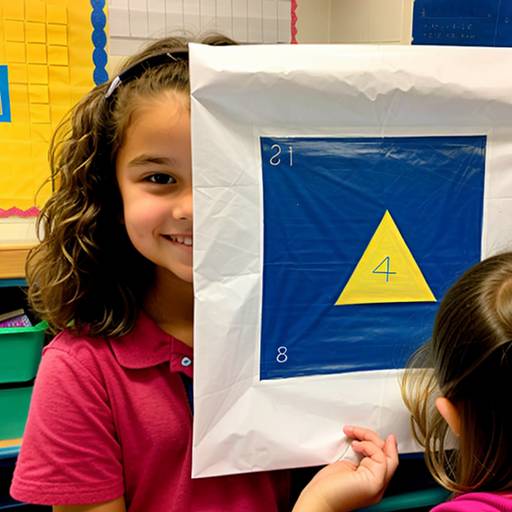
In this 3rd-grade math lesson plan, students will explore the concepts of measurement and perimeter through hands-on activities and guided instruction. They will learn about perimeter as the distance around shapes and practice measuring using rulers and tape measures. The lesson begins with an introduction to perimeter, followed by direct instruction on how to measure different shapes and calculate their perimeter using appropriate formulas.
Students will then work in small groups to measure shapes with provided templates, calculating and recording their findings. An engaging hands-on activity will allow them to create their own shapes using string or yarn, measure their sides, and determine the perimeter.
The lesson concludes with student presentations of their shapes and calculations, reinforcing their understanding of the concepts. Assessment will be conducted through observation during group activities and review of completed worksheets. Extensions and modifications are included to cater to diverse learning needs. This approach promotes collaboration and practical application of measuring skills.
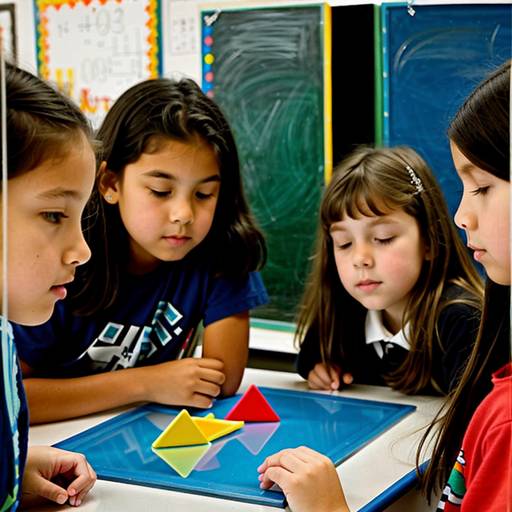
In this engaging 3rd-grade math lesson focused on geometry and symmetry, students will explore the concepts of symmetrical and asymmetrical shapes. The lesson begins with a discussion about symmetry using real-life examples displayed on a poster, followed by defining key vocabulary related to symmetry.
Through a demonstration on the whiteboard, students will learn how to identify lines of symmetry in various geometric shapes while participating in a sorting activity. Guided practice includes using mirrors to draw symmetrical designs, where students will see firsthand how one side of their artwork mirrors the other.
Independent practice features a worksheet where students will identify symmetrical shapes, draw their own, and create colorful designs using shape cut-outs. To conclude, the lesson recaps symmetry’s importance, and students will complete an exit ticket reflecting on examples of symmetry they observe in their environment.
Assessment includes monitoring student participation and reviewing their worksheets and designs. The lesson also offers extensions for advanced learners, reinforcing and deepening their understanding of symmetry concepts through interactive activities.
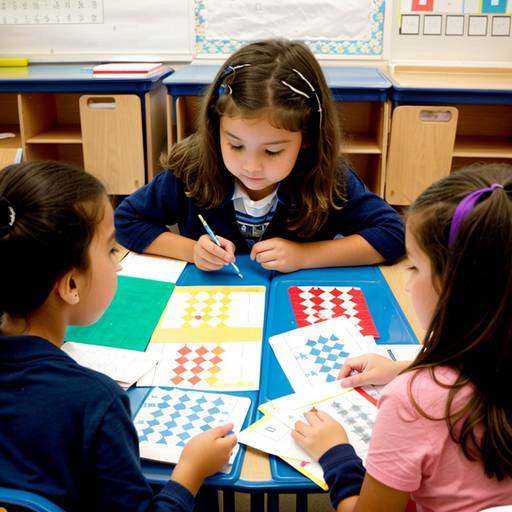
In this engaging 3rd-grade math lesson, students will explore the concept of multiplication as a form of repeated addition. The lesson begins with a discussion to recall prior knowledge, followed by a demonstration using visual aids such as counters to illustrate how multiplication works. Students will then create a multiplication chart on the whiteboard, identifying patterns within the multiplication facts.
During a group activity, students will use pattern blocks or colored paper shapes to create visual representations of multiplication patterns. Each group will present their work, explaining the multiplication reasoning behind their patterns. Independent practice will involve a worksheet featuring multiplication problems and exercises focused on recognizing numerical patterns.
The lesson closes with a class discussion about the real-world applications of patterns in everyday life. Throughout the session, the teacher will monitor understanding and provide feedback, ensuring that all students grasp the concepts of multiplication and pattern recognition effectively. Extensions are included for advanced learners and additional support for those needing more guidance.
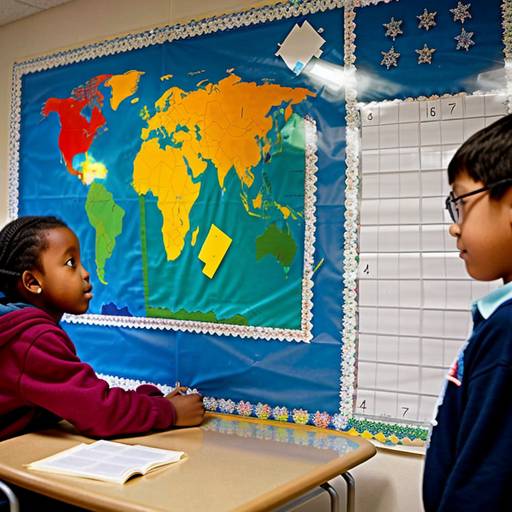
This lesson plan focuses on introducing third-grade students to the concept of fractions and teaching them how to compare different fractions. Beginning with a discussion about real-life situations involving sharing pizza or cake, students learn about numerators and denominators using hands-on examples such as fraction circles and paper plates.
In small groups, students create and compare various fractions, discussing which ones are larger or smaller. This collaborative activity fosters understanding through peer interaction. After guided practice, students work independently on worksheets that require them to choose larger or smaller fractions, as well as draw number lines to visualize fraction placement.
The lesson concludes with a review of the concepts learned, allowing students to share their findings and reflections. To assess understanding, the teacher observes group discussions and evaluates completed worksheets. The plan also includes extensions for advanced students and modifications for those needing additional support. Overall, the lesson aims to make fractions relatable and comprehensible while building foundational skills in comparing fractions.
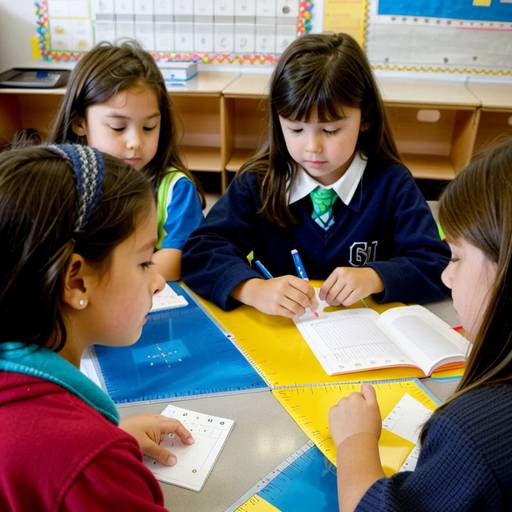
In this 60-minute math lesson for 3rd graders, students will explore measurement and area through interactive activities and hands-on practice. The lesson begins with discussions about the importance of measurement in everyday life, followed by demonstrations on measuring length using rulers in both inches and centimeters.
Students will learn the formula for calculating the area of rectangles (Area = Length x Width) with guided examples. They will then work in pairs to measure various objects, record the dimensions, and calculate the area together.
During independent practice, students will complete a worksheet with different rectangles drawn on graph paper, using their skills to measure and calculate the area of each shape. The teacher will conclude the lesson by reviewing key concepts and allowing students to share their findings. Assessment will be based on observations during group activities and the completion of worksheets. To extend learning, students will measure a room at home for homework and report back to the class. This engaging lesson reinforces essential math skills through collaboration and individual exploration.
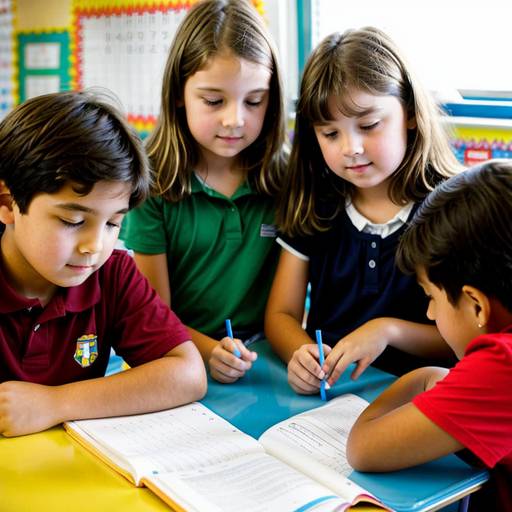
In this 3rd-grade math lesson, students will explore the concepts of measurement and volume through engaging hands-on activities. The lesson begins with an introduction to measurement and its importance in everyday life. Students will learn the difference between length and volume and become familiar with using measuring cups and standard measuring tools like rulers and meter sticks.
During guided practice, students will work in pairs to predict and then measure the volume of different containers using water, recording their findings on worksheets. They will also engage in independent practice by estimating and measuring the volume of household objects in the classroom. A class discussion will follow, allowing students to share their results and reflect on their learning.
Assessment will involve evaluating students' worksheets for accuracy and understanding, alongside monitoring participation during activities. Extensions provide opportunities for further exploration, such as a home project or a measurement scavenger hunt. The lesson aims to solidify students' understanding of measurement and volume while fostering collaborative learning and critical thinking skills.
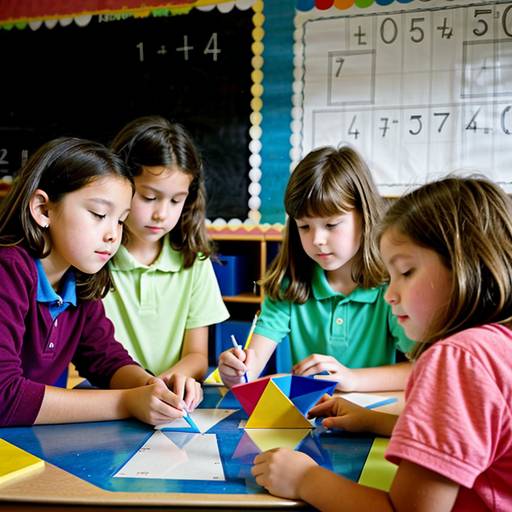
In this 3rd-grade math lesson, students will explore the concepts of geometry and angles by identifying and classifying acute, right, and obtuse angles. The session begins with a review of basic geometric shapes, transitioning into a focused discussion on angles—covering their definitions and characteristics.
Students will learn to measure angles using a protractor through direct instruction, followed by guided practice in small groups where they measure and classify a series of angle cards. After practicing collaboratively, students will complete a worksheet independently that involves drawing angles, classifying given angles, and measuring angles with a protractor.
The class concludes with a brief review to reinforce key concepts and an interactive game where students differentiate between angle types. Assessment will focus on participation, measurement accuracy, and angle classification. Extensions for advanced learners may include complementary and supplementary angles, alongside a scavenger hunt for real-world angle identification. Overall, the lesson aims to engage students with hands-on activities while developing their geometry skills.