
Filters
Level
Grade
Subject
Subject Area
Subject Topic
Standard(s)
Audience
Keyword
DurationMinutes
2nd Grade Math Lesson Plans

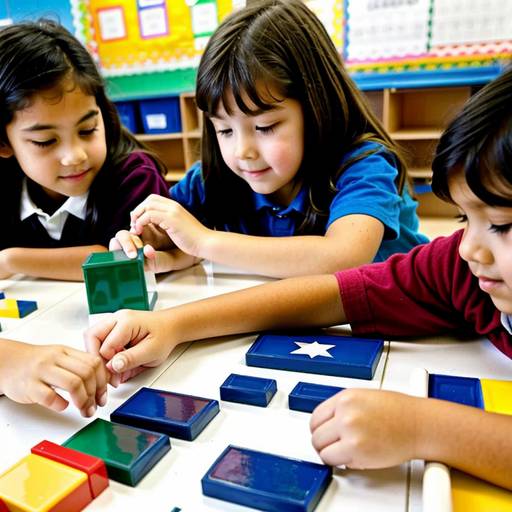
In this 2nd-grade math lesson, students will explore the concept of addition using hands-on manipulatives. The lesson begins with a review of addition basics, followed by a guided practice session where students work in groups to model addition problems using counting blocks. They will then participate in a series of “Addition Stations,” where they will solve different addition problems using manipulatives such as ten frames, number lines, and counting blocks. Each group will rotate through the stations, enhancing their understanding through interactive experiences. The lesson concludes with a discussion where students share their solutions and reflect on how manipulatives helped them grasp addition concepts. Assessment will be conducted through observation and completed worksheets, and accommodations will be provided for diverse learners. Extensions may include addition games and more advanced problems for those ready to challenge themselves.
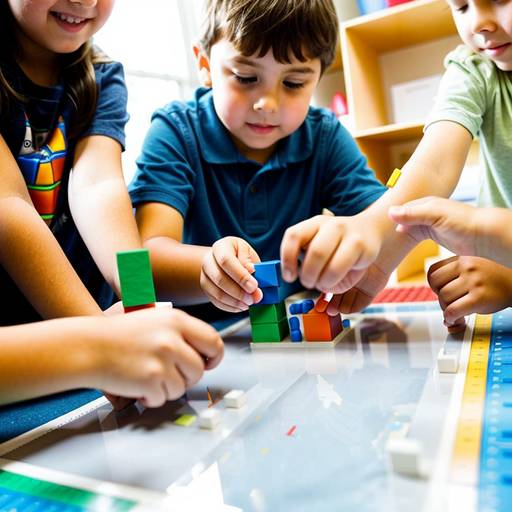
In this 2nd-grade math lesson, students will explore the concept of volume through hands-on activities and measurement. The lesson begins with a discussion about volume, encouraging students to estimate and compare the capacity of various containers. After demonstrating how to measure volume using non-standard units like blocks, students will work in small groups to measure and record the volume of different containers. They will then create drawings of their chosen container, including the volume measurement. The class will come together to share their findings, fostering collaboration and engagement. To assess understanding, teachers will observe group participation and evaluate students' drawings and measurements. The lesson allows for extensions and adaptations, making it accessible for all learners while connecting volume measurement to real-life applications.
This lesson plan focuses on introducing 2nd-grade students to the concept of multiplication through the use of arrays. The objective is for students to understand multiplication as repeated addition, create their own arrays, and utilize them to solve simple multiplication problems. The lesson begins with an engaging discussion that connects everyday scenarios to multiplication, followed by direct instruction that explains arrays as visual representations of multiplication facts. Students then participate in guided practice, drawing their own arrays on grid paper and sharing their work with partners. Independent practice involves completing a worksheet that reinforces the lesson’s concepts, including word problems requiring array representation. The lesson concludes with a review and an exit ticket activity that encourages students to demonstrate their understanding by creating and illustrating a multiplication problem. Overall, the lesson aims to foster a deeper understanding of multiplication using arrays while promoting collaboration and creativity among students.
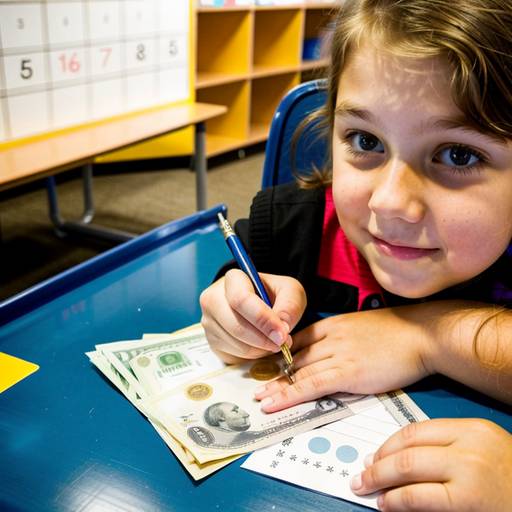
In this 2nd-grade math lesson, students will explore the concept of money by learning about the values of different coins, including pennies, nickels, dimes, and quarters. The lesson begins with an engaging discussion on students’ experiences with money, followed by direct instruction on identifying and valuing each type of coin using a visual chart. Guided practice involves hands-on coin counting activities in small groups, where students will work together to make specific amounts using play money.
Next, students will complete worksheets that focus on coin identification and values in pairs. During independent practice, they will simulate a shopping experience with small items priced in cents, allowing them to apply their counting skills in a real-world context. The lesson concludes with a group reflection on their learning experiences, where students will share insights they've gained about money. Assessment will be conducted through observation, worksheet review, and participation in the shopping simulation. Extensions are available for more advanced learners, including discussions about paper money and classroom economy concepts.
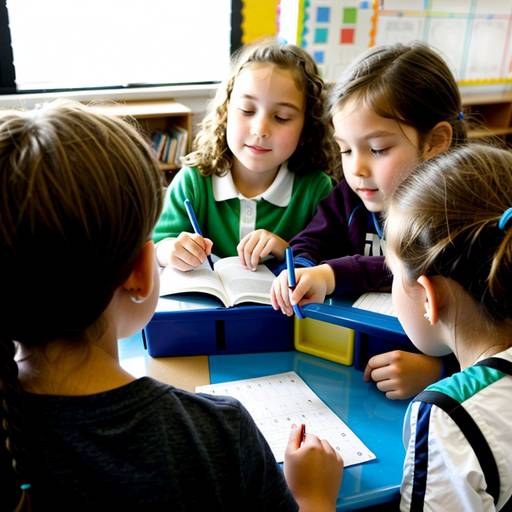
In this 2nd-grade math lesson, students will learn how to read both analog and digital clocks while also exploring the concept of elapsed time through engaging activities. The lesson begins with a discussion where students share their morning routines, helping to contextualize time in their daily lives.
Direct instruction follows, introducing clock reading and elapsed time with clear examples. Guided practice involves working through time-related scenarios on worksheets in pairs, fostering collaboration and reinforcing understanding.
Students will participate in a relay activity to practice telling time and will create drawings representing daily activities that demonstrate elapsed time. The lesson concludes with students sharing their work and reflecting on what they learned, along with a quick exit ticket to assess their understanding. Throughout the lesson, differentiation strategies ensure that all learners can engage with the material effectively.
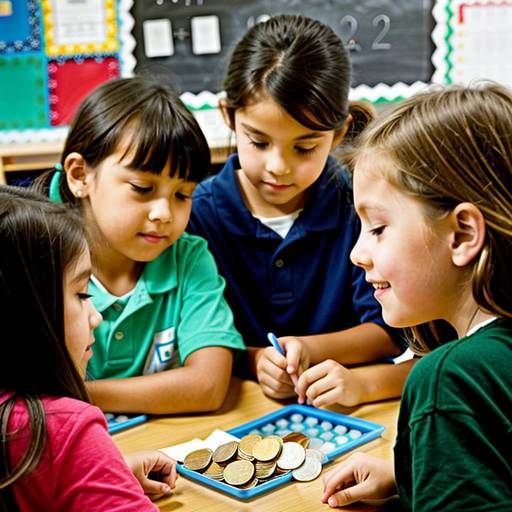
In this engaging 2nd-grade math lesson, students will explore the concept of money by identifying, counting, and comparing various coins and bills. The lesson begins with a discussion about what they could purchase with a dollar, followed by a demonstration of different coins and their values. Students will then participate in a hands-on activity in small groups, counting mixed coins and calculating their total value using a provided counting mat. After this guided practice, they will work independently on worksheets that involve counting coins and matching them to prices from flashcards. The lesson concludes with a whole-group discussion, where students share their strategies and insights, followed by a fun game to reinforce their understanding of pricing. Throughout the session, the teacher will assess students’ understanding through observation and the collection of worksheets, ensuring that all learners can grasp the importance of money in everyday life. Extension activities, such as running a classroom store, will provide additional opportunities for practical application of these newly acquired skills.
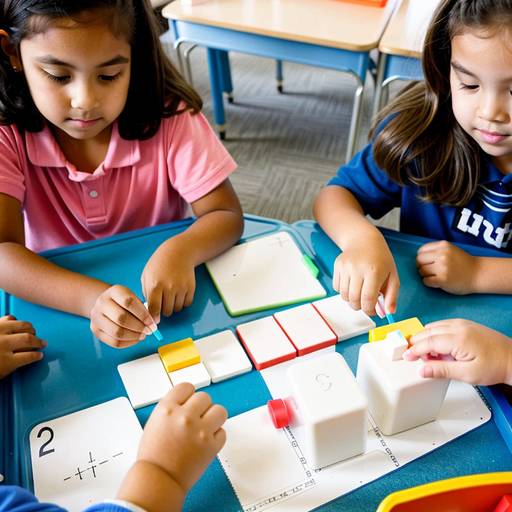
In this 2nd-grade math lesson, students will engage with the concept of addition through hands-on activities using various manipulatives. The lesson begins with a review of addition, followed by a demonstration where the teacher models how to combine groups using physical objects. Students will then work in small groups, using manipulatives to represent and solve simple addition problems from provided worksheets. After completing the activities, groups will share their findings with the class, reinforcing their understanding through discussion. The lesson concludes with a fun counting game that encourages movement and reinforces the addition concept. Assessment will involve observing student participation and reviewing their completed worksheets, with modifications and extensions available to support diverse learning needs. Overall, this interactive approach aims to make learning about addition engaging and accessible to all students.
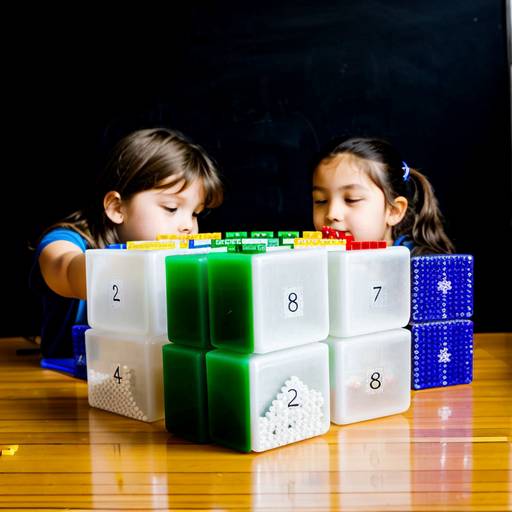
In this 2nd grade math lesson, students will explore the concepts of measurement and weight using both non-standard units and classroom objects. The lesson begins with a discussion about measurement, followed by a hands-on activity where students measure the length of various objects using Unifix cubes, recording their results on worksheets and sharing findings with the class.
Next, students will learn about weight, differentiating it from length, and use a scale to weigh selected objects. They will compare the weights of these items, using terms like "heavier than" and "lighter than." Finally, the class will reconvene to discuss their experiences, reflecting on what they learned about measurement and the importance of using both standard and non-standard units. The lesson aims to engage students in practical applications of measurement while fostering collaboration and critical thinking. Assessment will be based on worksheet completion and group participation, with extensions and differentiation provided to accommodate diverse learning needs.
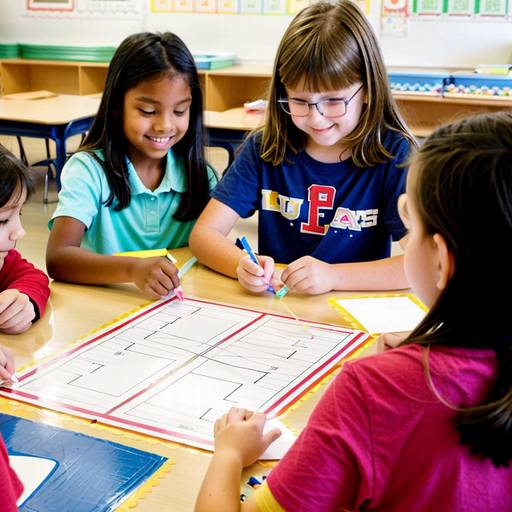
In this 2nd grade math lesson focused on geometry and lines, students will engage in interactive activities that help them identify and describe basic geometric shapes such as circles, squares, triangles, and rectangles, as well as types of lines, including straight and curved. The lesson begins with a group discussion where students share their observations of shapes in the classroom. They will then participate in a hands-on craft activity to create their own geometric shapes using construction paper. Following this, students will explore the concept of lines by making straight and curved lines with string and rulers.
To reinforce their understanding, they will embark on a geometry scavenger hunt in pairs, looking for objects that match a checklist of shapes and lines. The lesson concludes with a reflection session where students share their discoveries. Assessment will take place through observation during the activities and by reviewing the shapes and lines they created and identified. Optional extension activities include providing coloring sheets featuring shapes for additional practice. This comprehensive approach aims to foster a deeper understanding of geometry in an engaging and collaborative setting.
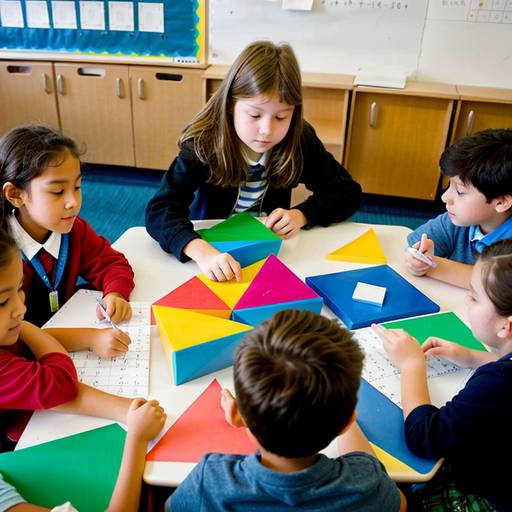
In this 2nd-grade math lesson, students will explore basic geometric shapes—circles, squares, triangles, and rectangles—by identifying and describing their properties. The lesson begins with a discussion about shapes found in their environment, followed by direct instruction where students learn about each shape’s characteristics, including the number of sides and corners.
Guided practice involves sorting a set of shape cutouts into labeled bins, allowing students to reinforce their understanding of shape properties. An engaging scavenger hunt encourages students to find real-world objects that correspond with the shapes they’ve learned. Following this activity, students will draw and label an object they discovered that represents a particular shape.
The lesson concludes with a group sharing session and a review to consolidate the concepts covered. Assessment occurs through observation during activities and by reviewing students' drawings to ensure accurate understanding. Extension activities are provided for further exploration, accommodating diverse learning needs and encouraging creativity in shape representation.