
Filters
Level
Grade
Subject
Subject Area
Subject Topic
Standard(s)
Audience
Keyword
DurationMinutes
2nd Grade Math Lesson Plans

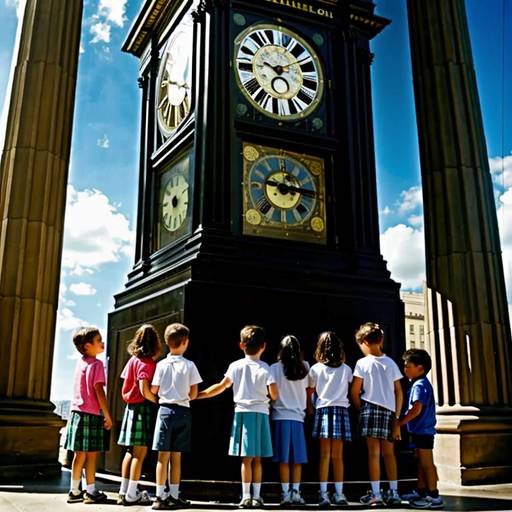
In this 2nd-grade math lesson focused on the concept of time and telling time, students will engage in an interactive and hands-on learning experience. The lesson begins with a discussion about the importance of time, followed by a read-aloud of a story that incorporates time-related themes. Students will learn to read both analog and digital clocks, identifying hours and half hours, as well as understanding the concepts of a.m. and p.m.
During direct instruction, a large paper clock will be used to visually demonstrate how to tell time, after which students will participate in guided practice by setting their individual paper clocks to various times called out by the teacher. In small groups, they will work on time-based scenarios, creating illustrations to represent their understanding.
For independent practice, students will complete a worksheet that includes identifying times on clocks and solving simple word problems related to time. The lesson concludes with a review of the worksheet answers and a reflection on what they learned. Assessment will be carried out through observation during group and independent activities, and students will have the opportunity to extend their learning with a time diary assignment for homework, reinforcing their new skills in a real-world context.
In this 2nd-grade math lesson, students will learn to read both analog and digital clocks, and develop an understanding of elapsed time. The lesson begins with an engaging discussion about time, followed by a matching game where students pair clock flashcards to reinforce their skills. After introducing elapsed time through relatable scenarios, students will work on a worksheet containing various everyday activities that require them to calculate start times, durations, and end times. The class will engage in a discussion to review their answers and clarify any misunderstandings. If time permits, a fun relay activity may be conducted to further solidify their understanding of time concepts. Assessment will be based on observations during activities and the correctness of their completed worksheets. Extensions and differentiation strategies will be provided to meet diverse learning needs, enhancing engagement and mastery of the subject.
In this 2nd-grade mathematics lesson, students will explore the concept of time and time patterns. The lesson aims to help students tell time to the nearest hour using analog clocks and to recognize and create patterns related to daily schedules based on time. The session begins with an introduction to the importance of time in daily routines, followed by direct instruction on reading analog clocks and discussing time patterns.
Students will participate in guided practice by setting their clocks to different times and creating a simple daily schedule as a class. During independent practice, they will complete worksheets that involve telling time and recognizing time patterns. The lesson concludes with a review of key concepts and a fun interactive game where students will demonstrate their understanding by showing specific times on their clocks.
Assessment will be based on monitoring student engagement during practice, reviewing completed worksheets for accuracy, and observing participation in discussions. Adjustments will be made to support students who need additional help, and extensions will be provided for advanced learners to explore more complex time concepts. This lesson provides a comprehensive approach to understanding time while engaging students in hands-on learning activities.
In this engaging 2nd-grade math lesson, students will explore the concepts of measurement and time through two main activities. The lesson begins with a discussion where students share their prior knowledge about clocks and measuring lengths. They will then learn to tell time on analog clocks, focusing on the hour and half-hour, while participating in an interactive game to practice their skills.
Next, students will become measurement explorers by first using non-standard units, such as paper clips, to measure various classroom objects. They will then transition to using standard measuring tools like rulers to measure items in inches and centimeters. Throughout these activities, students will work in pairs, fostering collaboration and active participation.
At the end of the lesson, students will share what they learned, reinforcing their understanding of the key concepts. The lesson culminates in an optional creative extension activity where students can design their own analog clocks, further solidifying their grasp of time-telling skills. Assessment will include collected worksheets and observation of student engagement during activities.
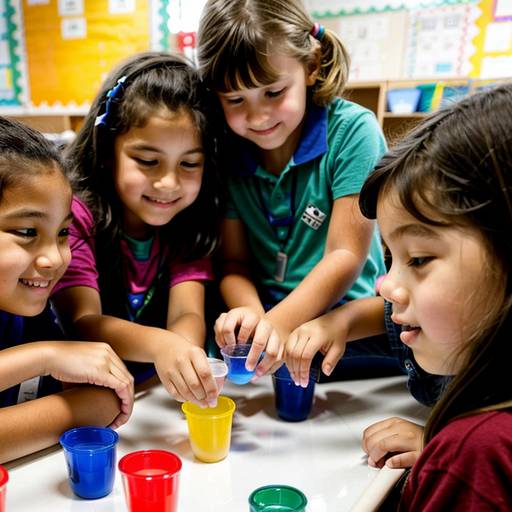
In this 2nd-grade math lesson, students will explore the concept of volume through hands-on activities and group collaboration. The lesson begins with a discussion about volume and its significance in measuring liquids. Following a demonstration using various containers, students break into small groups to measure and compare the volume of different containers using water or rice. They will record their findings and engage in a class discussion to share their observations. The lesson concludes with a volume worksheet that reinforces the concepts covered. To accommodate diverse learning needs, differentiation strategies are included for both advanced and struggling students. A follow-up activity encourages students to apply their knowledge at home by measuring liquids in various containers.
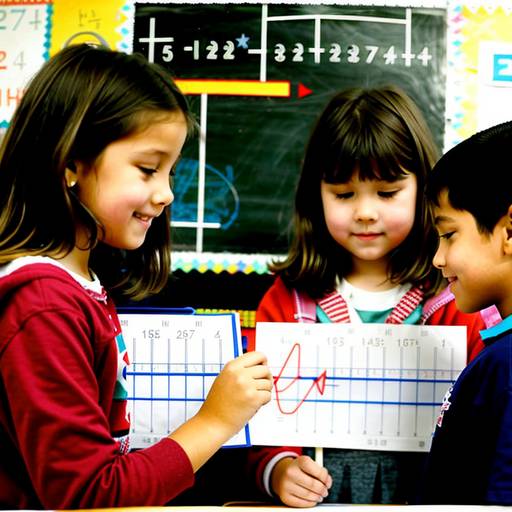
In this 2nd-grade math lesson, students will engage in hands-on activities to learn about measurement and temperature. The lesson begins with a discussion on the significance of weather and introduces the thermometer as a tool for measuring temperature. Students will work in small groups to measure the temperature of various water samples using thermometers and record their findings.
Next, they will explore length measurement using non-standard units such as paper clips or blocks to measure different classroom objects, fostering a practical understanding of size. The collected data will be compiled into a class chart, prompting discussion about the results and comparisons of temperatures and lengths.
To conclude, students will reflect on what they learned and complete a worksheet that reinforces the concepts of measuring temperature and length. Throughout the activities, differentiation strategies will be employed to support varying learning needs, and extensions will encourage students to monitor and report on temperature changes at home. Overall, this lesson aims to develop foundational skills in measurement and foster curiosity about the weather.
In this 2nd-grade math lesson, students will focus on understanding how to tell time and the concept of elapsed time. The lesson begins with a review of reading analog and digital clocks, followed by an engaging story that incorporates time references.
Students will learn about elapsed time through direct instruction and visual demonstrations, including practical examples of scenarios like reading time or engaging in play. They will then participate in a group activity where they solve elapsed time problems collaboratively, using timers to simulate real-life situations.
For independent practice, students will complete a worksheet that includes various elapsed time questions, reinforcing their understanding of the concept. The lesson concludes with a review of the answers, allowing for clarification of any confusions. Assessment will occur through observation during group activities and evaluation of the worksheets.
This interactive and comprehensive approach provides students with a solid foundation in telling time and understanding how time passes throughout the day, effectively preparing them for future mathematical concepts related to time.
In this 2nd-grade math lesson, students will learn how to read both analog and digital clocks, focusing on telling time to the nearest hour and half-hour. The lesson begins with a discussion on the importance of time in daily life, followed by direct instruction on how to identify and interpret the hour and minute hands of an analog clock, as well as reading times on a digital clock.
During guided practice, students will work in pairs to match analog times with their digital counterparts using flashcards. For independent practice, they will draw clock hands on blank worksheets to represent specific times called out by the teacher. The lesson concludes with a sharing session where students present their clock drawings and discuss their favorite activities at different times of the day.
Assessment will be based on observations during activities and by reviewing the completed clock worksheets. Optional extensions and differentiation strategies will be incorporated to further engage students and support individual learning needs. Overall, the lesson aims to foster hands-on interaction and peer collaboration while building foundational skills in telling time.