
Filters
Level
Grade
Subject
Subject Area
Subject Topic
Standard(s)
Audience
Keyword
DurationMinutes
2nd Grade Language Arts Lesson Plans


In this 2nd-grade Language Arts lesson, students will explore expository writing by crafting a descriptive piece about their experiences at the park. The lesson begins with a discussion that encourages students to share their favorite park activities. They will read a sample expository paragraph to understand the structure and the importance of sensory details. Students will then brainstorm their ideas using a graphic organizer, focusing on their activities, sensory experiences, and interactions. After completing their organizers, they will write their own paragraphs and share them with a partner for feedback. The lesson concludes with a review of key concepts, and students will illustrate a part of their experience to accompany their writing. Assessment will be based on student participation and the quality of their written work, with opportunities for further exploration of writing about other places they enjoy.
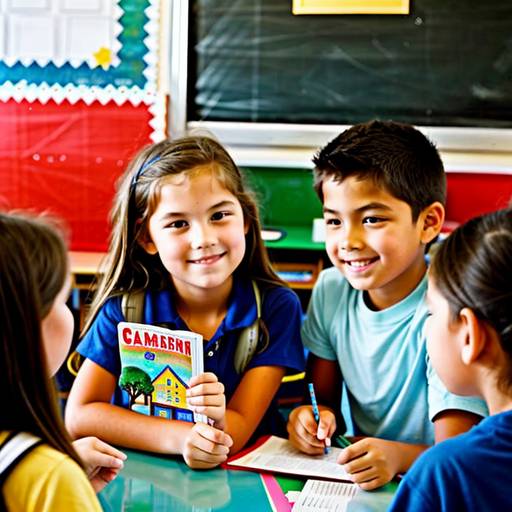
In this lesson plan for 2nd-grade students, the focus is on expository writing, where students will learn to express their ideas about a dream vacation clearly and descriptively. The lesson begins with a discussion on favorite vacation spots, followed by a modeling session where the teacher presents an example paragraph that illustrates the structure of expository writing. Students will then participate in guided practice to brainstorm activities for their chosen destinations using a graphic organizer, which helps them organize their thoughts. Following this, they will independently write paragraphs that include sensory details, utilizing their organizers as a reference. The lesson concludes with a sharing session, where students read their work aloud, fostering a supportive environment. Assessment will be conducted by collecting the written paragraphs to evaluate clarity, organization, and use of details, with differentiations and extensions offered for varying student needs. Overall, the lesson emphasizes the importance of structure and descriptive language in writing.

This 2nd-grade language arts lesson focuses on introducing students to the elements of narrative writing. The lesson begins with a read-aloud of a familiar story, prompting a discussion about its characters, setting, problem, and solution. Students then engage in a guided practice where they collaboratively fill out a Story Map template, effectively organizing their ideas for a narrative. Following this, they work independently to create their own stories using the Story Map, incorporating illustrations. After writing, students pair up or form small groups to share their narratives, promoting active listening and peer feedback. The session concludes with a recap of narrative elements and an opportunity for a few students to share their work with the entire class. Assessment is based on participation, the completion of Story Maps, and the sharing of their narratives, with adaptations available to support diverse learning needs and extensions for advanced learners.

In this 2nd Grade Language Arts lesson, students will explore the concept of antonyms and enhance their vocabulary. The lesson begins with a discussion about vocabulary and the definition of antonyms, followed by examples shared by students. Direct instruction involves using flashcards with images to illustrate pairs of opposite words, prompting students to brainstorm additional antonyms in pairs.
During group activities, students work together to create an "Antonym Chart" that lists pairs of antonyms along with illustrations, which they will present to the class. For independent practice, students fill out a worksheet identifying antonyms for given words and share their favorite pairs with a partner. The lesson concludes with a review of antonyms and an interactive "Antonym Wall" where each student contributes a sticky note with their favorite antonym pair.
Assessment includes observing participation in discussions and activities, reviewing worksheet completion for understanding, and evaluating the group-created charts. Accommodations and extensions are also included to support diverse learners and provide further challenge for advanced students.

This lesson plan aims to teach 2nd-grade students the fundamental rules of punctuation, specifically focusing on periods, question marks, and exclamation marks. The lesson begins with an introduction to the importance of punctuation in writing, followed by direct instruction that provides examples of each punctuation mark and demonstrates how they affect the meaning of sentences. Students will engage in guided practice by working in pairs to identify and correct punctuation in provided sentences. They will then proceed to independent practice, where they will create their own sentences using the three punctuation marks, accompanied by illustrations. The lesson concludes with students sharing their work and discussing the choices they made regarding punctuation. Assessment will include monitoring student participation, evaluating worksheets, and reviewing the students' sentences for correct punctuation usage. Extensions for creativity and modifications for varying skill levels are included to enhance the learning experience. This lesson encourages an interactive approach to mastering essential grammar skills.
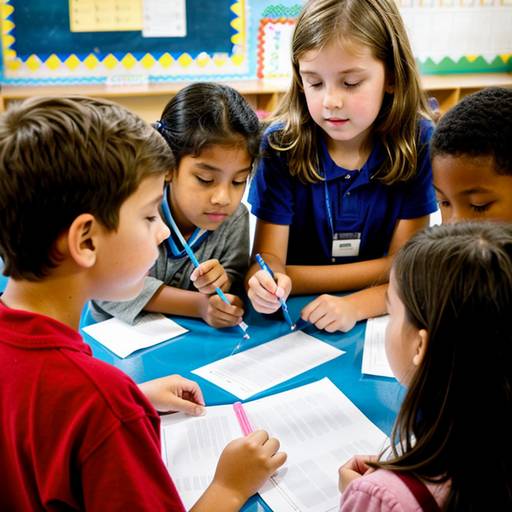
In this second-grade language arts lesson, students will explore basic punctuation marks—periods, question marks, and exclamation points—and their functions within sentences. The lesson begins with a read-aloud story that highlights these punctuation marks, prompting students to recognize their importance in communication. Following a mini-lesson, students will participate in small group activities where they create original sentences using the different punctuation marks and share them with the class.
For independent practice, students will complete a worksheet focused on identifying and correcting punctuation in sentences. The lesson concludes with a sharing session, reinforcing the role of punctuation in making writing clear and understandable. Assessment will involve observing group interactions and collecting worksheets to evaluate individual understanding. Accommodations and extensions are provided to support diverse learning needs and deepen engagement with the topic.
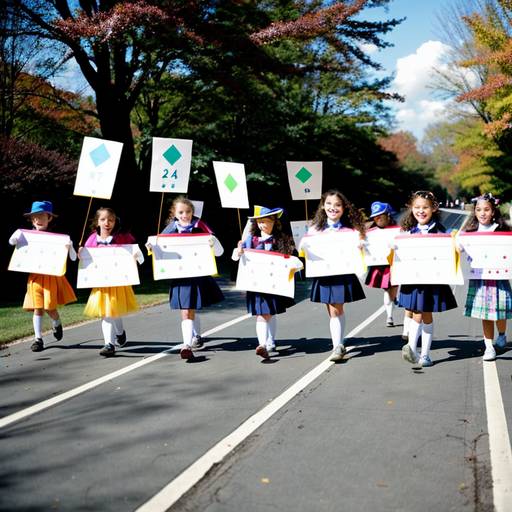
This lesson plan focuses on teaching second-grade students the fundamental concepts of grammar and capitalization. The objectives include helping students identify proper nouns and correctly capitalize them, as well as understanding that sentences begin with a capital letter.
The lesson begins with an introduction that encourages students to share their knowledge about capital letters, followed by a mini-lesson that explains proper nouns and the importance of capitalization. Guided practice involves students working in pairs to fill in missing capital letters on sentence strips, which they then share with the class.
For independent practice, students receive a worksheet to correct sentences with capitalization errors. The lesson concludes with a fun interactive activity, allowing students to present sentences they fixed, reinforcing their understanding through peer engagement. Assessment includes monitoring participation during the activity and reviewing the completed worksheets. Differentiation strategies are provided to support various learning needs. Overall, the lesson aims to make learning about grammar and capitalization engaging and enjoyable for young learners.

In this 2nd-grade Language Arts lesson, students will focus on improving reading fluency through a series of engaging activities. The lesson begins with a discussion on reading fluency, followed by a demonstration of expressive reading. Students will then practice together in pairs, taking turns reading and discussing their chosen books. After a guided practice session, each student will read independently and track their fluency progress by measuring the number of words read in one minute. The lesson concludes with students sharing their favorite parts of their books and reflecting on their learning. Throughout the lesson, emphasis is placed on the elements of fluency—speed, accuracy, and expression—encouraging collaboration and enhancing reading skills. Additionally, extensions such as creating a "Fluency Star" poster and organizing a reading day are included to further enrich the learning experience.
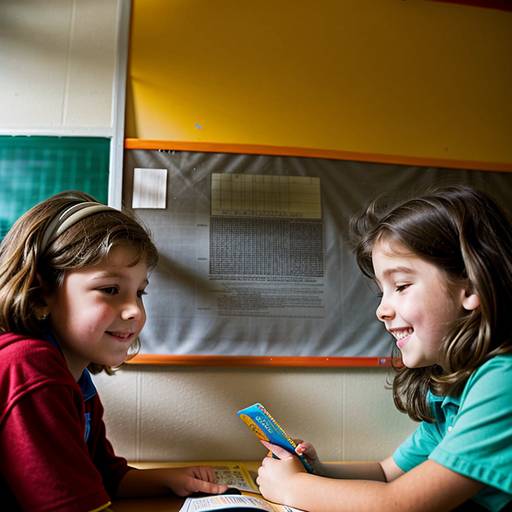
In this 2nd grade language arts lesson plan, students will embark on an engaging reading adventure focused on character exploration and reading fluency. The lesson begins with a discussion about the elements that make stories interesting, emphasizing the importance of characters. The teacher demonstrates expressive reading and fluency techniques using a selected text, modeling how to convey emotion through tone and pacing.
Students then pair up for partner reading activities, where one student reads a passage aloud while the other listens and notes character traits they observe. After switching roles, they will complete a character analysis graphic organizer that involves describing a chosen character and illustrating their traits.
The lesson concludes with a sharing session where students present their character analyses to the class, fostering discussion and deeper understanding. Assessment will be conducted through observation during partner reading and the evaluation of character analysis worksheets. Extensions and adaptations are provided to support various learning needs, ensuring that all students can participate effectively in the reading experience while improving their fluency and comprehension skills.
In this 60-minute lesson for 2nd-grade students, the focus is on enhancing reading comprehension by exploring key story elements: characters, setting, and plot. The lesson begins with an engaging read-aloud of a short story, followed by a discussion to elicit students' prior knowledge about these elements. Direct instruction introduces reading strategies, such as predicting, questioning, and summarizing, that students can use while reading.
During guided practice, students work in small groups to identify story elements in the text and create a story map, incorporating predictions and questions. They then engage in independent practice by selecting their own stories from the classroom library to create individual story maps. The lesson concludes with students sharing their story maps and a recap of the concepts learned. Assessment includes observing student participation and reviewing story maps for comprehension.
The lesson is designed to be interactive and collaborative, fostering a deeper understanding of reading while encouraging students to discuss and illustrate their learning creatively. Extensions and supports are provided to meet diverse learning needs within the classroom.