
Filters
Level
Grade
Subject
Subject Area
Subject Topic
Standard(s)
Audience
Keyword
DurationMinutes
2nd Grade Language Arts Lesson Plans

This 60-minute lesson plan for 2nd graders focuses on enhancing reading comprehension skills by identifying main ideas and supporting details in a story. The lesson begins with a group discussion about reading and students’ favorite stories. An engaging read-aloud of a short story captures students' attention, followed by a discussion that prompts them to share their thoughts on the main idea and details of the narrative. Students then complete a story map graphic organizer, outlining elements such as the title, characters, setting, problem, and solution, while illustrating their favorite part. After sharing their story maps with partners, the class wraps up with a brief review of key concepts. Finally, students complete a worksheet with comprehension questions to assess their understanding of the story. Differentiation strategies are included to support various learning levels, and the lesson concludes with reflection on its effectiveness.
In this 2nd grade Language Arts lesson, students will focus on enhancing their reading fluency by engaging in a variety of interactive reading activities. The lesson begins with a captivating read-aloud, where students will observe smooth and expressive reading. After discussing the concept of reading fluency, students will participate in choral reading to practice pacing and expression together.
In pairs, students will take turns reading short stories or poems while using a fluency checklist to assess each other’s performance. This peer feedback will help them recognize elements of fluent reading. Next, during independent practice, students will rotate through various reading stations, allowing them to practice different texts at their own pace, including the option to record themselves to reflect on their fluency.
The lesson concludes with a group reflection where students share their experiences and insights about fluent reading. Assessment will involve informal feedback during partner reading and evaluations of individual recordings. Extensions to the lesson include creating a display for fluency tips and encouraging ongoing collaboration through a "Fluency Buddy" program. This comprehensive approach aims to foster a supportive and engaging learning environment for improving reading fluency skills.
This lesson plan is designed for 2nd-grade students to enhance their understanding of grammar and sentence structure through an engaging and interactive approach. The lesson begins with a read-aloud of "The Cat in the Hat," prompting students to recognize sentence components. Direct instruction follows, focusing on identifying subjects and predicates in simple sentences. Guided practice allows students to collaborate in pairs to create their own sentences using a mix of nouns, verbs, and adjectives, while also learning to identify the parts of their sentences. Independent practice involves completing a worksheet where students draw a picture representing their sentence, write it out, and underline the subject and predicate. The lesson concludes with a sharing session to reinforce learning and encourage expression. Assessment is conducted through observation and collection of the worksheets to gauge comprehension. Extensions for homework are suggested, along with opportunities to introduce more complex structures in future lessons.
In this 2nd-grade language arts lesson, students will explore the basic components of sentence structure, focusing on subjects and predicates. The lesson begins with an engaging discussion about what constitutes a complete sentence, followed by direct instruction where the teacher models sentence construction on the whiteboard. Students will learn to differentiate between complete and incomplete sentences and the concept of declarative sentences.
During guided practice, students will work in pairs to rearrange words on sentence strips or index cards to create complete sentences, which they will illustrate and present to the class. For independent practice, they will complete worksheets where they cut out words to form sentences and decorate their creations.
The lesson concludes with a group discussion where students share their favorite sentences and identify subjects and predicates. An exit ticket will assess their understanding by asking them to write a sentence and underline its components. Throughout the lesson, the teacher will monitor participation and comprehension, providing support as needed to ensure all students grasp the concept of sentence structure.
In this 2nd-grade Language Arts lesson, students will learn about grammar and sentence structure by engaging in a variety of activities centered around building complete sentences. The lesson begins with a discussion on the components of sentences, emphasizing the subject and verb, and includes a modeling segment where a simple sentence is analyzed. Students will then work in small groups to create their own sentences using provided prompts and share their creations with the class.
Following this collaborative activity, learners will complete individual worksheets that allow them to fill in the blanks and craft their own sentences, incorporating creativity and self-expression. The lesson concludes with a review of key concepts regarding sentence construction and punctuation, and students will write an exit ticket to summarize their learning. Throughout the lesson, assessment will occur through observation during group tasks and analysis of completed worksheets. Optional extension activities include a crafting project to further engage students’ creativity. This lesson aims to strengthen students’ understanding of sentence structure while making the learning process enjoyable.
In this 2nd-grade language arts lesson, students will explore narrative writing by learning about the key elements of storytelling, including characters, setting, plot, and conflict. The lesson begins with a discussion about favorite stories, allowing students to articulate the components of narratives. After a mini-lesson where a familiar tale is analyzed, students will complete story map worksheets in pairs, brainstorming their own characters, settings, problems, and resolutions. They will then individually draft their own narratives based on their story maps, incorporating illustrations. The lesson concludes with opportunities for students to share their stories with classmates. Assessment will involve reviewing both the story maps and drafts to gauge understanding of narrative structure, and an extension activity will involve compiling a class storybook featuring student contributions. This lesson promotes creativity and engagement with writing while developing essential narrative skills.
In this 2nd Grade Language Arts lesson plan, students will enhance their reading comprehension skills by employing specific strategies to investigate a text. The lesson begins with a discussion on the importance of understanding stories, followed by a read-aloud of a chosen picture book. During the reading, students will be encouraged to make predictions and identify key story elements such as characters, setting, and plot.
Following the read-aloud, students will engage in guided practice using story maps to collaborate with a partner in identifying story elements. They will also participate in a prediction activity by writing alternative endings based on clues from the text. As part of the lesson, students will formulate questions about the story using guided prompts, which they will share with the class.
Assessment will involve monitoring student participation, and collecting story maps and predictions to evaluate comprehension and engagement. The lesson promotes differentiation by offering support for struggling students while challenging advanced learners with creative tasks. The closing reinforces the importance of active reading strategies to deepen understanding and enjoyment of literature.
In this 2nd Grade Language Arts lesson, students will explore the elements of storytelling, including characters, setting, problem, and solution. The lesson begins with a discussion about what makes a good story, followed by an introduction to story starters that prompt creative thinking. Students will first brainstorm ideas based on their assigned story starter in pairs, then independently write their own short stories that incorporate all four story elements. Peer sharing and feedback are integral to the lesson, allowing students to learn from each other and practice their oral communication skills. The lesson concludes with a reflection on the writing experience and the uniqueness of each story. To enhance learning, differentiation strategies are provided for students who may need additional support, and a follow-up activity involves creating a class display of students’ work.
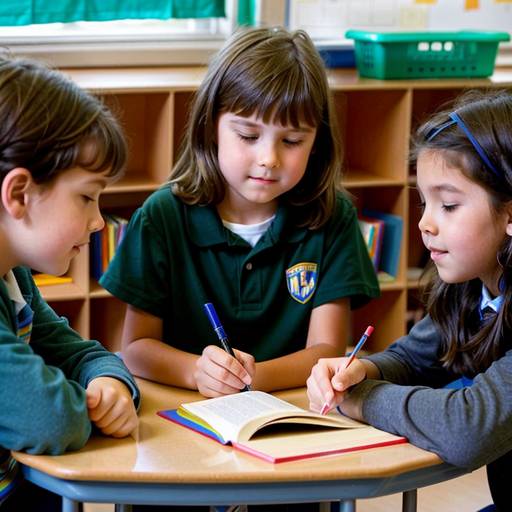
In this 2nd-grade Language Arts lesson, students will focus on enhancing their reading comprehension skills through interactive exploration of a selected picture book. The lesson begins with a class discussion about what makes stories interesting, followed by a read-aloud session where students are encouraged to make predictions and express their thoughts on the characters and plot. After reading, the class engages in a discussion to identify the main idea and supporting details, using graphic organizers to summarize their understanding.
Students will then write personal connections or lessons learned from the story on sticky notes, which will be displayed on the whiteboard. For an optional extension, they can illustrate their favorite scene or create a new ending. The lesson culminates with a recap of the key concepts learned, reinforcing the significance of main ideas and details in understanding narratives. Assessment will involve monitoring student participation in discussions and reviewing their written reflections to gauge comprehension and personal engagement with the text.
In this 2nd-grade Language Arts lesson, students will explore the concept of antonyms and their importance in vocabulary development. The lesson begins with a discussion to activate prior knowledge about antonyms, followed by a direct instruction segment where key vocabulary is introduced and examples are provided. Students will work on worksheets to practice identifying and using antonyms in context, followed by a collaborative group activity where they match antonym pairs and create sentences. The lesson concludes with a recap of what antonyms are, encouraging students to find examples in their everyday lives. Assessment will be based on participation, worksheet completion, and the quality of sentences generated in group activities. Additionally, an extension activity will be introduced, allowing students to further engage with the topic throughout the week. Reflection on the lesson's effectiveness will inform future instruction.