
Filters
Level
Grade
Subject
Subject Area
Subject Topic
Standard(s)
Audience
Keyword
DurationMinutes
2nd Grade Language Arts Lesson Plans

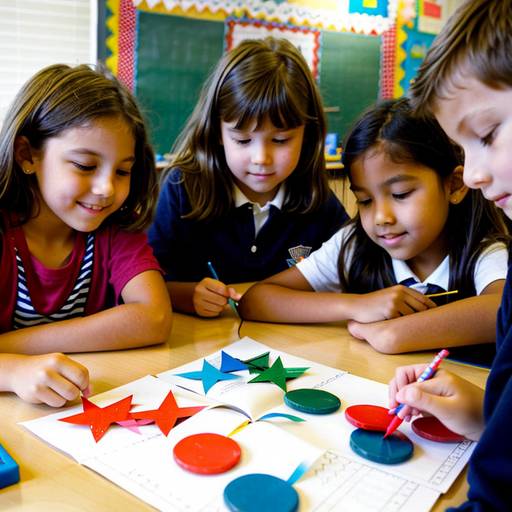
In this 2nd Grade Language Arts lesson, students will explore the fundamentals of storytelling through writing and creative expression. The lesson begins with a discussion about what elements make up a great story, prompting students to think about characters and settings. Working in small groups, students will brainstorm ideas using a selection of word bank cards, which will help inspire their unique narratives.
After collecting their ideas, students will fill out story templates to craft short narratives, incorporating descriptive language and at least one word from the provided banks. Once their stories are written, they will share them with partners or in small groups to practice their oral storytelling skills. The lesson concludes with a recap of key storytelling elements, reinforcing that everyone has the ability to be a storyteller. Assessment will focus on participation during activities, the content of written narratives, and engagement during sharing. Differentiation strategies will be provided to support varying levels of proficiency among students.
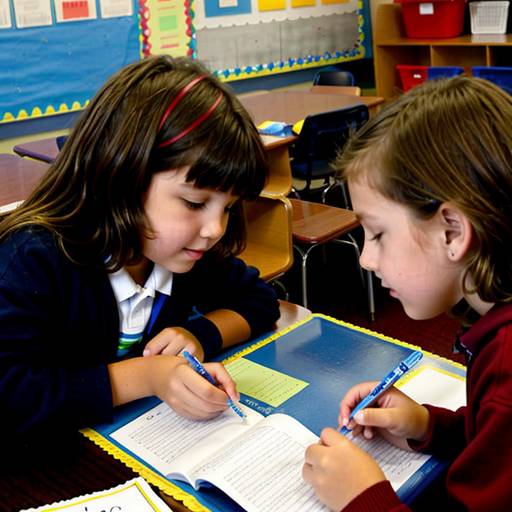
In this 2nd Grade Language Arts lesson, students will explore vocabulary and antonyms through interactive and engaging activities. The lesson begins with an introduction to the concept of antonyms, highlighting pairs of opposites. Following this, students will participate in a read-aloud of a story that features antonyms, allowing them to identify examples in context.
During guided practice, students will work in small groups to match vocabulary words with their antonyms using index cards. This collaborative activity encourages teamwork and reinforces their understanding. Afterward, students will complete a Word Adventure worksheet independently, which includes fill-in-the-blank exercises, a drawing activity, and sentence writing using antonyms.
The lesson concludes with a sharing session where students present their illustrations and sentences to the class. Assessment will focus on participation and the accuracy of the completed worksheets. Differentiation strategies will support varying learning levels, and opportunities for extension will allow students to contribute to a class word wall and create a collective book on antonyms. Overall, this lesson aims to enhance vocabulary acquisition and deepen students' understanding of word meanings through the exploration of opposites.

In this 2nd-grade language arts lesson, students will explore the concept of antonyms—words with opposite meanings. The lesson begins with an engaging introduction where students share what they know about antonyms, followed by a clear definition and examples from the teacher.
During guided practice, students participate in an interactive flashcard game to identify antonyms and then work in small groups to match words with their opposites using provided flashcards. For independent practice, students complete an "Antonyms Word Wizard" worksheet that includes matching tasks, sentence creation, and illustrations of antonym pairs.
The lesson concludes with a sharing session, allowing students to present their worksheet findings, reinforcing the importance of antonyms in everyday language and understanding. Assessment will be based on students’ worksheets and participation during discussions. Differentiation strategies will be employed to cater to various learning needs, and extension activities, such as storytelling and creating a mural, enhance student engagement and application of the concept. The teacher will reflect on the effectiveness of the lesson and adjust future plans based on student understanding.
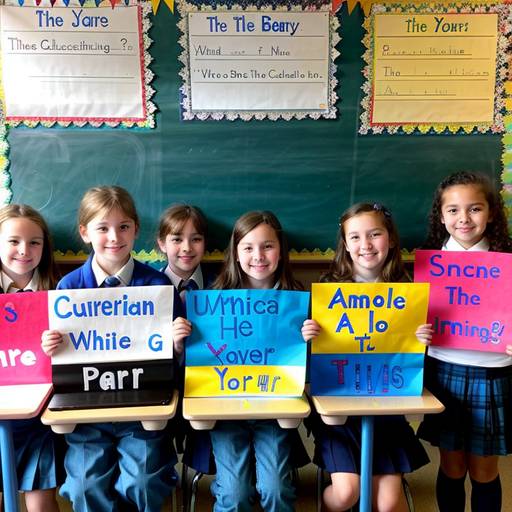
In this 2nd Grade Language Arts lesson, students will explore the essential role of punctuation in writing, focusing on periods, question marks, and exclamation marks. The lesson begins with a discussion on the significance of punctuation, followed by direct instruction where students learn the purpose and usage of each punctuation mark through examples.
Students will engage in guided practice by working in pairs to add the correct punctuation to provided sentences. After that, they will independently write a short story or paragraph using all three punctuation marks, allowing for creativity and expression. To conclude, students will share their work with the class and receive certificates acknowledging their participation and learning. The lesson will be assessed through monitoring engagement and collecting written assignments to evaluate punctuation usage, with extensions available for students who finish early.