
Filters
Level
Grade
Subject
Subject Area
Subject Topic
Standard(s)
Audience
Keyword
DurationMinutes
1st Grade Math Lesson Plans

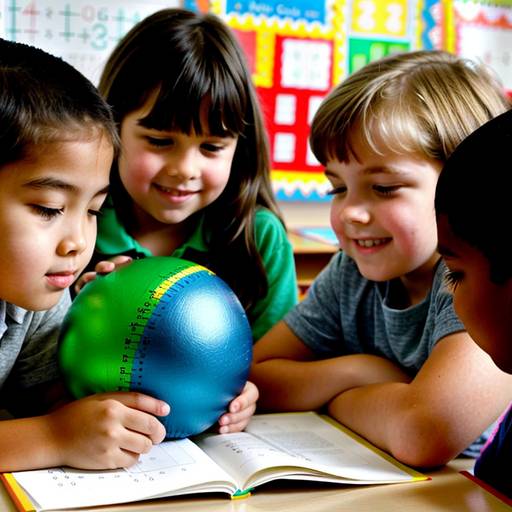
This 1st grade math lesson focuses on the concepts of measurement and weight through engaging, hands-on activities. Students begin by discussing the differences between measurement (size) and weight (heaviness) before working in small groups to measure classroom objects using non-standard units, like unifix cubes. They record their measurements and share findings with the class, creating a collective visual chart.
Next, the students explore weighing various objects using balance scales, predicting which will be heavier or lighter before confirming their predictions through hands-on experimentation. Their observations are noted on a worksheet to reinforce learning.
The lesson concludes with a review of key concepts, emphasizing teamwork and participation. Students are encouraged to reflect on their experiences, and sticker rewards are given for engagement. This lesson not only develops foundational skills in measurement and weight but also promotes collaboration, communication, and a love for learning.
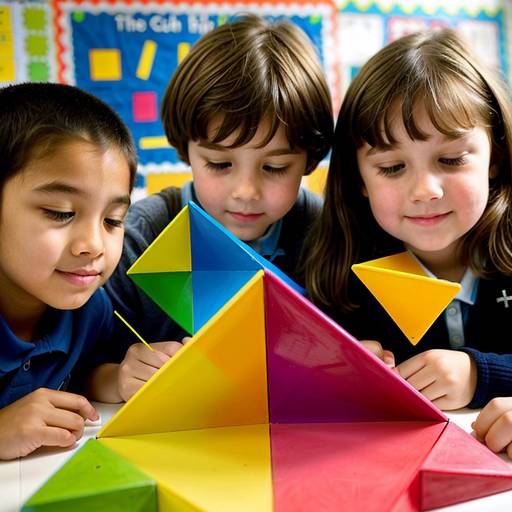
This 1st-grade math lesson focuses on introducing students to basic geometric shapes and patterns. The class begins with a discussion that helps students identify common shapes such as circles, squares, triangles, and rectangles found in their environment. Students then participate in a shape identification activity, sorting colored construction paper shapes in pairs.
Following this, the concept of patterns is introduced, with examples provided to help students understand the sequence and repetition involved. In small groups, students create their own patterns using a variety of small objects or pattern blocks and present their work to the class, fostering collaboration and communication skills.
A shape scavenger hunt is incorporated, allowing students to explore the classroom or outdoor space to find and draw real-world examples of the shapes they have learned about. The lesson concludes with a reflection on their discoveries and an emphasis on the presence of geometry in everyday life. Throughout the lesson, the teacher assesses students' understanding through observation and review of their work while offering differentiated activities to cater to varied learning needs. Additionally, opportunities for extension activities are provided to enhance engagement and learning.
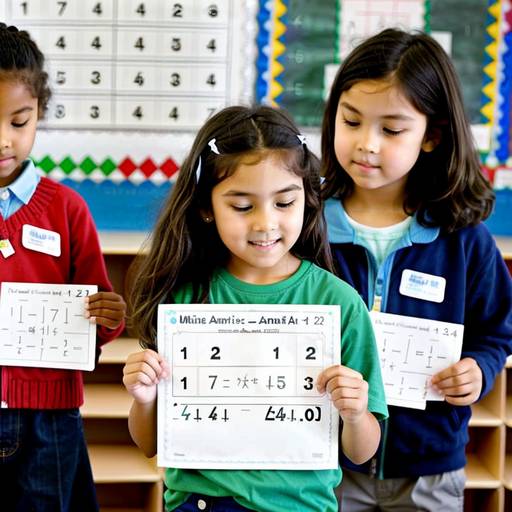
This 1st-grade math lesson focuses on teaching students how to perform addition using a number line. The objective is for students to understand the concept of "jumping" along the number line to find sums, enabling them to solve addition problems effectively.
The lesson begins with a warm-up activity that involves counting to 20, followed by an introduction to the number line as a visual aid for addition. The teacher demonstrates how to add numbers by jumping along the number line, using simple equations for clarity. Guided practice allows students to engage interactively, taking turns to solve problems as a class.
Students then participate in a hands-on activity where they use counters and individual number lines to solve assigned addition problems collaboratively. This reinforces their understanding of the addition process. Following this, they complete worksheets independently, drawing their own number lines to illustrate their jumps and calculations.
The lesson concludes with a review where students share their answers and experiences, reinforcing their learning. Assessment occurs through observation during activities and the collection of completed worksheets, ensuring that understanding is measured effectively. Extensions are suggested for those who grasp the concept quickly, including introducing subtraction using the number line or incorporating a physical activity to reinforce learning. Overall, the lesson fosters a supportive learning environment that encourages participation and collaboration among students.
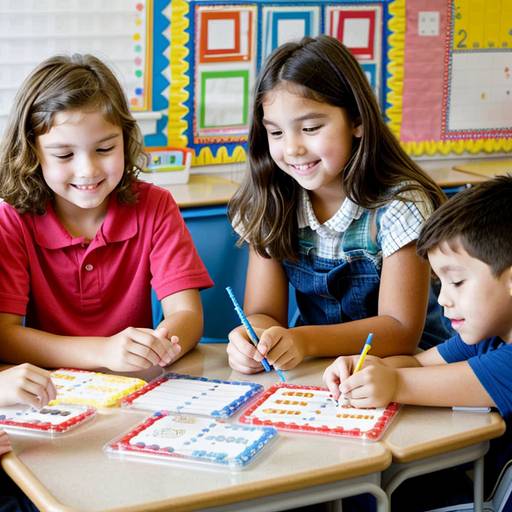
In this 1st-grade math lesson, students will explore the concept of multiplication through the idea of grouping objects. The lesson begins with an introduction to multiplication as repeated addition, using relatable examples from everyday life. Students will participate in a hands-on activity where they create groups of counters, allowing them to visualize and count the total.
Following this, the teacher will facilitate a group discussion, solving simple multiplication problems together while reinforcing the connection between grouping and counting. Students will then work independently on worksheets that feature straightforward multiplication problems and grouping exercises.
The lesson concludes with a review of the key concepts and a fun, musical activity to reinforce their learning. Throughout the session, student understanding will be assessed through observation and worksheet evaluation. Extensions for further reinforcing multiplication concepts are also included. By the end of the lesson, students will have a foundational grasp of multiplication as grouping, making the learning experience engaging and interactive.
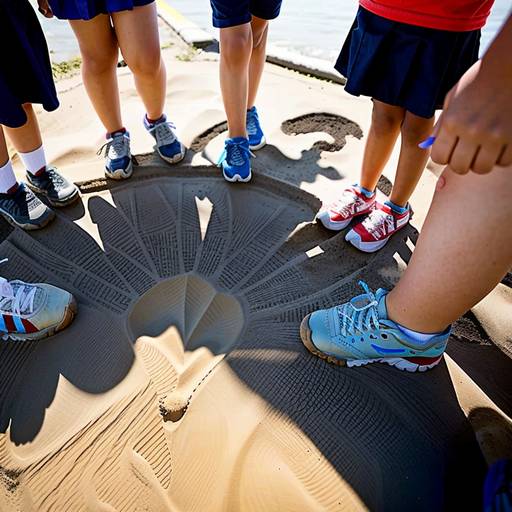
In this 1st-grade math lesson, students will explore the concepts of measurement and length through engaging, hands-on activities. The lesson begins with a discussion on measurement, where students share their thoughts and make estimates about the lengths of various classroom objects. Following a demonstration, they will measure these objects using pre-cut paper footprints, learning how to align the footprints end to end to determine actual lengths.
Students will work in small groups to measure a set of objects, record their estimates alongside the actual measurements on a worksheet, and create drawings of the objects. They will then have the opportunity to independently measure another object of their choice in the classroom, reinforcing their understanding of measurement. The lesson concludes with a class discussion where students share their findings, helping to solidify their learning and understanding of the importance of measurement in everyday life.
Assessment will be based on students' completed worksheets, their participation in discussions, and their engagement during group activities. The lesson includes extensions for students who want to explore measurement further and provides modifications for those who may need additional support. Overall, the lesson focuses on developing students' measurement skills while fostering collaboration and critical thinking.
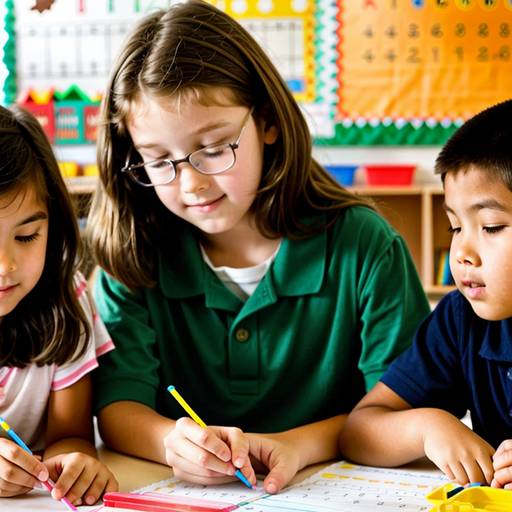
This 1st-grade math lesson focuses on helping students understand the concepts of measurement and time through interactive and hands-on activities. The lesson begins with a discussion about measurement and time, prompting students to share their prior knowledge.
Next, students work in small groups to measure various classroom objects using rulers or string, encouraging estimation and discussion of their findings. Following the measurement activity, the class moves on to learning about telling time using a large classroom clock. Students practice setting the hands of smaller analog clocks to specific times based on teacher prompts.
To reinforce the concepts, students complete worksheets that involve measuring items at home and drawing clock hands to show different times. The lesson concludes with a reflection on what students have learned and a review of measurement and time concepts. Throughout the lesson, students are assessed based on participation, group collaboration, and accuracy on their worksheets, with the opportunity for extensions that encourage continued exploration at home.
In this first-grade math lesson, students will explore the concepts of geometry by learning about different types of lines and angles. The session begins with an interactive discussion that prompts students to identify lines found in their environment. They will learn to differentiate between straight, zigzag, and curved lines, as well as understand the concept of right angles.
During guided practice, students will work in small groups to create and label their own lines using rulers and yarn, and they will search for objects in the classroom that display right angles. Following this, they will independently complete worksheets that reinforce their understanding of line types and angles through coloring and identification exercises.
The lesson concludes with a review that encourages students to share their findings, reinforcing the idea that lines and angles exist all around them. Assessment will be conducted through observation and worksheet review, ensuring that all students have engaged with the material effectively. Differentiation strategies will be in place to support varying learning needs, fostering an inclusive learning environment.
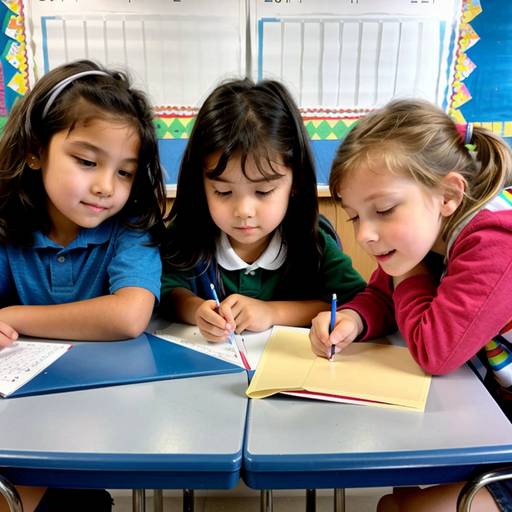
This 1st-grade math lesson focuses on geometry, specifically the identification and understanding of different types of lines and angles. The lesson begins with a read-aloud of a picture book that introduces lines and shapes, followed by a discussion on straight and curved lines, complete with visual demonstrations. Students then learn about three types of angles—right, acute, and obtuse—using flashcards and real-world examples.
In a guided practice activity, students work in small groups to create straight and curved lines using string or yarn, promoting teamwork and hands-on learning. They also embark on an "Angle Hunt" around the classroom to find and identify examples of the angles discussed. For independent practice, students engage in a craft activity where they create artwork featuring the lines and angles they learned about, encouraged to label their work.
The lesson concludes with a sharing session where students present their artwork and describe the lines and angles included. Assessment is conducted through observation during activities and by reviewing the finished art pieces. The lesson emphasizes interactive learning and aims to cultivate students' understanding of basic geometric concepts while also allowing for creativity and expression.
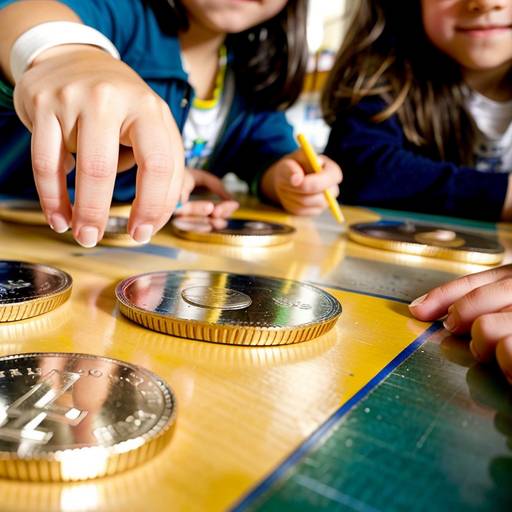
In this 1st-grade math lesson plan, students will explore the concept of money by identifying and differentiating between various coins: pennies, nickels, dimes, and quarters. The lesson begins with an engaging discussion on the use of money in everyday life, followed by hands-on activities that involve examining real or play coins to understand their values.
During direct instruction, students will participate in coin identification exercises and practice counting coins in groups. The highlight of the lesson is the setup of a classroom "store," where students can role-play as shoppers and cashiers, allowing them to apply their knowledge in a simulated buying experience. This interactive activity fosters understanding of how to use coins in transactions.
To conclude, students will reflect on what they have learned, and their understanding will be assessed through observational evaluation during the store activity and a simple worksheet that reinforces coin recognition and values. Differentiation strategies ensure that all learners can participate and benefit from the lesson.
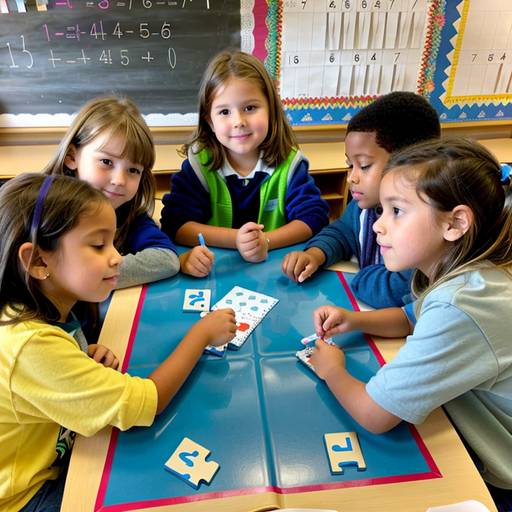
In this 1st-grade math lesson, students will explore the concept of addition through engaging word problems. The lesson begins with an introduction to addition, including a simple equation demonstration. Then, students learn about word problems, using a relatable scenario to illustrate how addition can be applied in real-life situations.
Afterward, students break into small groups to tackle word problem cards, using counters to visualize and solve the problems collaboratively. Following guided practice, they will complete worksheets independently, drawing pictures and writing equations to represent the problems they solve. The lesson wraps up with students sharing their work with the class, fostering a collaborative environment and reinforcing their understanding of addition.
Assessment will be based on observations during group work and the completion of worksheets, ensuring that each student's grasp of the topic is evaluated. Modifications will be provided for varying skill levels to ensure all students can participate meaningfully. Overall, the lesson aims to make addition fun and relatable through interactive problem-solving.