
Filters
Level
Grade
Subject
Subject Area
Subject Topic
Standard(s)
Audience
Keyword
DurationMinutes
1st Grade Math Lesson Plans

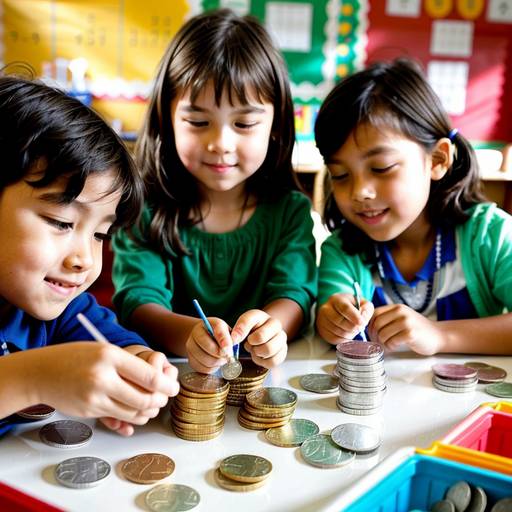
In this 1st-grade math lesson, students will learn about money by identifying various coins, including pennies, nickels, dimes, and quarters, and understanding their values. The lesson begins with a discussion on the concept of money, followed by direct instruction where the teacher models how to count coins using visual aids and involves students in hands-on participation. Following this, students will engage in guided practice in small groups, using real or play coins to create specific amounts. They will have an independent activity involving worksheets focused on counting coins. The lesson concludes with a fun mini store activity where students can use play money to "purchase" items, allowing them to apply what they’ve learned in a practical setting. Finally, the class will regroup to discuss their learning and reinforce key concepts. The assessment is based on observation during activities and the completion of the worksheets, ensuring that all students grasp the concepts related to counting and recognizing coins. Extensions for the lesson include creative writing and interactive online games for further practice.
In this 1st grade math lesson plan, students learn about addition through engaging word problems related to animals. The lesson begins with a warm-up discussion about favorite animals, followed by an introduction to addition using visual aids. The teacher demonstrates how to solve a simple word problem on the board, emphasizing comprehension and problem-solving strategies.
Students then work collaboratively in small groups to solve a series of addition word problems using counters and their “Critter Count” posters. This guided practice is followed by independent work where each student completes a worksheet with various addition problems.
Throughout the lesson, students are encouraged to share their solutions and reasoning, reinforcing their understanding of addition in real-life scenarios. The teacher assesses student comprehension through observations and collected worksheets, while also providing differentiated support to meet individual learning needs. Overall, the lesson aims to build foundational addition skills in a fun and interactive way.
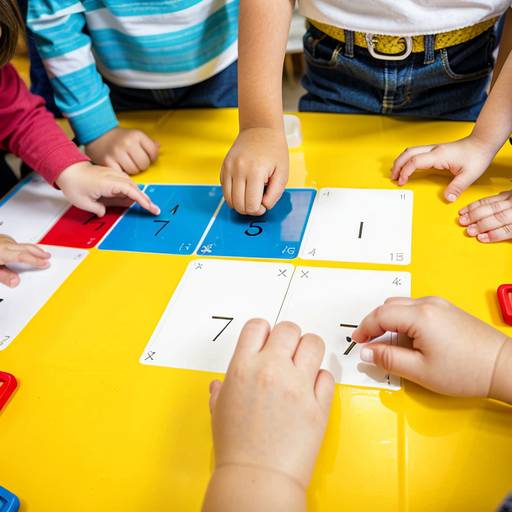
This 1st-grade math lesson focuses on introducing students to the concept of addition using manipulatives to enhance understanding. Over the course of 45 minutes, students will engage in a warm-up discussion to familiarize themselves with addition in real-life contexts. They will explore colorful counters, which will serve as their primary manipulatives for the lesson.
The teacher will model simple addition problems on the whiteboard, demonstrating how to combine groups of counters to find solutions. Students will then partner up to create and solve their own addition problems, utilizing their counters to reinforce the concept. After guided practice, students will complete a worksheet where they draw counters to visualize their answers.
The lesson will conclude with a review of the concepts learned, and students will reflect on their work by writing down an addition problem and its answer as an exit ticket. Assessment will occur through observation and worksheet review, allowing the teacher to gauge student understanding. The lesson includes extensions for advanced learners and modifications for those who need additional support, ensuring a comprehensive approach to teaching addition.
The lesson plan focuses on introducing 1st-grade students to the concepts of money, specifically coins and their values. It aims to help students identify different types of coins—pennies, nickels, dimes, and quarters—and understand how to count them. The lesson begins with an engaging discussion on money and its purpose, followed by direct instruction where students learn the names, images, and values of each coin.
In the guided practice segment, students group and count their coins collectively, promoting collaboration and reinforcing their counting skills. The highlight of the lesson is an interactive "store" activity, where students can buy items priced at 1-10 cents using play money. This hands-on experience allows them to apply their counting knowledge in a real-world context.
The lesson concludes with a group discussion where students share their experiences and what they learned. Assessment includes observing students during the activity and collecting worksheets to evaluate their understanding of coin identification and counting. Additionally, differentiation strategies are included to support a range of learning needs. Overall, the lesson combines direct instruction, practice, and interactive engagement to create a comprehensive learning experience centered around money.
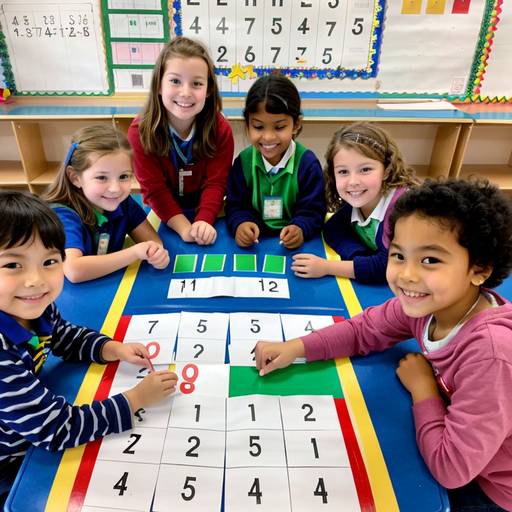
This 1st Grade math lesson focuses on teaching students the concept of addition using a number line. The lesson begins with a discussion about the importance of addition in everyday life, followed by an introduction to the number line as a useful tool for visualizing addition.
Through modeling and guided practice, students learn to perform simple addition problems while moving along the number line. They receive handouts of small number lines to help them practice independently. The lesson includes a hands-on activity where students use counters to create and solve their own addition problems, reinforcing their understanding of combining numbers.
The lesson concludes with students sharing their work and reflecting on their learning. A worksheet is provided for assessment, and extensions are suggested for students progressing at different rates. Differentiation strategies ensure all students receive appropriate support, while the teacher reflects on lesson effectiveness for future improvements.
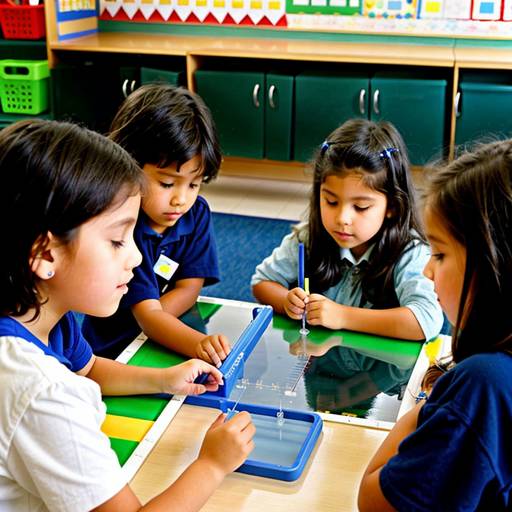
In this 1st-grade math lesson, students will explore the concepts of measurement and length through hands-on activities and discussions. The lesson begins with an introduction to the idea of measurement, where students will learn to use rulers and measuring tapes. After a guided demonstration, they will participate in a scavenger hunt around the classroom to measure various items, recording their findings on worksheets.
As they measure, students will practice identifying the lengths of objects, collaboratively sharing their observations in a group discussion. The class will create a chart to compare the lengths measured, reinforcing their understanding of terms like "longest" and "shortest." To conclude, students will reflect on the importance of measurement in real-life situations and will be assigned a simple homework task to measure and record three items at home.
Assessment will be based on participation during activities and the accuracy of worksheet completions, with accommodations provided to ensure all students can successfully engage in the lesson. Overall, the lesson aims to create an interactive and practical understanding of measurement and length for young learners.
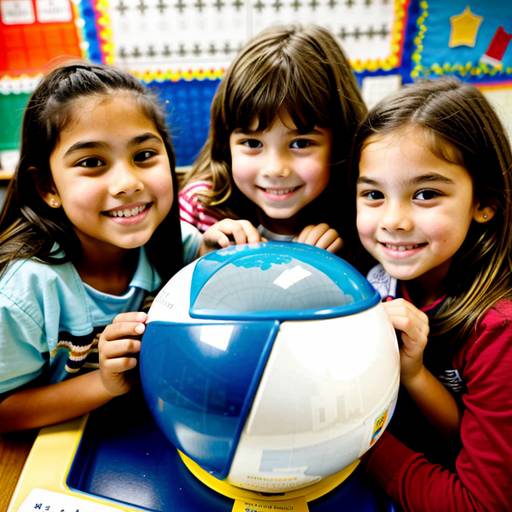
In this 1st-grade math lesson, students will explore measurement and weight through engaging, hands-on activities. The lesson begins with a discussion on the concepts of measuring length and weight, introducing key vocabulary such as heavier, lighter, longer, and shorter. Students will work in small groups to measure various classroom objects using rulers and non-standard units of measure, recording their findings on worksheets.
Next, they will use balance scales to weigh different objects, predicting which will be heavier or lighter before confirming their guesses. After sharing their measurements and comparisons with the class, students will wrap up with a Q&A session, reinforcing their understanding of the key concepts.
Assessment will involve observing group participation and reviewing worksheets, with extensions available for advanced learners. The lesson aims to provide a foundational understanding of measurement and weight through interactive experiences that connect to students’ everyday lives.
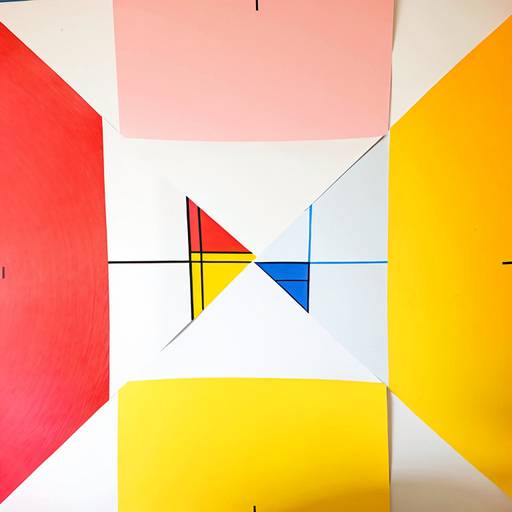
This first-grade lesson plan focuses on introducing students to the basic concepts of geometry, specifically related to lines and shapes. The lesson begins with a discussion to gauge students' prior knowledge about lines, followed by a demonstration of three types of lines: straight, curved, and zigzag. Students engage in identifying these lines through guided practice, including a "line hunt" around the classroom to find real-world examples.
As part of their independent practice, students create their own shapes using different types of lines, allowing for creativity and personal expression. They then share their shapes with partners to reinforce their understanding. The lesson concludes with a recap of the key concepts and an exit ticket activity, where students identify one line type and one shape they've created. Assessment is based on student participation, the shapes they create, and their exit ticket responses. Differentiation strategies are included to support various learners, and potential extensions encourage further exploration of geometry through technology and outdoor activities.
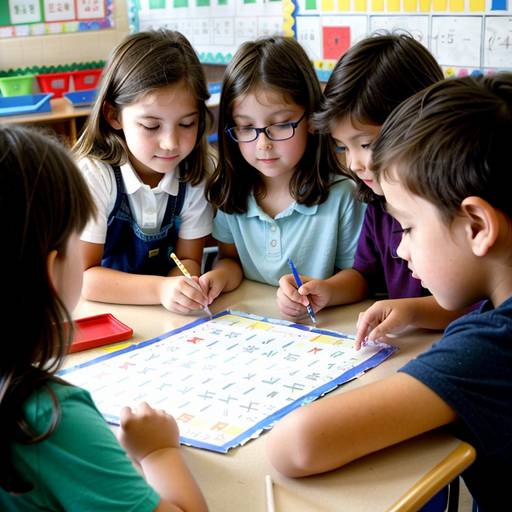
In this 1st-grade math lesson, students will explore the concept of addition with single-digit numbers through engaging activities and hands-on learning. The objective is to help students understand how to combine numbers and solve addition problems with sums up to 10.
The lesson begins with a group discussion, allowing students to share their prior knowledge of addition. The teacher will use a whiteboard to demonstrate addition problems, utilizing a number line and counters to visualize the process. After this direct instruction, students will engage in guided practice in small groups, using counters to solve a set of addition problems collaboratively.
Following guided practice, students will independently complete worksheets with single-digit addition problems, with access to manipulatives as needed. To reinforce learning, the class will participate in an interactive story time, where simple word problems are presented, and students will act out the solutions with their counters.
The lesson concludes with a review of key concepts and allows students to share their experiences, reinforcing their understanding. Assessment will be conducted through observation and worksheet review, with differentiation strategies in place to support diverse learning needs. Extensions, such as creating their own addition problems, will encourage further engagement and application of skills beyond the classroom setting.
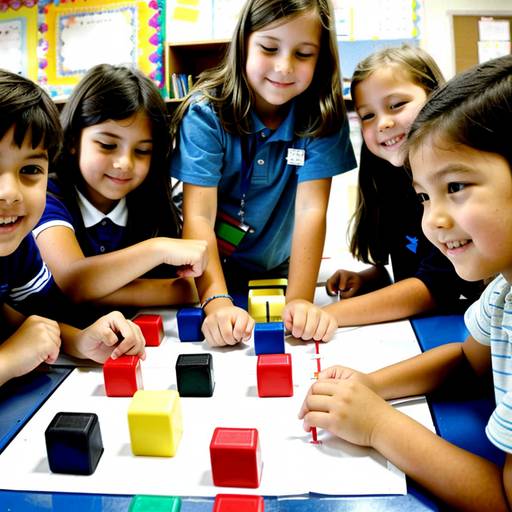
In this engaging 1st-grade math lesson, students will explore the concepts of measurement and time through hands-on activities. They will begin by discussing the importance of measurement and learning to tell time using both analog and digital clocks.
Students will participate in a group activity where they measure various classroom objects using non-standard units, such as paper clips and blocks, recording their findings on chart paper. Following this, they will enhance their time-telling skills through practice with time flashcards, where they will identify different times, and create their own paper plate clocks to demonstrate their understanding of telling time to the hour and half-hour.
Throughout the lesson, students will work collaboratively, share their findings, and engage in discussions that reinforce their learning. The lesson will end with a review of key concepts and an assessment of their understanding through observation, group recordings, and their created clocks. Extension activities will allow for further exploration of measurement and time, ensuring a comprehensive grasp of these fundamental math skills.