
Filters
Level
Grade
Subject
Subject Area
Subject Topic
Standard(s)
Audience
Keyword
DurationMinutes
Preschool Math Lesson Plans

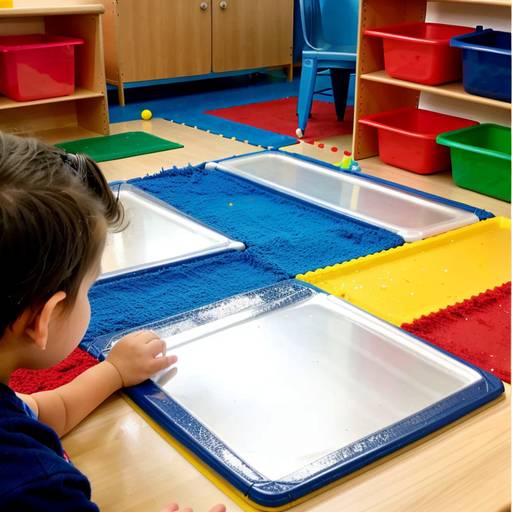
In this preschool lesson plan focused on spatial awareness, students engage in activities designed to enhance their understanding of positional concepts such as in, out, on, under, near, and far. The lesson begins with an interactive introduction using visual aids and gestures to explain these terms. Following this, students participate in storytime, listening to a book that highlights spatial relationships, accompanied by guided questions to foster comprehension.
The main activity involves rotating through various hands-on stations. At these stations, students engage in play and movement, using toys and hula hoops to explore and demonstrate spatial concepts physically. After the stations, there is a group discussion where students share their experiences and practice using the vocabulary learned.
To conclude, the lesson reinforces the spatial terms through a group chant or song, followed by a short assessment where students point out spatial concepts around them. The plan includes differentiation strategies to support diverse learning needs and suggests follow-up activities, such as worksheets and nature walks, to further explore spatial awareness in different contexts.
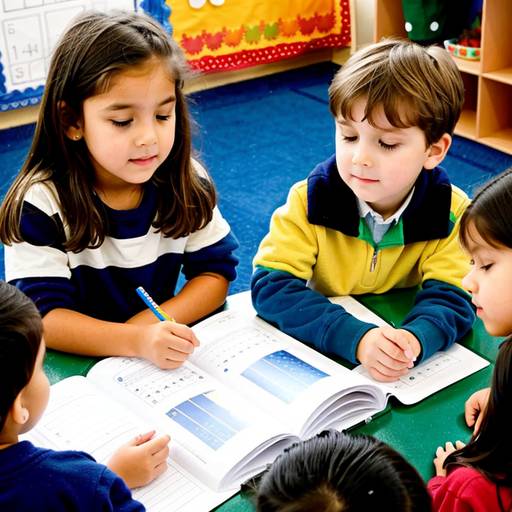
In this preschool math lesson, children will explore the concept of patterns through interactive activities designed to engage their senses and creativity. The session begins with an introduction to patterns, where children will identify simple sequences using colors and shapes. They will then participate in group activities, including creating their own patterns with paper shapes and replicating sound patterns through claps and stomps.
Next, students will embark on a “pattern hunt” in their environment, observing and discussing patterns they find in various surroundings. After returning to the classroom, children will create and showcase their own unique patterns on chart paper, reinforcing their understanding of the concept. The lesson concludes with a group discussion about their discoveries and a fun song to celebrate their learning. Throughout the activities, children will have opportunities for collaboration and sharing, enhancing their understanding of patterns in an engaging, hands-on manner. This lesson will help develop their observation skills, creativity, and mathematical thinking in a playful context.
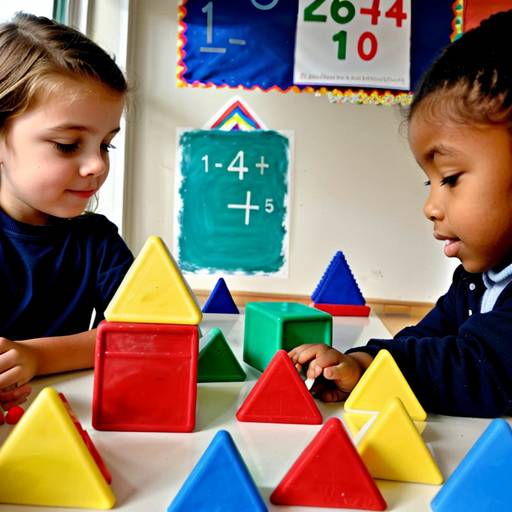
This lesson plan focuses on number recognition for preschool students aged 3-5 years. The objective is to help students identify and understand numbers from 0 to 10 through a series of engaging activities that incorporate shapes and counting.
The lesson begins with a warm welcome and a brief discussion about numbers known by the students. It continues with a shape sorting activity, where students identify shapes and match them to corresponding number cards based on the number of sides each shape has. Following this, students engage in a counting game, where they count objects like blocks and collaborate to count various classroom items, gradually reinforcing their number recognition skills.
The lesson concludes with a recap, allowing students to share their favorite numbers and participate in a fun number song. Throughout the activities, teachers observe student interactions to assess their understanding and provide positive reinforcement. Extensions are suggested for advanced learners, including simple addition and tracing number sheets to further enhance their learning experience. Overall, the lesson promotes a playful and interactive approach to foundational math skills.
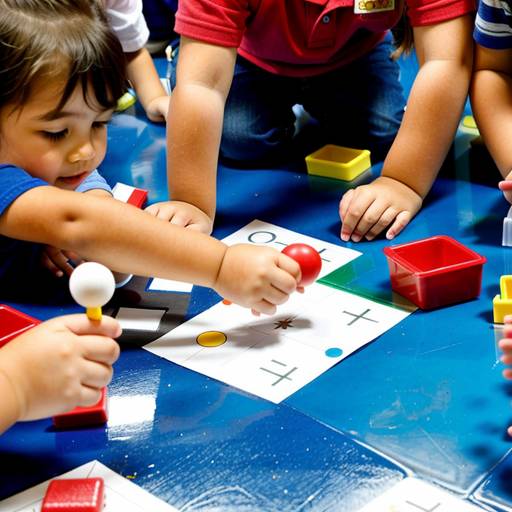
In this preschool math lesson, students will explore the concepts of measurement and time through engaging activities designed to enhance their observational and counting skills. The session begins with a welcoming circle where the teacher introduces the topics through a brief discussion. Following this, a relevant storybook is read to provide context and stimulate interest.
Students will be divided into small groups to measure various classroom objects using measuring tapes or rulers, fostering collaborative learning and hands-on experience. After sharing their findings with the class, the focus shifts to an interactive time challenge where students compete to perform as many jumping jacks or claps as possible within a set time limit.
The lesson concludes with a group reflection on their learning experiences, encouraging students to express what they enjoyed and understood about measurement and time. Participation will be rewarded with stickers, promoting a sense of achievement. An optional follow-up activity involves creating a "Measurement Wall" to encourage ongoing exploration of these concepts throughout the week. The lesson aims to make learning interactive and enjoyable for preschoolers.
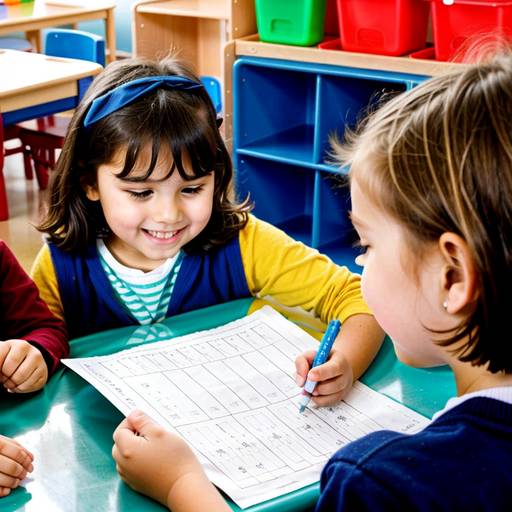
Students participate in hands-on activities at various math stations. In the first station, they use counting manipulatives to create and solve their own addition problems. The second station focuses on subtraction, where they practice taking away items from a larger group. The final station involves matching number cards to corresponding quantities.
The class then comes together for a fun relay activity that reinforces both addition and subtraction. As they take turns running to collect items and forming equations, they deepen their understanding of these mathematical operations.
To conclude the lesson, children reflect on their learning and share the equations they created. The session ends with another engaging song, ensuring a positive and memorable experience. Throughout the lesson, teachers assess students' understanding through their participation, responses, and ability to solve basic problems, providing opportunities for further challenge or support as needed.
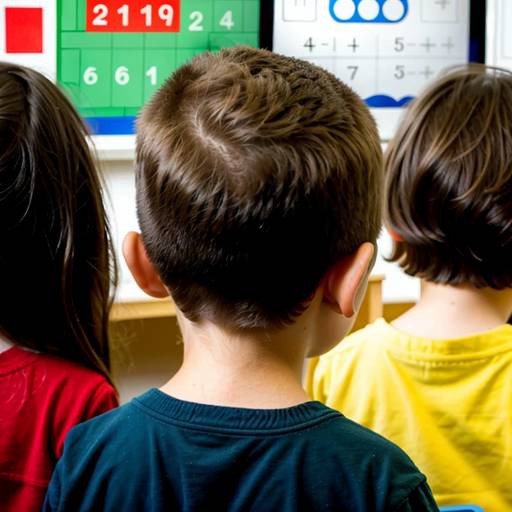
In this preschool math lesson, students will explore foundational math skills like counting, number recognition, and simple addition through the integration of technology. The lesson begins with a brief introduction to math and the role of technology in daily activities.
Following the introduction, students will engage in interactive math games using tablets or computers, allowing them to navigate educational apps that promote learning through play. A group demonstration on a Smartboard will help familiarize students with the app's features, encouraging participation and collaboration.
After the digital exploration, students will participate in a hands-on counting activity using manipulatives, reinforcing the concepts they learned through technology. The lesson concludes with a discussion where students reflect on their experiences, celebrating achievements with rewards. Throughout the lesson, teachers will assess understanding through observation and guided questions, ensuring a rich, engaging math experience that blends digital tools with tactile learning.
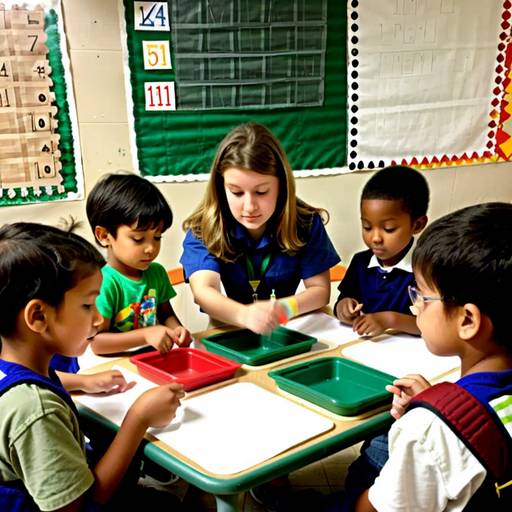
In this engaging preschool lesson, students will explore basic addition and subtraction concepts through a jungle-themed experience. The session begins with a circle time where children are introduced to the theme, followed by a read-aloud of a counting story featuring jungle animals to pique their interest.
The main activities involve hands-on group work, where students use toy animal counters to solve simple addition and subtraction problems collaboratively. This interactive approach allows them to visualize mathematical concepts and encourages peer discussion. An interactive game further reinforces these concepts, as children find and mark numbers on a jungle scene poster based on the problems presented.
To wrap up the lesson, students gather to reflect on what they learned, share insights, and complete a simple worksheet featuring jungle-themed math problems. If time permits, extension activities such as a dance and count session or a creative art project allow for movement and artistic expression while reinforcing the lesson's objectives.
Throughout the lesson, the teacher assesses understanding by observing participation and reviewing completed worksheets. The overall goal is to create a fun and dynamic environment where children can readily connect math concepts to their surroundings.
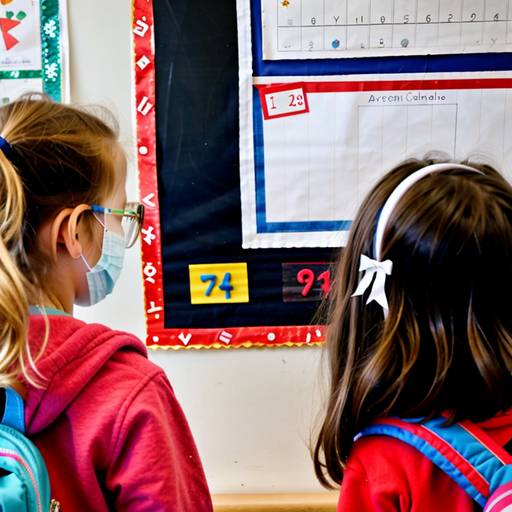
This preschool math lesson focuses on introducing young children to the concept of measurement through an engaging and interactive approach. Students will begin with a discussion about measurement, exploring vocabulary related to size and length. They will then participate in a hands-on activity where they form small groups to measure various objects within the classroom using measuring tapes or rulers. Each group will record their findings, compare measurements, and share their discoveries with the class. To reinforce their learning, students will create drawings of their favorite measured objects and label them with the respective measurements. The lesson concludes with a group discussion to reflect on what they learned and encourage measuring at home. Overall, this lesson aims to foster understanding of measurement concepts while promoting collaborative learning and creativity.
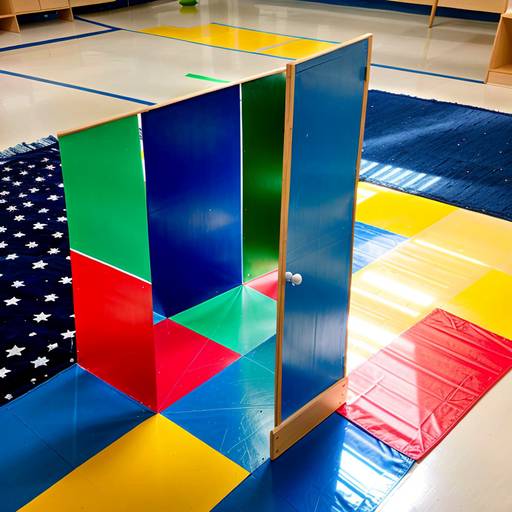
In this preschool lesson, students engage in a series of hands-on activities designed to enhance their spatial awareness skills. The session begins with an introduction to spatial concepts using picture cards, followed by an exploration of various-sized cardboard boxes where children can crawl, stand, and position themselves in relation to the boxes. Next, students navigate a maze created with colored tape or yarn, using directional language to describe their movements. Finally, they participate in a movement activity involving hula hoops, where they creatively move in different ways and describe their positions using spatial terminology. The lesson concludes with a reflection time for students to share what they learned, reinforcing key vocabulary and concepts. Through observation and participation, teachers assess students' understanding and encourage further development of these foundational skills in a playful and engaging environment.
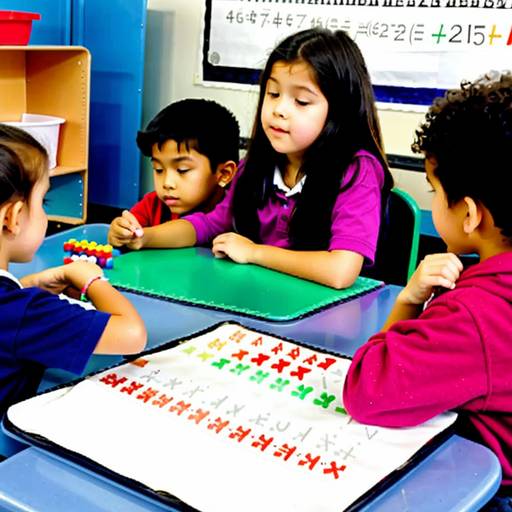
In this preschool math lesson, students engage in an interactive adventure centered around counting from 1 to 10. The session begins with an engaging story that sets the stage for a mystery related to missing cookies, capturing the children's interest. They participate in a series of hands-on activities at various stations, where they practice counting through fun tasks such as matching quantities with number cards, finding and identifying clues, and constructing simple puzzles.
As they rotate through each station, they work collaboratively, enhancing their counting skills in a playful and dynamic environment. After completing the stations, students get the opportunity to showcase their counting abilities by filling treasure boxes with colorful counters, which they present to the group. The lesson concludes with a review of what they learned and the distribution of certificates or stickers to celebrate their accomplishments. Throughout the lesson, careful observation of participation and accuracy in counting serves as an informal assessment of their understanding of the concepts presented. Extensions provide further opportunities for advanced learners to create their own counting challenges for their peers, deepening their engagement and reinforcing foundational math skills.