
Filters
Level
Grade
Subject
Subject Area
Subject Topic
Standard(s)
Audience
Keyword
DurationMinutes
Infant Lesson Plans

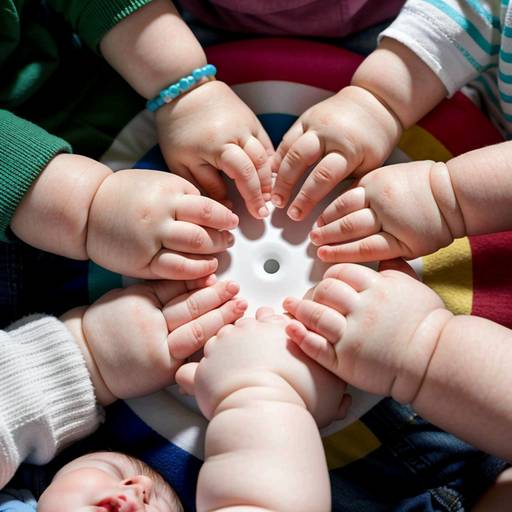
This lesson plan focuses on the development of fine motor skills in infants aged 6-12 months through engaging, hands-on activities. The session lasts 30-45 minutes and accommodates small groups of four to six infants with their caregivers.
The plan includes several interactive stations that encourage exploration and skill-building. Activities involve texture exploration with various fabric squares, block stacking for grasping and manipulation, and bead threading for hand-eye coordination. Additional opportunities for fine motor skill development include transferring small items using spoons, engaging in creative expression with crayons or finger paints, and sensory exploration with playdough.
The session concludes with a calming storytime featuring tactile books, allowing infants to enjoy an interactive reading experience. Throughout the activities, caregivers play a crucial role in supporting their infants and fostering confidence while enhancing vocabulary and sensory awareness. Observations of engagement and skill use help assess each child's progress, creating an enriching environment that encourages fine motor skill development through play.

This lesson plan focuses on developing hand-eye coordination in infants aged 6 to 12 months through engaging and interactive play activities. The session begins with an introduction that captivates infants’ attention using colorful materials. The activities are designed to enhance motor skills and encourage social interactions among infants and their caregivers.
The first activity involves rolling soft balls and encourages infants to reach for them, promoting both movement and coordination. In the second activity, infants use colorful stacking blocks, developing fine motor skills as they practice grasping and stacking. The third activity introduces texture exploration with large, varied fabric squares, stimulating sensory awareness and visual processing.
Finally, a bouncing and catching exercise with inflatable balls fosters effective coordination and collaborative play. The lesson concludes with a group circle where infants can explore freely and engage in a sing-along, further promoting social bonding. Throughout the session, caregivers receive feedback on their infant's progress, highlighting the importance of these foundational skills and suggesting simple activities to reinforce learning at home. Adaptations are included to meet the varying skill levels of infants, ensuring a fun and inclusive environment for all participants.

This lesson plan focuses on enhancing vocabulary development for infants aged 6-12 months through interactive and engaging activities. It aims to foster language comprehension by utilizing flashcards, storybooks, musical instruments, and plush toys. The session begins with a welcoming circle where caregivers and infants connect, followed by introducing vocabulary through flashcards, encouraging sound mimicking and participation. Storytime emphasizes repetition and engagement with picture books, while a musical segment incorporates vocabulary with fun sounds. Interactive play allows infants to explore objects and enhances social interaction. The lesson concludes with a recap song and positive reinforcement, encouraging caregivers to continue vocabulary-building activities at home. Overall, the lesson promotes language skills in a nurturing, play-based environment.
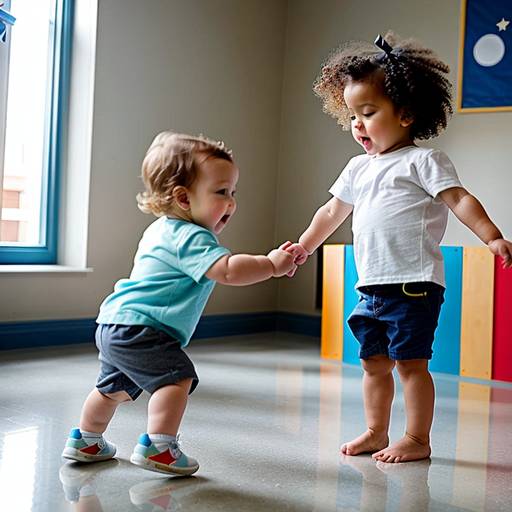
This lesson plan focuses on developing balance and coordination skills in infants aged 12 to 24 months through engaging and playful activities. It begins with a warm-up session that includes movement to lively music, encouraging infants to explore their bodies' capabilities. The main portion of the lesson consists of balance activities, such as walking on balance beams and navigating obstacle courses, alongside coordination games involving ball rolling and hula hoop crawling. The session concludes with gentle stretching and a reflective circle, fostering a calming atmosphere. Throughout the activities, caregivers are encouraged to provide support and encouragement, while also observing each child’s progress in their gross motor skills. Finally, parents are provided with suggestions for reinforcing these skills at home.
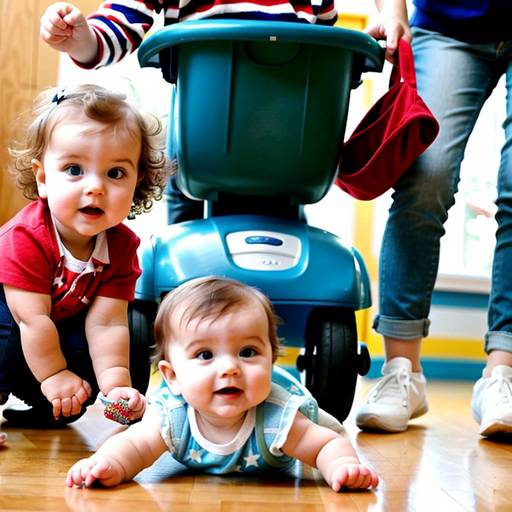
The lesson plan focuses on enhancing gross motor skills in infants aged 6 to 18 months through a series of engaging activities. The session begins with a warm-up that involves gentle stretching accompanied by music, introducing infants to movement. Key activities include a crawling relay, rolling lightweight balls, navigating a soft obstacle course, and chasing bubbles, all designed to promote coordination, balance, and strength. To wind down, caregivers and infants participate in a musical movement exercise where they dance and play instruments. The plan encourages caregiver involvement and concludes with a reflection session, fostering communication about each infant’s progress. Safety considerations ensure that all materials are appropriate for the age group, enabling a secure and playful learning environment.
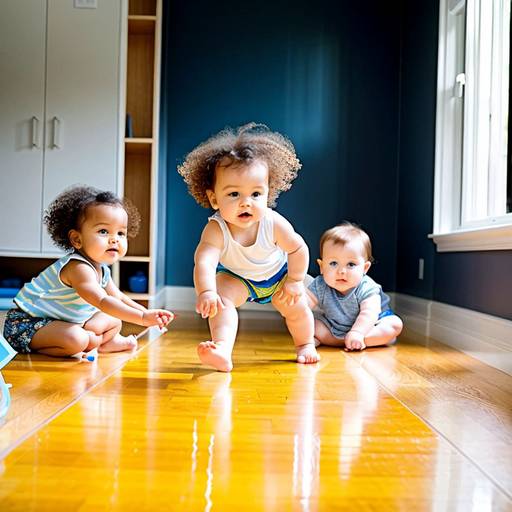
This lesson plan is designed for infants aged 6-12 months and focuses on enhancing balance and coordination through engaging activities. The session begins with a group circle where caregivers and infants participate in a lively song that encourages movement. Warm-up activities involve tummy time, where infants reach for toys to strengthen their core and improve balance.
The core of the lesson includes two interactive stations: one featuring wobble boards for stepping practice, and another where infants roll lightweight balls to each other, promoting both crawling and coordination skills. A movement scarf dance follows, allowing infants to explore rhythm and body movement while waving and tossing scarves to music.
The session concludes with a cool-down that includes gentle stretches, fostering relaxation. Throughout the lesson, caregivers are encouraged to observe their infants' progress, engage with them actively, and continue similar activities at home to further support motor skill development. Overall, the lesson promotes a safe and stimulating environment where infants can develop essential motor skills while enjoying playful interactions.


This lesson plan focuses on enhancing visual sensory development in infants aged 0-12 months through engaging activities centered around light, color, and movement. The session consists of a series of interactive activities, including exploring twinkling lights projected on walls, manipulating colorful fabric squares, observing a mobile with reflective elements, and engaging with sensory bottles filled with glitter or beads. High-contrast picture cards are introduced to stimulate visual tracking, and caregivers participate actively in each activity. The plan emphasizes the importance of responsive interactions and promotes caregiver bonding while providing suggestions for continuing similar activities at home. Overall, the lesson aims to create a multi-sensory experience that fosters visual development and encourages exploration in a safe and supportive environment.


This lesson plan is designed for infants aged 6-12 months to foster their understanding of object permanence, the awareness that objects continue to exist even when out of sight. The session lasts 30-40 minutes and involves interactive activities that engage both the infants and their caregivers.
The lesson begins with a brief introduction to the concept of object permanence, accompanied by demonstrations using toys. The first activity involves hiding toys under a colorful scarf or box while encouraging the infants to search for them, promoting curiosity and engagement. In the second activity, caregivers utilize a large cloth to hide toys, allowing infants to experience the thrill of discovery when the objects are revealed.
To conclude, a musical hide-and-seek game with small instruments reinforces the idea that objects can be temporarily hidden but still exist. Throughout the activities, caregivers are encouraged to observe their infants’ responses and engage with them to deepen the learning experience.
The plan also includes suggestions for follow-up activities that caregivers can continue at home, reinforcing the developmental milestone of object permanence through playful interactions and reading. Overall, this session aims to create a playful, stimulating environment that supports cognitive development in infants.

This lesson plan focuses on vocabulary building for infants aged 6-12 months, emphasizing words related to the natural environment. The session begins with caregivers and infants gathered in a circle to introduce the theme and new vocabulary words such as "flower," "tree," "sun," "bird," and "water." Engaging activities include using colorful picture cards for word introduction, playing nature-themed songs for active movement and interaction, and providing a sensory bin filled with safe natural items for hands-on exploration. During storytime, caregivers read soft fabric books that reinforce vocabulary through engaging visuals.
The lesson concludes with a closing circle where words are reviewed, and a goodbye song is sung. Caregivers are encouraged to continue using the new vocabulary at home during daily routines. The lesson aims to foster an interactive and enriching environment, promoting early language development through playful and engaging activities. Observations of infants' engagement serve as a means of assessment, allowing for real-time feedback on their responses to the vocabulary introduced. Adaptations are provided to cater to infants' varying mobility levels, ensuring inclusivity and stimulation throughout the session.
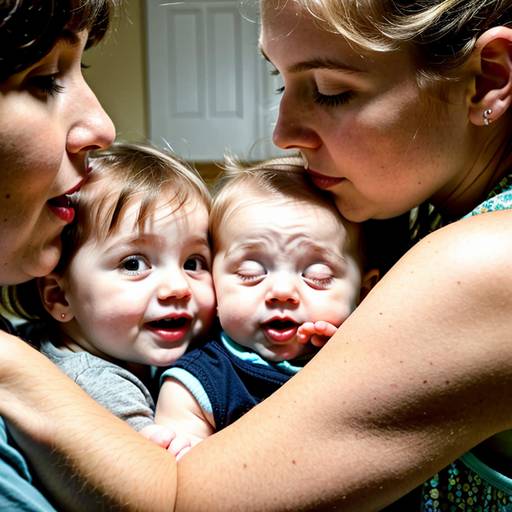
This lesson plan focuses on enhancing infants' sensory development through the exploration of different smells. Aimed at children aged 6-12 months, the session encourages interaction between infants and their caregivers as they discover various scents using safe, non-toxic materials, such as vanilla, lemon, lavender, and cinnamon.
The activity begins with an introduction to the theme and a brief discussion about the importance of scents in daily life. Infants and caregivers then participate in rotating through scent stations, where they can smell and explore different fragrant items while caregivers note their infants' reactions. The lesson promotes sensory integration by calming the infants with a comforting scent towards the end.
Concluding the session, caregivers share insights about their infants' preferences, and everyone engages in a song related to scents, fostering a joyful atmosphere. Safety measures ensure a secure environment throughout the activity, while caregivers receive take-home suggestions for further scent exploration at home, paving the way for continued sensory development in everyday life.