
Filters
Level
Grade
Subject
Subject Area
Subject Topic
Standard(s)
Audience
Keyword
DurationMinutes
Elementary School Lesson Plans

In this lesson plan designed for 5th-grade social studies, students explore the geography of various countries and their unique features. The lesson spans two class periods, beginning with a warm-up discussion to introduce key geographic vocabulary, including continents, countries, and various landforms like mountains and rivers. Students are divided into small groups, each assigned a different country from various continents.
In the first class, groups research their assigned country using fact sheets and available resources, focusing on geographical aspects such as climate, major landforms, and natural resources. They then create informative posters that visually represent their findings, including maps and illustrations.
During the second class, groups present their posters to the class, sharing what they've learned about their country’s geography and how it influences local culture and lifestyles. The session concludes with a reflective discussion on the impact of geography on daily life. Assessment is based on poster creativity, accuracy, and presentation skills, with extensions available for further exploration of the topic. Modifications are included to support diverse learners, ensuring that all students can engage meaningfully with the material.
This lesson plan for 4th-grade students in social studies focuses on geography and countries, spanning two class periods. The objectives include identifying major countries on each continent, understanding significant geographical features, and appreciating cultural diversity.
The first class begins with a warm-up discussion and a presentation about the continents and selected countries. Students work in groups to create posters that showcase countries, geographical features, and cultural facts related to their assigned continent. The second class includes group presentations where students share their research, followed by an interactive mapping activity where they label countries and features on a blank world map.
The lesson concludes with a reflection discussion and a short homework assignment where students express their personal connections to what they learned. Assessment includes evaluating group projects, individual maps, and reflection papers. Differentiation strategies are provided for varying student needs, and follow-up activities such as a "Cultural Day" are suggested to deepen engagement with the material. Overall, this lesson promotes collaboration, creativity, and a greater understanding of global geography and cultures.

In this 5th-grade language arts lesson, students will explore narrative writing by creating their own imaginative stories. The lesson begins with a discussion about the elements of narratives, including characters, setting, plot, conflict, and resolution. Following this, a mini-lesson on descriptive language emphasizes its importance in enhancing storytelling by helping readers visualize and connect with the narrative.
Students will then brainstorm their story ideas using graphic organizers to outline key components. With ample writing time, they will compose their narratives, applying learned techniques, while utilizing a checklist to ensure they include all necessary elements. Afterward, students will share portions of their stories with peers for feedback, fostering a collaborative learning environment.
The lesson concludes with a reflection on what they learned about narrative writing and the significance of detail in storytelling. Assessments will focus on participation during discussions and the completeness and creativity of their narratives. Differentiation strategies will be employed to support diverse learners, with opportunities for extension activities, such as illustrating scenes from their stories.
This 5th-grade language arts lesson plan focuses on introducing students to various literary genres. The lesson begins with a discussion about students' favorite types of books, followed by an overview of common genres such as fiction, nonfiction, fantasy, and mystery. Students participate in a group activity where they create genre maps that include definitions, descriptions, and illustrations for selected genres. Each group presents their map to the class, prompting discussions about the similarities and differences among the genres. The lesson concludes by emphasizing the importance of exploring diverse literature, with opportunities for students to engage further through reading assignments and a dedicated classroom library. Assessment is based on participation, creativity, and understanding demonstrated during presentations. Overall, the lesson aims to enhance students' comprehension of literary genres and inspire a greater appreciation for reading.

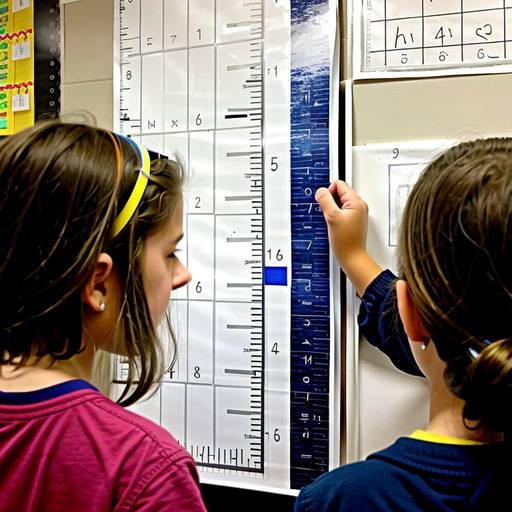
This 5th-grade math lesson focuses on the concept of measurement and length, emphasizing its real-world applications. Students will understand how to measure using standard units—specifically inches, feet, centimeters, and meters—and practice converting between these units. The lesson begins with a discussion on the importance of measurement in everyday life, followed by a demonstration of measuring techniques.
Students will engage in a hands-on activity where they work in small groups to measure various classroom objects and record their findings on a worksheet, including unit conversions. The class will then reconvene to discuss their measurements and any challenges they encountered. To conclude, a short quiz or exit ticket will assess their understanding of the material covered. This lesson aims to reinforce measurement skills while fostering collaboration and real-life connection to mathematics.
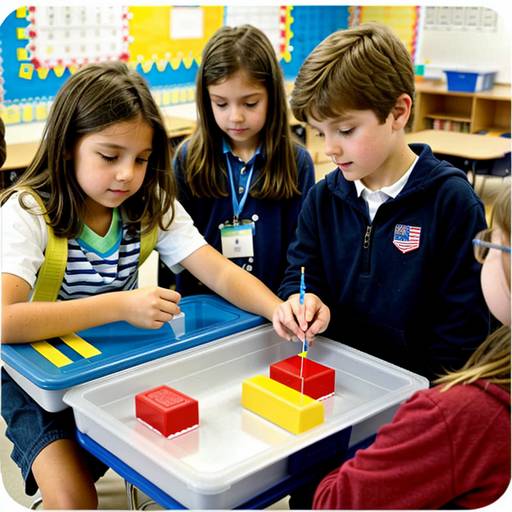
In this 60-minute math lesson designed for 3rd graders, students will explore the concepts of measurement and length through engaging activities. The lesson begins with a discussion about real-life applications of measurement, introducing key vocabulary such as inches, feet, and centimeters.
Following an instructional demonstration on how to use rulers and meter sticks, students will participate in measurement stations where they measure various classroom objects, make estimates, and record their findings. They will create a personal measurement chart featuring three selected objects, noting estimated and actual lengths, and reflect on their accuracy.
The lesson concludes with a review of key concepts and a preview of the upcoming topic on perimeter and area. Assessment will occur through the observation of student engagement during activities and the evaluation of completed worksheets and charts. Differentiation strategies will be implemented to ensure all students are supported according to their individual needs and abilities.

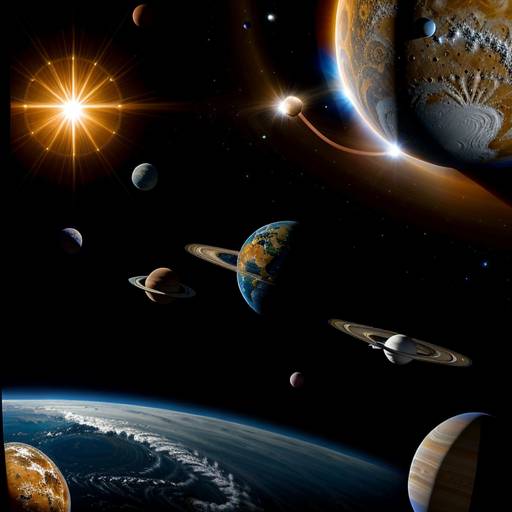
In this 4th-grade science lesson, students will explore the solar system and learn about the individual planets and space exploration. The lesson begins with an engaging discussion to assess prior knowledge and introduces key concepts about the solar system, including the order of the planets and their main characteristics.
Following direct instruction, students will work in small groups to research a specific planet using provided fact cards and model representations. Each group will prepare a short presentation to share interesting facts about their planet with the class. This collaborative activity encourages teamwork and enhances communication skills.
The lesson concludes with a reflective discussion where students can express what they learned. To reinforce their understanding, students will complete a "Planet Journal" worksheet to document information about the planets. Assessment will focus on group participation, presentation clarity, and the completion of the journal. Optional extensions include creating a model of a favorite planet or exploring space-related resources further, while modifications are provided to ensure all students can engage meaningfully with the content.
In this 1st grade Language Arts lesson plan, students will enhance their reading comprehension skills by identifying the main idea and key details of a story through engaging discussions and interactive activities. The lesson begins with a read-aloud of a selected story, during which students are encouraged to participate by predicting events and discussing the plot. After reading, the class will collaboratively explore the main idea and supporting details, which will be documented on the whiteboard. Students will then create their own Story Maps, where they identify the main idea and key details while illustrating their favorite parts of the story. The lesson culminates in a sharing session, allowing students to present their Story Maps to the class. Assessment focuses on participation and the clarity of the completed Story Maps, with differentiation strategies to support varying learning needs. The lesson concludes with a summary of the importance of stories and reading. For follow-up, students will select another story to create their own Story Map for future sharing.
In this 2nd grade social studies lesson, students will explore the fundamental concepts of maps and geography, focusing on elements such as symbols, legends, and compass roses. The lesson begins with a warm-up discussion where students share their prior knowledge about maps, followed by an examination of various map examples. Through guided practice, the class collaboratively creates a simple map of their classroom, developing a legend to represent different features. Students then independently design their own maps of familiar places, incorporating symbols and legends. The lesson concludes with a sharing session, where students present their maps to the class and reflect on the significance of maps in navigating the world around them. Assessment will be based on participation during activities and the clarity of the symbols and legends in their maps. The lesson also includes potential extensions and adaptations to cater to varying student needs.
In this 3rd-grade social studies lesson plan, students will explore the concepts of geography and maps through interactive discussions and hands-on activities. The objectives include identifying key components of maps, understanding different types of maps, and creating their own simple maps. The lesson begins with an engaging introduction to maps, followed by group activities where students examine various map types and present their findings. For the independent activity, students will draw a map of their classroom or school, incorporating essential elements such as the title, legend, scale, and compass rose. The lesson concludes with a gallery walk, allowing students to showcase their work and provide feedback to peers. Assessment will focus on participation, the completeness and creativity of the maps, and a reflection quiz to reinforce learning. Differentiation strategies are included to support diverse learning needs, and extension activities are suggested for further exploration of geography and mapping skills.