
Filters
Level
Grade
Subject
Subject Area
Subject Topic
Standard(s)
Audience
Keyword
DurationMinutes
Elementary School Lesson Plans


In this 4th-grade science lesson, students will explore the concepts of forces and motion, specifically focusing on push and pull. The lesson begins with an engaging discussion about the movement of objects in their environment, followed by a clear explanation of different types of forces and their effects, including the role of friction.
Students will participate in a hands-on experiment where they will work in small groups to test how different forces influence the distance that a small ball or toy car travels down a ramp. By adjusting the angle of the ramp and adding weights, they will observe and record their results, which will promote understanding of the relationship between force and motion.
The lesson culminates in a class discussion where students share their findings and reflect on their learning. Through this interactive approach, they will develop a foundational understanding of physical forces and their implications in everyday situations, while also honing their data collection and analytical skills. Assessment will be based on observation during activities, worksheet completion, and participation in discussions. Extensions are provided for students who wish to explore further challenges related to forces and motion.

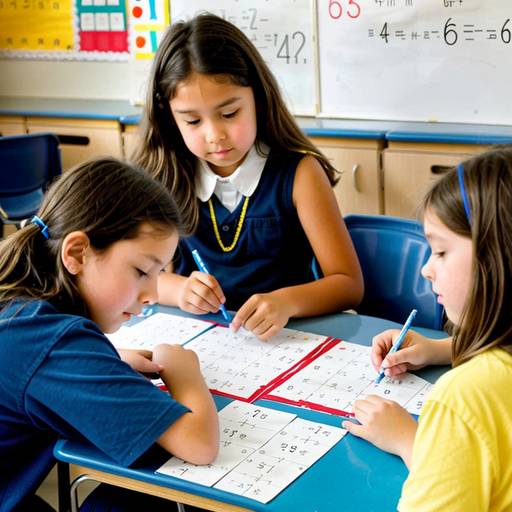
In this 4th-grade math lesson, students will focus on understanding and subtracting fractions with like denominators. The session begins with a brief review of fractions, including their components and visual representations using fraction circles. Students will learn the process of subtracting fractions through direct instruction and guided practice involving visual aids. After working collaboratively on a worksheet, they will have the opportunity to engage in a hands-on activity using real-world objects, such as pizza slices or fruit pieces, to act out fraction subtraction problems. The lesson concludes with a recap of the key concepts, followed by individual assessments through completed worksheets. To accommodate different learning needs, the lesson includes extensions for advanced learners and additional support for those who require it. Overall, this lesson aims to provide an interactive and practical approach to mastering the subtraction of fractions.

This 5th-grade math lesson focuses on teaching students how to subtract fractions, both with like and unlike denominators. The lesson begins with a warm-up activity that reviews basic fraction concepts and gathers students' prior knowledge. The teacher then demonstrates the process of subtracting fractions by explaining and illustrating the steps for both like denominators, where students simply subtract the numerators, and unlike denominators, where they must find a common denominator.
Following direct instruction, students participate in a hands-on activity using manipulatives to visualize the subtraction of fractions, enhancing their understanding through physical representation. Guided practice involves solving example problems collaboratively, allowing students to engage with the material and ask questions. Independent practice is facilitated through worksheets that provide varied problems for students to solve individually.
The lesson concludes with a review of key concepts and an exit ticket, where each student solves a final subtraction problem to demonstrate their understanding. Throughout the lesson, the teacher assesses student comprehension through observation and reviews of the completed assignments, ensuring that differentiation strategies are employed to support both advanced learners and those who may struggle. Reflection on the lesson's effectiveness is encouraged to inform future instruction.
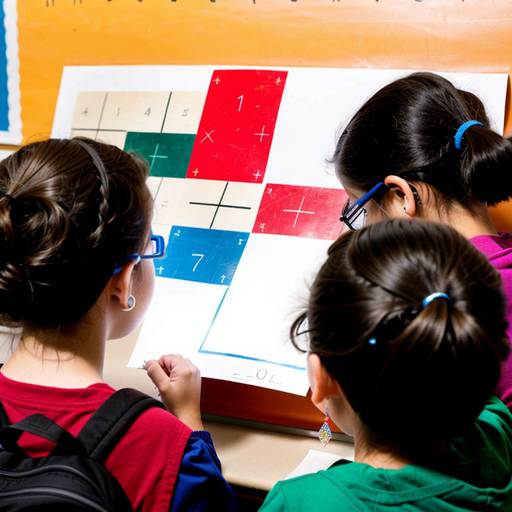
In this 5th-grade math lesson, students will explore the concept of fractions and learn how to add fractions with like denominators. The session begins with a review of what fractions represent, using manipulatives for visual support. Direct instruction will demonstrate the addition process, emphasizing the simplicity of adding numerators while keeping the denominator consistent. Students will engage in guided practice with worksheets, followed by independent practice with increasingly challenging problems.
To reinforce their understanding, students will participate in a creative activity where they create colorful "Fraction Wheels," visually representing different fractions and their sums. The lesson concludes with a review of key concepts, encouraging reflections on learning and any challenges faced. Assessment will be conducted through observation of student work and the creative projects. Modifications will be available to accommodate varying skill levels, while extensions will provide opportunities for further exploration of fractions in future lessons.

This lesson plan focuses on teaching 5th-grade students how to multiply fractions and apply this knowledge in practical situations. The lesson begins with a review of fractions, followed by direct instruction on the multiplication process, emphasizing how to multiply the numerators and denominators and simplify the resulting fractions. Students engage in guided practice using fraction circles or tiles to understand the concept visually in pairs.
Additionally, real-world application is integrated into the lesson as students work in small groups to solve problems based on scenarios such as cooking and sharing, which helps them see the relevance of fractions in everyday life. The lesson concludes with a review and assessment of understanding through worksheets and group presentations. Extensions are provided for advanced learners, ensuring that all students remain engaged and challenged throughout the learning experience. Feedback and reflection on the lesson's effectiveness are encouraged for future improvement.

This math lesson plan for 5th-grade students focuses on introducing and practicing the concept of dividing fractions. The lesson aims to enhance students' understanding of fractions and demonstrate how to apply the "Keep, Change, Flip" method when dividing one fraction by another.
The session begins with a review of fractions and their importance in everyday life, followed by direct instruction where the method is explained and demonstrated through example problems on the whiteboard. Students then engage in guided practice, collaboratively solving additional fraction division problems.
For independent practice, students complete worksheets featuring a range of fraction division problems, including word problems that encourage critical thinking. The lesson concludes with a review of key concepts, an invitation for questions, and a quick exit ticket assessment to gauge student understanding. Follow-up activities include homework assignments that involve creating original word problems and a planned review game in the next class to reinforce the material learned. Adjustments for varying student needs and abilities are also suggested.

In this 5th-grade math lesson, students will explore the concept of subtracting fractions, focusing on problems with like denominators. The lesson begins with a warm-up discussion about fractions in everyday life, followed by a hands-on demonstration using manipulatives to visualize the subtraction process. Students will then engage in guided practice through a worksheet featuring fraction subtraction problems, working collaboratively in pairs to reinforce their understanding.
To deepen their engagement, a creative hands-on activity allows students to represent fractions as toppings on a paper plate pizza, where they will create their own subtraction problems and share them with peers. The lesson wraps up with an exit ticket that assesses individual understanding of the content. Throughout the lesson, observation and informal assessments will inform future instruction, catering to diverse learning needs and providing opportunities for extension and modification as necessary.
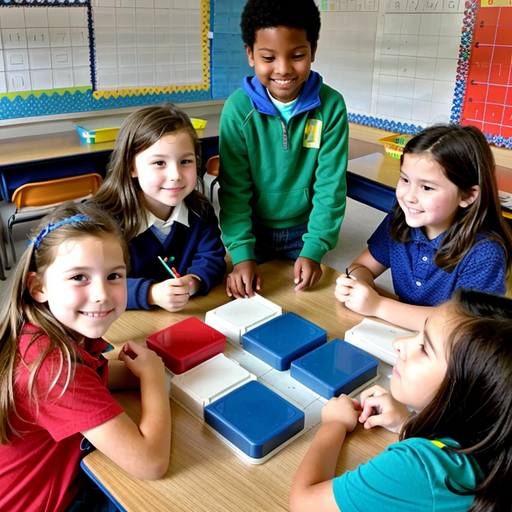
In this 4th-grade math lesson, students will explore the concept of subtracting fractions with like denominators. The lesson aims to ensure that students grasp the foundational steps for subtracting fractions, including keeping denominators the same, subtracting the numerators, and simplifying the resulting fraction when possible.
The lesson begins with a review of fractions to gauge prior knowledge, followed by direct instruction that includes a step-by-step explanation and a visual demonstration using fraction circles or strips. During guided practice, students work on worksheets with fraction subtraction problems, allowing for collaboration and peer support as they practice the concepts.
Students then engage in a hands-on activity in small groups where they tackle real-world scenario cards that require them to apply their understanding of subtracting fractions. They create visual representations of these problems using fraction materials, facilitating a deeper understanding through tactile learning.
The lesson concludes with a review of key concepts, and students share their group scenarios with the class. An exit ticket activity allows students to individually demonstrate their understanding by writing and solving a subtraction fraction problem. The lesson incorporates differentiation to support diverse learning needs and emphasizes observation and assessment to gauge student comprehension and engagement.
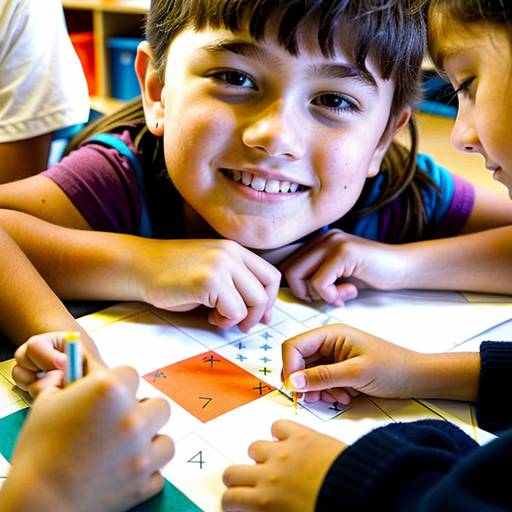
In this 4th-grade math lesson, students will explore the concept of fractions, focusing on adding fractions with like denominators. The lesson begins with an engaging discussion about real-life examples of fractions, such as pizza or cake slices, followed by direct instruction on adding fractions using visual aids like fraction circles or bars.
Students will participate in guided practice by solving addition problems together on the whiteboard, allowing for collaborative learning and expression of thought processes. Afterward, they will complete worksheets independently, reinforcing their understanding through practice problems and real-life applications drawn from a story that features fraction scenarios.
The lesson concludes with a review session, where students share their learnings and questions, solidifying their grasp of the material. Assessment will be ongoing, focusing on student participation in activities, worksheet accuracy, and reflections captured in exit tickets. Overall, the lesson aims to make the concept of adding fractions accessible and relevant to students' everyday experiences while fostering a supportive learning environment.
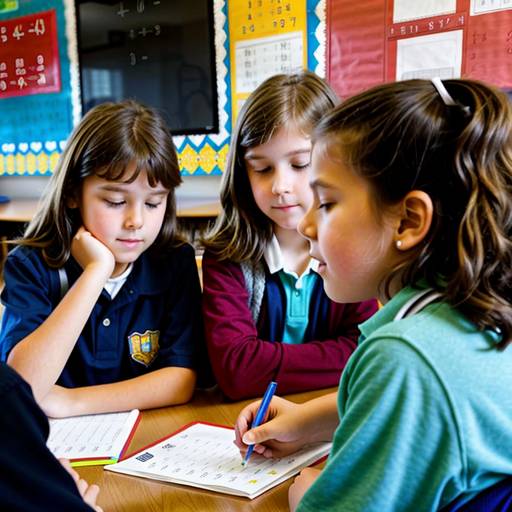
This 4th-grade math lesson focuses on helping students understand fractions and apply their knowledge to solve fraction-related word problems. The objective is for students to grasp the concept of fractions as parts of a whole and to effectively tackle various word problems involving fractions.
The lesson begins with an engaging introduction, using real-life examples like pizzas to spark interest and prompt discussion about fractions. Direct instruction follows, where the teacher explains the components of fractions and demonstrates how to solve word problems with visual aids.
During guided practice, students work in small groups to collaboratively solve fraction word problems, facilitating peer learning and support. Afterward, they complete an independent worksheet that reinforces the concepts covered in class.
The lesson concludes with a sharing session, where students present their solutions and reasoning, fostering a deeper understanding of the material. Assessment is conducted through monitoring group discussions, reviewing worksheets, and evaluating participation in class discussions. Extensions and challenges are available for advanced learners, while additional support is offered for those who need it. A homework assignment further solidifies their understanding by allowing practice at home. Overall, the lesson aims to create an engaging learning experience that connects concepts of fractions to real-world applications.