
Filters
Level
Grade
Subject
Subject Area
Subject Topic
Standard(s)
Audience
Keyword
DurationMinutes
Elementary School Lesson Plans

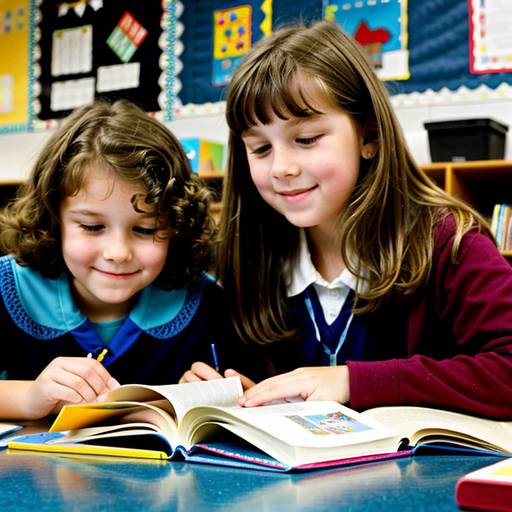
In this 2nd-grade Language Arts lesson, students will explore three main genres of literature: fiction, non-fiction, and poetry. The lesson begins with an engaging discussion to define genres and identify their characteristics. Students are then divided into small groups to read excerpts from a selection of mixed-genre books and discuss their thoughts, ultimately sharing their findings with the class.
For independent practice, each student will select a book, complete a "Genre Detective" worksheet, and illustrate a favorite part of the book. This will help reinforce their understanding of the genres and encourage them to think critically about the readings. The lesson concludes with a sharing session, where students present their choices and review the key characteristics of each genre. Assessment will focus on group participation and the completed worksheets, with opportunities for further exploration of reading genres through a "Genre of the Week" display and creative writing assignments. Overall, this lesson aims to foster a love for reading and the understanding of various literary forms.

This first-grade science lesson focuses on exploring the physical properties of everyday materials. Students will begin by discussing the concept of matter and the three states: solids, liquids, and gases. Through interactive demonstrations, they will learn about the properties that distinguish these states, such as shape and texture.
In a hands-on activity, students will work in small groups to investigate a selection of everyday objects using magnifying glasses and measuring tools. They will record their observations about the properties of these materials, fostering teamwork and discussion.
The lesson will conclude with each group sharing their findings with the class, reinforcing their learning. An exit ticket will assess student understanding through a drawing of an object and its properties. Extension activities include exploring objects at home and conducting simple experiments related to states of matter. Overall, the lesson aims to engage students in discovering the characteristics of matter in a fun and interactive manner.
In this Kindergarten science lesson, students will engage with the fundamental concept of matter, specifically exploring its three states: solid, liquid, and gas. The lesson begins with a discussion to define matter, accompanied by visuals to illustrate the different states. Students are then organized into small groups to participate in a hands-on activity where they sort various objects into the three categories based on their properties.
Following this, the students conduct simple experiments to observe the characteristics of solids and liquids using water and rocks, and explore gases by inflating balloons. They create solid shapes with playdough, reinforcing their understanding of the distinctions between the different states of matter.
To conclude, students complete a worksheet that reinforces their ability to identify types of matter, followed by a reflection discussion to share their insights. The lesson incorporates hands-on activities, visual aids, and collaborative learning, fostering engagement and curiosity about the physical properties of the world around them. Extensions and modifications are also included to cater to diverse learning needs, ensuring all students have the opportunity to participate and learn effectively.


In this 5th-grade art lesson plan, students will explore the world of fiber arts by learning about various techniques such as weaving, embroidery, and tapestry. The lesson begins with an engaging discussion about the cultural significance of fiber art and the impact of texture and color in artistic expression. Students will create inspiration sketches to plan their unique woven pieces and will construct their own cardboard looms.
Hands-on weaving will involve threading and interlacing different yarn colors and textures to create visually appealing designs. Students will have the opportunity to personalize their woven artworks by adding decorative elements, like fabric scraps or felt.
The lesson culminates in a mini-gallery walk where students can showcase their creations, share their artistic choices, and reflect on their experiences. Assessment will focus on participation, the creative process, and written reflections that demonstrate an understanding of fiber arts. Extensions may include inviting a local fiber artist for a demonstration and exploring eco-friendly art materials. This lesson promotes creativity, fine motor skills, and personal expression through the art of fiber.
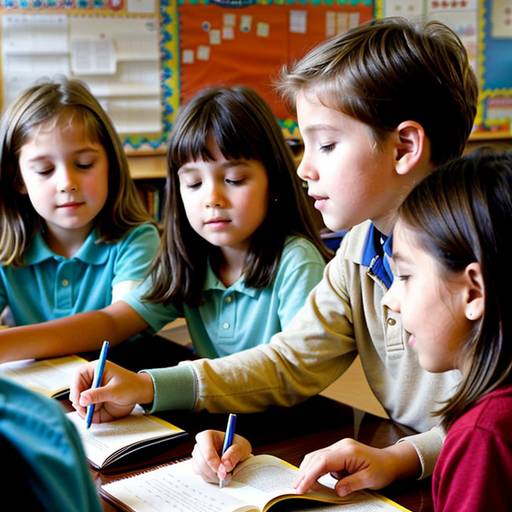
In this 1st Grade Language Arts lesson, students will embark on an engaging exploration of synonyms. The class will begin with a lively discussion to introduce the concept of synonyms, using simple terms and examples. Students will participate in group activities where they will work with word cards to identify synonyms and use them in sentences. This collaborative effort will encourage creative thinking and enhance their vocabulary.
As independent practice, students will complete worksheets that challenge them to fill in the blanks with appropriate synonyms, reinforcing their understanding of the concept. They will also have the opportunity to illustrate their sentences, fostering creativity.
The lesson will culminate in a review of key concepts, with students sharing their favorite synonyms as an exit ticket. Assessment will be based on participation in discussions, completion of worksheets, and retention of vocabulary demonstrated through the exit tickets. Modifications will be made to support diverse learners, and an optional extension will encourage students to continue expanding their synonym knowledge at home. Overall, the lesson aims to make learning about synonyms fun and interactive while building essential language skills.

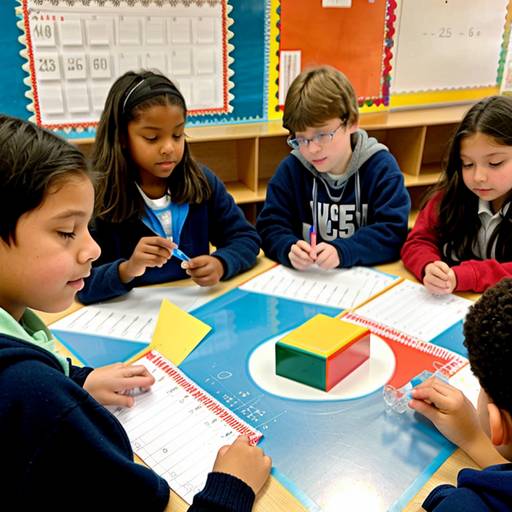
In this 5th-grade math lesson, students will explore the concepts of measurement and weight through engaging hands-on activities. They will learn to use various tools such as digital scales, rulers, and measuring tapes to accurately measure and weigh different objects. The lesson begins with a discussion on the importance of measurement in everyday life, followed by direct instruction on using measurement tools and converting between different units (grams, kilograms, ounces, and pounds).
Students will then work in small groups to measure and weigh assigned items, recording their findings on worksheets. After grouping activity, they will perform conversions and solve related word problems based on their measurements. The lesson concludes with group presentations where students share their observations and reflect on their learning experience. Assessment will be based on their worksheets and participation in group discussions, while extensions and adaptations are available for varying student needs. Overall, the lesson aims to deepen students’ understanding of measurement through collaboration and practical application.
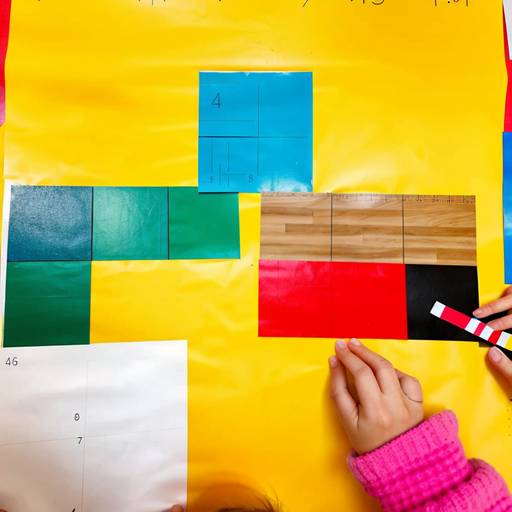
In this 4th-grade math lesson, students will explore the concepts of measurement and perimeter through engaging hands-on activities. The lesson begins with a discussion on the importance of measurement and introduces perimeter as the distance around shapes, including the relevant formula for rectangles. Students will practice measuring various classroom objects in small groups during a scavenger hunt, where they will calculate the perimeter based on their measurements. Following the scavenger hunt, each student will draw a rectangle on graph paper, measure its dimensions, and determine its perimeter. The lesson concludes with a review of key concepts, allowing students to share their findings. Assessment will be based on observation during activities and the collection of worksheets and drawings. Extensions and adaptations are included to cater to diverse learning needs, ensuring that all students can engage meaningfully in the exploration of measurement and perimeter.

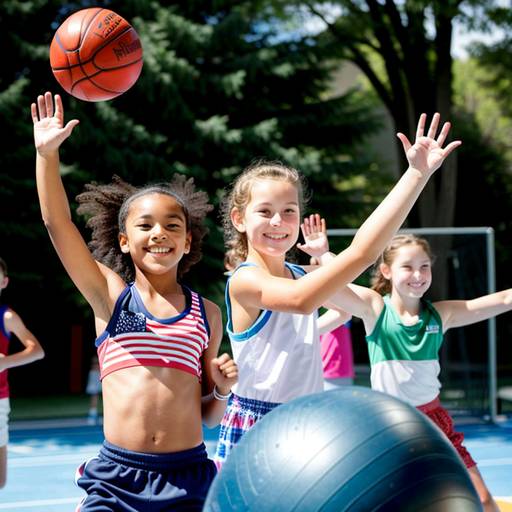
This 4th-grade physical education lesson focuses on teaching students about the importance of fitness and flexibility through engaging activities. The lesson begins with an energizing warm-up that includes dancing to upbeat music, followed by a discussion highlighting the benefits of flexibility.
Students then rotate through four interactive stretching stations, targeting different muscle groups—upper body, lower body, core, and dynamic stretching—while working in small groups. After completing the stations, the class participates in a "Flexibility Challenge," where they hold various static stretches together while encouraging each other.
The lesson concludes with a cool-down routine, including deep breathing and gentle stretches, followed by a reflection session where students share their newfound knowledge about flexibility and ways to practice it at home. Teacher observation and student reflections serve as assessments of their understanding and engagement throughout the activities. Adaptations are provided to ensure all students can participate comfortably. The lesson emphasizes the significance of flexibility in overall fitness and encourages students to incorporate stretching into their daily lives.

In this 5th-grade physical education lesson plan, students will explore the importance of fitness and strength for overall health through engaging activities. The lesson begins with a warm-up that includes dynamic stretching and a fitness circle to prepare their bodies for exercise.
Students will be introduced to various strength-building exercises, including body-weight exercises like push-ups, squats, lunges, and planks, as well as resistance band exercises. Following the instructional component, students will participate in a series of activity stations, rotating every five minutes to practice different strength exercises in groups.
To conclude the lesson, students will engage in a cool-down with static stretching and a reflective discussion about their experiences and insights gained from the activities. Throughout the lesson, students will be observed for form and participation, and safety measures will be emphasized to prevent injuries. Extension activities will encourage students to set personal fitness goals and create their own workout routines to share with others.
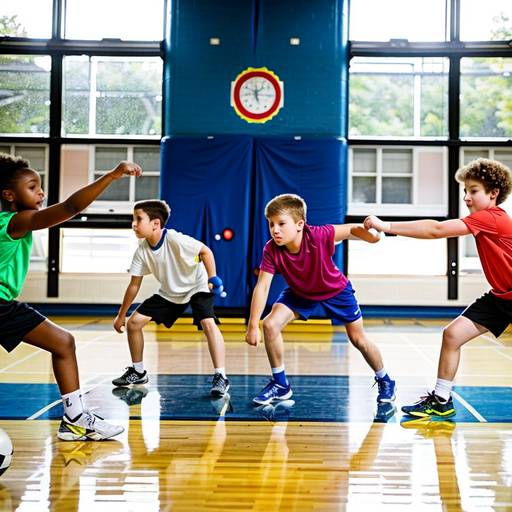
This lesson plan for 3rd grade students focuses on physical fitness and strength training through engaging activities. The objectives include helping students understand the importance of fitness and strength in their daily lives. The lesson begins with a discussion about fitness concepts, followed by a dynamic warm-up to prepare the students for exercise.
Students participate in a rotation of five strength-focused stations, including bodyweight squats, push-ups, planks, resistance band exercises, and fun animal walks, allowing them to practice and improve their strength in various ways. After the activities, a cool-down session incorporates gentle stretches and reflections on the day's learning. The lesson encourages students to share their experiences and consider ways to stay active outside of school, promoting a lifelong appreciation for physical health and fitness. Assessment is informal, based on observations during activities and discussions during the wrap-up. Modifications ensure inclusivity for all fitness levels, and extensions encourage personal goal-setting related to fitness.