
Filters
Level
Grade
Subject
Subject Area
Subject Topic
Standard(s)
Audience
Keyword
DurationMinutes
Elementary School Lesson Plans
In this 4th-grade technology lesson, students will gain an understanding of technology and its various tools used in everyday life. The lesson begins with a discussion on the definition of technology, followed by a video showcasing different tools. Students will be divided into small groups to explore assorted technology tools, discussing their uses and problem-solving capabilities. Each group will present their findings to the class, fostering an engaging discussion about the impact and relevance of these tools. To conclude, students will reflect in their journals on what they found most interesting and predict future technological changes. The assessment will be based on participation, group presentations, and individual reflections. Extensions include a homework assignment involving interviews about technology use at home and a planned "Tech Show and Tell" event. Overall, the lesson emphasizes the importance of technology in our lives and encourages students to embrace new tools for learning and growth.
This lesson plan for 5th-grade students introduces the concept of technology and its significance in everyday life while emphasizing technological innovations and the inventors behind them. Students will begin by defining technology and exploring its various forms through a brief discussion and a short video presentation. They will then learn about key technological innovations, focusing on notable inventions and their impact on society.
Using a timeline, the class will discuss the evolution of specific technologies and how these advancements have altered daily activities. In groups, students will identify a real-world problem and brainstorm a simple technological solution, which they will present to the class. The lesson concludes with a recap and a homework assignment that encourages students to envision future innovations. Assessment will be based on participation, group presentations, and the quality of the homework assignment. Adaptations and extensions are included to address diverse learning needs and to encourage further exploration of current technological advancements.

This 2nd grade Language Arts lesson focuses on enhancing reading comprehension through engaging activities centered around a selected picture book. Students begin by predicting the story's content based on the cover and illustrations. Following a read-aloud session, they participate in a group discussion to identify key story elements, such as characters, setting, and main events. They practice reading strategies—prediction, visualization, and summarization—while reading independently or in pairs. The lesson concludes with students sharing their thoughts and learning experiences, reinforcing the importance of these strategies in understanding and enjoying literature. Assessment is conducted through observations and reviewing students' reflections, with differentiated support provided as needed. Extensions include creative activities such as drawing scenes from the story and writing summaries. Overall, the lesson aims to foster confidence and skill in young readers.
This lesson plan is designed for 3rd-grade students to help them develop essential internet skills and understand the basics of search engines. The lesson begins with a discussion about the internet and its purpose, followed by direct instruction on how search engines work, the importance of keywords, and evaluating the credibility of sources.
Students engage in guided practice by teaming up to explore research topics using search engines, noting interesting facts they find. They then participate in an independent search challenge to further develop their skills in finding and recording information. The lesson culminates in a recap of key points and prepares students for the next topic of internet safety.
Assessment is based on observation during activities and the accuracy of the information gathered. Modifications are included to support diverse learners, ensuring that all students can participate and succeed. Overall, the plan emphasizes effective information retrieval, critical thinking, and responsible online exploration.

In this 5th-grade social studies lesson, students will explore the key elements and purposes of maps, including types such as political, physical, and thematic. The class will begin with a discussion about the importance of maps, followed by direct instruction on essential map features such as title, legend, scale, compass rose, and latitude and longitude. Students will then create their own simple maps of their local area using graph paper, incorporating all required elements. During guided practice, they will work in pairs to share their maps and explain their features. The lesson will conclude with presentations from a few students and a reinforcement of the role maps play in everyday life. Assessment will involve evaluating the maps based on creativity and inclusion of necessary elements, along with a quiz on the concepts covered. Extensions may include exploring digital mapping tools and further research on maps from different countries. Overall, the lesson aims to build students' understanding of geography through interactive and creative activities.

In this music appreciation lesson for 3rd graders, students will explore various musical genres and styles from around the world. The session begins with a discussion on the role of music in different cultures and students' personal favorites. They will listen to five audio clips representing different genres, including classical, jazz, folk, and contemporary music, while taking notes on instruments, emotions, and cultural origins.
Following the listening activity, the class will engage in a discussion to share observations and pinpoint the geographical backgrounds of each piece on a world map. To foster creativity, students will then create artwork inspired by the music they enjoyed most, reflecting their feelings and imaginations. The lesson concludes with presentations of their artwork, reinforcing their connection to the music. Assessment will focus on participation, worksheet completion, and engagement in the creative activity, encouraging students to further explore global music.
In this 1-hour lesson plan for 3rd-grade students, the focus is on developing essential internet skills and online research techniques. The session begins with an engaging introduction that prompts students to share their knowledge about the internet and its functions. Following this, students are taught important internet safety guidelines to ensure they navigate online spaces securely.
After discussing reliable sources and how to use search engines effectively, students are divided into small groups to conduct research on pre-selected topics such as animals, space, or inventions. Utilizing computers or tablets, they gather information, documenting their findings on a structured worksheet. This collaborative activity encourages teamwork as students explore various resources.
The lesson concludes with students sharing interesting facts they discovered, reinforcing the key concepts of safe browsing and effective research. Assessment strategies include monitoring participation and reviewing completed worksheets. Extension activities are suggested to further enhance students' understanding and application of their learned skills. Overall, this lesson effectively combines technology education with critical thinking and collaborative learning.
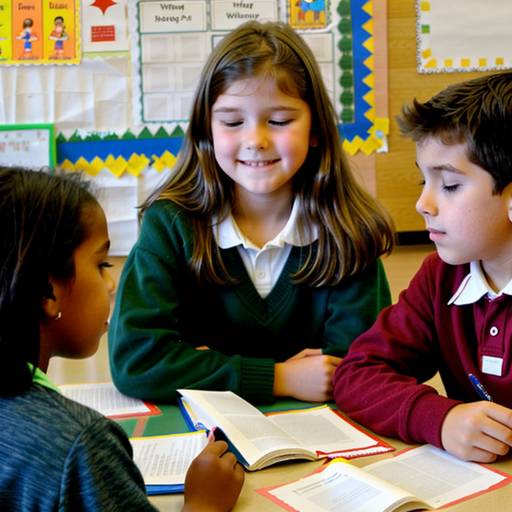
This 3rd-grade language arts lesson focuses on enhancing students' vocabulary skills through the use of context clues. The lesson begins with a discussion on strategies for deciphering unfamiliar words. Students are introduced to new vocabulary words and participate in a read-aloud activity where they identify and infer meanings based on surrounding text. Guided practice involves working in pairs to complete worksheets that encourage them to explore context clues in various sentences. For independent practice, students create their own sentences using the vocabulary words, incorporating context clues to clarify meanings. The lesson concludes with a sharing session where a few students present their sentences, reinforcing their understanding of the concept. Throughout the lesson, assessment is conducted through observation and the evaluation of worksheets and sentence constructions. Accommodations are provided for different learning needs, ensuring all students can effectively engage with the material.

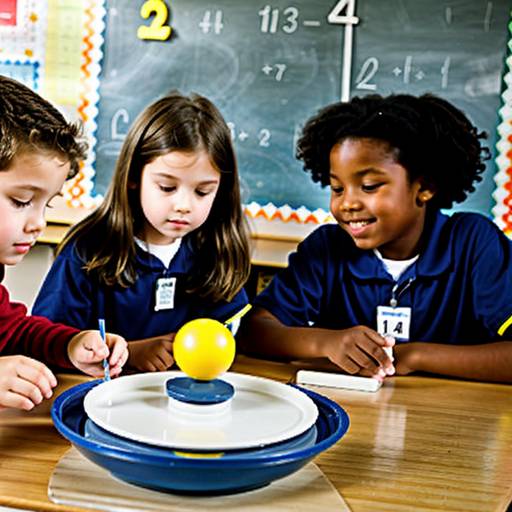
In this 2nd-grade math lesson, students will explore the concepts of measurement and weight using balance scales. The lesson begins with a discussion about weight, followed by an introduction to balance scales and how they work. Students will then engage in group activities where they estimate the weight of various classroom objects and record their predictions. Afterward, they will use the balance scale to measure the actual weight of these objects, noting the results on worksheets. The lesson culminates in a group discussion where students share their findings, reflect on their estimations, and learn about the importance of weight in everyday life. The lesson promotes hands-on learning, teamwork, and critical thinking as students compare and analyze the weights of different items. Assessment will focus on the accuracy of their measurements and participation during activities, with extensions available for students who grasp the content quickly.
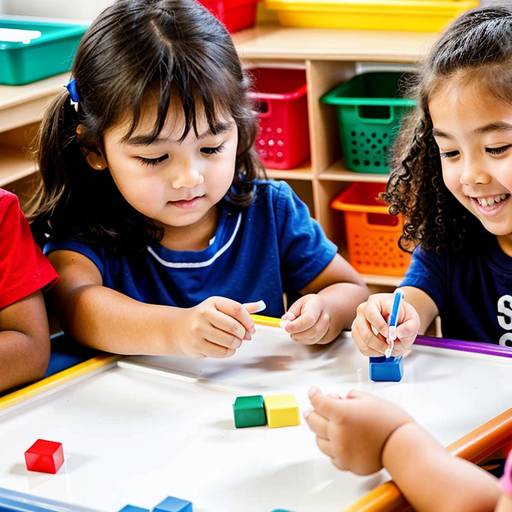
This Kindergarten math lesson focuses on measurement and weight, allowing students to explore and compare the weights of various objects through a hands-on approach. The lesson begins with an interactive discussion about weight, introducing key vocabulary such as heavy, light, balance, and scale. Students are then divided into small groups, each provided with balance scales and an assortment of classroom objects to weigh. As they experiment, they predict and observe which items are lighter or heavier, using the vocabulary to describe their findings.
Following the group activity, the class engages in a sharing session where each group presents their observations, reinforcing the concept of balance and providing a platform for discussion about their discoveries. The lesson wraps up with a reflective conversation and a fun chant to reinforce the vocabulary learned. Assessment is based on student participation, engagement, and the accuracy of their recorded observations. An optional extension activity encourages further exploration with a "Weight Hunt," where students classify additional items as heavy or light. Overall, the lesson aims to build foundational skills in measurement and weight through active participation and collaborative learning.