
Filters
Level
Grade
Subject
Subject Area
Subject Topic
Standard(s)
Audience
Keyword
DurationMinutes
Elementary School Lesson Plans

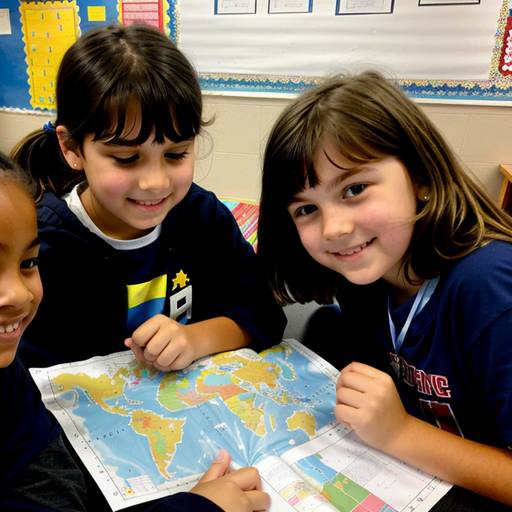
In this 3rd-grade social studies lesson focused on geography and maps, students will explore the essential components of maps, such as the legend, title, compass rose, and scale. The lesson begins with an engaging discussion about maps, where students share their experiences and observations. Using printed examples, the teacher demonstrates key map features and symbols.
During guided practice, students work in small groups to create a map of their classroom or playground, incorporating the components learned. Each group presents their map to the class, explaining their symbols and choices. Following this, students independently design their personal map of a familiar location, including essential map elements and writing a reflective paragraph about the importance of maps in daily life.
The lesson concludes with a review of key concepts and an exit ticket for each student to share their newfound knowledge. Assessment is conducted through group presentations and individual map evaluations. Extension activities may be provided for advanced learners, while additional support is available for those needing assistance. Overall, students will gain a foundational understanding of maps and their significance in navigating our world.

This lesson plan is designed for third-grade students to explore the solar system and learn about the planets that orbit the sun. It begins with an engaging video or animation to capture students' interest, followed by a discussion about their observations of the night sky. The teacher will introduce each planet, highlighting key characteristics and the concepts of orbit and gravity.
Students will participate in guided activities where they work in groups to create fact cards for assigned planets, including drawings and interesting information. They will also build a scale model of the solar system using Styrofoam balls or balloons to represent the planets and string for their orbits.
To reinforce learning, students will complete reflective journal entries about their favorite planet. The lesson concludes with sharing insights and reviewing the order of the planets. Assessment will be based on group interactions and journal reflections. Extensions and adaptations are included to cater to various learning needs, ensuring an engaging and informative experience centered around astronomy.
This lesson plan focuses on helping 5th-grade students explore and understand the solar system. Over two class periods, students will learn about the eight planets and other celestial bodies, including their sizes, distances from the Sun, and unique features. The lesson begins with an engaging video and a presentation that covers key aspects of each planet. Students will also participate in a scaled-down model activity to visualize distances between planets.
In the second class, students will present their research on a chosen planet, fostering collaboration and interactive learning. After presentations, they will engage in a hands-on creative project, crafting models of their assigned planets using Styrofoam balls and paint, emphasizing their characteristics. The lesson culminates in a group discussion to reflect on their learning and share insights. Assessment will be based on student participation, presentation quality, and model creativity, with an extension option for further exploration through field trips or astronomy apps. The overall goal is to deepen students’ understanding of the solar system and their place within it.
In this 4th grade science lesson, students will explore the solar system and its planets through engaging discussions, multimedia resources, and hands-on activities. The lesson begins with an introduction to the solar system, where students share their prior knowledge and watch a video to spark interest. Following this, the teacher presents detailed information about the eight planets, using visual aids to highlight their unique features and the concept of orbits around the sun.
Students will then participate in an interactive activity where they represent different planets in groups, showcasing their assigned planet's characteristics to the class. They will also simulate orbits around the sun in a movement exercise, reinforcing their understanding of how planets travel in space.
To conclude the lesson, students will reflect on their learning through discussion and by completing a labeled diagram of the solar system. Assessment will be based on participation in activities and the accuracy of the diagrams. Extensions and adaptations are included to enhance learning opportunities and support diverse learners. Overall, this lesson aims to instill a fascination with astronomy and provide foundational knowledge about our cosmic neighborhood.
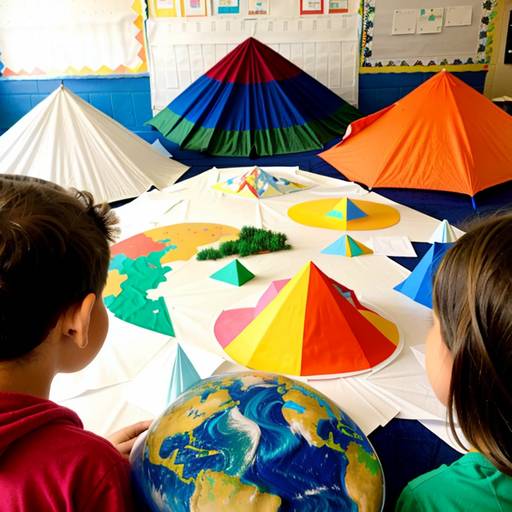
This lesson plan for 3rd graders focuses on geography and landforms, aiming to help students identify and understand various types of landforms, including mountains, valleys, plains, and rivers. The lesson begins with an interactive discussion about geography, where students share what they know about landforms. It then includes a presentation that defines each landform and discusses its importance to the environment and human life.
Students engage in a hands-on activity where they create their own maps using colored pencils to illustrate different landforms creatively. They work in small groups matching flashcards with definitions and pictures, reinforcing their learning through collaboration. The lesson concludes with a fun game of “Landform Bingo,” allowing students to test their knowledge in an engaging way.
Assessment is conducted through observation during activities and the evaluation of completed maps. To extend learning beyond the classroom, students are assigned a homework task to find pictures of landforms to share with their peers in the next session. Overall, the lesson promotes active participation, teamwork, and creativity while deepening students' understanding of landforms and their significance.
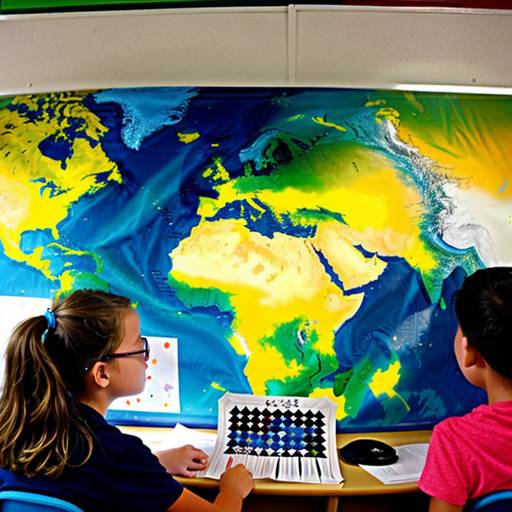
This 4th-grade social studies lesson focuses on exploring geography and landforms. Students will begin by watching a video showcasing various landforms, followed by a discussion about their characteristics and significance. They will learn about different types of landforms, including mountains, hills, plains, valleys, plateaus, and deserts, along with the processes that form them.
In small groups, students will create models of assigned landforms using modeling clay or playdough, promoting teamwork and creativity while reinforcing their understanding. Each group will then present their model to the class, explaining its features and importance. Students will also label and illustrate a blank map of their locality with the landforms they learned about.
The lesson wraps up with a review of what students have discovered and emphasizes the importance of understanding landforms in the context of their own environment. Assessment will include observational notes during group activities and an evaluation of the maps created by students. Extensions may involve further independent research on specific landforms and their cultural impact. This engaging lesson blends visual, tactile, and collaborative activities to enhance students' understanding of geography.

In this 2nd-grade Language Arts lesson, students will explore the concept of expository writing by focusing on their favorite animals. The lesson begins with a discussion on what expository writing is, highlighting its purpose to inform and explain. Students will learn how to structure their writing, incorporating an introduction, body paragraphs containing facts, and a conclusion.
After modeling the writing process, students will engage in guided practice to brainstorm and organize their thoughts using a graphic organizer. They will then write their expository paragraphs independently, focusing on clarity and organization. The lesson concludes with students sharing their writing with the class, fostering peer feedback and reinforcing their understanding of the genre. Throughout the lesson, there will be opportunities for assessment and differentiation to support diverse learners. Overall, students will develop their expository writing skills while expressing their personal interests.
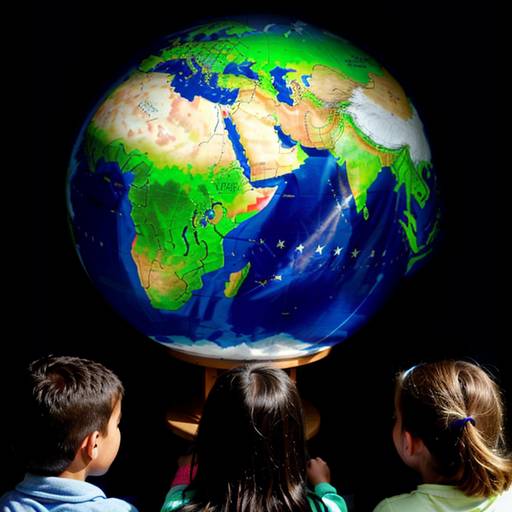
In this 1st-grade social studies lesson, students will embark on an exploration of various countries around the world, focusing on geography and cultural diversity. The lesson begins with a brief introduction to the concept of countries and geography, using a world map to highlight their own country. Educators will introduce selected countries, providing interesting facts and showing picture cards related to each country's flag, traditional clothing, and landmarks.
Students will then engage in a group activity where they locate the discussed countries on a map while discussing what makes each one unique. For the independent activity, each student will select a country of interest and create a poster that includes the country's name, a drawing or picture of a landmark, traditional food or cultural items, and a fun fact.
The lesson concludes with students sharing their posters with the class, fostering a sense of community and appreciation for global diversity. Assessment will be based on observation during the activities and the creativity demonstrated in the poster project. Optional extensions include a "Cultural Day" event, promoting further engagement with the material. The lesson aims to enhance students' understanding of different cultures and the world in which they live.
In this 4th-grade social studies lesson, students explore geography and different countries, aiming to understand cultural diversity and the importance of geography. The lesson spans two class periods. In the first session, students learn about the continents and oceans, and then work in small groups to select a country for research. They gather information about the country's population, capital, language, landmarks, and cultural aspects using various resources.
In the second session, groups create informative posters based on their findings. They present these posters to the class, fostering engagement through questions and discussion. The lesson culminates in a wrap-up discussion that reinforces the concepts learned and highlights cultural appreciation. Assessment focuses on group participation, the accuracy of information, creativity, and engagement during presentations. Optional extension activities include creating a class geography book and considering pen pal exchanges to connect with students globally.
In this 2nd-grade social studies lesson, students will embark on an exploration of different countries and their geographic locations. The lesson begins with a discussion about geography, introducing students to the concept of maps and the significance of understanding various places around the world. Students will be divided into small groups, each assigned a specific country. They will use fact cards to learn about their country's capital, flag, and an interesting cultural aspect, and then locate it on a world map.
Following their research, each group will present their findings to the class, sharing the country’s key information and engaging their peers with questions. The lesson will conclude with a creative activity where students will decorate individual maps with stickers representing the countries discussed. This lesson aims to help students recognize global diversity and develop a basic understanding of world geography while fostering teamwork and presentation skills. Assessment will include observations during group presentations and the evaluation of students' individual maps for accuracy and creativity. Extensions to the lesson may include ongoing exploration of additional countries or personal connections to different cultures.