
Filters
Level
Grade
Subject
Subject Area
Subject Topic
Standard(s)
Audience
Keyword
DurationMinutes
Elementary School Lesson Plans

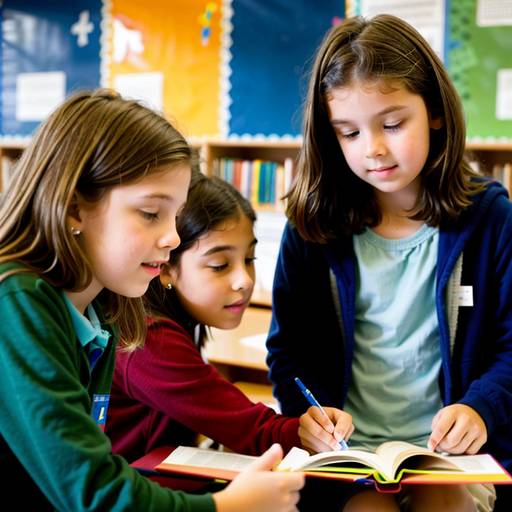
In this 4th-grade Language Arts lesson plan, students will explore effective reading strategies to enhance their comprehension skills. The lesson focuses on two key strategies: predicting and summarizing. It begins with a discussion on various reading strategies and an introduction to the specific focus strategies. The teacher models the use of these strategies by reading a short story aloud, guiding students to make predictions based on the title and illustrations, and crafting a summary together after reading.
Next, students will participate in small groups where they will read different texts, use prediction strategies, and summarize the main points of their readings. Following this collaborative work, students will independently select a text to practice making predictions and summarizing using graphic organizers.
The lesson concludes with a class sharing session, fostering discussion around the predictions and summaries created throughout the lesson. Assessment will be based on group discussions, participation, and the quality of predictions and summaries produced by students. Extensions include creating a “Reading Strategies” poster and introducing additional strategies in future lessons. The teacher will reflect on student engagement and understanding to guide future instruction.

This fourth-grade life science lesson focuses on exploring the major systems of the human body and their functions. Students will begin by sharing their prior knowledge about the human body, followed by an introduction to the six key body systems: skeletal, muscular, circulatory, respiratory, digestive, and nervous systems. Each system's major components and functions will be explained using visuals and simple analogies.
Following the direct instruction, students will be divided into small groups to create informative posters about their assigned body system, highlighting its name, parts, functions, and illustrations. Each group will present their poster to the class, fostering collaboration and communication skills. To reinforce their learning, students will then create a simple 3D model of their system using craft supplies.
The lesson concludes with a class discussion on the interconnectivity of body systems and their importance to overall health. Assessment will involve observing group participation, evaluating posters, and assigning fact sheets for homework. Extensions may include inviting a medical professional to speak about their work with body systems or encouraging research on diseases related to each system. This engaging lesson aims to deepen students’ understanding of human biology while promoting teamwork and critical thinking.

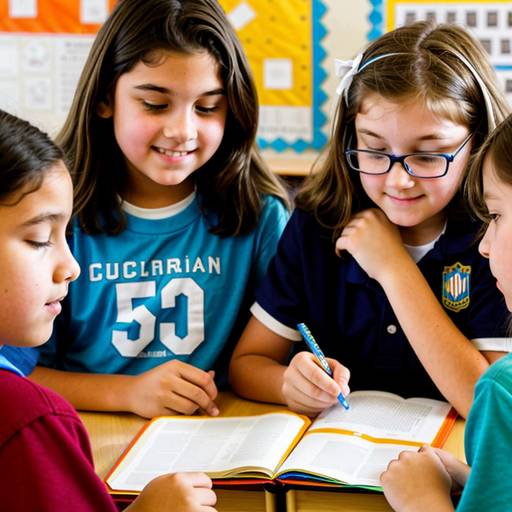
In this 5th-grade social studies lesson, students will explore the concept of community by identifying various roles and responsibilities within it. The lesson begins with a discussion on what constitutes a community and the roles individuals play, followed by a collaborative brainstorming session where students work in small groups to list community roles. After sharing their ideas with the class, students will engage in a discussion highlighting the responsibilities associated with each role.
To reinforce their learning, students will create a visual mural that represents selected community roles, complete with illustrations and descriptions. Groups will present their murals, fostering teamwork and communication skills. The lesson concludes with an assessment of participation and creativity, and opportunities for further engagement through guest speakers or community service projects. This lesson aims to deepen students' understanding of the importance of various roles in the functioning of their community.
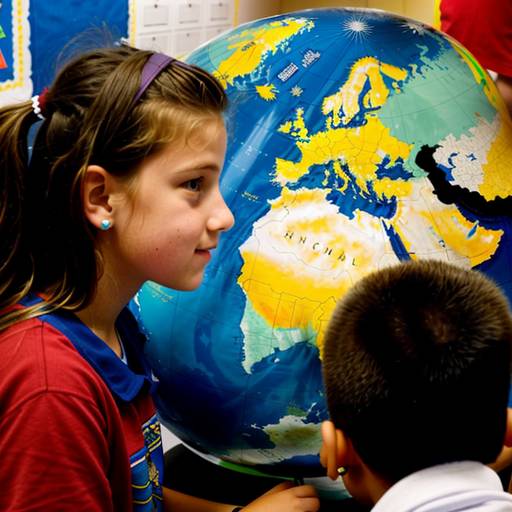
In this 4th-grade social studies lesson, students will explore the essential components of maps, including title, legend, scale, and symbols. The lesson begins with an engaging discussion about world and local maps, followed by a demonstration on how to interpret a simple map. In small groups, students will analyze a local map, highlighting important locations and creating a legend to represent them. For independent practice, each student will draw their own map of a familiar area, incorporating various map elements and showcasing their creativity. The lesson concludes with a sharing session where students present their maps to the class. Assessment will focus on participation, understanding of map components, and creativity in their map designs. Adaptations will be provided for students needing additional support, and follow-up activities may include a classroom mural and a field trip to reinforce the concepts learned.
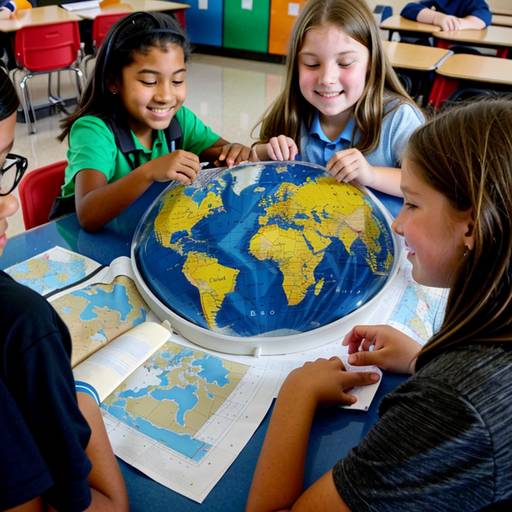
This lesson plan is designed for 5th-grade students to explore the concepts of geography and maps over two class periods. The first day focuses on introducing essential map components, including legends, scales, and compass roses. Students engage in discussions and group activities to analyze different types of maps, helping them to understand how to read and interpret them effectively.
On the second day, students apply their knowledge by creating their own fictional island maps, incorporating the elements they've learned. This hands-on activity encourages creativity while reinforcing the importance of map features. Students then share their maps with the class, promoting discussion and collaboration. Assessment is conducted through both formative and summative methods, ensuring students grasp map concepts while enjoying the creative process. Additionally, opportunities for technology integration and cross-curricular connections enhance the learning experience.
This 4th-grade social studies lesson focuses on helping students understand the various roles within their community and the importance of community helpers. The class begins with a discussion about who contributes to making the neighborhood a better place, encouraging students to share their thoughts. Students then work in small groups to explore specific community roles, discussing their functions and significance. Following this, they engage in a creative activity where they create a collage that visually represents different community helpers and includes descriptions of each role. The lesson concludes with students sharing their collages with the class, fostering a reflective discussion on the vital contributions of these helpers. Assessment is based on participation and the creativity demonstrated in their collages, while extensions include possible field trips or guest speakers to enhance their understanding. Overall, the lesson aims to instill appreciation for community members who play essential roles in daily life.
In this 1st Grade Social Studies lesson, students will explore the roles and responsibilities of various community helpers. The lesson begins with a read-aloud of a story related to community helpers, followed by an engaging discussion where students identify and categorize different community roles. They will work in small groups to create drawings of specific community helpers and present their work to the class, fostering collaboration and communication skills. To conclude, students will design their own "Thank You" cards to express appreciation for a community helper of their choice. This activity not only helps students understand the importance of community helpers but also encourages gratitude and recognition for those who contribute to the well-being of their neighborhood. Assessment will include observation of participation, as well as reviewing student drawings and cards for comprehension. Differentiation strategies will be applied to support diverse learners, and an extension activity will introduce hands-on experience with local community resources.
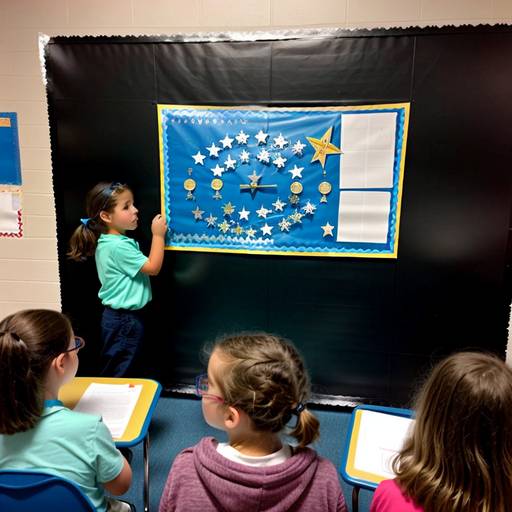
In this 4th-grade social studies lesson, students will explore the concept of timelines as a tool for understanding historical events. The lesson begins with a discussion about history and the purpose of timelines, followed by group activities where students analyze historical timelines and identify key events. They will then create personal timelines that include significant moments from their own lives, allowing them to make personal connections to the material. Students will work individually and collaboratively to construct a large historical timeline as a class, gaining insight into the relationship between individual experiences and broader historical narratives. The lesson concludes with presentations of their personal timelines, reinforcing their understanding of how timelines help organize and convey information about past events. Assessment will be based on participation, timeline creation, and understanding of the concepts introduced. Additionally, extension activities are provided to encourage further exploration of historical events.
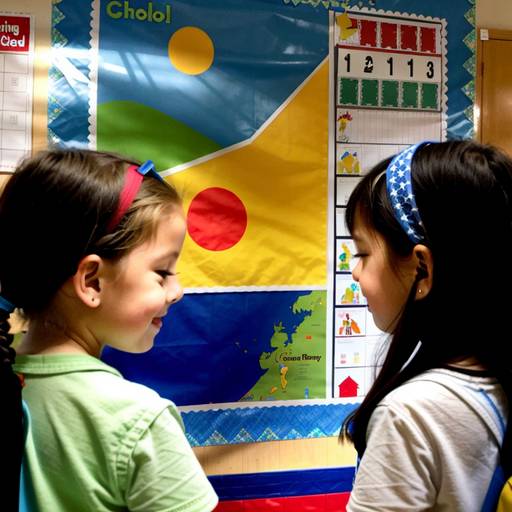
In this Kindergarten social studies lesson, students will explore the concept of maps and their significance in understanding geography. The lesson begins with an introduction to maps using a world map and globe, where students discuss their familiarity with maps and their uses. Different types of maps, such as neighborhood and park maps, will be showcased, highlighting features like symbols and legends.
Students will engage in a story that involves navigation and maps, reinforcing the lesson's theme. The core activity involves each student creating their own map of either their classroom or a part of their neighborhood, incorporating important features and imaginative symbols. They will have the opportunity to share their creations with peers, fostering a collaborative environment.
The lesson will conclude with a recap of the key concepts learned, encouraging students to think about other contexts where maps can be useful. Assessment will be based on observations during the map-making activity and participation in discussions. Extensions may include planning a field trip and incorporating basic compass directions to deepen their understanding of navigation. Overall, this lesson promotes creativity, spatial awareness, and teamwork while providing foundational knowledge of geography and mapping.
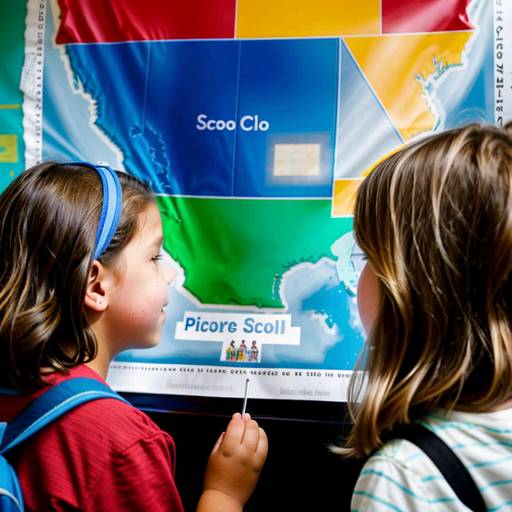
In this 2nd-grade social studies lesson focused on geography and maps, students will gain an understanding of basic map skills, including identifying essential components such as the title, legend, compass rose, and scale. The lesson begins with a discussion about maps, during which students share their prior knowledge and experiences. Following this, students will explore a printed map of their local area, learning about various landmarks and symbols through guided instruction.
After familiarizing themselves with map elements, students will create their own simple maps of their classroom or route to school, using symbols and labels discussed earlier. They will then share their creations in small groups, fostering collaboration and communication. As an independent activity, students will complete a worksheet matching symbols to locations on a community map, followed by a reflection exercise where they articulate the importance of maps and their learnings.
The lesson wraps up with students sharing their drawings and a recap of map significance. Assessment will be based on student participation, completed maps and worksheets, and reflective writing. Extensions may include an introduction to GPS and digital maps for advanced learners. Overall, the lesson aims to deepen students' understanding of map reading and their connection to the community.