
Filters
Level
Grade
Subject
Subject Area
Subject Topic
Standard(s)
Audience
Keyword
DurationMinutes
Elementary School Lesson Plans

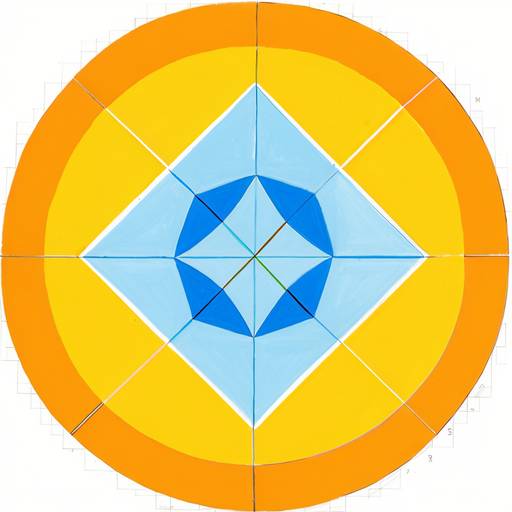
This 3rd-grade math lesson focuses on exploring geometric shapes and the concept of symmetry. The session begins with an introduction to various geometric shapes, followed by a clear explanation of symmetry through visual examples and a demonstration using a mirror. Students engage in guided practice by identifying symmetrical and asymmetrical shapes with provided materials, testing their hypotheses through folding.
During the independent activity, students create their own symmetrical designs using colored paper and markers, incorporating at least one line of symmetry. They then present their creations to the class, explaining the concept of symmetry in their designs. The lesson concludes with a review of key concepts and a discussion about the presence of symmetry in everyday life. Assessment occurs through observation during activities and evaluation of the students' designs. Extension activities provide opportunities for further exploration, including a symmetry scavenger hunt and challenges on rotational symmetry, fostering both understanding and creativity in geometry.

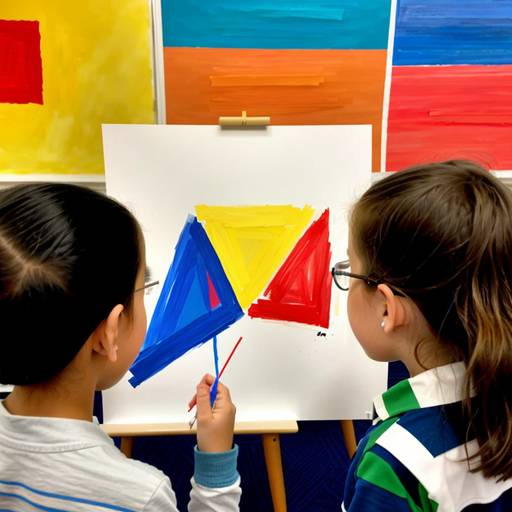
In this 1st-grade art lesson plan, students will explore the elements of art, focusing on color and shapes. They will learn to identify primary colors (red, blue, yellow) and how to mix them to create secondary colors (green, orange, purple). The lesson begins with a discussion about colors and an introduction to the color wheel, allowing students to understand the relationships between primary and secondary colors.
Students will engage in a hands-on activity where they practice mixing colors using crayons and markers. Following this, they will create a colorful collage using various pre-cut shapes made from colored paper, incorporating their understanding of color theory into their artwork. Throughout the lesson, students are encouraged to think creatively about patterns and layering.
As a culmination, students will share their collages with the class, discussing the colors they used and their significance. Assessment will focus on observing their color mixing skills and evaluating their collages for the use of primary and secondary colors. This lesson fosters creativity and critical thinking while providing a foundational understanding of art concepts.

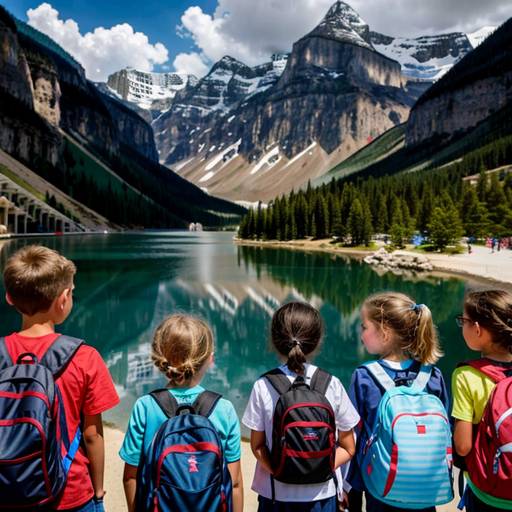
In this 1st-grade social studies lesson, students will explore the concept of countries and their significance within the world. The lesson begins with a discussion about what constitutes a country, using a large world map to highlight continents and specific nations. Students will engage in a guided activity where they match flags to the associated countries while learning interesting facts about each.
For the independent activity, each student will choose a country to research further and create a colored map that includes drawings or descriptions of three notable features, such as the flag, food, and a famous landmark. They will have the opportunity to share their findings with peers in small groups, fostering communication and collaboration.
The lesson will conclude with a class regrouping to allow students to share insights about what they learned, reinforcing their understanding of global diversity. The overall aim is to instill an appreciation for different cultures and geography while encouraging creativity and peer interaction. Assessment will be based on participation and the quality of the completed maps, with potential extensions for further cultural exploration in future lessons.

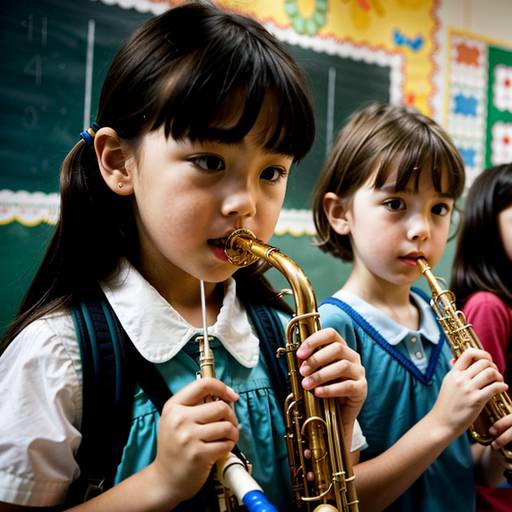
In this Kindergarten music lesson, students will explore the fascinating world of woodwind instruments. The session begins with an engaging discussion about music and an introduction to different woodwind instruments, including the flute, clarinet, saxophone, oboe, and bassoon. Students will listen to recorded music showcasing these instruments, fostering an appreciation for their unique sounds.
Following this, the children will participate in a movement activity where they represent their chosen woodwind instrument through body movements and sound, creating a lively “woodwind orchestra.” Using scarves or ribbons, they will express musical notes visually as they listen to woodwind recordings, enhancing their understanding of rhythm and dynamics.
Finally, the lesson concludes with a group discussion and a take-home coloring sheet featuring woodwind instruments. Throughout the activities, students will develop their listening skills, creativity, and ability to identify different woodwind instruments while enjoying a fun and interactive experience.
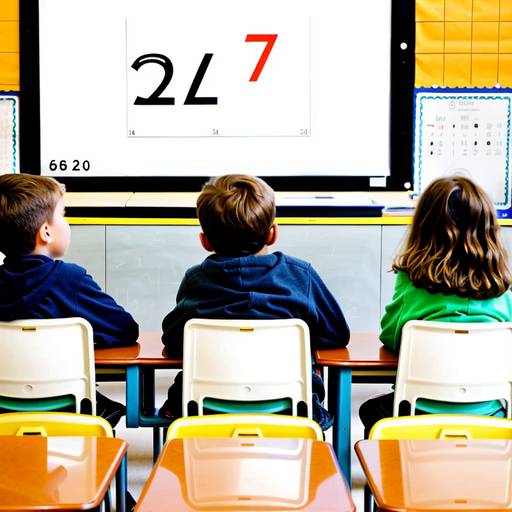
In this 2nd-grade math lesson, students will learn how to read both analog and digital clocks, focusing on telling time to the nearest hour and half-hour. The lesson begins with a discussion on the importance of time in daily life, followed by direct instruction on how to identify and interpret the hour and minute hands of an analog clock, as well as reading times on a digital clock.
During guided practice, students will work in pairs to match analog times with their digital counterparts using flashcards. For independent practice, they will draw clock hands on blank worksheets to represent specific times called out by the teacher. The lesson concludes with a sharing session where students present their clock drawings and discuss their favorite activities at different times of the day.
Assessment will be based on observations during activities and by reviewing the completed clock worksheets. Optional extensions and differentiation strategies will be incorporated to further engage students and support individual learning needs. Overall, the lesson aims to foster hands-on interaction and peer collaboration while building foundational skills in telling time.
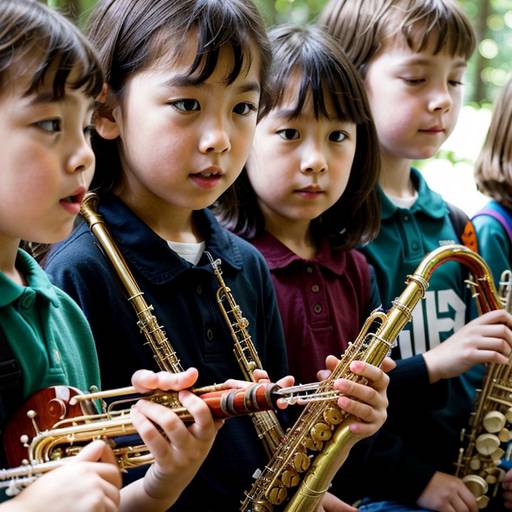
This Kindergarten music lesson plan introduces students to woodwind instruments and their distinct sounds. It begins with a discussion about what woodwind instruments are, accompanied by visuals and audio clips to help students recognize each instrument. Following this, students participate in a listening activity where they share their feelings about different pieces of woodwind music.
The lesson encourages movement through a creative activity where students mimic the sounds of various woodwinds with their bodies. They also get hands-on experience by exploring simple instruments like recorders, learning how to produce sounds and different pitches.
To further engage their creativity, students create their own paper woodwind instruments using craft materials, allowing for personalized expression. The lesson concludes with a group activity reflecting on what they learned and a collective sing-along related to themes of wind or breath. Assessment is based on observation of participation and understanding during discussions and activities, promoting an enjoyable and interactive approach to music education.

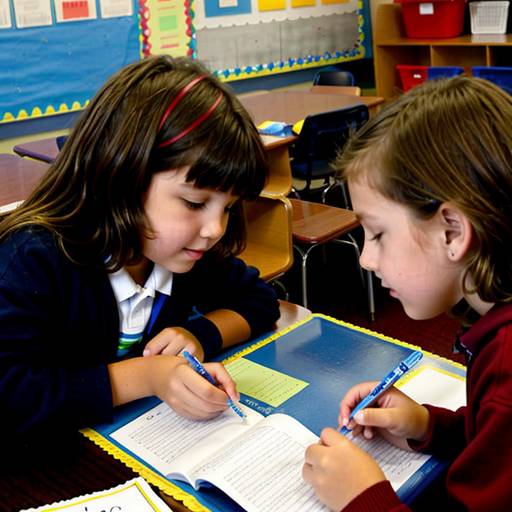
In this 2nd Grade Language Arts lesson, students will explore vocabulary and antonyms through interactive and engaging activities. The lesson begins with an introduction to the concept of antonyms, highlighting pairs of opposites. Following this, students will participate in a read-aloud of a story that features antonyms, allowing them to identify examples in context.
During guided practice, students will work in small groups to match vocabulary words with their antonyms using index cards. This collaborative activity encourages teamwork and reinforces their understanding. Afterward, students will complete a Word Adventure worksheet independently, which includes fill-in-the-blank exercises, a drawing activity, and sentence writing using antonyms.
The lesson concludes with a sharing session where students present their illustrations and sentences to the class. Assessment will focus on participation and the accuracy of the completed worksheets. Differentiation strategies will support varying learning levels, and opportunities for extension will allow students to contribute to a class word wall and create a collective book on antonyms. Overall, this lesson aims to enhance vocabulary acquisition and deepen students' understanding of word meanings through the exploration of opposites.
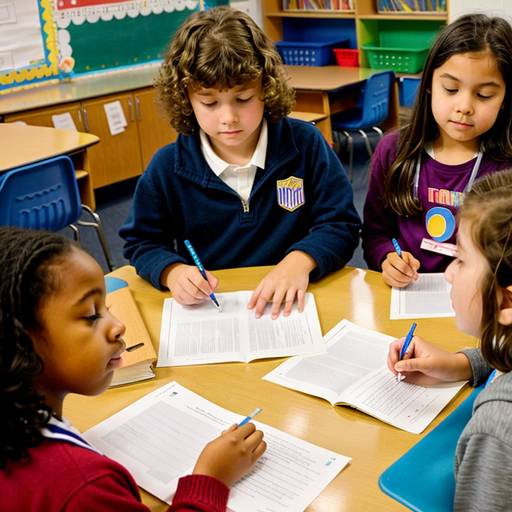
In this 3rd-grade Language Arts lesson, students will engage in learning about context clues to understand unfamiliar vocabulary. The class will begin with a discussion about their experiences with unknown words, followed by an explanation of context clues and their significance. The teacher will model how to identify context clues within sentences, demonstrating the process using examples to guide student understanding.
Students will then work in pairs on a vocabulary worksheet to practice identifying context clues in provided sentences. Following guided practice, they will participate in an independent activity where they will find unfamiliar words in a familiar text and write sentences using context clues.
The lesson will conclude with a review of key concepts and a reflective sharing of new vocabulary. Assessment will be conducted through the collected worksheets and observation of student participation. Extensions for advanced learners and additional support for those needing extra help are included, ensuring a comprehensive approach to vocabulary development.
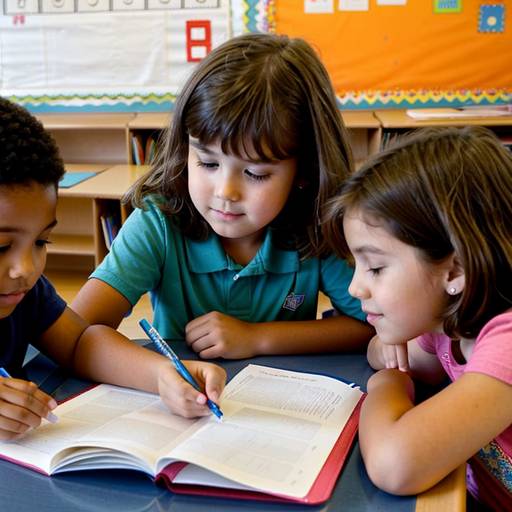
In this 1st-grade Language Arts lesson plan, students will explore the concept of synonyms, learning to identify and understand words with similar meanings. The lesson begins with a brief introduction to vocabulary and synonyms, using examples and visuals to engage the class. Students will participate in guided activities, including matching word cards that represent synonyms and collaborating in small groups to find synonyms for picture cards. Independent practice will involve completing worksheets where they write synonyms for provided words. The lesson concludes with a recap of the importance of synonyms and an option for students to share findings from a short story. Assessment will occur through observation during group activities and review of completed worksheets, with differentiation strategies in place to support individual learning needs. Students will also be encouraged to explore synonyms at home and share their discoveries in future classes.
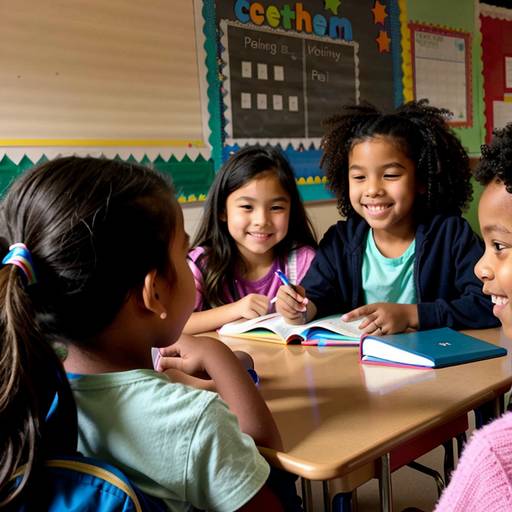
In this 1st-grade Language Arts lesson, students will learn about synonyms—words that have similar meanings. The lesson begins with an introduction to the concept of synonyms, using flashcards to illustrate examples. During a read-aloud of a simple storybook, students will participate by identifying synonyms for descriptive words used in the text.
Next, students will be divided into small groups to engage in a synonym matching activity with flashcards. After regrouping, they will share their matched pairs with the class, reinforcing their understanding through discussion. Students will then complete a worksheet that includes exercises related to identifying and using synonyms.
The lesson concludes with students sharing their favorite “word friends” from the day's activities, emphasizing the importance of synonyms in enhancing their communication. Assessment will be based on participation in group activities and the completed worksheets, while potential extensions include creating a classroom “Word Friends Wall” to display new synonyms discovered during reading. Differentiation strategies will be implemented to support varied learning needs.