
Filters
Level
Grade
Subject
Subject Area
Subject Topic
Standard(s)
Audience
Keyword
DurationMinutes
Elementary School Lesson Plans

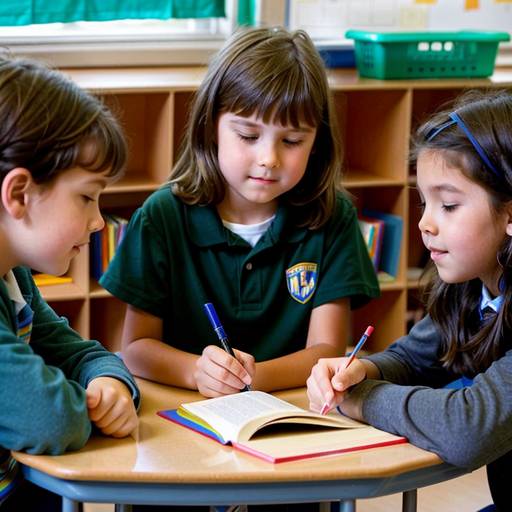
In this 2nd-grade Language Arts lesson, students will focus on enhancing their reading comprehension skills through interactive exploration of a selected picture book. The lesson begins with a class discussion about what makes stories interesting, followed by a read-aloud session where students are encouraged to make predictions and express their thoughts on the characters and plot. After reading, the class engages in a discussion to identify the main idea and supporting details, using graphic organizers to summarize their understanding.
Students will then write personal connections or lessons learned from the story on sticky notes, which will be displayed on the whiteboard. For an optional extension, they can illustrate their favorite scene or create a new ending. The lesson culminates with a recap of the key concepts learned, reinforcing the significance of main ideas and details in understanding narratives. Assessment will involve monitoring student participation in discussions and reviewing their written reflections to gauge comprehension and personal engagement with the text.
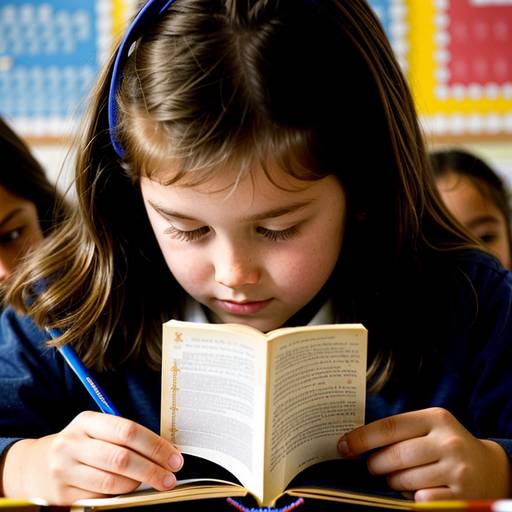
This 3rd Grade Language Arts lesson focuses on enhancing students' reading comprehension through the use of key reading strategies: predicting, questioning, and summarizing. The lesson begins with a discussion on the importance of reading, followed by a modeling segment where the teacher demonstrates each strategy using a short storybook. Students then engage in guided practice by forming small groups to read different books, discussing their thoughts, and applying the strategies while jotting down notes on sticky paper.
After their reading sessions, groups create graphic organizers in the form of "Treasure Maps," which visually represent key events and insights gained from their reading, highlighting the strategies they employed. Each group shares their map with the class, fostering discussion and further inquiry. The lesson concludes with a reflection on what students learned and how they can apply these strategies in the future. Student participation and the completed graphic organizers serve as assessments of their understanding. An extension activity encourages students to practice the strategies with a book of their choice at home.

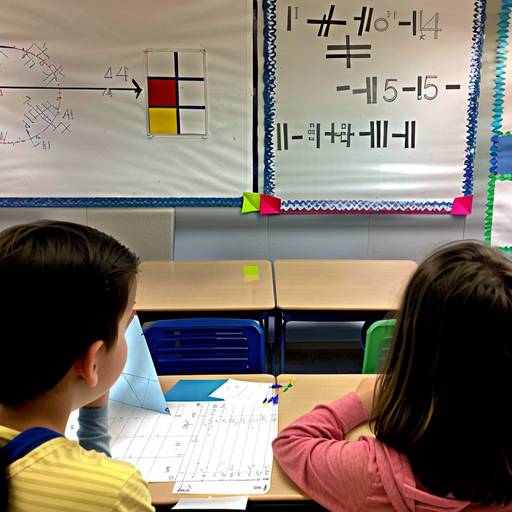
In this 4th-grade math lesson, students will explore the concept of angles through a combination of discussions, hands-on activities, and creative projects. The lesson begins with a warm-up discussion, where students identify different types of angles—acute, right, and obtuse—and observe examples in their daily lives.
Following this, they will engage in an angle scavenger hunt, working in small groups to find and document instances of each type of angle around the classroom or school. Next, students will receive a demonstration on how to measure angles using a protractor, followed by practice worksheets to reinforce their measurement skills.
In a creative activity, students will design their own shapes that incorporate various angles, labeling each angle with its measurement and classification. They will then present their designs to the class, further solidifying their understanding of angles. The lesson concludes with a summary of key concepts and an assignment for students to find additional examples of angles in their homes.
Assessment will be based on participation, accuracy in measuring angles, and the quality of the shapes created by the students, ensuring that all learners are engaged and challenged appropriately.
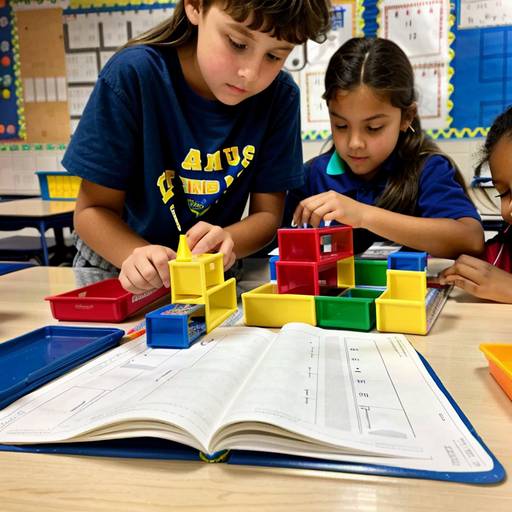
In this third-grade math lesson, students will explore the concepts of measurement and volume through hands-on activities. The lesson begins with a brief discussion about the importance of measurement in everyday life, focusing on volume and the units of liters and milliliters. Students will then work in small groups to measure the volume of various containers using water, encouraging them to make estimates before measuring and record their findings.
Following the measurement activity, students will participate in a relay race designed to reinforce their understanding of volume as they fill containers to specific targets. The class will come together for a discussion to share their results and reflect on their experiences, emphasizing key vocabulary related to the lesson. To wrap up, students will complete a short worksheet to assess their understanding and will be assigned homework that requires them to measure the volume of an item at home. This engaging approach promotes teamwork, estimation skills, and practical application of mathematical concepts.
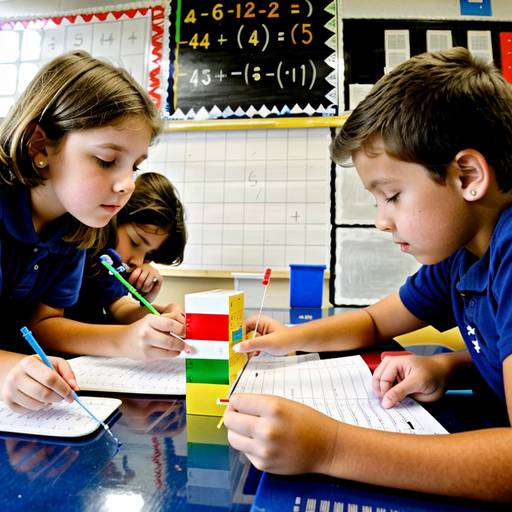
In this third-grade math lesson, students will explore the concepts of measurement and temperature through hands-on activities. The lesson begins with an introduction to thermometers and the different temperature scales, Celsius and Fahrenheit. Following a demonstration of how to read a thermometer using various liquids, students will work in small groups to measure and record the temperatures of ice water, room temperature water, and hot water. After sharing their findings in a class discussion, students will practice converting temperatures between Celsius and Fahrenheit with individual worksheets. The session concludes with a reflection where students share one new thing they learned, allowing for reinforcement of concepts and evaluation of understanding. This interactive approach ensures that students gain practical experience with measurement while connecting the topic to real-world applications.

In this 5th-grade science lesson, students explore the concepts of energy, motion, and forces through hands-on experimentation. They will learn about kinetic energy (energy of motion) and potential energy (stored energy based on position) by conducting an experiment using toy cars, ramps, and weights. Divided into small groups, students will measure the height of their ramps and observe how different weights affect the speed of the toy cars as they roll down. Through data collection and discussion, students will analyze the relationship between potential and kinetic energy and understand how energy is transformed during motion. The lesson concludes with a reflection on energy transformations in everyday life and assessment through worksheets and group discussions, encouraging critical thinking and collaboration. Additional exploration options are provided for students who wish to deepen their understanding of energy dynamics.

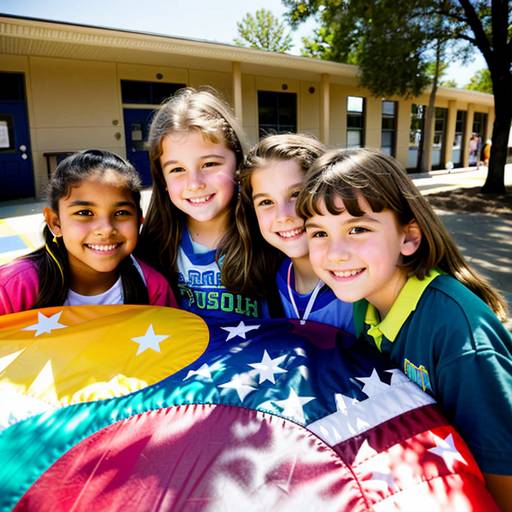
This 4th-grade social studies lesson focuses on community and diversity, aiming to help students understand and appreciate the various cultures that enrich their surroundings. The lesson begins with a warm-up discussion where students share what makes their community special. Key concepts of "community" and "diversity" are introduced and explored.
Students then engage in small group discussions where they investigate different cultural aspects such as food, music, holidays, and clothing that are present in their community. They share their findings with the class, which are recorded for reference.
Following this, students collaboratively create a mural that visually represents the diversity discussed, with sections dedicated to different cultural elements. They complement the mural with personal reflections written on post-it notes, providing an opportunity for individual expression.
The lesson concludes with students sharing their reflections, fostering a collaborative learning environment. Assessment is based on participation, creativity, and understanding demonstrated through the mural and reflections. Follow-up activities include interviews with family members about cultural backgrounds, encouraging continued exploration of diversity.
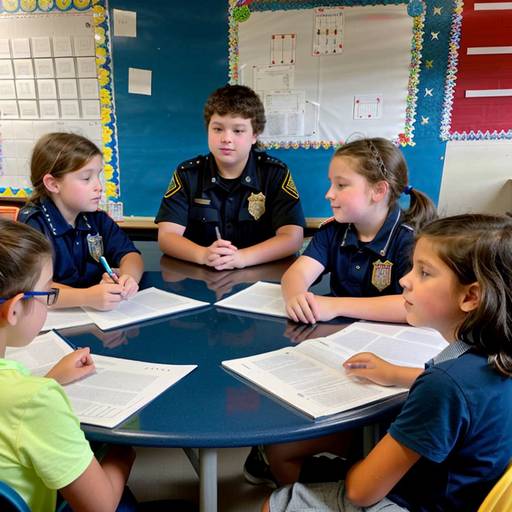
In this 4th-grade social studies lesson, students will explore the concept of community by identifying and discussing various roles within it, such as teachers, police officers, and doctors. They will learn about the responsibilities associated with each role and how these contribute to the overall well-being of the community.
The lesson begins with a group discussion to define what a community is and the roles that comprise it. Students will then work in small groups to select community roles from provided cards, creating posters that highlight the role's title, responsibilities, and illustrations. Each group will present their posters to the class, fostering a collaborative learning environment.
To conclude, students will reflect on their own roles in the community by writing about their personal responsibilities. Assessment will be based on group participation, the quality of the posters, and individual reflections. Additional extensions may include inviting community leaders for discussions or encouraging students to interview someone in a specific role. Overall, the lesson emphasizes the importance of individual contributions to the community and fosters an understanding of civic responsibilities.
In this 3rd-grade social studies lesson, students will explore the concept of community by identifying key members who contribute to its well-being, such as police officers, firefighters, teachers, and doctors. The lesson begins with a discussion about what constitutes a community, encouraging students to share their thoughts while compiling a list on the whiteboard.
Next, students learn about community rules and their significance in maintaining safety and order. In small groups, they will work with scenario cards to discuss specific situations and develop relevant rules that apply to each scenario. After sharing their insights with the class, students will reflect on the importance of following rules for the safety and happiness of everyone in the community.
To conclude the lesson, students will complete a worksheet where they draw a community helper and write a rule associated with that role. The lesson encourages active participation, collaboration, and critical thinking while promoting an understanding of community dynamics and responsibilities. Extensions for the lesson include potential field trips to local community service areas to enhance hands-on learning experiences.
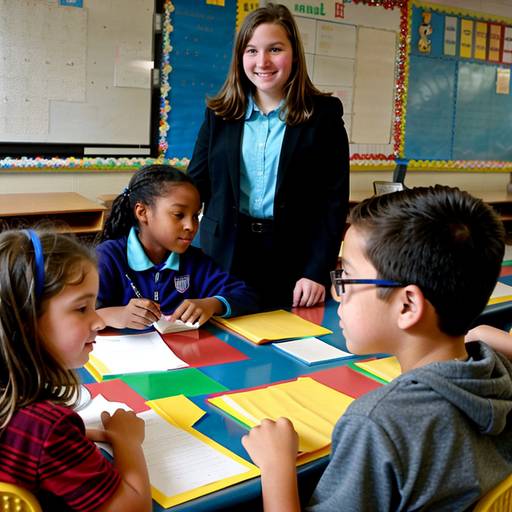
This lesson plan focuses on helping 3rd-grade students explore the various roles within their community and understand the contributions each role makes to society. The lesson begins with a class discussion to define what a community is and identify different community roles. Students work in small groups to brainstorm and share selected roles, discussing their importance. Following this, they create individual community maps, illustrating and representing various community roles through drawings and art. The lesson concludes with students presenting their maps to the class and reflecting on how these roles collaborate to enhance the community. Assessment is based on student participation in discussions, group activities, and the creativity demonstrated in their community maps. The lesson can be extended with additional research or the inclusion of guest speakers to provide real-life context.