
Filters
Level
Grade
Subject
Subject Area
Subject Topic
Standard(s)
Audience
Keyword
DurationMinutes
Elementary School Lesson Plans

In this 2nd-grade math lesson focused on the concept of time and telling time, students will engage in an interactive and hands-on learning experience. The lesson begins with a discussion about the importance of time, followed by a read-aloud of a story that incorporates time-related themes. Students will learn to read both analog and digital clocks, identifying hours and half hours, as well as understanding the concepts of a.m. and p.m.
During direct instruction, a large paper clock will be used to visually demonstrate how to tell time, after which students will participate in guided practice by setting their individual paper clocks to various times called out by the teacher. In small groups, they will work on time-based scenarios, creating illustrations to represent their understanding.
For independent practice, students will complete a worksheet that includes identifying times on clocks and solving simple word problems related to time. The lesson concludes with a review of the worksheet answers and a reflection on what they learned. Assessment will be carried out through observation during group and independent activities, and students will have the opportunity to extend their learning with a time diary assignment for homework, reinforcing their new skills in a real-world context.
In this 2nd-grade math lesson, students will learn to read both analog and digital clocks, and develop an understanding of elapsed time. The lesson begins with an engaging discussion about time, followed by a matching game where students pair clock flashcards to reinforce their skills. After introducing elapsed time through relatable scenarios, students will work on a worksheet containing various everyday activities that require them to calculate start times, durations, and end times. The class will engage in a discussion to review their answers and clarify any misunderstandings. If time permits, a fun relay activity may be conducted to further solidify their understanding of time concepts. Assessment will be based on observations during activities and the correctness of their completed worksheets. Extensions and differentiation strategies will be provided to meet diverse learning needs, enhancing engagement and mastery of the subject.
In this 2nd-grade mathematics lesson, students will explore the concept of time and time patterns. The lesson aims to help students tell time to the nearest hour using analog clocks and to recognize and create patterns related to daily schedules based on time. The session begins with an introduction to the importance of time in daily routines, followed by direct instruction on reading analog clocks and discussing time patterns.
Students will participate in guided practice by setting their clocks to different times and creating a simple daily schedule as a class. During independent practice, they will complete worksheets that involve telling time and recognizing time patterns. The lesson concludes with a review of key concepts and a fun interactive game where students will demonstrate their understanding by showing specific times on their clocks.
Assessment will be based on monitoring student engagement during practice, reviewing completed worksheets for accuracy, and observing participation in discussions. Adjustments will be made to support students who need additional help, and extensions will be provided for advanced learners to explore more complex time concepts. This lesson provides a comprehensive approach to understanding time while engaging students in hands-on learning activities.

In this 5th-grade social studies lesson, students will explore the concept of timelines and their importance in understanding historical events. The lesson begins with a class discussion to engage students and introduce the idea of tracking time. Key vocabulary related to timelines will be taught, followed by a guided activity where students work in pairs to place historical events on a timeline.
Students will then have the opportunity to create their own personalized timelines, selecting five significant events from American history to illustrate and describe. This creative project encourages individual expression and reinforces their understanding of chronological order.
The lesson concludes with students sharing their timelines with peers, fostering communication skills and collective learning. Throughout the lesson, assessment will focus on participation, the accuracy of timelines, and a reflective exit ticket to gauge student understanding. Extensions include a digital timeline project for advanced learners and a timeline fair to engage parents. Overall, this lesson promotes critical thinking, collaboration, and creativity while deepening students' appreciation for history.
In this engaging 2nd-grade math lesson, students will explore the concepts of measurement and time through two main activities. The lesson begins with a discussion where students share their prior knowledge about clocks and measuring lengths. They will then learn to tell time on analog clocks, focusing on the hour and half-hour, while participating in an interactive game to practice their skills.
Next, students will become measurement explorers by first using non-standard units, such as paper clips, to measure various classroom objects. They will then transition to using standard measuring tools like rulers to measure items in inches and centimeters. Throughout these activities, students will work in pairs, fostering collaboration and active participation.
At the end of the lesson, students will share what they learned, reinforcing their understanding of the key concepts. The lesson culminates in an optional creative extension activity where students can design their own analog clocks, further solidifying their grasp of time-telling skills. Assessment will include collected worksheets and observation of student engagement during activities.

In this 2nd-grade music lesson, students embark on an engaging journey through the world of music history by exploring the lives and works of notable composers such as Mozart, Beethoven, and Tchaikovsky. The lesson begins with a discussion about music and its ability to convey stories and emotions. Students then learn fun facts about each composer as they listen to selected audio clips of their most famous pieces.
After the listening session, students break into small groups to further explore a specific composer’s music, recreating the sounds using various instruments while focusing on dynamics and tempo. This hands-on experience allows them to express their interpretations creatively. Following this, they collaborate to compose their own simple melodies inspired by the composer they studied and illustrate a picture that represents their music or the composer’s spirit.
The class concludes with a reflection on their experiences, reinforcing what they learned about the composers and the expressive power of music. Students also receive a take-home worksheet featuring composer facts and musical symbols to reinforce their learning. The lesson encourages participation, creativity, and an appreciation for music history.

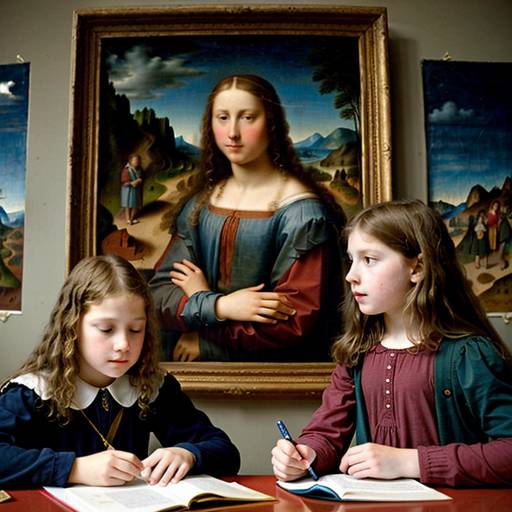
In this 1-hour art lesson for 2nd graders, students will explore the Renaissance period by learning about its significance and famous artists such as Leonardo da Vinci, Michelangelo, and Raphael. The class will start with a brief discussion about what Renaissance art is, focusing on its colors, themes, and styles. Students will then engage in a hands-on activity where they will create their own artwork inspired by the concepts they've learned, using colored pencils, markers, or even collage techniques. After completing their pieces, students will participate in a gallery walk to showcase their work and share what inspired them. The lesson aims to foster creativity while helping students understand the connection between art and history. Reflection and discussion will wrap up the session, allowing students to articulate their experiences and insights gained throughout the lesson. Extensions will encourage further exploration of art history in their home environment. Assessment will involve participation and the creativity demonstrated in their artwork and presentations.
This 3rd-grade math lesson focuses on teaching students how to tell time using both analog and digital clocks while also exploring patterns related to time. The lesson begins with an engaging discussion about time and familiar daily activities, followed by direct instruction on how to read clocks and understand concepts of AM and PM. Students participate in guided activities where they practice showing different times on clocks and create their own time patterns based on their routines. Independent practice involves worksheets that reinforce their skills in telling time and recognizing time patterns. The lesson concludes with a review of key concepts, allowing students to reflect on what they have learned. Assessment is achieved through observation, worksheet completion, and exit tickets, ensuring that students grasp essential time-telling skills and the role of time in their daily lives. Extensions and support are provided to meet varying student needs, enhancing their understanding of elapsed time and encouraging collaborative learning.
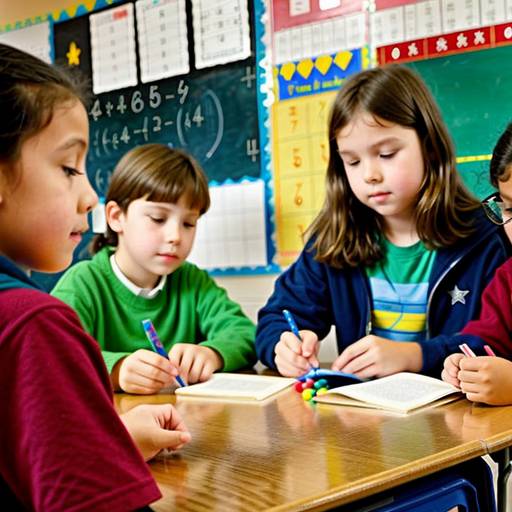
In this 3rd-grade math lesson, students will explore multiplication and practice their times tables through interactive activities. The lesson begins with a review of multiplication concepts and a demonstration of the times table on the whiteboard. Students will then engage in guided practice using flashcards to quiz one another, identifying which multiplication facts they find easiest and hardest.
The highlight of the lesson is a treasure hunt, where students work in pairs to solve multiplication problems on clue cards hidden around the classroom. Each correct answer leads them closer to a "treasure" of small prizes. After the treasure hunt, students will complete a worksheet with various multiplication problems for independent practice.
The lesson will conclude with a group discussion where students share their favorite parts and reflect on what they learned about multiplication. Assessment will be based on the completed worksheet and participation in activities, with adaptations available for varying skill levels. Extensions include creating a decorative multiplication chart to take home and exploring online multiplication games. This engaging approach to multiplication encourages collaboration and reinforces essential skills in a fun learning environment.
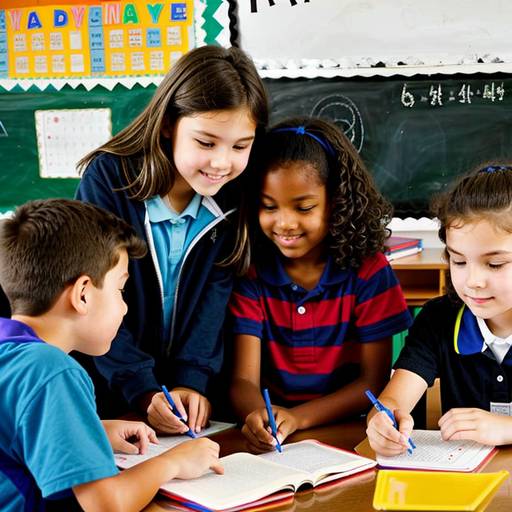
In this 4th-grade math lesson, students will explore the concept of multiplication by connecting it to repeated addition and practicing their times tables up to 12 x 12. The lesson begins with a review of multiplication basics and a group chant of selected times tables to bolster recall. Students will then engage in paired quizzes to reinforce their understanding of multiplication facts, using index cards with various multiplication problems.
The main activity involves a treasure hunt in which small groups will search for hidden index cards containing multiplication questions. They will work collaboratively to solve these problems and record their answers on a treasure map handout. The lesson concludes with a class review of the answers and a discussion on the importance of multiplication in real-life scenarios. Small prizes will be awarded to celebrate the students’ participation and efforts. Overall, this lesson aims to enhance multiplication skills through interactive learning and collaboration.