
Filters
Level
Grade
Subject
Subject Area
Subject Topic
Standard(s)
Audience
Keyword
DurationMinutes
Elementary School Lesson Plans

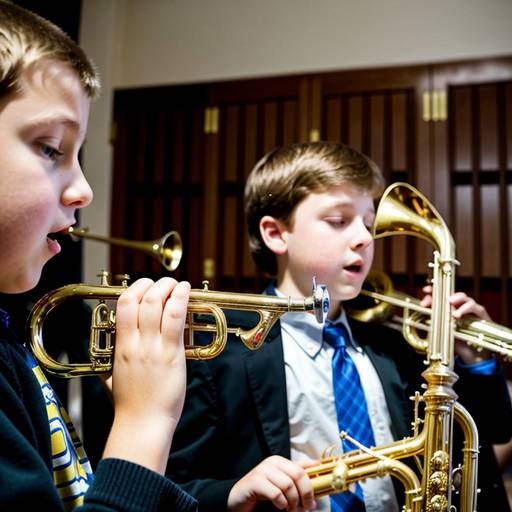
This 5th grade music lesson focuses on brass instruments, aiming to help students identify and describe various types, understand the mechanics of sound production, and explore their roles in different musical genres. The lesson begins with a discussion to activate prior knowledge, followed by visual and auditory exploration of instruments like the trumpet, trombone, tuba, and French horn. Students engage in a hands-on activity where they can experiment with producing sound on available instruments or simulate playing with "air" instruments.
In small groups, students research specific brass instruments using provided fact sheets, culminating in short presentations to share their findings with the class. The lesson concludes with a reflection on what students learned, reinforced by a worksheet to be completed at home. Participation in discussions, group activities, and the quality of presentations will serve as assessment criteria. Optional extensions include inviting a local musician or arranging a field trip to enhance the learning experience.
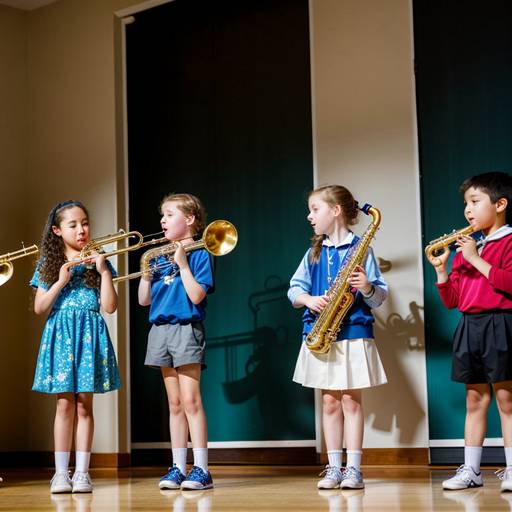
In this 4th-grade music lesson, students will explore wind instruments by engaging in a variety of activities designed to enhance their understanding and appreciation of these instruments. The lesson begins with a discussion on different wind instruments, followed by listening to audio clips that showcase their unique sounds.
Students will then break into small groups, each focusing on a specific wind instrument, where they will research its characteristics, sound production methods, and notable pieces of music. Each group will present their findings to the class, fostering collaboration and communication skills.
After presentations, students will have the opportunity to practice playing wind instruments, such as recorders, learning a simple melody together as an ensemble. The lesson concludes with a reflective discussion on what students learned about wind instruments and their experiences in the class. Through this engaging approach, students will develop a deeper understanding of wind instruments and improve their musical skills in a collaborative environment.

In this engaging 5th-grade science lesson, students will explore the major systems of the human body, including the skeletal, muscular, circulatory, respiratory, digestive, and nervous systems. The lesson begins with a captivating video to spark interest, followed by a comprehensive presentation that outlines the function of each body system and emphasizes their interconnections.
Students will then work in small groups to create models of their assigned systems using various materials, fostering teamwork and creativity. Each group will present their model to the class, explaining its function and how it interacts with other systems. The lesson concludes with a reflective discussion on what surprised students about the human body. Assessment will focus on participation, understanding, and the creativity of group projects, while extensions may include a homework assignment or a potential field trip for further learning.
In this 3rd-grade science lesson focused on life science and the human body, students will explore the major systems that keep our bodies functioning. They will learn about the skeletal, muscular, circulatory, and respiratory systems, including their primary functions and how they interact with one another. The lesson begins with a discussion to engage students and gauge their prior knowledge.
Following a direct instruction segment where each body system is presented with diagrams, students will work in small groups to create models representing their assigned body systems using construction paper and other materials. This hands-on activity promotes collaboration and creativity, allowing students to label parts and explain the functions of their system in group presentations.
The lesson concludes with a recap of the importance of body systems in maintaining health, encouraging students to consider how they take care of their bodies. Assessment will occur through observation of group work, presentations, and optional follow-up activities that reinforce the concepts learned.

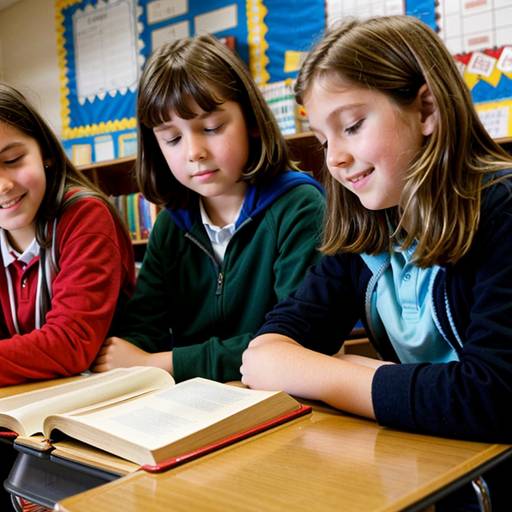
In this 5th-grade language arts lesson, students will explore various reading genres and their defining characteristics. The lesson begins with a class discussion about favorite books, where students categorize them into genres. They will then work in small groups to examine a selection of books, identifying key elements that characterize different genres. Each group will present their findings, sharing information about a chosen genre, its characteristics, and book examples.
Following the presentations, students will participate in a sorting activity where they will categorize genre cards representing specific books or stories, reinforcing their understanding of genre distinctions. The lesson concludes with a reflection period, encouraging students to select a book from a less familiar genre to read at home and write a short paragraph about it for homework. Assessment will be based on participation in discussions, accuracy in genre sorting, and the clarity of their presentations. Extensions and differentiation strategies are included to cater to diverse learning needs, fostering a deeper appreciation of literature.
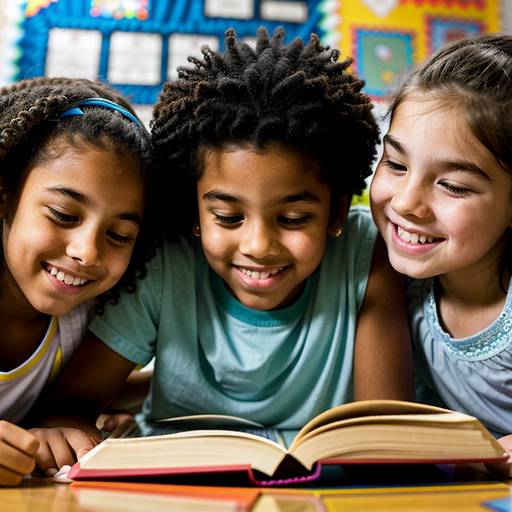
In this 3rd-grade language arts lesson, students will explore and identify various book genres, including fiction, non-fiction, poetry, mystery, fantasy, and biography. The lesson begins with a discussion about the importance of genres and includes a participatory activity where students work in small groups to examine a selection of books from different genres. They will analyze the characteristics of each genre and summarize their findings on worksheets. Following the group exploration, students will share their insights with the class, contributing to a collaborative genre poster for future reference. Each student will then choose a favorite genre to write or draw about, reflecting on their personal preferences. The lesson emphasizes cooperation, creativity, and the joy of reading, concluding with student presentations that foster engagement and understanding of literary diversity. Assessment will be based on participation, worksheets, and individual responses regarding their chosen genre. Differentiation strategies will ensure all learners are supported throughout the activities.
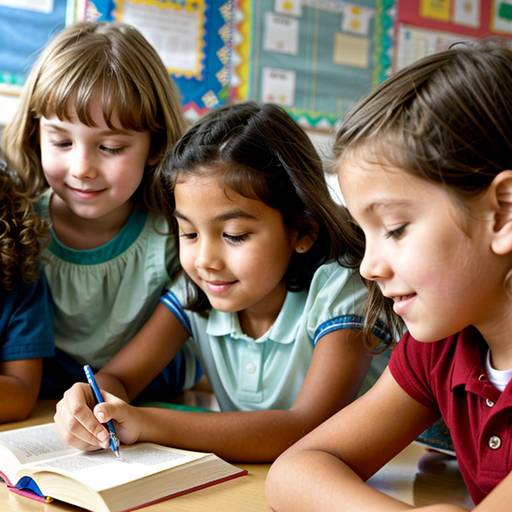
In this 1st Grade Language Arts lesson, students will engage in an interactive reading experience where they explore the characters, setting, and events of a selected picture book. The lesson begins with students predicting the story's content based on its cover, followed by a read-aloud where they are encouraged to make predictions and answer questions about the text. After the read-aloud, students will complete a graphic organizer to illustrate and label the main character(s), setting, and a key event from the story. They will also fill out a prediction card to express their thoughts on what might happen next. The lesson concludes with students sharing their findings with the class, reinforcing their understanding of essential story elements. Throughout the lesson, assessment will be conducted through observation and collection of the students' work to gauge their comprehension and engagement in reading. Extension activities will encourage independent reading at home, while modifications will support students requiring extra help.

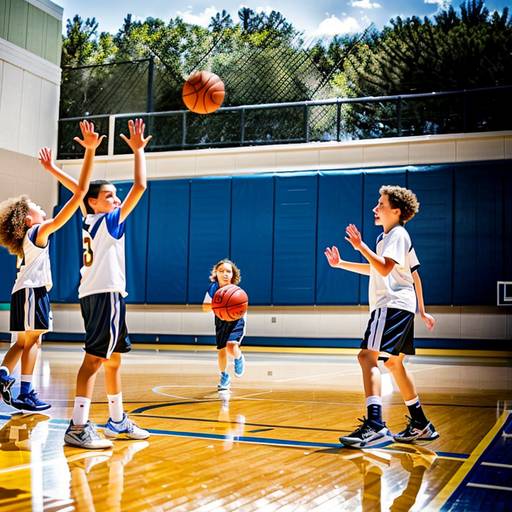
In this 4th-grade physical education lesson, students will focus on developing essential basketball skills, including dribbling, passing, and shooting, all while emphasizing teamwork and communication. The session begins with a warm-up that includes dynamic stretching and a fun dribbling relay to prepare the students for activity.
Students will then rotate through skill stations, where they will practice dribbling through cones, executing accurate passes with partners, and refining their shooting techniques at the hoop. Following the skill stations, students will engage in a team challenge that reinforces their passing and teamwork skills in a competitive setting.
The lesson concludes with a brief scrimmage, allowing students to apply the skills they've learned in a game context. Afterward, a cool-down period includes static stretches, followed by a group discussion to reflect on their learning experiences. Throughout the lesson, instructors will assess student engagement and skill application, ensuring an inclusive approach that accommodates varying skill levels. Overall, this lesson promotes physical activity, skill development, and the importance of sportsmanship among students.
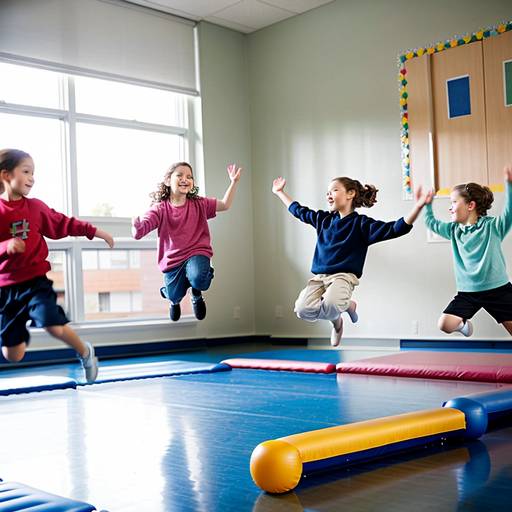
In this 1st-grade science lesson, students explore the concepts of motion by investigating how various objects bounce and roll. The lesson begins with a discussion about the forces that cause movement, highlighted by a demonstration of a bouncing ball. Students are then divided into small groups to participate in hands-on activities at different stations, where they experiment with various balls and toy cars, measuring bounce heights and distances traveled on inclined planes. Throughout the activity, students make observations and predictions, enhancing their understanding of how factors like weight, shape, and surface affect motion. The lesson concludes with students sharing their experiences and findings, solidifying their grasp of motion and the forces that influence it. Worksheets are used to encourage individual expression of their favorite activities and to reinforce learning outcomes. Overall, this interactive approach fosters engagement and curiosity about physical science concepts related to motion.
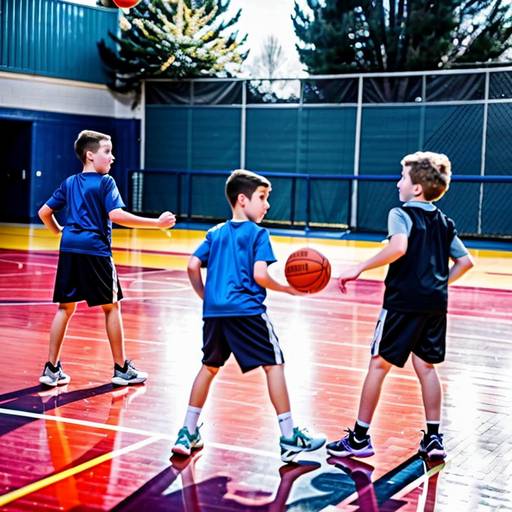
This third-grade physical education lesson focuses on introducing students to the fundamental skills of dribbling and passing in basketball. The lesson begins with a dynamic warm-up and a brief overview of basketball's basic rules and terminology, emphasizing teamwork. Students engage in various drills to practice their dribbling skills, including stationary dribbling and a relay race using an obstacle course.
Next, learners participate in partner passing exercises to enhance their passing techniques, followed by a target game that encourages precision. The lesson culminates in mini basketball games, where students apply their skills in a fun, competitive setting while working together in teams.
To conclude, students cool down with stretches and reflect on the day's activities by sharing their thoughts on what they enjoyed and learned, particularly about teamwork in sports. Throughout the lesson, teachers assess students' skill levels and provide modifications for those needing extra support. Overall, the session aims to cultivate a passion for basketball, improve fundamental skills, and promote collaboration among students.