
Language Arts Lesson Plan
Book Adventures Lesson Plan

Book Adventures

Exploring Genres Through Stories!

View Lesson

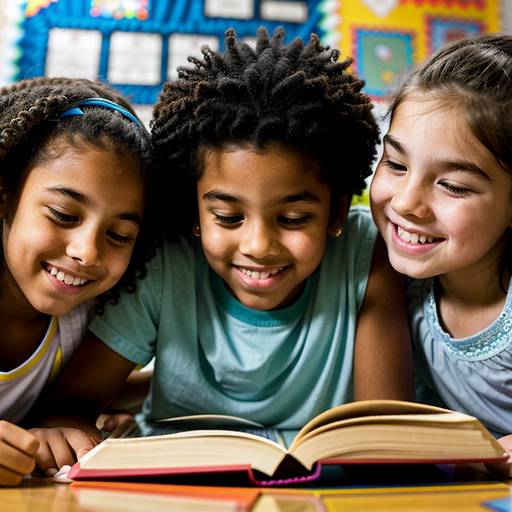
In this 3rd-grade language arts lesson, students will explore and identify various book genres, including fiction, non-fiction, poetry, mystery, fantasy, and biography. The lesson begins with a discussion about the importance of genres and includes a participatory activity where students work in small groups to examine a selection of books from different genres. They will analyze the characteristics of each genre and summarize their findings on worksheets. Following the group exploration, students will share their insights with the class, contributing to a collaborative genre poster for future reference. Each student will then choose a favorite genre to write or draw about, reflecting on their personal preferences. The lesson emphasizes cooperation, creativity, and the joy of reading, concluding with student presentations that foster engagement and understanding of literary diversity. Assessment will be based on participation, worksheets, and individual responses regarding their chosen genre. Differentiation strategies will ensure all learners are supported throughout the activities.

View Lesson

CCSS.RL.3.1
CCSS.RL.3.1
Ask and answer questions to demonstrate understanding of a text, referring explicitly to the text as the basis for the answers.
CCSS.RL.3.2
CCSS.RL.3.2
Recount stories, including fables, folktales, and myths from diverse cultures; determine the central message, lesson, or moral and explain how it is conveyed through key details in the text.
CCSS.RL.3.5
CCSS.RL.3.5
Refer to parts of stories, dramas, and poems when writing or speaking about a text, using terms such as chapter, scene, and stanza; describe how each successive part builds on earlier sections.
CCSS.RL.3.7
CCSS.RL.3.7
Explain how specific aspects of a text’s illustrations contribute to what is conveyed by the words in a story (e.g., create mood, emphasize aspects of a character or setting).
CCSS.RL.3.10
CCSS.RL.3.10
By the end of the year, read and comprehend literature, including stories, dramas, and poetry, at the high end of the grades 2–3 text complexity band independently and proficiently.
CCSS.SL.3.1
CCSS.SL.3.1
Engage effectively in a range of collaborative discussions (one-on-one, in groups, and teacher-led) with diverse partners on grade 3 topics and texts, building on others' ideas and expressing their own clearly.
CCSS.SL.3.4
CCSS.SL.3.4
Report on a topic or text, tell a story, or recount an experience with appropriate facts and relevant, descriptive details, speaking clearly at an understandable pace.
CCSS.W.3.1
CCSS.W.3.1
Write opinion pieces on topics or texts, supporting a point of view with reasons.
CCSS.W.3.4
CCSS.W.3.4
With guidance and support from adults, produce writing in which the development and organization are appropriate to task and purpose. (Grade-specific expectations for writing types are defined in standards 1-3 above.)
LevelElementary School
Grade3rd Grade
SubjectLanguage Arts
Subject AreaReading
Subject TopicReading Genres
Age Range8 to 9
AudienceGroup
LanguageEnglish
Duration60 mins