
Filters
Level
Grade
Subject
Subject Area
Subject Topic
Standard(s)
Audience
Keyword
DurationMinutes
Elementary School Lesson Plans

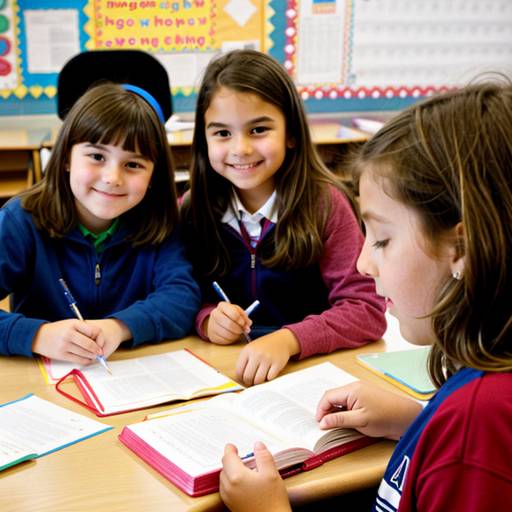
In this 4th-grade language arts lesson, students will learn the importance of punctuation in writing by focusing on four key marks: periods, commas, question marks, and exclamation points. The lesson begins with a discussion to gauge students' prior knowledge, followed by direct instruction that provides clear examples of how each punctuation mark should be used.
Students will engage in guided practice through a worksheet that reinforces their understanding by requiring them to identify and apply correct punctuation in sentences. The lesson includes a collaborative activity where students work in small groups to correct sentences that lack proper punctuation, fostering teamwork and critical thinking.
As a creative writing exercise, students will compose a short paragraph about their favorite animal, ensuring the use of all four punctuation marks. The lesson concludes with a review and sharing session, allowing students to showcase their writing. Assessment will be based on observation during activities and the collection of worksheets and written paragraphs, enabling the teacher to evaluate each student’s grasp of the material. Finally, students will have a homework assignment that reinforces this learning by identifying punctuation in their favorite books. This lesson promotes both individual understanding and cooperative learning.

This 5th grade language arts lesson plan focuses on grammar and punctuation, helping students understand the importance of using punctuation marks correctly in their writing. The lesson begins with a discussion on punctuation, followed by an introduction to various punctuation marks and their uses. Students engage in guided practice by correcting sentences together as a class, then work in small groups to edit additional sentences. Each group shares one corrected sentence with the class, reinforcing their learning. The lesson emphasizes collaboration and encourages students to understand how punctuation impacts the meaning of sentences. Assessment is done through observation of participation, review of completed handouts, and evaluation of group presentations. Extensions and support are provided for students with varying levels of understanding. Overall, this lesson aims to enhance students’ writing clarity through proper punctuation usage.

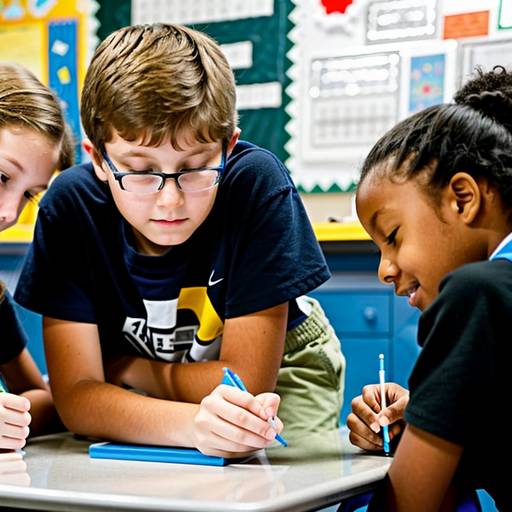
In this 5th-grade physical science lesson, students will explore the concepts of forces, focusing on push and pull, and how these forces affect the motion of objects. The lesson begins with a discussion to assess prior knowledge, followed by a mini-lecture that introduces key vocabulary and principles, including balanced and unbalanced forces.
Students will engage in hands-on activities where they experiment with toy cars on different surfaces using ramps to observe the impact of friction on motion. They will also measure the force required to pull various objects across surfaces using spring scales. After conducting their experiments, students will regroup to discuss their findings, reinforcing the understanding of friction's role as an opposing force.
The lesson concludes with a recap of the key concepts and an assessment through a short quiz. Extensions encourage students to further observe forces in their environment at home. The lesson emphasizes collaboration and hands-on learning while allowing for differentiation based on individual student needs.
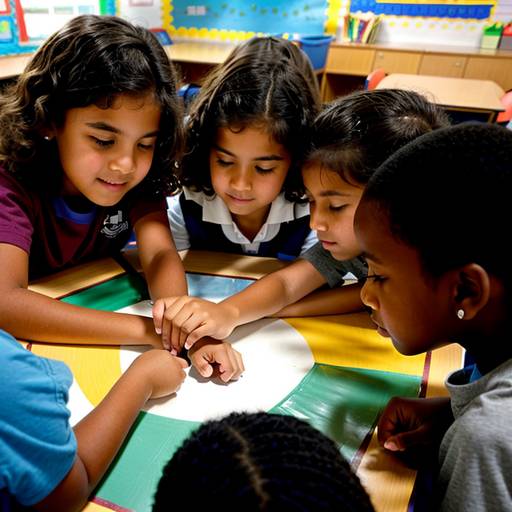
In this 3rd-grade science lesson, students will explore the fundamental concepts of pushes and pulls as types of forces through engaging discussions and hands-on activities. The lesson begins with students sharing their ideas about what forces are, followed by explanations and demonstrations using toy cars to illustrate pushing and pulling.
In small groups, students will conduct experiments by building ramps and testing how far toy cars travel when pushed or pulled, while varying the weight of the cars to observe the effects of different forces. They will record their findings and engage in a class discussion to share observations and insights about their experiments.
Students will solidify their understanding of these concepts through presentations and will be assessed based on their participation and the accuracy of their findings. Extensions and challenges for further exploration will be provided, encouraging students to apply their learning to real-life situations. Safety will be emphasized throughout the activities to ensure a secure learning environment.
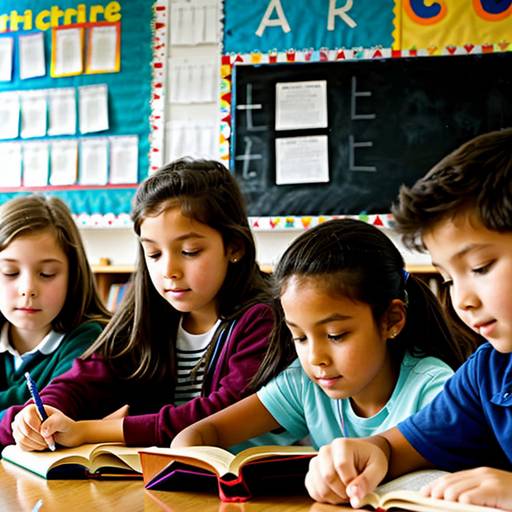
This 4th Grade Language Arts lesson focuses on enhancing students' reading fluency through interactive, collaborative activities. The lesson begins with a discussion about the qualities that make storytelling captivating, followed by a demonstration of fluent reading. Students then engage in partner reading, where they take turns reading short passages aloud while providing feedback to one another using a fluency checklist. After practicing together, students choose a new passage for independent reading and reflect on their understanding and experiences through writing. The lesson concludes with a group discussion about their reflections and previews an upcoming activity that will further develop their expressive reading skills. Overall, this lesson emphasizes the importance of fluency in reading and comprehension while fostering a supportive learning environment.
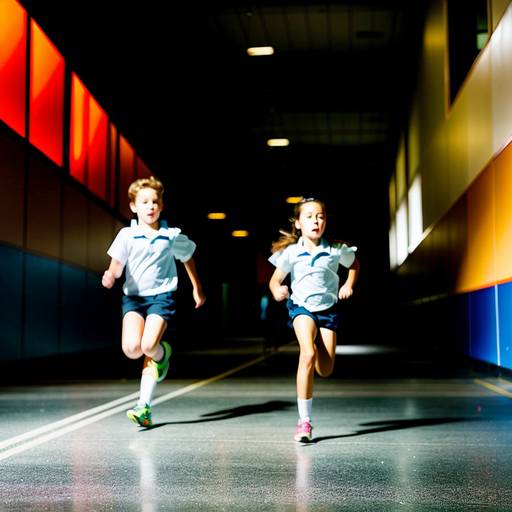
This lesson plan for 3rd-grade students focuses on the concepts of motion, speed, and forces within physical science. The lesson begins with an interactive discussion where students define motion and explore related vocabulary like "force," "push," and "pull." Demonstrations involving toy cars and ramps illustrate how gravity influences motion. Students then work in small groups to conduct a hands-on experiment, varying the angle of ramps to observe how it affects the speed of the cars. They record their observations and discuss their findings with the class, reinforcing their understanding of the relationship between force and motion. The lesson concludes with an evaluation of student participation and science journal entries, with an optional extension activity for those who finish early or seek further challenge. Overall, this plan emphasizes collaborative learning and critical thinking while exploring fundamental scientific principles.

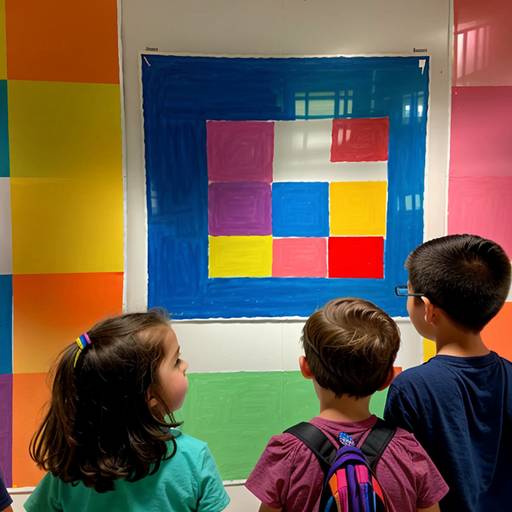
In this 1st Grade art lesson, students will explore the elements of art through a hands-on activity focused on color theory and shape recognition. The lesson begins with an engaging discussion about colors, where students will identify primary and secondary colors using a color wheel. They will also learn about basic shapes like circles, squares, triangles, and rectangles.
After the introduction, students will work in small groups to create a large mural using crayons, markers, and optional paint. They will have the opportunity to mix colors and utilize various shapes to design their sections of the mural, allowing their creativity to shine. The lesson concludes with a sharing session where students reflect on their artwork and discuss the colors and shapes they used. This collaborative activity not only fosters artistic skills but also encourages teamwork and self-expression.
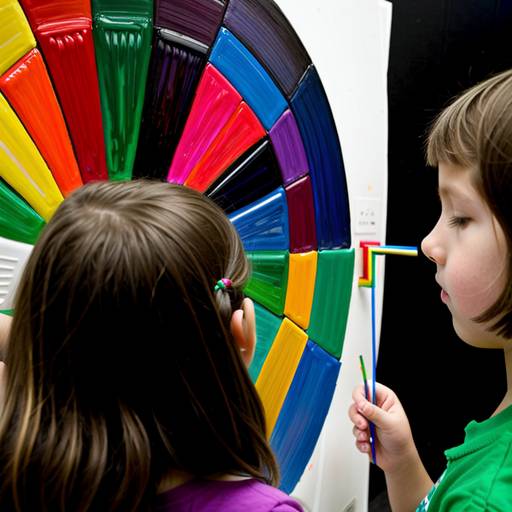
In this 2nd-grade art lesson, students will explore the elements of art with a focus on color theory. The session begins with a discussion about favorite colors and the introduction of primary colors (red, blue, yellow) and how they can be mixed to create secondary colors (green, orange, purple). Students will observe demonstrations of color mixing and complementary colors through the use of a color wheel.
Following the introduction, students will engage in a hands-on activity where they will create their own colorful artwork using watercolor paints. They will paint a background, mix primary colors to form secondary colors, and apply complementary color combinations for contrast and depth in their artwork. Throughout the activity, the teacher will provide support and encouragement, fostering creativity.
Finally, the lesson concludes with a reflection and sharing session, where students will present their completed artworks to their peers, discussing the colors used and their artistic inspiration. The lesson assessment will focus on students' understanding and application of color theory, creativity, and engagement during the activity. Differentiation strategies will be employed to support diverse learning needs, ensuring all students can participate meaningfully.
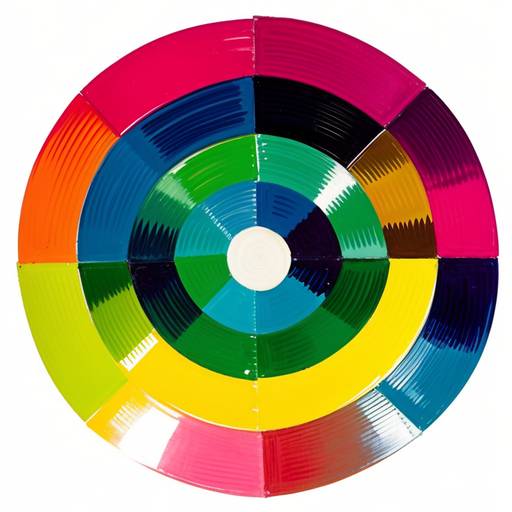
In this kindergarten art lesson, students will explore the basic elements of art, focusing on color and shape. They will begin by learning about the color wheel, including primary and secondary colors, and how to mix them. Students will also review various shapes, identifying them through pre-cut paper shapes.
During the guided practice, students will experiment with mixing watercolors to create new colors and arrange shapes on drawing paper. They will then paint a background using their mixed colors and glue their shapes onto the artwork, adding personal touches with markers or crayons.
The lesson will conclude with a sharing session where students present their creations, discussing the colors and shapes they incorporated and what they learned about color mixing. Assessment will be based on their engagement in the activities and the creativity observed in their final artworks. This lesson encourages artistic expression and helps develop fine motor skills while fostering a deeper understanding of color theory and shape recognition.
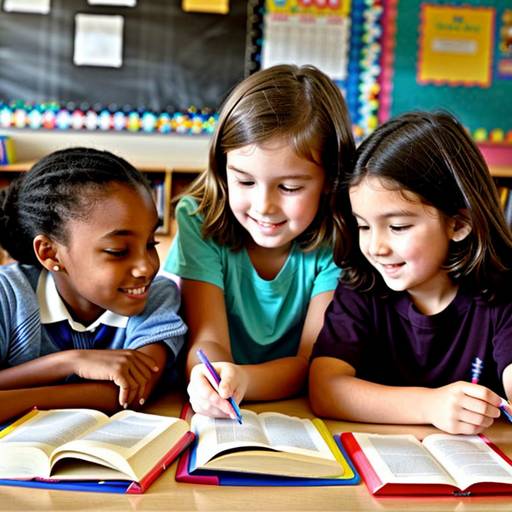
In this 2nd-grade Language Arts lesson, students will focus on improving reading fluency through a series of engaging activities. The lesson begins with a discussion on reading fluency, followed by a demonstration of expressive reading. Students will then practice together in pairs, taking turns reading and discussing their chosen books. After a guided practice session, each student will read independently and track their fluency progress by measuring the number of words read in one minute. The lesson concludes with students sharing their favorite parts of their books and reflecting on their learning. Throughout the lesson, emphasis is placed on the elements of fluency—speed, accuracy, and expression—encouraging collaboration and enhancing reading skills. Additionally, extensions such as creating a "Fluency Star" poster and organizing a reading day are included to further enrich the learning experience.